... or just a taste of the magic, really. I can't go revealing everything to my players on this blog!
But Ikasha is a member of the party of characters adventuring in my Greyhame Game, and she is a Star Elf, clad in a body of flesh fashioned for her by the Goblin King before his demise; and so Ikasha knows a few of the spells of the stars, which I will describe here.
I will note that magic-users are not able to just "come by" these spells as they level up--they must find some means of learning them in-game, perhaps through communication with Star Elves and then spell research, or perhaps through an ancient spellbook secreted away in a dungeon somewhere ...
Cloak of Dust
level 1
range: the caster
duration: permanent until dispelled
A spell used by Star Elves to form a corporeal body for themselves out of star dust. If used in this way, the body has from 1-8 hit points which act as "temporary hit points" for the Star Elf and will be "used up" first. Once the body's hit points are diminished to 0, the body crumbles away, revealing the luminous semi-ethereal body of the Star Elf.
May also be used as "armor" for the caster. This "armor" of dust grants AC 3; the first time the caster is struck in combat, this AC is reduced to 5; after the next hit, AC is reduced to 7; after the next hit, the dust is fully dispersed and the spell dispelled.
Starfires
level 1
range 240', 20' radius
(inspired by a similar spell from Master of Magic)
By means of this spell, the caster throws a portion of the cold fires of the stars against her undead enemies. It will destroy 2-16 hit dice of undead of up to 4 HD, and cause 1-6 damage to any undead of higher HD caught within its radius.
Shine
level 2
range: caster
duration 1 round + 1/level of caster
This spell causes the caster to shine with the brightness of a star.
All who look directly at the shining caster are blinded for 2-5 rounds (at -4 "to hit" and a penalty of +4 to AC); a save versus spells prevents this blindness.
Those who attack the caster but turn their gaze to avoid the brightness attack at -2 to hit, but save against blindness at +2.
Irradiate
level 2
range 240', one object or creature
The target of this spell receives a large dose of radiation. For living creatures, this means 2-12 radiation damage. A save versus death rays will reduce the damage to 1-6.
This is a potentially lethal dose--from 5-12 radiation damage itself forces a save versus poison to avoid immediate incapacitating nausea, and a save versus poison at the end of the session to avoid death.
Showing posts with label new spell. Show all posts
Showing posts with label new spell. Show all posts
Tuesday, August 7, 2018

Wednesday, February 21, 2018
The Goblin King has a Name
... and his name is Danohir the Mirk.
But really, I just wanted to say that I love it when ideas suddenly (finally!) cohere. I've been running my Greyhame Game for four and a half months now (since 1 October last year), and my starting pitch included the Goblin King and his alliance with the Lord of Werewolves ... but I never was certain just who the Goblin King was.
Several times I've had players ask captured goblins the name of their King, and where is he? And lo! though I hate it as a player when I ask for but do not receive a Name, I did that very thing to my players, evading their queries or hemming and hawing until they got bored and just killed the poor goblins (they did always learn that the King was "further below", at least).
I was sorely tempted to just let his name be Jarred and look just like David Bowie in Labyrinth, but I couldn't quite bring myself to do it. Especially not when I already have a character named Jaer, stolen from another medium ...
But, today I figured it out. The Goblin King has a name and a backstory, and I'll be regaling the players of my Greyhame Game with it soon enough, and posting it in full here on this blog.
And it's funny how much of what I figured out was inspired by a random roll that occurred during the game this week (on 19 February ... I have yet to write up that 21st expedition), a wilderness roll that indicated an encounter with a party of Elves. We didn't even roleplay it beyond a snooty Elf making fun of the party and then continuing on ... but even just that little piece of information, lodged in the back of my mind as I was worrying the Name of the Goblin King like a piece of fatty gristle, ultimately produced the entire rest of the backstory.
------
So this isn't really much of a post, other than to remark on how one can run a game for a long while without knowing all the little details (four months without knowing a main antagonist's name for me), and also about how great it is when little details suddenly cohere in a moment of inspiration.
As a Joesky tax, here's a Free Goblin spell:
Steal Shadow
Free Goblin, Elf, magic-user level 4
duration: permanent (until/unless the shadow is released)
target: one creature's shadow
range: touch (insofar as one can "touch" a shadow)
materials: two silver nails, each worth 50 gold or more
This spell must be cast while standing in another creature's shadow, and is completed by driving the enchanted nails into one's boots, thus nailing the shadow to them.
When you walk away, the victim is left without a shadow, causing them slowly to fade away into nothingness themselves, losing one level of life energy for every week without a shadow. If they can find another shadow somehow, the fading will cease wherever it left off. (the Unnameable Monastery might be a place to start looking for a new shadow)
As for the shadow nailed to your boots--it acts as a monstrous shadow, acting on your initiative and at your direction and draining strength just like the monster does. It can be released by pulling the nails from your shoes, but beware! It will probably attack you first, and then seek to reunited itself with its body--or, if that's impossible, it will wander the world's dungeons as a free shadow, creating more of its kind through its strength drain ...
But really, I just wanted to say that I love it when ideas suddenly (finally!) cohere. I've been running my Greyhame Game for four and a half months now (since 1 October last year), and my starting pitch included the Goblin King and his alliance with the Lord of Werewolves ... but I never was certain just who the Goblin King was.
Several times I've had players ask captured goblins the name of their King, and where is he? And lo! though I hate it as a player when I ask for but do not receive a Name, I did that very thing to my players, evading their queries or hemming and hawing until they got bored and just killed the poor goblins (they did always learn that the King was "further below", at least).
I was sorely tempted to just let his name be Jarred and look just like David Bowie in Labyrinth, but I couldn't quite bring myself to do it. Especially not when I already have a character named Jaer, stolen from another medium ...
But, today I figured it out. The Goblin King has a name and a backstory, and I'll be regaling the players of my Greyhame Game with it soon enough, and posting it in full here on this blog.
And it's funny how much of what I figured out was inspired by a random roll that occurred during the game this week (on 19 February ... I have yet to write up that 21st expedition), a wilderness roll that indicated an encounter with a party of Elves. We didn't even roleplay it beyond a snooty Elf making fun of the party and then continuing on ... but even just that little piece of information, lodged in the back of my mind as I was worrying the Name of the Goblin King like a piece of fatty gristle, ultimately produced the entire rest of the backstory.
------
So this isn't really much of a post, other than to remark on how one can run a game for a long while without knowing all the little details (four months without knowing a main antagonist's name for me), and also about how great it is when little details suddenly cohere in a moment of inspiration.
As a Joesky tax, here's a Free Goblin spell:
Steal Shadow
Free Goblin, Elf, magic-user level 4
duration: permanent (until/unless the shadow is released)
target: one creature's shadow
range: touch (insofar as one can "touch" a shadow)
materials: two silver nails, each worth 50 gold or more
This spell must be cast while standing in another creature's shadow, and is completed by driving the enchanted nails into one's boots, thus nailing the shadow to them.
When you walk away, the victim is left without a shadow, causing them slowly to fade away into nothingness themselves, losing one level of life energy for every week without a shadow. If they can find another shadow somehow, the fading will cease wherever it left off. (the Unnameable Monastery might be a place to start looking for a new shadow)
As for the shadow nailed to your boots--it acts as a monstrous shadow, acting on your initiative and at your direction and draining strength just like the monster does. It can be released by pulling the nails from your shoes, but beware! It will probably attack you first, and then seek to reunited itself with its body--or, if that's impossible, it will wander the world's dungeons as a free shadow, creating more of its kind through its strength drain ...
Monday, January 29, 2018
Sword of Blood
Inspired by a joke-calculation concerning how much blood it would actually take to forge a sword from the blood of your enemies ... This spell, sword of blood, is a ritual, a concept already in use in games like 5e, but the rules of which for my B/X game I just made up for this post. Maybe I'll rescind or modify them later, but I like the idea for now.
Rituals may be taken by clerics instead of their usual spells, or may take up a slot in a magic-user's or Elf's spellbook of a level equivalent to the ritual's level. Rituals are used in "downtime"--the rites and magic involved are too lengthy to be really useful in an adventure-context, and probably also don't add up to anything usefully gamable within that context. (Also, rituals usually use up large amounts of material components)
Sword of Blood
ritual 4
range: the blood of all humans or humanoids being sacrificed as part of the ritual
components: 500 gold for the "liturgy" of each sacrificial "session"
By the means of this ritual, a cleric or magic-user extracts the iron from the let blood of a sacrificial victim of human or humanoid nature. Each individual's blood produces 1-4 grams of iron; this works out to requiring about 200 victims to provide enough blood for a single sword. (I did say that this was a long term "downtime" activity, unless your cleric or magic-user has the location and means to sacrifice 200 victims all in one go)
I wouldn't tend to worry about the grams themselves, just the number of victims; though the caster will require somewhere to store the iron they're collecting by means of the ritual until they have enough.
When enough iron has been acquired by means of this spell, it can be forged into a sword (or other desired weapon), by the caster if he has the wont and the skill, or by a hired armorer. When the sword has been forged, and a last instance of ritual incanted over it, roll a d20 and consult this table, add +1 to the roll if at least 5000 gold is spent on ornamental trappings for the sword:
1-2 -- the metal was impure and the weapon is worthless
3-4 -- it's a sword, but there's nothing magical about it
5-12 -- it's a sword +1; if the sword is ever destroyed or broken, an incorporeal wight will spring from the fragments, born from the hatred of the spirits trapped within; this spirit will seek out and destroy the sword's creator
13-16 -- it's an intelligent sword +2 of the same alignment as its creator, but it also actively hates its creator; 3 times per day the sword can do extra damage, i.e. for 1-10 rounds, each hit will do x4 damage; if the sword is ever destroyed or broken, a wraith born of the hate of the spirits trapped within will emerge and seek out and destroy the sword's creator
17-20 -- it's an intelligent sword that hates its creator, and acts as a lifedraining sword, i.e. on a hit it may drain 1 life level of energy; but after draining 13 life levels, the blood of those within its iron erupt as a spectre intent on destroying the original caster of the spell; the sword becomes a mere sword +1
It shouldn't need saying, but any Good character attempting to use this spell immediately loses their status as Good, and they also lose one life level, and must seriously atone even to regain their former alignment. Good characters attempting to wield these weapons feel intensely uneasy and treat the magical "plus" as a penalty instead. Surrendering such weapons to the Good cult to be redeemed is worth at least 1000 experience per magical "plus".
------
There is an 01-05 chance that any magical sword (or metal-headed weapon) found in a randomly generated treasure hoard was created by this ritual. Good characters find them uneasy to wield, as above, and may turn them over to the Good cult for "redemption" and experience points.
Moreover, more powerful magic swords of this type actively hate their creators and will seek out their destruction if possible. This would be an excellent hook for future adventures ...
Rituals may be taken by clerics instead of their usual spells, or may take up a slot in a magic-user's or Elf's spellbook of a level equivalent to the ritual's level. Rituals are used in "downtime"--the rites and magic involved are too lengthy to be really useful in an adventure-context, and probably also don't add up to anything usefully gamable within that context. (Also, rituals usually use up large amounts of material components)
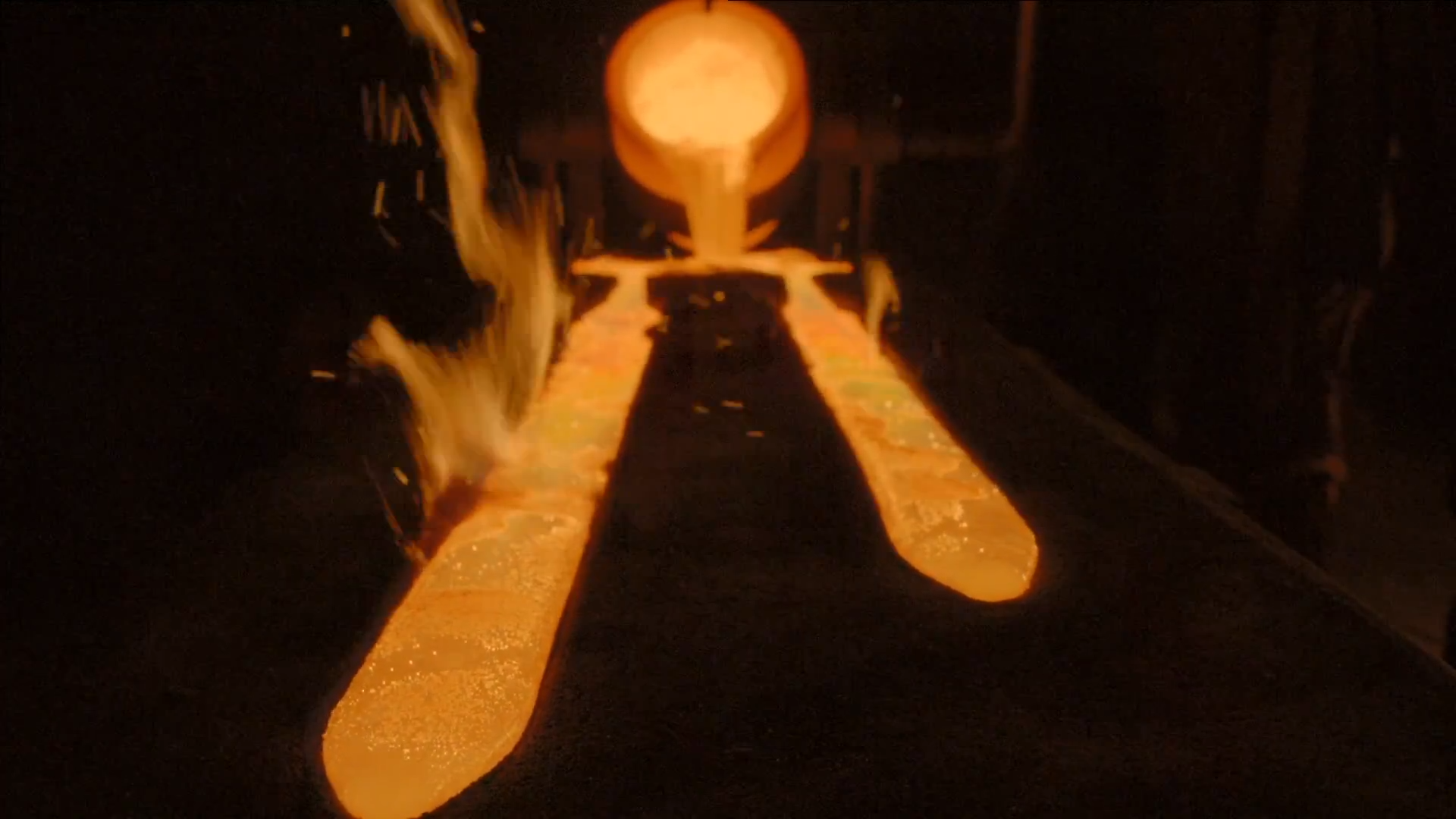 |
| A terrible way to forge a sword ... but it is cinematic |
Sword of Blood
ritual 4
range: the blood of all humans or humanoids being sacrificed as part of the ritual
components: 500 gold for the "liturgy" of each sacrificial "session"
By the means of this ritual, a cleric or magic-user extracts the iron from the let blood of a sacrificial victim of human or humanoid nature. Each individual's blood produces 1-4 grams of iron; this works out to requiring about 200 victims to provide enough blood for a single sword. (I did say that this was a long term "downtime" activity, unless your cleric or magic-user has the location and means to sacrifice 200 victims all in one go)
I wouldn't tend to worry about the grams themselves, just the number of victims; though the caster will require somewhere to store the iron they're collecting by means of the ritual until they have enough.
When enough iron has been acquired by means of this spell, it can be forged into a sword (or other desired weapon), by the caster if he has the wont and the skill, or by a hired armorer. When the sword has been forged, and a last instance of ritual incanted over it, roll a d20 and consult this table, add +1 to the roll if at least 5000 gold is spent on ornamental trappings for the sword:
1-2 -- the metal was impure and the weapon is worthless
3-4 -- it's a sword, but there's nothing magical about it
5-12 -- it's a sword +1; if the sword is ever destroyed or broken, an incorporeal wight will spring from the fragments, born from the hatred of the spirits trapped within; this spirit will seek out and destroy the sword's creator
13-16 -- it's an intelligent sword +2 of the same alignment as its creator, but it also actively hates its creator; 3 times per day the sword can do extra damage, i.e. for 1-10 rounds, each hit will do x4 damage; if the sword is ever destroyed or broken, a wraith born of the hate of the spirits trapped within will emerge and seek out and destroy the sword's creator
17-20 -- it's an intelligent sword that hates its creator, and acts as a lifedraining sword, i.e. on a hit it may drain 1 life level of energy; but after draining 13 life levels, the blood of those within its iron erupt as a spectre intent on destroying the original caster of the spell; the sword becomes a mere sword +1
It shouldn't need saying, but any Good character attempting to use this spell immediately loses their status as Good, and they also lose one life level, and must seriously atone even to regain their former alignment. Good characters attempting to wield these weapons feel intensely uneasy and treat the magical "plus" as a penalty instead. Surrendering such weapons to the Good cult to be redeemed is worth at least 1000 experience per magical "plus".
------
There is an 01-05 chance that any magical sword (or metal-headed weapon) found in a randomly generated treasure hoard was created by this ritual. Good characters find them uneasy to wield, as above, and may turn them over to the Good cult for "redemption" and experience points.
Moreover, more powerful magic swords of this type actively hate their creators and will seek out their destruction if possible. This would be an excellent hook for future adventures ...
Friday, November 24, 2017
Phantasmal Warriors
 |
| Those blue dudes up to the left are Phantom Warriors, defending a Sorcery Node; later-game they'd be joined by Phantom Beasts ... |
In keeping with the idea of transposing Master of Magic monsters into D&D, I've always thought Phantom Warriors would be great, so here goes.
These guys are like mirror images that can also fight. They strike with phantom weapons that ignore armor, allowing them to hit often, and yet themselves being insubstantial, a single hit destroys one figure.
I figure there are two ways to look at these, one as monsters, the other as a spell:
Phantasmal Warriors (the monster)
No. Appearing 3-18
AC 9
hp "1" (any "hit" kills it)
THAC0 19
damage 1-6
movement 120'
special: all hits by phantasmal warriors ignore physical armor, striking both an unarmored man and a character in plate as if AC 9; BUT dexterity adjustments and magical bonuses to armor still count as AC against these attacks
Phantasmal Warriors (the spell)
level 4
range 1 (allied) creature
duration 6 turns
2-7 phantasmal representations of the target creature appear, randomly armed and armored. Each "phantom" is allowed one attack per round at THAC0 19 (but treating natural or worn armor as AC 9; dexterity adjustments and magical bonuses to armor still apply to this AC), doing 1-6 damage; furthermore, each "phantom" is struck as if AC 9, and any "hit", regardless of damage, dissipates the "phantom" thus struck
Subscribe to:
Posts (Atom)