Continuing the "three magic items" theme, esp. those that are not magic swords, have three new scrolls:
Scroll of Tongues
A short vellum scroll; all writing on it disappears after a day, leaving the scroll free for further writings.
The value of this scroll lies not in any permanent record, but rather in the fact that anything written upon it in one language can be read by any literate creature, regardless of their own native language. E.g. a human might write a message on the scroll in the Common tongue, and an Elf might read the same message in Elvish while an orc would read it in Orcish, or a giant in Giantish.
Alas, it is nearly useless for learning new languages, because the reader comprehends whatever was written in his own native tongue ...
Scroll of Spellcatching
Prized especially by spellcasters eager to learn new spells, nevertheless, this scroll is useful to any class of character. It is a blank scroll; when carried upon one's person, it will "catch" the first spell cast against the person, totally negating the spell's effect, and inscribing the spell's formula magically onto the scroll (even a fireball spell would be affected, albeit partially; the carrier of this scroll would be immune to the damage of the spell, and the spell would be inscribed upon the scroll; but the magic would act normally upon all others within the radius of the spell's effect).
Though any spell level may be "caught" and negated in this way, the scroll will only every "catch" one spell. After that, it counts as a spell scroll with that particular spell inscribed upon it (to be used or learned by a magic-user, and unusable by any other class but perhaps a high level thief). Those unable to cast or learn spells from scrolls will find the item useless at this point ...
Scroll of Psalms
A scroll of paeans to the right gods ... only clerics (or other priest-like classes) may use these scrolls, and then only by chanting the psalms or paeans round-by-round.
A character chanting the poetic prayers upon the scroll cannot otherwise act; they are essentially casting a spell, though insofar as they are chanting prayers from the scroll, the effects cannot be fizzled like a spell in melee.
After 1 round of chanting, all allies within 30' gain a +1 to hit; after 2 rounds, allies within 30' gain a +1 to damage; after 3 rounds, allies within 30' gain a bonus of 1 to their armor class; after 4 rounds, allies within 30' receive 1-6 hit points, either as direct healing, or as "temporary hit points". The "chanter" of the scroll must continue to chant each round thereafter for his allies to retain these bonuses; if the chanting ceases, so too do the benefits proffered by the scroll.
Rune Wand
A bonus "scroll" type ... Items of this sort are long wands carved with a series of runes representing a spell; they are functionally identical to spell scrolls (whatever spell is contained within is "used up" when the runes are activated by reading them), and are just a different medium of storage of the magical dweomers.
Showing posts with label magic items. Show all posts
Showing posts with label magic items. Show all posts
Monday, August 20, 2018

DIY 30 #15: Three Potions
Continuing the thought that I tend to think of items as magic swords or magic rings, here are three potions to offset my predilections:
Potion of Elemental Fury
These potions imbue the drinker with the power of one of the four dominant types of elementals (fire, water, earth, air; roll a d4 to randomly determine the type associated with the potion). A fire potion burns as it goes down and fills the drinker with a fiery heat; an earth potion is gritty like thick coffee, and fills the drinker with a sense of gravity and deep connection; a water potion tastes of seawater, but fills the drinker with a sense of liquid grace; an air potion seems but a breath of heavy gas which leaves the drinker light-headed and with a sense of "floating".
All potions of elemental fury cause a creature to fight as a staff elemental of the potion's type (AC 2, HD 8, unarmed damage 1-8), but each potion also grants additional abilities appropriate to its type:
-- fire grants fire immunity, so that even magical fire attacks deal no damage;
-- earth grants regeneration of 1 hit point per round, and poison immunity so that poisons do not affect the drinker;
-- water grants waterbreathing and immunity to any kind of gas-based spell, e.g. cloudkill or stinking cloud;
-- air grants the ability to fly, as well as protection from normal missiles as the spell
Characters affected by a potion of elemental fury are incapable of breaking through a circle of protection against elementals like that created by a scroll of protection versus elementals.
Memory Moss
Not a potion per se, but a "helping" of obliviax (memory moss), this black mold can easily be swallowed over the course of a melee round. It is alive with the "memory" of one spell from 1st to 3rd level (determine level randomly with a d6, so 1-3 is 1st level, 4-5 is 2nd level, 6 is 3rd, and roll the spell randomly once level is determined). The only way to know what spell is contained within is to eat the moss.
A character eating the moss gains the ability to use the spell contained within as if they were a magic-user that had memorized it (i.e. just the once). Even a fighter or a thief could eat the moss and thus be able to cast the spell, but neither such character would be able to cast the spell while wearing armor.
There is, of course, the risk of attaining undesired memories by eating memory moss. A successful save versus spells allows a character to ignore such alien memories, but the referee is free to create new plot hooks or strange behavioral hang-ups for those who fail the save ...
Dweomer Potion
Without access to a good reference library, this potion is night worthless; such a potion, dripped over an enchanted item, throws off certain auras and other magical signs that may be cross-referenced in the correct tomes to identify the magic item's properties. The potion is viscous and tastes vaguely of salts and minerals; anyone with memorized spells will cause it to react as it would to a magic item, such that the dwimmers give off an aura and a slight scent of ozone.
Each potion contains enough material to identify 2-7 items or potions. Characters with extensive libraries for magical research (worth 5000+ gp), or perhaps specific encyclopedias, will have a decent or better chance to succeed with the potion for themselves, using their own reference works.
Sages will always buy these potions, though they will talk the price down as much as possible. It is up to the sellers to determine its real worth for the buyer.
Love Potion
Bonus potion, don't forget love potions. They're good for role-playing, and/or for getting players to come up with creative ways to get past encounters using them.
Potion of Elemental Fury
These potions imbue the drinker with the power of one of the four dominant types of elementals (fire, water, earth, air; roll a d4 to randomly determine the type associated with the potion). A fire potion burns as it goes down and fills the drinker with a fiery heat; an earth potion is gritty like thick coffee, and fills the drinker with a sense of gravity and deep connection; a water potion tastes of seawater, but fills the drinker with a sense of liquid grace; an air potion seems but a breath of heavy gas which leaves the drinker light-headed and with a sense of "floating".
All potions of elemental fury cause a creature to fight as a staff elemental of the potion's type (AC 2, HD 8, unarmed damage 1-8), but each potion also grants additional abilities appropriate to its type:
-- fire grants fire immunity, so that even magical fire attacks deal no damage;
-- earth grants regeneration of 1 hit point per round, and poison immunity so that poisons do not affect the drinker;
-- water grants waterbreathing and immunity to any kind of gas-based spell, e.g. cloudkill or stinking cloud;
-- air grants the ability to fly, as well as protection from normal missiles as the spell
Characters affected by a potion of elemental fury are incapable of breaking through a circle of protection against elementals like that created by a scroll of protection versus elementals.
Memory Moss
Not a potion per se, but a "helping" of obliviax (memory moss), this black mold can easily be swallowed over the course of a melee round. It is alive with the "memory" of one spell from 1st to 3rd level (determine level randomly with a d6, so 1-3 is 1st level, 4-5 is 2nd level, 6 is 3rd, and roll the spell randomly once level is determined). The only way to know what spell is contained within is to eat the moss.
A character eating the moss gains the ability to use the spell contained within as if they were a magic-user that had memorized it (i.e. just the once). Even a fighter or a thief could eat the moss and thus be able to cast the spell, but neither such character would be able to cast the spell while wearing armor.
There is, of course, the risk of attaining undesired memories by eating memory moss. A successful save versus spells allows a character to ignore such alien memories, but the referee is free to create new plot hooks or strange behavioral hang-ups for those who fail the save ...
Dweomer Potion
Without access to a good reference library, this potion is night worthless; such a potion, dripped over an enchanted item, throws off certain auras and other magical signs that may be cross-referenced in the correct tomes to identify the magic item's properties. The potion is viscous and tastes vaguely of salts and minerals; anyone with memorized spells will cause it to react as it would to a magic item, such that the dwimmers give off an aura and a slight scent of ozone.
Each potion contains enough material to identify 2-7 items or potions. Characters with extensive libraries for magical research (worth 5000+ gp), or perhaps specific encyclopedias, will have a decent or better chance to succeed with the potion for themselves, using their own reference works.
Sages will always buy these potions, though they will talk the price down as much as possible. It is up to the sellers to determine its real worth for the buyer.
Love Potion
Bonus potion, don't forget love potions. They're good for role-playing, and/or for getting players to come up with creative ways to get past encounters using them.
DIY 30 #14: Three Staves
Yes "staves" is a correct plural for more than one staff, i.e. walking stick, and the one that I prefer. For multiple groups of employees, "staffs" is correct.
Anyway, these could be staves or rods; but the idea was that I tend to focus on magic rings, magic swords, and miscellaneous magic when I devise new items, and so I should begin expanding my horizon.
Rod of the Gerontes
A short walking-stick, shod in iron, usually topped with a disc bearing the seal of the office the rod was dedicated to (i.e. the mayor of the palace, the high priest of the city-cult, or the head of a particular guild).
This rod grants +1 to all reactions, +3 to reactions with those specifically associated with whatever office it was originally dedicated to (e.g. a harbormaster's rod would grant +3 reactions when dealing with ship captains, rowers, or other seafarers). It may furthermore be used to cast a charm person spell, each use costing 1 charge (and the rod will be found with but 3-30 charges).
Unfortunately, for those who take up this rod, it is a walking stick meant for old oligarchs; merely handling it permanently ages a character 1 year. Bearing it as an item temporarily ages the bearer a further 10 years, thus reducing strength, dexterity, and constitution each by 1-3 points ... one week of rest apart from the staff will restore one ability score back to its "prime/original" score, but no amount of rest will restore the 1 full year first lost when handling the rod--only a wish or similarly powerful spell might restore lost youth.
Flowering Staff
A staff of dead wood that has since sprung into new life, bearing green shoots of new growth and a flower (or more) miraculously blooming at the top. Perhaps the gods themselves have caused it to flower as a sign of forgiveness that was thought impossible (the Pope's staff at the end of the Tannhauser legend); perhaps the life-blood of a god of life and death has washed over it (Jigo's staff at the end of Princess Mononoke).
The staff now has the following powers (and from 3-30 charges):
-- entangle per the spell, costing 1 charge
-- control plant per the ring, costing 2 charges and lasting as long as the user concentrates on the magic
-- animate tree (or similar plant) per the treant ability, costing 3 charges and lasting 7-12 rounds
-- and lastly, the power to absolve a character of major transgressions, per an attonement spell, or to reinvigorate a character of one lost life-energy level, per a restoration spell; use of this power exhausts all remaining charges
A flowering staff may not be recharged, but if one of its green shoots is planted and cared for over the course of a year ,with proper blessings, a new staff of the same type might be grown ...
Thyrsus and Tambor
Staves of this type are long ceremonial staves topped with a pine cone (or representation of one), with tambors that hang down on either side of the pine cone. When shaken, they produce a rattle and a clash of tiny cymbals.
Combined with prayers to the right (Chaotic) gods, the sounding of these staves and their tambors serve as a call to revelry. All creatures within 30' of the chanting must save v. spells or join in the chanting and the enthusiasmus, being essentially charmed by the staff-bearer. If the staff-bearer or her associates are carrying wine, it may be offered out to incur a -2 penalty on the save against the magic of the thyrsus.
_-_Mailice_(1899).jpg)
This charm is not as powerful as the spell; it lasts for 1-3 hours, and those charmed are generally unwilling to join any combat, preferring revelry, song, and the drinking of wine. Calls to fight will be ignored at best (or allow a second saving throw at +2 to throw off the charm!). The bearer of the thyrsus must also remain in the midst of the revelry, egging the party on and indulging in excesses herself, to keep the charm going.
It is of course eminently reasonable that charmed creatures should offer intelligence about the dungeon or situation to the staff-bearer, or be otherwise helpful without directly engaging in combat. Perhaps they have treasure they should wish to share, magical or otherwise; or perhaps they have advice that they can offer. The possibilities should be extensive.
Anyway, these could be staves or rods; but the idea was that I tend to focus on magic rings, magic swords, and miscellaneous magic when I devise new items, and so I should begin expanding my horizon.
Rod of the Gerontes
A short walking-stick, shod in iron, usually topped with a disc bearing the seal of the office the rod was dedicated to (i.e. the mayor of the palace, the high priest of the city-cult, or the head of a particular guild).
This rod grants +1 to all reactions, +3 to reactions with those specifically associated with whatever office it was originally dedicated to (e.g. a harbormaster's rod would grant +3 reactions when dealing with ship captains, rowers, or other seafarers). It may furthermore be used to cast a charm person spell, each use costing 1 charge (and the rod will be found with but 3-30 charges).
Unfortunately, for those who take up this rod, it is a walking stick meant for old oligarchs; merely handling it permanently ages a character 1 year. Bearing it as an item temporarily ages the bearer a further 10 years, thus reducing strength, dexterity, and constitution each by 1-3 points ... one week of rest apart from the staff will restore one ability score back to its "prime/original" score, but no amount of rest will restore the 1 full year first lost when handling the rod--only a wish or similarly powerful spell might restore lost youth.
Flowering Staff
A staff of dead wood that has since sprung into new life, bearing green shoots of new growth and a flower (or more) miraculously blooming at the top. Perhaps the gods themselves have caused it to flower as a sign of forgiveness that was thought impossible (the Pope's staff at the end of the Tannhauser legend); perhaps the life-blood of a god of life and death has washed over it (Jigo's staff at the end of Princess Mononoke).
The staff now has the following powers (and from 3-30 charges):
-- entangle per the spell, costing 1 charge
-- control plant per the ring, costing 2 charges and lasting as long as the user concentrates on the magic
-- animate tree (or similar plant) per the treant ability, costing 3 charges and lasting 7-12 rounds
-- and lastly, the power to absolve a character of major transgressions, per an attonement spell, or to reinvigorate a character of one lost life-energy level, per a restoration spell; use of this power exhausts all remaining charges
A flowering staff may not be recharged, but if one of its green shoots is planted and cared for over the course of a year ,with proper blessings, a new staff of the same type might be grown ...
Thyrsus and Tambor
Staves of this type are long ceremonial staves topped with a pine cone (or representation of one), with tambors that hang down on either side of the pine cone. When shaken, they produce a rattle and a clash of tiny cymbals.
Combined with prayers to the right (Chaotic) gods, the sounding of these staves and their tambors serve as a call to revelry. All creatures within 30' of the chanting must save v. spells or join in the chanting and the enthusiasmus, being essentially charmed by the staff-bearer. If the staff-bearer or her associates are carrying wine, it may be offered out to incur a -2 penalty on the save against the magic of the thyrsus.
This charm is not as powerful as the spell; it lasts for 1-3 hours, and those charmed are generally unwilling to join any combat, preferring revelry, song, and the drinking of wine. Calls to fight will be ignored at best (or allow a second saving throw at +2 to throw off the charm!). The bearer of the thyrsus must also remain in the midst of the revelry, egging the party on and indulging in excesses herself, to keep the charm going.
It is of course eminently reasonable that charmed creatures should offer intelligence about the dungeon or situation to the staff-bearer, or be otherwise helpful without directly engaging in combat. Perhaps they have treasure they should wish to share, magical or otherwise; or perhaps they have advice that they can offer. The possibilities should be extensive.
Friday, August 17, 2018
DIY 30 #13: Three Magic Rings
Dragon Ring
This ring was created by a too-ambitious magic-user hoping to harness the power of the dragons, and though it certainly does benefit its wearer with certain powers, it ultimately comes with a major drawback.
First, the benefits: First, the wearer of the ring is able at will to detect precious metals within 60', able to determine direction, but not precise location. Second, the wearer gains the ability 3 times per day to breathe fire as a dragon. This breath attack extends from the wearer's mouth in a cone, 60' long and 15' wide at its furthest point, and it deals damage equal to the wearer's current hit points. Those caught within the cone are allowed a saving throw versus breath weapons to take half damage. Third and lastly, the wearer gains an aura of dragon awe, so that creatures entering melee against him must succeed in a morale check or forfeit their first attack (but are able to attack normally thereafter).
The wearer of the ring will ultimately discover that it is a curse, however. Immediately putting on the ring, the wearer will find himself unwilling to relinquish any wealth for frivolous purposes (including unwilling to remove the ring or otherwise give it up); this means that gold may be spent for lodgings and food, and to purchase necessary equipment, but for no other purposes: no carousing, no spell research, no wages for hirelings or mercenaries, no magic item creation, etc, etc.
After a month spent wearing the ring, the character's alignment changes to Chaotic as the draconic nature of the ring exerts itself on his spirit. Any class whose powers rely on alignment will suffer the full penalty of losing their class abilities, but be unable to atone without also removing the ring (e.g. a Lawful cleric who changes to Chaotic will lose all spells and undead turning abilities until/unless they atone or confirm their new alignment). It is at this point that the character's skin and eyes really take on a reptillian, draconic cast.
After a full year wearing the ring, a character is actually transformed bodily into a dragon. And no, this is not supposed to be a cool "I get to play a dragon" thing, it is rather at this point that the referee takes the character sheet away and informs the player that the dragon-character has settled down into a long draconic lethargy, sleeping on whatever wealth he has acquired, aroused only in defense of its hoard.
Ring of Cold
This ring is perpetually covered with a dusting of brown mold, which might be mistaken as rust. It is bitingly cold to the touch, and putting it on will reduce the wearer's hit points by one until the ring is removed (and the hp must then be healed back).
It otherwise acts as a ring of fire resistance, so that it grants +4 on saves against fire attacks, allows the wearer to ignore all normal fires, and reduces damage from magical fire attacks by 1 point per damage die (or per hit die of the creature in the case of a dragon's breath, which isn't rolled).
The fire resistance in this case, though, is granted because of the brown mold colony that has been enchanted into the ring. After suffering three major magical fire attacks, e.g. a fireball, dragon's breath, etc., the brown mold explodes forth from the ring, growing over the wearer's body. The mold deals 1d6 cold damage cumulatively for 5 rounds as it grows, after which it continues dealing 5d6 cold damage per round. This damage is also dealt to anyone within melee range. The body of the wearer will quickly be devoured and transformed into a brown mold colony once the character's hp reach 0, and continue to deal 5d6 cold damage every round to those within melee range.
Cold spells will cause the mold to go dormant for a number of rounds equal to the number of damage dice of the spell; and in the case of this ring, the mold is susceptible to acid damage, so that 8 acid damage will cause the colony to discorporate.
Ring of the Skeleton
This ring is formed of pale white bone. It acts essentially as a ring of sustenance or a ring of warmth; the wearer does not need to eat or breathe, and is immune to all kinds of cold damage. It further grants immunity to charm, sleep, and hold spells.
Unfortunately, its use entails certain downsides. The wearer may be turned as an undead creature of hit dice equivalent to the character's level (as close as possible). Furthermore, the wearer's body begins to show the effect of not-eating ... the character's body quickly wastes away until it seems only skin and bones remain. If allowed to continue (and the ring can only be removed with a remove curse spell) in this way, the flesh actually will wither away, leaving the character as only an animated skeletal figure. If the ring is removed at this point, the character will die. The character's charisma is permanently reduced by 6 due to becoming undead and a walking memento mori. As undead, the character will be destroyed by a raise dead spell, and cannot be merely raised from the dead if destroyed; once undead, only a wish spell or something similarly powerful is able to restore such a character.
This ring was created by a too-ambitious magic-user hoping to harness the power of the dragons, and though it certainly does benefit its wearer with certain powers, it ultimately comes with a major drawback.
First, the benefits: First, the wearer of the ring is able at will to detect precious metals within 60', able to determine direction, but not precise location. Second, the wearer gains the ability 3 times per day to breathe fire as a dragon. This breath attack extends from the wearer's mouth in a cone, 60' long and 15' wide at its furthest point, and it deals damage equal to the wearer's current hit points. Those caught within the cone are allowed a saving throw versus breath weapons to take half damage. Third and lastly, the wearer gains an aura of dragon awe, so that creatures entering melee against him must succeed in a morale check or forfeit their first attack (but are able to attack normally thereafter).
The wearer of the ring will ultimately discover that it is a curse, however. Immediately putting on the ring, the wearer will find himself unwilling to relinquish any wealth for frivolous purposes (including unwilling to remove the ring or otherwise give it up); this means that gold may be spent for lodgings and food, and to purchase necessary equipment, but for no other purposes: no carousing, no spell research, no wages for hirelings or mercenaries, no magic item creation, etc, etc.
After a month spent wearing the ring, the character's alignment changes to Chaotic as the draconic nature of the ring exerts itself on his spirit. Any class whose powers rely on alignment will suffer the full penalty of losing their class abilities, but be unable to atone without also removing the ring (e.g. a Lawful cleric who changes to Chaotic will lose all spells and undead turning abilities until/unless they atone or confirm their new alignment). It is at this point that the character's skin and eyes really take on a reptillian, draconic cast.
After a full year wearing the ring, a character is actually transformed bodily into a dragon. And no, this is not supposed to be a cool "I get to play a dragon" thing, it is rather at this point that the referee takes the character sheet away and informs the player that the dragon-character has settled down into a long draconic lethargy, sleeping on whatever wealth he has acquired, aroused only in defense of its hoard.
Ring of Cold
This ring is perpetually covered with a dusting of brown mold, which might be mistaken as rust. It is bitingly cold to the touch, and putting it on will reduce the wearer's hit points by one until the ring is removed (and the hp must then be healed back).
It otherwise acts as a ring of fire resistance, so that it grants +4 on saves against fire attacks, allows the wearer to ignore all normal fires, and reduces damage from magical fire attacks by 1 point per damage die (or per hit die of the creature in the case of a dragon's breath, which isn't rolled).
The fire resistance in this case, though, is granted because of the brown mold colony that has been enchanted into the ring. After suffering three major magical fire attacks, e.g. a fireball, dragon's breath, etc., the brown mold explodes forth from the ring, growing over the wearer's body. The mold deals 1d6 cold damage cumulatively for 5 rounds as it grows, after which it continues dealing 5d6 cold damage per round. This damage is also dealt to anyone within melee range. The body of the wearer will quickly be devoured and transformed into a brown mold colony once the character's hp reach 0, and continue to deal 5d6 cold damage every round to those within melee range.
Cold spells will cause the mold to go dormant for a number of rounds equal to the number of damage dice of the spell; and in the case of this ring, the mold is susceptible to acid damage, so that 8 acid damage will cause the colony to discorporate.
Ring of the Skeleton
This ring is formed of pale white bone. It acts essentially as a ring of sustenance or a ring of warmth; the wearer does not need to eat or breathe, and is immune to all kinds of cold damage. It further grants immunity to charm, sleep, and hold spells.
Unfortunately, its use entails certain downsides. The wearer may be turned as an undead creature of hit dice equivalent to the character's level (as close as possible). Furthermore, the wearer's body begins to show the effect of not-eating ... the character's body quickly wastes away until it seems only skin and bones remain. If allowed to continue (and the ring can only be removed with a remove curse spell) in this way, the flesh actually will wither away, leaving the character as only an animated skeletal figure. If the ring is removed at this point, the character will die. The character's charisma is permanently reduced by 6 due to becoming undead and a walking memento mori. As undead, the character will be destroyed by a raise dead spell, and cannot be merely raised from the dead if destroyed; once undead, only a wish spell or something similarly powerful is able to restore such a character.
Tuesday, August 14, 2018
DIY 30 #12: Harpe of Castration, Ring of Darkness, Shadow Cloak
Three items associated with the cult of Skotia, goddess of darkness, silence, and death, or with goddesses of darkness in general:
Harpe of Castration
A "harpe" is a kind of sickle-sword; the most famous depiction is of Perseus' sword, which resembles a short sword with a hook on the back of one side of the blade--but what is more likely is that a harpe was more of a real sickle-sword, with a curved blade and perhaps with the cutting edge on the inside of the curve.
This particular harpe has been enchanted in imitation of the mythology of Skotia and her emasculation of her son, Ophalle. It is a shortsword +1, +3 vs. men. Additionally to the extra bonus to hit and damage, when a critical hit is rolled against a man in combat (a roll of a 20 on the die without modifiers), the blade threatens the opponent's genital integrity. Whether this actually risks castration or emasculation in such a moment is up to the referee, but the effect of the threat is such that the target of the attack must making a saving throw against fear (or paralysis if there is no particular fear save), or fight at -2 on all dice rolls for the remainder of the combat.
There are tales of priestesses sent out to collect fifties of cut-off phalluses for their goddess, in much the way that David was sent by Saul to collect the foreskins of the Philistines. The reward for such a quest is conjecture, and the truth of such tales is debatable as possible fear-mongering by more male-centric cults.
Ring of Darkness
A thin ring of a dark metal, a ring of darkness is so light that it seems almost nothing in the palm. And yet, worn when under darkness' cloak, the power inherent in the ring is palpable.
A ring of darkness confers several benefits on its wearer while the wearer lurks in shadows. First, the wearer gains the ability to heal through regeneration at the rate of 1 hp per turn. Secondly, the wearer may become invisible at will. Thirdly, rather than becoming invisible, the wearer may become incorporeal, and thus struck only by silver or magical weapons, as well as capable of passing through walls and other solid objects.
However, if the wearer is exposed to sunlight or any other significantly bright light while using the powers of the ring (e.g. the daylight spell, or a chamber filled with bright torches that banish any shadow), the powers immediately cease, revealing the wearer in whatever capacity they were intent upon.
Lastly of note, the use of the powers of invisibility and incorporeality incur a risk with every activation: upon activating the power, the wearer must make a saving throw versus death or suffer one permanent point of Constitution loss (only a wish or some similarly powerful magic might restore it!). If a character is ever brought to 0 Constitution by the invocation of these powers, they immediately fade away into the Shadow Realm, a place from which they can no longer access or affect the Prime Material Plane. This is permanent; though it is left up to the referee to devise some means of restoration from such a fate, if they so desire ...
Shadow Cloak
This cloak is nearly insubstantial and seems to be but an ethereal wisp of shadow that one throws about one's shoulders and secures with a silver cloak pin. The insubstantiallity is no illusion--this cloak is a shadow, literally pinned by the cloak pin.
Any character wearing the cloak while in melee may command the cloak to attack exactly per the description of the shadow creature in the rule book. It attacks on the wearer's initiative.
It is possible for an enemy to strike the cloak pin that binds the shadow, rather than the character wearing it. Only particularly intelligent or aware monsters should generally take the option to do so. The cloak pin has an AC equal to that of the shadow monster, plus any Dexterity bonuses (or penalties) appropriate to the character wearing it. It can sustain 6 hp of damage before breaking; if broken, the pin no longer binds the shadow, and the creature will most likely (1-4 on a d6) attack the wearer of the cloak, or (5-6 on a d6) continue attacking whatever creature it had been commanded to attack, before fleeing away and seeking some dark hole in which to hide and succor itself in shadow and hatred ...
Harpe of Castration
A "harpe" is a kind of sickle-sword; the most famous depiction is of Perseus' sword, which resembles a short sword with a hook on the back of one side of the blade--but what is more likely is that a harpe was more of a real sickle-sword, with a curved blade and perhaps with the cutting edge on the inside of the curve.
This particular harpe has been enchanted in imitation of the mythology of Skotia and her emasculation of her son, Ophalle. It is a shortsword +1, +3 vs. men. Additionally to the extra bonus to hit and damage, when a critical hit is rolled against a man in combat (a roll of a 20 on the die without modifiers), the blade threatens the opponent's genital integrity. Whether this actually risks castration or emasculation in such a moment is up to the referee, but the effect of the threat is such that the target of the attack must making a saving throw against fear (or paralysis if there is no particular fear save), or fight at -2 on all dice rolls for the remainder of the combat.
There are tales of priestesses sent out to collect fifties of cut-off phalluses for their goddess, in much the way that David was sent by Saul to collect the foreskins of the Philistines. The reward for such a quest is conjecture, and the truth of such tales is debatable as possible fear-mongering by more male-centric cults.
Ring of Darkness
A thin ring of a dark metal, a ring of darkness is so light that it seems almost nothing in the palm. And yet, worn when under darkness' cloak, the power inherent in the ring is palpable.
A ring of darkness confers several benefits on its wearer while the wearer lurks in shadows. First, the wearer gains the ability to heal through regeneration at the rate of 1 hp per turn. Secondly, the wearer may become invisible at will. Thirdly, rather than becoming invisible, the wearer may become incorporeal, and thus struck only by silver or magical weapons, as well as capable of passing through walls and other solid objects.
However, if the wearer is exposed to sunlight or any other significantly bright light while using the powers of the ring (e.g. the daylight spell, or a chamber filled with bright torches that banish any shadow), the powers immediately cease, revealing the wearer in whatever capacity they were intent upon.
Lastly of note, the use of the powers of invisibility and incorporeality incur a risk with every activation: upon activating the power, the wearer must make a saving throw versus death or suffer one permanent point of Constitution loss (only a wish or some similarly powerful magic might restore it!). If a character is ever brought to 0 Constitution by the invocation of these powers, they immediately fade away into the Shadow Realm, a place from which they can no longer access or affect the Prime Material Plane. This is permanent; though it is left up to the referee to devise some means of restoration from such a fate, if they so desire ...
Shadow Cloak
This cloak is nearly insubstantial and seems to be but an ethereal wisp of shadow that one throws about one's shoulders and secures with a silver cloak pin. The insubstantiallity is no illusion--this cloak is a shadow, literally pinned by the cloak pin.
Any character wearing the cloak while in melee may command the cloak to attack exactly per the description of the shadow creature in the rule book. It attacks on the wearer's initiative.
It is possible for an enemy to strike the cloak pin that binds the shadow, rather than the character wearing it. Only particularly intelligent or aware monsters should generally take the option to do so. The cloak pin has an AC equal to that of the shadow monster, plus any Dexterity bonuses (or penalties) appropriate to the character wearing it. It can sustain 6 hp of damage before breaking; if broken, the pin no longer binds the shadow, and the creature will most likely (1-4 on a d6) attack the wearer of the cloak, or (5-6 on a d6) continue attacking whatever creature it had been commanded to attack, before fleeing away and seeking some dark hole in which to hide and succor itself in shadow and hatred ...
Monday, August 13, 2018
DIY 30 #10: Six Ways to Redeem Cursed Items
(I'm behind on my DIY 30 thing because I went on a short vacation, so I'm going to try to post a couple a day to catch up ...)
It's been my impression that cursed items--e.g. that sword -2 that your character picked up in the dungeon, and now won't part with barring a cleric's remove curse spell--were originally intended to be redeemed through quests, and to gain a magic bonus commensurate to the penalty of the curse (so that sword -2 would become a sword +2, if only you could figure out how to redeem it!)
I've introduced one item with a clear means of redeeming its curse into my game notes (the players haven't found it yet). I figured I'd share that means, and a few other ideas here, both for myself and for whoever wants to use them (and I intend to come up with more in the future ...):
1) wash the item in the waters of Lethe (the River of Forgetfulness), so that it forgets whatever evil caused it to be cursed, and then have it blessed by a cleric of a reasonable alignment along with a sacrifice of not less than 1000 gold per its magic bonus, i.e. a sword +2 would need a 2000 gp sacrifice
2) (for those of Evil alignment) the item has not yet been finally and completely corrupted. It must be used in the course of three murders (or other serious crimes, like betrayals, or human sacrifices) and then sealed in its new alignment by the "blessing" of an Evil cleric, naturally including a donation of 1000+ gold to the cult of Evil ...
3) the item must receive the Kiss of Peace from the Queen of Elves (or some other magical prince), who cursed the item to begin with. Perhaps it was a sword that stood bare between her and her would-be lover--the wielder--preventing consummation of their affair; or a magical cloak worn by a rival-in-love; regardless, the item will not now return to its former power until "forgiven" by her (or his) kiss
4) a weapon used for evil, armor that shielded a murderer, or an item that aided in some crime--the item must be formally broken and its original purpose renounced, esp. by breaking a sword-blade or spear-shaft. Then the item must be reconsecrated by a Good or Lawful or Clannish cleric with a bless spell and a sacrifice of 1000-6000 gold, and it gains a new and different function. Perhaps the broken sword becomes a virtual staff of healing, or the broken links of a murderer's mail become capable of turning undead and detecting evil
5) the curse is a test of humility, per faerie-story or Arthurian legend. Suffering it out with the item for a year and a day will prove the wielder's character, and the item will reveal itself in its full glory--a glory likely better than a mere reversal of its former penalty!
6) a demon or other spirit dwells within the item. This spirit can be exorcised by the correct cleric or magic-user for the right price, and so becomes a normal item +1 (whatever it may be), OR if the spirit is properly appeased on a regular basis, it may grant some extra power beyond a mere bonus, e.g. a fire spirit may allow the sword's blade to be sheathed in flame, causing 1-6 extra damage per a flaming sword, but only if appeased with burnt offerings of 500 gold per month (and otherwise, the sword functions as a sword -1 which automatically comes to hand in melee, as cursed swords do ...). Even better variations on powers and their costs should be easy to develop per the item and its situation ...
It's been my impression that cursed items--e.g. that sword -2 that your character picked up in the dungeon, and now won't part with barring a cleric's remove curse spell--were originally intended to be redeemed through quests, and to gain a magic bonus commensurate to the penalty of the curse (so that sword -2 would become a sword +2, if only you could figure out how to redeem it!)
I've introduced one item with a clear means of redeeming its curse into my game notes (the players haven't found it yet). I figured I'd share that means, and a few other ideas here, both for myself and for whoever wants to use them (and I intend to come up with more in the future ...):
1) wash the item in the waters of Lethe (the River of Forgetfulness), so that it forgets whatever evil caused it to be cursed, and then have it blessed by a cleric of a reasonable alignment along with a sacrifice of not less than 1000 gold per its magic bonus, i.e. a sword +2 would need a 2000 gp sacrifice
2) (for those of Evil alignment) the item has not yet been finally and completely corrupted. It must be used in the course of three murders (or other serious crimes, like betrayals, or human sacrifices) and then sealed in its new alignment by the "blessing" of an Evil cleric, naturally including a donation of 1000+ gold to the cult of Evil ...
3) the item must receive the Kiss of Peace from the Queen of Elves (or some other magical prince), who cursed the item to begin with. Perhaps it was a sword that stood bare between her and her would-be lover--the wielder--preventing consummation of their affair; or a magical cloak worn by a rival-in-love; regardless, the item will not now return to its former power until "forgiven" by her (or his) kiss
4) a weapon used for evil, armor that shielded a murderer, or an item that aided in some crime--the item must be formally broken and its original purpose renounced, esp. by breaking a sword-blade or spear-shaft. Then the item must be reconsecrated by a Good or Lawful or Clannish cleric with a bless spell and a sacrifice of 1000-6000 gold, and it gains a new and different function. Perhaps the broken sword becomes a virtual staff of healing, or the broken links of a murderer's mail become capable of turning undead and detecting evil
5) the curse is a test of humility, per faerie-story or Arthurian legend. Suffering it out with the item for a year and a day will prove the wielder's character, and the item will reveal itself in its full glory--a glory likely better than a mere reversal of its former penalty!
6) a demon or other spirit dwells within the item. This spirit can be exorcised by the correct cleric or magic-user for the right price, and so becomes a normal item +1 (whatever it may be), OR if the spirit is properly appeased on a regular basis, it may grant some extra power beyond a mere bonus, e.g. a fire spirit may allow the sword's blade to be sheathed in flame, causing 1-6 extra damage per a flaming sword, but only if appeased with burnt offerings of 500 gold per month (and otherwise, the sword functions as a sword -1 which automatically comes to hand in melee, as cursed swords do ...). Even better variations on powers and their costs should be easy to develop per the item and its situation ...
DIY 30 #9: Aeolan Singing Bowl, Staff of Wind and Storm, Ring of Absorption
Got a storm giant and a greater djinni in conflict in my game, so I thought I'd develop a couple weather/lightning magic items for the players to seek out between them ...
Aeolan Singing Bowl
A large bronze bowl, decorated with imagery of winds and storms, especially over seas, mountains, and rolling hills. When struck, it sounds with a long, clear tone that reverberates over great distances (automatic roll on a wandering monster check when in an appropriate area!). But furthermore, through practice (or experimentation), a character may learn to build the tone by drawing the striking instrument around the outside lip of the bowl, "chasing" the sound's vibration and making it grow and grow ...
Merely striking the bowl three times within one round (one minute) so that it creates a cacophony of sound will deal 3-18 damage to everyone within 60' of the bowl, save v. breath for half. Three strokes may be performed in a round, and every round so struck, the bowl will deal its damage; but every round thus struck also incurs a cumulative 10% chance of summoning an air elemental (device-type) that will attack the user of the bowl first, then everyone else nearby, and will fight until slain.
Striking the bowl once, and then drawing out the sound will summon clouds after 1 turn (ten minutes), rain after 2 turns, a storm after 3 turns, and then allow the user to call lightning once per round on any target within eyesight on turns thereafter.
Meanwhile, striking the bowl twice, and then drawing the tone out for at least 1 turn, will summon an air elemental that makes obeisance to the user, and then waits, neither attacking, nor serving him. For every turn that the tone is sustained unbroken, the air elemental will serve for one day; but for every turn attempted, the user must roll a d20 under his dexterity score, OR his wisdom score, or lose control of the tone. A roll of 20 indicates that the tone is violently broken, and that the air elemental will attack the user of the bowl, then anyone else nearby, and fight until slain, or until no one remains so that it then returns to the elemental plane of air.
Staff of Wind and Storm
A six foot tall staff of black iron, topped with an iron disc depicting: on the obverse, the Storm God in his chariot drawn by stormwinds, thunderbolt high in hand; and on the reverse, the Anemoi cavorting amidst clouds and winds. The iron crackles with electrical energy when held.
The wielder of the staff may use it to call upon six different powers:
1) upon striking in melee, the staff may discharge 1 charge in a stroke of electricity, dealing 1-6 extra damage as per the striking spell
2) a gust of wind spell, 1 charge
3) the ability to control weather, 1 charge
4) the ability to call up a guardian wind, which acts as protection from normal missiles and may be further discharged as a fly spell that lasts for 7-12 rounds, 1 charge
5) an 8-dice lightning bolt, 2 charges, and
6) the ability to summon an ice storm, 2 charges
The staff will contain 3-30 charges when found. Unlike many other wands and staves, it may be recharged ... This is done by carrying it out into the midst of a thunderstorm (summer being the best time to do so); and once under a thunderstorm, the staff must be raised on high to attract lightning. Every hour so exposed will provoke one to three strokes of lightning, depending on the intensity of the storm; and every stroke of lightning that strikes the staff will deal 3-18 damage to the wielder, but also recharge 1-3 charges in the staff.
Ring of Absorption
An arm- or finger-ring of a dark, black metal. It feels cool to the touch unless it has absorbed energy, in which case it is warm and subtly vibrates.
The finger-ring version of this item will absorb up to 24 damage from fire or lightning type attacks, including natural lightning strokes, damage caused by natural or oil fires, or even magical attacks like fireball or lightning bolt. The arm-ring version will absorb up to 48 damage from the same sources. This energy is stored in the ring; excess damage still "washes" over the character and deals appropriate damage to them without benefit of the ring.
The energy stored in the ring may be used by its wearer, however; by making an attack roll, the wearer may attempt to expend stored energy in a melee attack. For every 6 points of energy (damage) stored in the ring, the wielder deals 1-6 damage to her target (multiples of less than 6 deal only 1 damage, i.e. if the ring has absorbed only 4 points of energy/damage, a successful attack with it will only deal 1 damage). Creatures immune to fire OR electricity are immune to damage from this ring (it expends stored energy as both).
Aeolan Singing Bowl
A large bronze bowl, decorated with imagery of winds and storms, especially over seas, mountains, and rolling hills. When struck, it sounds with a long, clear tone that reverberates over great distances (automatic roll on a wandering monster check when in an appropriate area!). But furthermore, through practice (or experimentation), a character may learn to build the tone by drawing the striking instrument around the outside lip of the bowl, "chasing" the sound's vibration and making it grow and grow ...
Merely striking the bowl three times within one round (one minute) so that it creates a cacophony of sound will deal 3-18 damage to everyone within 60' of the bowl, save v. breath for half. Three strokes may be performed in a round, and every round so struck, the bowl will deal its damage; but every round thus struck also incurs a cumulative 10% chance of summoning an air elemental (device-type) that will attack the user of the bowl first, then everyone else nearby, and will fight until slain.
Striking the bowl once, and then drawing out the sound will summon clouds after 1 turn (ten minutes), rain after 2 turns, a storm after 3 turns, and then allow the user to call lightning once per round on any target within eyesight on turns thereafter.
Meanwhile, striking the bowl twice, and then drawing the tone out for at least 1 turn, will summon an air elemental that makes obeisance to the user, and then waits, neither attacking, nor serving him. For every turn that the tone is sustained unbroken, the air elemental will serve for one day; but for every turn attempted, the user must roll a d20 under his dexterity score, OR his wisdom score, or lose control of the tone. A roll of 20 indicates that the tone is violently broken, and that the air elemental will attack the user of the bowl, then anyone else nearby, and fight until slain, or until no one remains so that it then returns to the elemental plane of air.
Staff of Wind and Storm
A six foot tall staff of black iron, topped with an iron disc depicting: on the obverse, the Storm God in his chariot drawn by stormwinds, thunderbolt high in hand; and on the reverse, the Anemoi cavorting amidst clouds and winds. The iron crackles with electrical energy when held.
The wielder of the staff may use it to call upon six different powers:
1) upon striking in melee, the staff may discharge 1 charge in a stroke of electricity, dealing 1-6 extra damage as per the striking spell
2) a gust of wind spell, 1 charge
3) the ability to control weather, 1 charge
4) the ability to call up a guardian wind, which acts as protection from normal missiles and may be further discharged as a fly spell that lasts for 7-12 rounds, 1 charge
5) an 8-dice lightning bolt, 2 charges, and
6) the ability to summon an ice storm, 2 charges
The staff will contain 3-30 charges when found. Unlike many other wands and staves, it may be recharged ... This is done by carrying it out into the midst of a thunderstorm (summer being the best time to do so); and once under a thunderstorm, the staff must be raised on high to attract lightning. Every hour so exposed will provoke one to three strokes of lightning, depending on the intensity of the storm; and every stroke of lightning that strikes the staff will deal 3-18 damage to the wielder, but also recharge 1-3 charges in the staff.
Ring of Absorption
An arm- or finger-ring of a dark, black metal. It feels cool to the touch unless it has absorbed energy, in which case it is warm and subtly vibrates.
The finger-ring version of this item will absorb up to 24 damage from fire or lightning type attacks, including natural lightning strokes, damage caused by natural or oil fires, or even magical attacks like fireball or lightning bolt. The arm-ring version will absorb up to 48 damage from the same sources. This energy is stored in the ring; excess damage still "washes" over the character and deals appropriate damage to them without benefit of the ring.
The energy stored in the ring may be used by its wearer, however; by making an attack roll, the wearer may attempt to expend stored energy in a melee attack. For every 6 points of energy (damage) stored in the ring, the wielder deals 1-6 damage to her target (multiples of less than 6 deal only 1 damage, i.e. if the ring has absorbed only 4 points of energy/damage, a successful attack with it will only deal 1 damage). Creatures immune to fire OR electricity are immune to damage from this ring (it expends stored energy as both).
Thursday, August 2, 2018
DIY 30 #2: Seer Cauldrons and Augury Stones
(continuing the DIY 30 ideas begun yesterday)
A seer cauldron is a large magical device used to divine the future, the past, far-away places, or sometimes deeper or more eldritch secrets. It is a large black cauldron, usually made of heavy iron, and set over a fire perhaps on a massive tripod; as such, it is more of a permanent-fixture kind of magic device that a magic-user might keep within her tower, or a sage within his library.
But the enchanted cauldron alone is not sufficient for visions of the past, future, etc.; it must, of course, be filled with water, and once the water has been brought to a rolling boil with a fuel marked with the right runes, it will reveal upon its suddenly, supernaturally glassy surface the object of inquiry.
The cheapest means of fuel is to carve the correct runes into the single largest log that will make up the fire under the base of the cauldron, and which will be burned to achieve the boil; unfortunately, such an unstable fuel, which burns away as it imparts its heat and energy into the cauldron, supplies only unstable visions. The future seen may be fundamentally correct, but will probably be easily changeable by sufficient application of will.
Those with real means, on the other hand, prefer augury stones. These are stones, specially enchanted and carved with the proper runes for augury and divination. To use them with a seer cauldron, one heats the augury stones up in a fire--a particularly hot fire, perhaps even the heart of a fire elemental!--until the stones are burning-hot, and then dumping the stones into the water of the cauldron and allowing them to bring the water to boil. Visions achieved via this means will be clearer and more likely to be true than those achieved merely through a wood-fire.
Augury stones can also be used without a seer cauldron--either by the same method, heating them and then boiling water with them, and looking over the water for a vision of the object of inquiry, OR, merely by casting them as an augur might "cast the bones". This latter, of course, produces the least complete of auguries.
Certain magic-users and seers who wish to protect their seer cauldron and augury stones from unwary thieves or users will mark false augury stones with glyphs of warding, or (as insurance against a too-ambitious apprentice perhaps?) with magical runes that will cause the false stone to explode when placed in the fire to heat before boiling the water.
The particulars of divinations or auguries allowed through the means of these items is left up to the referee; the spells divination, augury, contact other planes, etc. might be considered in rulings on them, but the ultimate results should remain somewhat mysterious, and never completely accurate or regular, to maintain the air of magic and mystery.
A seer cauldron is a large magical device used to divine the future, the past, far-away places, or sometimes deeper or more eldritch secrets. It is a large black cauldron, usually made of heavy iron, and set over a fire perhaps on a massive tripod; as such, it is more of a permanent-fixture kind of magic device that a magic-user might keep within her tower, or a sage within his library.
But the enchanted cauldron alone is not sufficient for visions of the past, future, etc.; it must, of course, be filled with water, and once the water has been brought to a rolling boil with a fuel marked with the right runes, it will reveal upon its suddenly, supernaturally glassy surface the object of inquiry.
The cheapest means of fuel is to carve the correct runes into the single largest log that will make up the fire under the base of the cauldron, and which will be burned to achieve the boil; unfortunately, such an unstable fuel, which burns away as it imparts its heat and energy into the cauldron, supplies only unstable visions. The future seen may be fundamentally correct, but will probably be easily changeable by sufficient application of will.
Those with real means, on the other hand, prefer augury stones. These are stones, specially enchanted and carved with the proper runes for augury and divination. To use them with a seer cauldron, one heats the augury stones up in a fire--a particularly hot fire, perhaps even the heart of a fire elemental!--until the stones are burning-hot, and then dumping the stones into the water of the cauldron and allowing them to bring the water to boil. Visions achieved via this means will be clearer and more likely to be true than those achieved merely through a wood-fire.
Augury stones can also be used without a seer cauldron--either by the same method, heating them and then boiling water with them, and looking over the water for a vision of the object of inquiry, OR, merely by casting them as an augur might "cast the bones". This latter, of course, produces the least complete of auguries.
Certain magic-users and seers who wish to protect their seer cauldron and augury stones from unwary thieves or users will mark false augury stones with glyphs of warding, or (as insurance against a too-ambitious apprentice perhaps?) with magical runes that will cause the false stone to explode when placed in the fire to heat before boiling the water.
The particulars of divinations or auguries allowed through the means of these items is left up to the referee; the spells divination, augury, contact other planes, etc. might be considered in rulings on them, but the ultimate results should remain somewhat mysterious, and never completely accurate or regular, to maintain the air of magic and mystery.
Saturday, July 7, 2018
Rings of Power
"There are many magic rings in this world, Bilbo Baggins, and none of them should be used lightly," says Gandalf when confronting Bilbo at the (for the hobbit-guests) surprising end of his "Long Expected Party".
The Lord of the Rings movies certainly did some tricks of the camera to make the Ring seem bigger and heftier than any ring has any right to be; these, along with tricks to make the hobbits seem shorter, while the men and Elves seemed taller.
And sometimes I look at my wedding ring, and it really is just a thin gold band; it feels like nothing in my hand, and I can easily hear myself quoting Boromir: "Is it not strange that we should suffer so much fear and doubt for so small a thing? So small a thing! ..."
Marriage-jokes aside, it really is a tiny thing, almost weightless in my hand, and yet freighted with such meaning as if it should be heavy to wear. And that's just a wedding ring, no Ring of Power as Galadriel, or Elrond, or Cirdan the Shipwright wear!
Now, the simple gold band of a husband's wedding ring is a perfect image for the metaphor of Sauron's One Ring. First, as I said, it is a tiny, unassuming thing. I've always joked that if I should need to create a "lich's phylactery" or a "horcrux" that the best thing to imbue with a piece of myself would be a pine needle on a forest floor, or a grain of sand on the beach, impossible to differentiate from all the rest. There is an undead creature in one of Lloyd Alexander's Prydain books whose soul is bound up in a finger secreted away inside an unassuming pine tree that the hero just happens to find. The less conspicuous the better! And a simple gold band, rather than something ostentatious with runes and gems and all manner of signs of magic is just the kind of unassuming secret thing that I would pour my power into if I were a Sauron or a lich ...
Secondly, metaphorically, Sauron seeks to overmaster everything, and so could be considered to be a bad husband: a man who seeks to control and dominate, to overmaster everything to his will; a tyrant! This is a metaphor, of course, something to be drawn out of the imagery, not something directly allegorized by Tolkien, who hated allegory. Still, there is much to the image--the ring-wearing man, commanding all others to do as he says, rather than working with them toward the end of real justice for all ...
Okay, but I originally started this post to suggest other kinds of rings of power. The ring I wear is so little, but the oath-rings that the Norsemen and their gods used to lay their hands upon were surely not tiny finger-rings, right? I imagine they were arm-rings or torcs--weighty things upon which a man could lay a hand with a real sense of presence.
So why not sometimes describe magic rings as arm-rings or torcs or key rings, or some other kind of ring? E.g.
1) Arm-Ring of the Serpent: a Celtic-type gold ring formed like a serpent and worn around one's upper arm; when worn, it conveys a +2 bonus on saves v. poison; on command, it becomes a viper per the rules, attacking on the wearer's initiative, and when killed reverts to the arm-ring, to be called into viper-form again after one day; similar Eagle- and Wolf-Torcs exist, which provide different specific bonuses and become the animals they represent until killed ...
2) Knotted Arm-Ring: gold lattice in a Celtic-knot-type pattern, it provides from +1 to +3 protection (to both AC and saves ... 1-3 +1, 4-5 +2, 6 +3)
3) Oath Ring: a heavy iron ring worn around the arm, any oath sworn upon it acts as a geas spell for the swearer
4) Torc of Nobility: a well-made golden or silver torc that provides an air of authority. It grants either a +1 to reactions (1-4) or a +2 (5-6).
5) Torc of Thorns: reduces max hp by 2-7 (roll once; no creature can be reduced to fewer than 1 hp by wearing it); otherwise acts as a Ring of Plant Control; and furthermore, grants the power to animate up to two trees per the Treant ability, and to have them fight while concentration is maintained as if concentrating on a device controlling elementals ...
6) Draupnir: or an imitation; be it a finger-ring, arm-ring, or torc, every ninth night it drops nine copies of itself. 1-3 finger-ring worth 25 gp each; 4-5 an arm-ring worth 50 gp each; 6 a torc worth 100 gp each.
Many other such things are possible--why limit "rings" to finger-rings? One could even include ear-rings, nose-rings, and more!
The Lord of the Rings movies certainly did some tricks of the camera to make the Ring seem bigger and heftier than any ring has any right to be; these, along with tricks to make the hobbits seem shorter, while the men and Elves seemed taller.
And sometimes I look at my wedding ring, and it really is just a thin gold band; it feels like nothing in my hand, and I can easily hear myself quoting Boromir: "Is it not strange that we should suffer so much fear and doubt for so small a thing? So small a thing! ..."
Marriage-jokes aside, it really is a tiny thing, almost weightless in my hand, and yet freighted with such meaning as if it should be heavy to wear. And that's just a wedding ring, no Ring of Power as Galadriel, or Elrond, or Cirdan the Shipwright wear!
Now, the simple gold band of a husband's wedding ring is a perfect image for the metaphor of Sauron's One Ring. First, as I said, it is a tiny, unassuming thing. I've always joked that if I should need to create a "lich's phylactery" or a "horcrux" that the best thing to imbue with a piece of myself would be a pine needle on a forest floor, or a grain of sand on the beach, impossible to differentiate from all the rest. There is an undead creature in one of Lloyd Alexander's Prydain books whose soul is bound up in a finger secreted away inside an unassuming pine tree that the hero just happens to find. The less conspicuous the better! And a simple gold band, rather than something ostentatious with runes and gems and all manner of signs of magic is just the kind of unassuming secret thing that I would pour my power into if I were a Sauron or a lich ...
Secondly, metaphorically, Sauron seeks to overmaster everything, and so could be considered to be a bad husband: a man who seeks to control and dominate, to overmaster everything to his will; a tyrant! This is a metaphor, of course, something to be drawn out of the imagery, not something directly allegorized by Tolkien, who hated allegory. Still, there is much to the image--the ring-wearing man, commanding all others to do as he says, rather than working with them toward the end of real justice for all ...
Okay, but I originally started this post to suggest other kinds of rings of power. The ring I wear is so little, but the oath-rings that the Norsemen and their gods used to lay their hands upon were surely not tiny finger-rings, right? I imagine they were arm-rings or torcs--weighty things upon which a man could lay a hand with a real sense of presence.
So why not sometimes describe magic rings as arm-rings or torcs or key rings, or some other kind of ring? E.g.
1) Arm-Ring of the Serpent: a Celtic-type gold ring formed like a serpent and worn around one's upper arm; when worn, it conveys a +2 bonus on saves v. poison; on command, it becomes a viper per the rules, attacking on the wearer's initiative, and when killed reverts to the arm-ring, to be called into viper-form again after one day; similar Eagle- and Wolf-Torcs exist, which provide different specific bonuses and become the animals they represent until killed ...
2) Knotted Arm-Ring: gold lattice in a Celtic-knot-type pattern, it provides from +1 to +3 protection (to both AC and saves ... 1-3 +1, 4-5 +2, 6 +3)
3) Oath Ring: a heavy iron ring worn around the arm, any oath sworn upon it acts as a geas spell for the swearer
4) Torc of Nobility: a well-made golden or silver torc that provides an air of authority. It grants either a +1 to reactions (1-4) or a +2 (5-6).
5) Torc of Thorns: reduces max hp by 2-7 (roll once; no creature can be reduced to fewer than 1 hp by wearing it); otherwise acts as a Ring of Plant Control; and furthermore, grants the power to animate up to two trees per the Treant ability, and to have them fight while concentration is maintained as if concentrating on a device controlling elementals ...
6) Draupnir: or an imitation; be it a finger-ring, arm-ring, or torc, every ninth night it drops nine copies of itself. 1-3 finger-ring worth 25 gp each; 4-5 an arm-ring worth 50 gp each; 6 a torc worth 100 gp each.
Many other such things are possible--why limit "rings" to finger-rings? One could even include ear-rings, nose-rings, and more!
Sunday, May 13, 2018
A Generic Old Sword +1
I've occasionally seen the argument bandied about, that a generic Sword +1 (or any magic item +1) is just about the worst kind of magic item that can be found in the game.
The sense that I take from these statements is that magic items should all be interesting and unique, and an item +1 cheapens magic to just another game stat.
I agree in general with the sentiment. Magic should be unique and interesting! So what I used to do, back in high school, was never to give out any magical item unless I had carefully placed it in my dungeon. I remember the party was once forced to fight a demon that was harmed only by magical weapons with the single Dagger +1, which I had placed in a dungeon somewhere elsewhere ...
... one of the players was later so desperate for magic that other players (okay, I was one of them that session) played a joke on him by casting continual flame on a quiver of arrows and making them seem like some kind of flaming arrow.
Sure, you're right--that Dagger +1, even though it was the only magic item held by a party of 6 or so ~4th level characters, didn't actually have a name or anything. It was still just an item +1 ... but its magic still made that encounter more interesting ...
------
So I agree with the general sentiment, that magic items should be unique and interesting, but I disagree with the practical idea that one should not include "generic rulebook stuff". How to make this jive?
First, what's the motivation to cut out the generic item +1? Is it for the players or for the referee? In every game I've run, players are always happy to run across the next Sword +1 or Shield +1 or whatever. Even if they don't immediately use it, they can add it to their "downtime" inventory, they can give it to a favored hireling, or just hold onto it to bribe the dragon instead of using their personal Sword +3 of Whatever Awesomeness.
Likewise, as a player, I'm happy to pick up extra items +1 to add to my inventory for use by my henchmen/hirelings--or, at first level, it's just fucking awesome to finally have a magic thing!
As a corollary ... sometimes I as a player just don't want a weird magic item ... I know, I know, "weaponize floating disc and mending" and all that, and use every item in weird ways, but still, sometimes I just don't see a use for the thing. Maybe someone else does--and I'll be glad to give it to them! But sometimes a Sword +1 would just be kind of generically useful ...
Second, assuming unique magic items is a thing for the referee ... you don't need every item to be magically unique to give a unique description to the item. A Sword +1 can be a sword "marked with the maker's mark of the Waterfall", or it can be a "narrow grey sword with weird Dwarvish runes", or it can be "a flashing scimitar with a spider hilt", etc. etc. etc.
I have some specific traditions of magic-sword forgings in my game that provide ready descriptions for otherwise generic swords. I need more such, surely; and I need the same for other "generic" magic items that could be found in the game; but I've gotten by so far with what I have ...
Third, the randomness of the tables in the book is a large part of the appeal. I had a dungeon that included a staff of power in one of the rooms on the first level because I rolled the 01 on percentile dice for a magic item present, unguarded (likelihood 1%!), and proceeded to roll within 91-95 (Wand/Staff/Rod), and then 22-23 (Staff of Power). Honest rolls. Which meant, when my players found it, that they had a staff of power! Its use was their prerogative ... only just now, six years later, have they finally "used it up". Without rolling it, there's no way in hell I would have placed it there--but with random generation ... well, sometimes adventurers get lucky!
Corollary to that--if you don't like the generic tables, write your own tables specific to your setting. I keep intending to do this for myself ... but really, I have no beef with items +1 (and I don't want to spend the time). My players eat them up. I generally have handy descriptions for them to differentiate one from the next (eh, I sometimes do). Too many?--items get lost. And even the generic magic item tables have a variety of interesting things that players have never seen, or have rarely really gotten a chance to play around with, session after session (Blackleaf in my Greyhame Game has a medallion of ESP 30'. It's the first time for me as a referee ... after 20ish years of D&D? ... to have to deal with it--and definitely the first time for her as a player of maybe five years. She abuses it at every door, and I roll with it ... someday there'll be a monster with an amulet of protection from ESP ... rolled randomly, of course)
------
So call me a conservative in this regard, but I'm fine with a Mace +1 (its head is fashioned to resemble elephants with mighty tusks) and a Ring of Protection +1 (where a stone would be set instead is a piece of a saint's fingerbone). I'll place super-special magic-items here and there in the dungeon where I will, but for any old hoard (and a dungeon-level should hold several), I'll roll randomly just to see what shows up.
The sense that I take from these statements is that magic items should all be interesting and unique, and an item +1 cheapens magic to just another game stat.
I agree in general with the sentiment. Magic should be unique and interesting! So what I used to do, back in high school, was never to give out any magical item unless I had carefully placed it in my dungeon. I remember the party was once forced to fight a demon that was harmed only by magical weapons with the single Dagger +1, which I had placed in a dungeon somewhere elsewhere ...
... one of the players was later so desperate for magic that other players (okay, I was one of them that session) played a joke on him by casting continual flame on a quiver of arrows and making them seem like some kind of flaming arrow.
Sure, you're right--that Dagger +1, even though it was the only magic item held by a party of 6 or so ~4th level characters, didn't actually have a name or anything. It was still just an item +1 ... but its magic still made that encounter more interesting ...
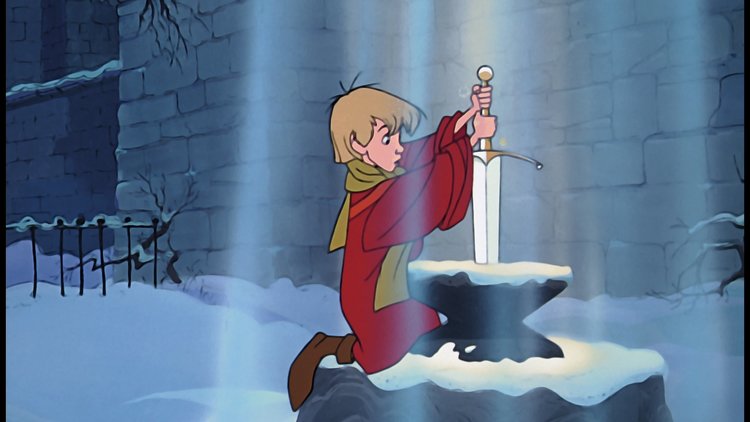 |
| "So help me if this is just some Sword +1, +3 versus Undead!" |
------
So I agree with the general sentiment, that magic items should be unique and interesting, but I disagree with the practical idea that one should not include "generic rulebook stuff". How to make this jive?
First, what's the motivation to cut out the generic item +1? Is it for the players or for the referee? In every game I've run, players are always happy to run across the next Sword +1 or Shield +1 or whatever. Even if they don't immediately use it, they can add it to their "downtime" inventory, they can give it to a favored hireling, or just hold onto it to bribe the dragon instead of using their personal Sword +3 of Whatever Awesomeness.
Likewise, as a player, I'm happy to pick up extra items +1 to add to my inventory for use by my henchmen/hirelings--or, at first level, it's just fucking awesome to finally have a magic thing!
As a corollary ... sometimes I as a player just don't want a weird magic item ... I know, I know, "weaponize floating disc and mending" and all that, and use every item in weird ways, but still, sometimes I just don't see a use for the thing. Maybe someone else does--and I'll be glad to give it to them! But sometimes a Sword +1 would just be kind of generically useful ...
Second, assuming unique magic items is a thing for the referee ... you don't need every item to be magically unique to give a unique description to the item. A Sword +1 can be a sword "marked with the maker's mark of the Waterfall", or it can be a "narrow grey sword with weird Dwarvish runes", or it can be "a flashing scimitar with a spider hilt", etc. etc. etc.
I have some specific traditions of magic-sword forgings in my game that provide ready descriptions for otherwise generic swords. I need more such, surely; and I need the same for other "generic" magic items that could be found in the game; but I've gotten by so far with what I have ...
Third, the randomness of the tables in the book is a large part of the appeal. I had a dungeon that included a staff of power in one of the rooms on the first level because I rolled the 01 on percentile dice for a magic item present, unguarded (likelihood 1%!), and proceeded to roll within 91-95 (Wand/Staff/Rod), and then 22-23 (Staff of Power). Honest rolls. Which meant, when my players found it, that they had a staff of power! Its use was their prerogative ... only just now, six years later, have they finally "used it up". Without rolling it, there's no way in hell I would have placed it there--but with random generation ... well, sometimes adventurers get lucky!
Corollary to that--if you don't like the generic tables, write your own tables specific to your setting. I keep intending to do this for myself ... but really, I have no beef with items +1 (and I don't want to spend the time). My players eat them up. I generally have handy descriptions for them to differentiate one from the next (eh, I sometimes do). Too many?--items get lost. And even the generic magic item tables have a variety of interesting things that players have never seen, or have rarely really gotten a chance to play around with, session after session (Blackleaf in my Greyhame Game has a medallion of ESP 30'. It's the first time for me as a referee ... after 20ish years of D&D? ... to have to deal with it--and definitely the first time for her as a player of maybe five years. She abuses it at every door, and I roll with it ... someday there'll be a monster with an amulet of protection from ESP ... rolled randomly, of course)
------
So call me a conservative in this regard, but I'm fine with a Mace +1 (its head is fashioned to resemble elephants with mighty tusks) and a Ring of Protection +1 (where a stone would be set instead is a piece of a saint's fingerbone). I'll place super-special magic-items here and there in the dungeon where I will, but for any old hoard (and a dungeon-level should hold several), I'll roll randomly just to see what shows up.
Monday, January 29, 2018
Sword of Blood
Inspired by a joke-calculation concerning how much blood it would actually take to forge a sword from the blood of your enemies ... This spell, sword of blood, is a ritual, a concept already in use in games like 5e, but the rules of which for my B/X game I just made up for this post. Maybe I'll rescind or modify them later, but I like the idea for now.
Rituals may be taken by clerics instead of their usual spells, or may take up a slot in a magic-user's or Elf's spellbook of a level equivalent to the ritual's level. Rituals are used in "downtime"--the rites and magic involved are too lengthy to be really useful in an adventure-context, and probably also don't add up to anything usefully gamable within that context. (Also, rituals usually use up large amounts of material components)
Sword of Blood
ritual 4
range: the blood of all humans or humanoids being sacrificed as part of the ritual
components: 500 gold for the "liturgy" of each sacrificial "session"
By the means of this ritual, a cleric or magic-user extracts the iron from the let blood of a sacrificial victim of human or humanoid nature. Each individual's blood produces 1-4 grams of iron; this works out to requiring about 200 victims to provide enough blood for a single sword. (I did say that this was a long term "downtime" activity, unless your cleric or magic-user has the location and means to sacrifice 200 victims all in one go)
I wouldn't tend to worry about the grams themselves, just the number of victims; though the caster will require somewhere to store the iron they're collecting by means of the ritual until they have enough.
When enough iron has been acquired by means of this spell, it can be forged into a sword (or other desired weapon), by the caster if he has the wont and the skill, or by a hired armorer. When the sword has been forged, and a last instance of ritual incanted over it, roll a d20 and consult this table, add +1 to the roll if at least 5000 gold is spent on ornamental trappings for the sword:
1-2 -- the metal was impure and the weapon is worthless
3-4 -- it's a sword, but there's nothing magical about it
5-12 -- it's a sword +1; if the sword is ever destroyed or broken, an incorporeal wight will spring from the fragments, born from the hatred of the spirits trapped within; this spirit will seek out and destroy the sword's creator
13-16 -- it's an intelligent sword +2 of the same alignment as its creator, but it also actively hates its creator; 3 times per day the sword can do extra damage, i.e. for 1-10 rounds, each hit will do x4 damage; if the sword is ever destroyed or broken, a wraith born of the hate of the spirits trapped within will emerge and seek out and destroy the sword's creator
17-20 -- it's an intelligent sword that hates its creator, and acts as a lifedraining sword, i.e. on a hit it may drain 1 life level of energy; but after draining 13 life levels, the blood of those within its iron erupt as a spectre intent on destroying the original caster of the spell; the sword becomes a mere sword +1
It shouldn't need saying, but any Good character attempting to use this spell immediately loses their status as Good, and they also lose one life level, and must seriously atone even to regain their former alignment. Good characters attempting to wield these weapons feel intensely uneasy and treat the magical "plus" as a penalty instead. Surrendering such weapons to the Good cult to be redeemed is worth at least 1000 experience per magical "plus".
------
There is an 01-05 chance that any magical sword (or metal-headed weapon) found in a randomly generated treasure hoard was created by this ritual. Good characters find them uneasy to wield, as above, and may turn them over to the Good cult for "redemption" and experience points.
Moreover, more powerful magic swords of this type actively hate their creators and will seek out their destruction if possible. This would be an excellent hook for future adventures ...
Rituals may be taken by clerics instead of their usual spells, or may take up a slot in a magic-user's or Elf's spellbook of a level equivalent to the ritual's level. Rituals are used in "downtime"--the rites and magic involved are too lengthy to be really useful in an adventure-context, and probably also don't add up to anything usefully gamable within that context. (Also, rituals usually use up large amounts of material components)
 |
| A terrible way to forge a sword ... but it is cinematic |
Sword of Blood
ritual 4
range: the blood of all humans or humanoids being sacrificed as part of the ritual
components: 500 gold for the "liturgy" of each sacrificial "session"
By the means of this ritual, a cleric or magic-user extracts the iron from the let blood of a sacrificial victim of human or humanoid nature. Each individual's blood produces 1-4 grams of iron; this works out to requiring about 200 victims to provide enough blood for a single sword. (I did say that this was a long term "downtime" activity, unless your cleric or magic-user has the location and means to sacrifice 200 victims all in one go)
I wouldn't tend to worry about the grams themselves, just the number of victims; though the caster will require somewhere to store the iron they're collecting by means of the ritual until they have enough.
When enough iron has been acquired by means of this spell, it can be forged into a sword (or other desired weapon), by the caster if he has the wont and the skill, or by a hired armorer. When the sword has been forged, and a last instance of ritual incanted over it, roll a d20 and consult this table, add +1 to the roll if at least 5000 gold is spent on ornamental trappings for the sword:
1-2 -- the metal was impure and the weapon is worthless
3-4 -- it's a sword, but there's nothing magical about it
5-12 -- it's a sword +1; if the sword is ever destroyed or broken, an incorporeal wight will spring from the fragments, born from the hatred of the spirits trapped within; this spirit will seek out and destroy the sword's creator
13-16 -- it's an intelligent sword +2 of the same alignment as its creator, but it also actively hates its creator; 3 times per day the sword can do extra damage, i.e. for 1-10 rounds, each hit will do x4 damage; if the sword is ever destroyed or broken, a wraith born of the hate of the spirits trapped within will emerge and seek out and destroy the sword's creator
17-20 -- it's an intelligent sword that hates its creator, and acts as a lifedraining sword, i.e. on a hit it may drain 1 life level of energy; but after draining 13 life levels, the blood of those within its iron erupt as a spectre intent on destroying the original caster of the spell; the sword becomes a mere sword +1
It shouldn't need saying, but any Good character attempting to use this spell immediately loses their status as Good, and they also lose one life level, and must seriously atone even to regain their former alignment. Good characters attempting to wield these weapons feel intensely uneasy and treat the magical "plus" as a penalty instead. Surrendering such weapons to the Good cult to be redeemed is worth at least 1000 experience per magical "plus".
------
There is an 01-05 chance that any magical sword (or metal-headed weapon) found in a randomly generated treasure hoard was created by this ritual. Good characters find them uneasy to wield, as above, and may turn them over to the Good cult for "redemption" and experience points.
Moreover, more powerful magic swords of this type actively hate their creators and will seek out their destruction if possible. This would be an excellent hook for future adventures ...
Tuesday, November 21, 2017
Eating a Dragon Heart
 |
| Sigurd/Siegfried sucks his thumb after burning it while cooking Fafnir's heart--he is about to understand birdspeech ... |
[after slaying the dragon Fafnir] ... Therewith Sigurd cut out the heart of the worm with the sword called Ridil; but Regin drank of Fafnir's blood, and spake, "Grant me a boon, and do a thing little for thee to do. Bear the heart to the fire, and roast it, and give me thereof to eat."
Then Sigurd went his ways and roasted it on a rod; and when the blood bubbled out he laid his finger thereon to essay it, if it were fully done; and then he set his finger in his mouth, and lo, when the heart-blood of the worm touched his tongue, straightway he knew the voice of all fowls, and heard withal how the wood-peckers chattered in the brake beside him--
"There sittest thou, Sigurd, roasting Fafnir's heart for another, that thou shouldest eat thine ownself, and then thou shouldest become the wisest of all men."
And another spake: "There lies Regin, minded to beguile the man who trusts in him."
But yet again said the third, "Let him smite the head from off him then, and be only lord of all that gold."
And once more the fourth spake and said, "Ah, the wiser were he if he followed after that good counsel, and rode thereafter to Fafnir's lair, and took to him that mighty treasure that lieth there, and then rode over Hindfell, whereas sleeps Brynhild; for there would he get great wisdom. Ah, wise he were, if he did after your redes, and bethought him of his own weal; 'for where wolf's ears are, wolf's teeth are near.'"
Then cried the fifth: "Yea, yea, not so wise is he as I deem him, if he spareth him whose brother he hath slain already."
At last spake the sixth: "Handy and good rede to slay him, and be lord of the treasure!"
Then said Sigurd, "The time is unborn wherein Regin shall be my bane; nay, rather one road shall both these brothers fare."
And therewith he drew his sword Gram and struck off Regin's head. ...
("Chapter XIX: Of the Slaying of Regin, Son of Hreidmar", The Volsung Saga, translated by William Morris and Eirikr Magnusson, 1888, retrieved online from Sacred Texts)
------
Drawing from this instance of Sigurd/Siegfried gaining magical knowledge from the heart of Fafnir (not a true dragon, you might say, being a dwarf transformed by curse into a worm, but bah! a dragon I call him) ... and also from the parallel story of Finn cooking the Salmon of Knowledge, burning his thumb on it, sucking his thumb, and thus gaining knowledge ... in my game, eating the heart of a dragon earns a character magical wisdom, strength, lore, or other strange powers.
Several dragons have been killed over the course of the years, and several hearts eaten, and several powers/advantages gained ... and once I even got a player (my wife!) rolling her eyes at bonuses to her character's attributes, a most coveted use of the wish spell in the ancient days--and she just rolled her eyes! D&D players--you just can't please 'em.
Anyway, for dragon hearts I use a d12 table, because I like the variety without it being overboard. A friend of mine who took to B/X D&D with alacrity and who has hosted a longstanding campaign when I wish to play, took my table and ran with it, adding all kinds of bells and whistles, with saves, percentile dice, etc.--and my characters have taken advantage, believe it well, when we have slain dragons in his game--but I retain the simple d12 table for my game. (Actually, several ... I keep losing them)
So here's the current incarnation:
Eating a Dragon Heart
1 - comprehend languages at will
2 - 1 first level spell, determined at random; can be used even by a character in armor, like an Elf
3 - 1 second level spell, determined at random; can be used even by a character in armor
4 - (1-2) +1 Strength, (3-4) +1 Dexterity, (5-6) +1 Constitution
5 - (1-2) +1 Intelligence, (3-4) +1 Wisdom, (5) +1 INT, +1 Charisma, (6) +1 WIS, +1 CHA
6 - dragon skin, -1 AC, -1 reactions
7 - dragon awe, +1 reactions, enemy Morale -1
8 - dragon power, +1 to hit, +1 to damage
9 - dragon eyes, +1 reactions, charm person 1/day
10 - +1 STR, DEX, CON, max 18
11 - +1 INT, WIS, CHA, max 18
12 - 1 first and 1 second level spell, determined randomly, may be cast by armored characters
Monday, October 9, 2017
d12 More Oddments for Sale
I thought up a few more things than could fit on a d12 roll last night, and I filled in enough for a second table today at work while otherwise stocking shelves mindlessly. I was thinking each session that I would roll 2d12 and take one item from each table for sale that session. Again (per last night's post), these are items that are not regulated by any guild (sages' or magic-users' or any other), nor common enough to have a "market price", so players/characters will have to name a price and either get a reactions-roll as to whether it's enough, or actually role-play some haggling. The general asking price should be at least 100 gp.
Also, again, there's a chance that any item isn't really what the seller says it is, possibly just because the item is some bone claimed to be a saint's bone or a sending bone; or possibly, the item is essentially as-advertised, but defective in a serious way. So:
1 - a dagger fashioned from a killer bee's stinger--essentially a pixie's crysknife--it does 1-3 damage, has enough of the poison sac left for one hit to force a save against poison or die (at +2 on the save), and even if the poison fails, the stinger's barbs force it ever deeper into the wound for 1 additional damage every round, unless an entire round is spent digging it out
2 - a large egg; laid by what, the seller doesn't know, though he probably has some kind of pitch. It might be the egg of an owlbear, a gryphon, a giant eagle, a moa bird, a deinonychus, a demi-dragon, etc. (but it's not reptilian--reptile eggs are soft-shelled and this one is hard-shelled; and yes, a dinosaur is perfectly reasonable, dinosaurs are more birdlike than reptilian, they had feathers dammit). There is a 2 in 6 chance that the egg is inert because it wasn't incubated properly, but would still be worth something as a giant omelet or a sweet painted egg or something
3 - a troll's finger, the largest remaining piece of a destroyed troll, carefully and continuously carved to remain merely a regenerating finger. Sold by an ancient mountain man with an iron stomach who wants to retire--he used the finger as "emergency rations", cutting off a piece here or there to supplement meager rations with protein (no worries, stomach acids denature even troll proteins ...). If not properly carved for a week, it grows into an entire hand that seeks to strangle the character holding it, and then escape into the wilderness to regrow
4 - a vial of green slime; can be thrown like a flask of oil, and if it strikes and breaks on a creature, it begins its process of dissolving armor and clothes and turning flesh into another green slime colony; the colony within the vial is small, and so it only has 1 HD, and it takes twice as long (e.g. 2-8 rds) to do its slime thing
5 - 50% chance, either a piece of smoked salmon of knowledge OR fermented sleeper shark; the salmon of knowledge grants a single use of a random spell, magic-user or clerical; the sleeper shark grants a single use of contact higher plane as the magic-user spell (including esp. the insanity chance!)--those sharks have been around since the beginning of the world, and spoken with ancient aboleths and other strange things.
6 - a ghost pepper, so powerfully spicy that it allows contact with the spirit realm. It's unclear whether this means that eating the pepper raises one to a spiritual plane because of the pain (so like to death), or whether the oils within the pepper are so efficacious that even spirits might be affected by a sword smeared with their residue. That, or both might be possible. Regardless, eating the pepper raw causes 1-4 damage from sheer misery.
7 - the fingerbone (or other like, small remains) of a Good saint, Lawful holy man, or Natural mystic; incorporating it into a holy symbol grants +1 on the roll for number of hit dice affected by a turn undead attempt; possibly it could also be incorporated into a weapon (in the hilts of a sword, for instance, or a mace's head) to allow that weapon to strike undead otherwise struck only by silver or magical weapons
8 - a nosegay of dragonrose; ("dragonrose" is lifted from the animated film "The Flight of Dragons" (1982), a late Rankin & Bass project, and one of my favorite movies from my childhood; this clip has nothing to do with dragronrose, but is indicative of the film's imaginative nature) anyway, dragonrose has a pungent scent, and properties that put even dragons to sleep (given enough quantity); its effect on other creatures, even those of serpentine or lizardlike nature, might be comparable; the nosegay lasts 1-3 weeks before withering away
9 - a sending bone--some kind of spirit has been trapped within this bone (likely smaller than a femur, but larger than a knucklebone), and not necessarily the original owner of the bone. The spirit can be sent with a message to any creature whose name is known, and collect a short response. Unfortunately, such things are finicky creatures, and there is a 1 in 20 chance that the spirit goes berserk and attacks the named individual. Treat it as a shadow
10 - a roll of bark from an Elvish willow grove; it may be chewed directly, brewed into a tea, or worked into a poultice and applied directly to a wound; chewing it cures 1-2 hp of wounds, the tea cures 2-4 hp of wounds but requires a fire and a skin of water, and takes 1 turn to brew, while the poultice must be made over the course of a day, but can be applied to conscious or unconscious characters' wounds to cure 2-4 hp of wounds.
11 - a rowan shield; it performs as a normal shield (-1 AC, may be broken to prevent a "hit" from dealing damage)--but, rowan has a special magical property too. A rowan shield may be "broken" by a character to automatically save on one save against spells ("broken" in that it is sapped of vital forces and left as a brittle husk with no serious protective powers)
12 - a Ring of Unseen Servant OR Referee's Choice; the Ring produces an unseen servant on command (invisible spirit that can do simple things like sweep the floor, do dishes, take arrows out of an enemy's quiver, etc.--but any attack against it dispels it, and it cannot itself attack)--but, there is a distinct possibility that the Ring is actually a Djinni Ring, and that, as an heirloom passed down over several generations, its real power has been forgotten. The Djinni is happy to maintain the charade, masquerading as an unseen servant to quickly complete easy tasks and then return to its own leisure; it would of course be displeased to be discovered, but would have little legitimate pushback against the Ring's owner ... If this item is rolled, I would suggest a new item be created for future rolls, or that the referee pick an item from this or the previous list that seem particularly appropriate to the moment of the campaign (be that best served by usefulness or hilarity or otherwise ...)
Also, again, there's a chance that any item isn't really what the seller says it is, possibly just because the item is some bone claimed to be a saint's bone or a sending bone; or possibly, the item is essentially as-advertised, but defective in a serious way. So:
1 - a dagger fashioned from a killer bee's stinger--essentially a pixie's crysknife--it does 1-3 damage, has enough of the poison sac left for one hit to force a save against poison or die (at +2 on the save), and even if the poison fails, the stinger's barbs force it ever deeper into the wound for 1 additional damage every round, unless an entire round is spent digging it out
2 - a large egg; laid by what, the seller doesn't know, though he probably has some kind of pitch. It might be the egg of an owlbear, a gryphon, a giant eagle, a moa bird, a deinonychus, a demi-dragon, etc. (but it's not reptilian--reptile eggs are soft-shelled and this one is hard-shelled; and yes, a dinosaur is perfectly reasonable, dinosaurs are more birdlike than reptilian, they had feathers dammit). There is a 2 in 6 chance that the egg is inert because it wasn't incubated properly, but would still be worth something as a giant omelet or a sweet painted egg or something
3 - a troll's finger, the largest remaining piece of a destroyed troll, carefully and continuously carved to remain merely a regenerating finger. Sold by an ancient mountain man with an iron stomach who wants to retire--he used the finger as "emergency rations", cutting off a piece here or there to supplement meager rations with protein (no worries, stomach acids denature even troll proteins ...). If not properly carved for a week, it grows into an entire hand that seeks to strangle the character holding it, and then escape into the wilderness to regrow
4 - a vial of green slime; can be thrown like a flask of oil, and if it strikes and breaks on a creature, it begins its process of dissolving armor and clothes and turning flesh into another green slime colony; the colony within the vial is small, and so it only has 1 HD, and it takes twice as long (e.g. 2-8 rds) to do its slime thing
5 - 50% chance, either a piece of smoked salmon of knowledge OR fermented sleeper shark; the salmon of knowledge grants a single use of a random spell, magic-user or clerical; the sleeper shark grants a single use of contact higher plane as the magic-user spell (including esp. the insanity chance!)--those sharks have been around since the beginning of the world, and spoken with ancient aboleths and other strange things.
6 - a ghost pepper, so powerfully spicy that it allows contact with the spirit realm. It's unclear whether this means that eating the pepper raises one to a spiritual plane because of the pain (so like to death), or whether the oils within the pepper are so efficacious that even spirits might be affected by a sword smeared with their residue. That, or both might be possible. Regardless, eating the pepper raw causes 1-4 damage from sheer misery.
7 - the fingerbone (or other like, small remains) of a Good saint, Lawful holy man, or Natural mystic; incorporating it into a holy symbol grants +1 on the roll for number of hit dice affected by a turn undead attempt; possibly it could also be incorporated into a weapon (in the hilts of a sword, for instance, or a mace's head) to allow that weapon to strike undead otherwise struck only by silver or magical weapons
8 - a nosegay of dragonrose; ("dragonrose" is lifted from the animated film "The Flight of Dragons" (1982), a late Rankin & Bass project, and one of my favorite movies from my childhood; this clip has nothing to do with dragronrose, but is indicative of the film's imaginative nature) anyway, dragonrose has a pungent scent, and properties that put even dragons to sleep (given enough quantity); its effect on other creatures, even those of serpentine or lizardlike nature, might be comparable; the nosegay lasts 1-3 weeks before withering away
9 - a sending bone--some kind of spirit has been trapped within this bone (likely smaller than a femur, but larger than a knucklebone), and not necessarily the original owner of the bone. The spirit can be sent with a message to any creature whose name is known, and collect a short response. Unfortunately, such things are finicky creatures, and there is a 1 in 20 chance that the spirit goes berserk and attacks the named individual. Treat it as a shadow
10 - a roll of bark from an Elvish willow grove; it may be chewed directly, brewed into a tea, or worked into a poultice and applied directly to a wound; chewing it cures 1-2 hp of wounds, the tea cures 2-4 hp of wounds but requires a fire and a skin of water, and takes 1 turn to brew, while the poultice must be made over the course of a day, but can be applied to conscious or unconscious characters' wounds to cure 2-4 hp of wounds.
11 - a rowan shield; it performs as a normal shield (-1 AC, may be broken to prevent a "hit" from dealing damage)--but, rowan has a special magical property too. A rowan shield may be "broken" by a character to automatically save on one save against spells ("broken" in that it is sapped of vital forces and left as a brittle husk with no serious protective powers)
12 - a Ring of Unseen Servant OR Referee's Choice; the Ring produces an unseen servant on command (invisible spirit that can do simple things like sweep the floor, do dishes, take arrows out of an enemy's quiver, etc.--but any attack against it dispels it, and it cannot itself attack)--but, there is a distinct possibility that the Ring is actually a Djinni Ring, and that, as an heirloom passed down over several generations, its real power has been forgotten. The Djinni is happy to maintain the charade, masquerading as an unseen servant to quickly complete easy tasks and then return to its own leisure; it would of course be displeased to be discovered, but would have little legitimate pushback against the Ring's owner ... If this item is rolled, I would suggest a new item be created for future rolls, or that the referee pick an item from this or the previous list that seem particularly appropriate to the moment of the campaign (be that best served by usefulness or hilarity or otherwise ...)
d12 Semi-Magical Items For Sale at the Local Market
These are the kinds of items that aren't quite controlled by sages' or magic-users' guilds. They don't require a Wizard or Wizard-Lord to create, or they can be found/uncovered locally, or they're the kind of thing that adventurers might sell in local markets to be resold to other adventurers. There are no set "market prices" for these goods because they're too rare for any kind of "secure" price/profit. Rather, they must be haggled over (whether that be offer a price and roll a reactions roll, OR actually going through the motions of haggling with price/counter-price until both parties are satisfied or mutually incompatible). I would definitely not allow offers below 100 gp for any of these things, however (unless, perhaps, they're counterfeit ...)
Because these are being sold by free yeomen, traveling men, hunters, etc. at the local market--and not vetted by any sage or magic-users' guild--there is no guarantee that any particular item is actually what it's advertised as. The root of bryony, for instance, might actually be a human-like root of ginger; or it might even be an insidious imp, hoping to tempt some poor buyer down the path to Evil. Likewise, the memory moss might be exactly as advertised, or in fact be some kind of dark moss that is deadly-poisonous when eaten. Once acquired, they may, of course, be taken to a sage to be certainly identified--but the sage will likely charge the usual rate of 2000 gp/month of investigation!
1 - a giant-killer-bee honeycomb, which, if eaten all at once, cures 1-4 hit points; regardless of whether this is the promised killer bee honey, there is a 25% chance that the honey was made by bees with access to opium, lotus, or another like drug, and that it causes mild hallucinations when ingested
2 - part of a dragon's heart; normally dragon hearts are things of power that, when eaten by mortals, imbue the eater with something of the dragon's majesty (like the speech of birds or snakes, access to a single spell, or improved attributes, etc.). This particular item, being only a part, will grant the ability to comprehend languages for 2-12 turns (e.g. Siegfried sucking his thumb, burned on Fafnir's heart, which grants him comprehension of birdsong)
3 - keeping with dragons for a moment, a vial of dragon's blood is being hawked here. Everyone knows that dragon's blood is deadly poisonous, so that merely touching it can kill a man (or is that just a legend?); regardless, this vial, if poured over a weapon, should allow a single hit to poison an enemy so that they die immediately if they fail a save vs. poison. Where this vial really contains dragon's blood or not, there is a 10% chance that when applying it to a weapon, a character accidentally poisons him/herself (unless the character is an Assassin, or in some other way a qualified poisoner)--moreover, the sale of this deadly poison is, naturally, very illegal, and its price will be higher than other items, and its sale and possession must be kept in strictest secrecy
4 - a quill pen cut from the feather of an ancient raven; the magic inherent in the raven and crow tribes is such that a spellcaster (magic-user, elf, cleric, etc.) may use this quill to pen one scroll of one spell from first to third level, spending only 100 gp per level of the spell--and may do so without being the minimum level normally needed to scribe scrolls (e.g. 5th for ACKS, 9th for B/X, etc.)
5 - a handful of memory moss ("obliviax"); assuming this really is what is being sold, a character who eats it entirely will be granted a single use of a random spell from first through fourth level (regardless of being a magic-user or not), but will also be inflicted with some of the memories of the individual brain-drained by the moss. Such memories may be traumatic, or a kind of treasure map, or anything, really.
6 - a lantern with treated fire beetle glands which, if shaken, will shine as a lantern for 24 turns (duration of a lantern) because of the alchemical processes used to preserve the fire beetle glands' light-emitting properties. Assuming this is not a huckster selling you an accidental shake-em-up alchemists' fire bomb, it will have from 2 to 8 "charges" before the reagents within cease to react.
7 - a bottle of Laurantha's Enchanted Mead (or some imitator's knock-off); the bottle contains enough mead or wine to pour four goblets-worth of drink. Drinking any one goblet is enough to knock a sober man to drunkenness (save vs. poison to negate, -1 cumulative penalty and a new save per goblet drunk). A bad knock-off might leave a man blind for drinking it ...
OR
a bottle of the Mead of Poetry--if drunk in its entirety by one character, that character gains a +1 Charisma (even beyond 18), has a knack for verse forevermore (regardless of the player's ability, the character may speak poetically whenever they wish), and once over the next year may utter a doom (this can be a geas, a prophecy, some kind of unique boon tied to a nickname, etc., along the lines of what a skald or bard might proclaim)
8 - not done with dragons, apparently, a dragon's tooth which, if planted, will sprout a fully armed warrior which will either (on a good reactions roll) swear loyalty to the planting character, or (on a bad reactions roll) go berserk and attack the nearest creature. Legends tell that throwing a stone at a creature near it will force the earth-sprung warrior to attack that creature--but such tales are garbled things of old wives' tales and half-remembered epics from an earlier age
9 - a unicorn's horn, which will act as a wand of poison detection with 3-10 (d8+2) charges; OR, using up 3 charges by grinding up part of the horn and dissolving it in water or wine, one may make a potion of neutralize poison that most assuredly neutralizes all poisons. Given the unicorn's status as a symbol of innocence and purity, a Good character may not participate in the commodification of a unicorn without the express purpose of putting the horn to rest, without any benefit from its uses as a panacea.
10 - a root of bryony, properly harvested and trimmed on the days of the moon; the sages say that if it is buried in a graveyard and fed milk for 30 days, and then dug up and wound with a dead man's winding sheet, the root should become a Mandragora (a kind of familiar spirit); this root-spirit must be kept at the side of its creator. Whenever the creator is affected by something requiring a saving throw, he may choose to succeed automatically in a process that destroys the Mandragora. Furthermore, if the Mandragora is separated from its creator by more than 60 feet, it utters a death shriek forcing everyone within 60 feet to save vs. death or die, the creator included.
11 - a sprig of nightshade, properly harvested; the ancient Masters of Magic assure us of nightshade's use as a protection against enchantments, and so wearing a sprig of its flowers grants a +1 on all saves against hostile magic--assuming the blooms really are nightshade. The flowers last 1-4 weeks before crumbling into dust.
12 - a vial of water from the Well of Forgetfulness, of from the Well of Memory (50% chance for either, no guarantee the seller remembers which it is); one erases memories, leaving a character "catatonic" and inactive for 1-3 turns, and erasing one random spell from memory for the day if the drinker is a spellcaster; the other causes memories to surge forth, leaving a character overwhelmed by memory and confused (as the spell) for 2-7 rounds, though it does "re-memorize" one random spell for a spellcaster, from those already cast for the day. Other things beyond spells may be "forgotten" or "remembered" per referee fiat, though it should only be one "item" per vial.
Because these are being sold by free yeomen, traveling men, hunters, etc. at the local market--and not vetted by any sage or magic-users' guild--there is no guarantee that any particular item is actually what it's advertised as. The root of bryony, for instance, might actually be a human-like root of ginger; or it might even be an insidious imp, hoping to tempt some poor buyer down the path to Evil. Likewise, the memory moss might be exactly as advertised, or in fact be some kind of dark moss that is deadly-poisonous when eaten. Once acquired, they may, of course, be taken to a sage to be certainly identified--but the sage will likely charge the usual rate of 2000 gp/month of investigation!
1 - a giant-killer-bee honeycomb, which, if eaten all at once, cures 1-4 hit points; regardless of whether this is the promised killer bee honey, there is a 25% chance that the honey was made by bees with access to opium, lotus, or another like drug, and that it causes mild hallucinations when ingested
2 - part of a dragon's heart; normally dragon hearts are things of power that, when eaten by mortals, imbue the eater with something of the dragon's majesty (like the speech of birds or snakes, access to a single spell, or improved attributes, etc.). This particular item, being only a part, will grant the ability to comprehend languages for 2-12 turns (e.g. Siegfried sucking his thumb, burned on Fafnir's heart, which grants him comprehension of birdsong)
3 - keeping with dragons for a moment, a vial of dragon's blood is being hawked here. Everyone knows that dragon's blood is deadly poisonous, so that merely touching it can kill a man (or is that just a legend?); regardless, this vial, if poured over a weapon, should allow a single hit to poison an enemy so that they die immediately if they fail a save vs. poison. Where this vial really contains dragon's blood or not, there is a 10% chance that when applying it to a weapon, a character accidentally poisons him/herself (unless the character is an Assassin, or in some other way a qualified poisoner)--moreover, the sale of this deadly poison is, naturally, very illegal, and its price will be higher than other items, and its sale and possession must be kept in strictest secrecy
4 - a quill pen cut from the feather of an ancient raven; the magic inherent in the raven and crow tribes is such that a spellcaster (magic-user, elf, cleric, etc.) may use this quill to pen one scroll of one spell from first to third level, spending only 100 gp per level of the spell--and may do so without being the minimum level normally needed to scribe scrolls (e.g. 5th for ACKS, 9th for B/X, etc.)
5 - a handful of memory moss ("obliviax"); assuming this really is what is being sold, a character who eats it entirely will be granted a single use of a random spell from first through fourth level (regardless of being a magic-user or not), but will also be inflicted with some of the memories of the individual brain-drained by the moss. Such memories may be traumatic, or a kind of treasure map, or anything, really.
6 - a lantern with treated fire beetle glands which, if shaken, will shine as a lantern for 24 turns (duration of a lantern) because of the alchemical processes used to preserve the fire beetle glands' light-emitting properties. Assuming this is not a huckster selling you an accidental shake-em-up alchemists' fire bomb, it will have from 2 to 8 "charges" before the reagents within cease to react.
7 - a bottle of Laurantha's Enchanted Mead (or some imitator's knock-off); the bottle contains enough mead or wine to pour four goblets-worth of drink. Drinking any one goblet is enough to knock a sober man to drunkenness (save vs. poison to negate, -1 cumulative penalty and a new save per goblet drunk). A bad knock-off might leave a man blind for drinking it ...
OR
a bottle of the Mead of Poetry--if drunk in its entirety by one character, that character gains a +1 Charisma (even beyond 18), has a knack for verse forevermore (regardless of the player's ability, the character may speak poetically whenever they wish), and once over the next year may utter a doom (this can be a geas, a prophecy, some kind of unique boon tied to a nickname, etc., along the lines of what a skald or bard might proclaim)
8 - not done with dragons, apparently, a dragon's tooth which, if planted, will sprout a fully armed warrior which will either (on a good reactions roll) swear loyalty to the planting character, or (on a bad reactions roll) go berserk and attack the nearest creature. Legends tell that throwing a stone at a creature near it will force the earth-sprung warrior to attack that creature--but such tales are garbled things of old wives' tales and half-remembered epics from an earlier age
9 - a unicorn's horn, which will act as a wand of poison detection with 3-10 (d8+2) charges; OR, using up 3 charges by grinding up part of the horn and dissolving it in water or wine, one may make a potion of neutralize poison that most assuredly neutralizes all poisons. Given the unicorn's status as a symbol of innocence and purity, a Good character may not participate in the commodification of a unicorn without the express purpose of putting the horn to rest, without any benefit from its uses as a panacea.
10 - a root of bryony, properly harvested and trimmed on the days of the moon; the sages say that if it is buried in a graveyard and fed milk for 30 days, and then dug up and wound with a dead man's winding sheet, the root should become a Mandragora (a kind of familiar spirit); this root-spirit must be kept at the side of its creator. Whenever the creator is affected by something requiring a saving throw, he may choose to succeed automatically in a process that destroys the Mandragora. Furthermore, if the Mandragora is separated from its creator by more than 60 feet, it utters a death shriek forcing everyone within 60 feet to save vs. death or die, the creator included.
11 - a sprig of nightshade, properly harvested; the ancient Masters of Magic assure us of nightshade's use as a protection against enchantments, and so wearing a sprig of its flowers grants a +1 on all saves against hostile magic--assuming the blooms really are nightshade. The flowers last 1-4 weeks before crumbling into dust.
12 - a vial of water from the Well of Forgetfulness, of from the Well of Memory (50% chance for either, no guarantee the seller remembers which it is); one erases memories, leaving a character "catatonic" and inactive for 1-3 turns, and erasing one random spell from memory for the day if the drinker is a spellcaster; the other causes memories to surge forth, leaving a character overwhelmed by memory and confused (as the spell) for 2-7 rounds, though it does "re-memorize" one random spell for a spellcaster, from those already cast for the day. Other things beyond spells may be "forgotten" or "remembered" per referee fiat, though it should only be one "item" per vial.
Subscribe to:
Posts (Atom)