I've seen some posts in the OSR blogosphere about initiative that are interesting in their takes on the idea, but to which I want to respond ...
In Dungeons and Dragons, of course, "initiative" is the roll that one makes at the beginning of combat (either once, or every round of combat, depending on editions ...) which determines the order of combatants and their actions.
Noisms at Monsters and Manuals talks about it directly in "Seizing the Initiative", in which he points out that "initiative" is a thing that one can actually observe "being seized" in sports matches or in historical accounts of battle, even if the precise ... Platonic ideal, one could say ... cannot be directly observed. In a match between two teams, one of them suddenly takes charge seemingly of everything and destroys the other team. This is not modeled well in the D&D "roll for initiative" rule, he argues, and might better be modeled by some action that could be taken by players or NPC enemies to "seize the initiative" for their team and ensure that they act first (until the initiative is taken back).
Emmy Allen at Cavegirl's Game Stuff has an excellent post about how RPGs fail to model the realities of skirmishes and combat when one has actually partaken in modern recreations of melee combats with swords, spears, shields, etc ("Shit games don't get about combat situations"). She doesn't talk about initiative in particular, so much as "reach" weapons (spears), missile weapons, shield walls, and formations in general, and their effects on the people involved in a combat. But these things are basic parts of "initiative" ... some D&D games use "reach" as the deciding factor for "initiative", i.e. spears always strike before swords ... AD&D complicated things by having smaller/faster weapons strike first after the initial round, though this is not unreasonable when considering the effect of the Spanish rodelleros (using sword and buckler) against pike formations in the 16th C.
And just recently, Patrick Stuart at False Machine has written an idea for initiative in which it is literally a physical thing carried by the characters which can be seized back and forth, OR as a mechanic related to how much information the player/characters are trying to ascertain before they act, this post being, "Physical Initiative and Query Initiative". In a sense, I quite like the Physical Initiative--you could tie it to a standard bearer-character, or a drum/pipes character keeping time for the march, and if they are captured or killed, they can no longer provide initiative for their own team (Patrick has even more bizarre and interesting versions that are worth checking out).
------
So these are all interesting ways to think about what D&D or its descendants are modeling, and about how one might model things in one's own game to better match what one thinks "initiative" is (or more broadly, just to remember that any game mechanic can be fiddled with, changed, or forgotten, to fit what you want to happen in your game!).
But, I think this quibbling over "initiative" as a mechanic actually misses the initiative of those playing the game. Sure, in my game as in most "OSR" games, a d6 is rolled each round, one for the player/characters, one for the monsters they're fighting, and the higher result wins. There are lots of fiddly particulars depending on the referee--Aleksandr Revzin has the players win on a tied roll; I ask magic-users to declare spells before initiative is rolled, and if their side loses initiative and they get struck by an attack, their spell fizzles; also, concerning tied rolls, I have all attacks happen simultaneously, so that even those "killed" in the round still get their attacks off.
All of this is largely cosmetic, though.
Initiative proper is whether the players understand what's going on well enough in the melee to coordinate their attacks. Better yet, initiative is the players having planned the melee before hand, lured the monsters to where they want them to be, and then to attack them with maximum force.
A die roll, you go first/they go first doesn't matter much when one side has overwhelming odds. Players who understand that, set the situation up to have overwhelming odds, and then engage--those are the players who actually have the initiative.
As referees, truthfully, we could always have the initiative. We have fuller knowledge of the environment, of the numbers the goblin (or whatever) tribe could bring to bear when fully alarmed, of the tricks, traps, and spells that can be brought to bear against the players. But the game is designed to allow the players to have the initiative (usually); they enter the goblin-caves of their own will; they are the ones sneaking around, choosing where to go; if they set off the alarm, so be it, but they have their own wits about them to try to silence any alarm they can.
Even when they do end up in melee combat, the player/characters can take the initiative. Stand in the hallway rather than the broad chamber so you can set up an un-flankable battle-line; lay down flaming oil to keep enemies off your flank when you can't withdraw in time; focus attacks on one enemy at a time to make sure they go down, rather than dividing attention among multiple foes; all of these and more are tactics that will see a party through, regardless of what they roll for initiative any particular round.
I don't know how many combats I've watched as a referee in which players just attack whatever, and nobody takes the initiative to direct their fellows as to the best course of action. Melees like that go fine against goblins ... but against well coordinated enemies, they tend to go poorly. I think initiative is already in the hands of the players ... the dice roll is just there to keep things from being stale (yeah, don't get me started on waiting an hour to get back around to my turn in 3e/Pathfinder/5e!!)
Showing posts with label osr. Show all posts
Showing posts with label osr. Show all posts
Monday, October 22, 2018

Sunday, May 13, 2018
A Generic Old Sword +1
I've occasionally seen the argument bandied about, that a generic Sword +1 (or any magic item +1) is just about the worst kind of magic item that can be found in the game.
The sense that I take from these statements is that magic items should all be interesting and unique, and an item +1 cheapens magic to just another game stat.
I agree in general with the sentiment. Magic should be unique and interesting! So what I used to do, back in high school, was never to give out any magical item unless I had carefully placed it in my dungeon. I remember the party was once forced to fight a demon that was harmed only by magical weapons with the single Dagger +1, which I had placed in a dungeon somewhere elsewhere ...
... one of the players was later so desperate for magic that other players (okay, I was one of them that session) played a joke on him by casting continual flame on a quiver of arrows and making them seem like some kind of flaming arrow.
Sure, you're right--that Dagger +1, even though it was the only magic item held by a party of 6 or so ~4th level characters, didn't actually have a name or anything. It was still just an item +1 ... but its magic still made that encounter more interesting ...
------
So I agree with the general sentiment, that magic items should be unique and interesting, but I disagree with the practical idea that one should not include "generic rulebook stuff". How to make this jive?
First, what's the motivation to cut out the generic item +1? Is it for the players or for the referee? In every game I've run, players are always happy to run across the next Sword +1 or Shield +1 or whatever. Even if they don't immediately use it, they can add it to their "downtime" inventory, they can give it to a favored hireling, or just hold onto it to bribe the dragon instead of using their personal Sword +3 of Whatever Awesomeness.
Likewise, as a player, I'm happy to pick up extra items +1 to add to my inventory for use by my henchmen/hirelings--or, at first level, it's just fucking awesome to finally have a magic thing!
As a corollary ... sometimes I as a player just don't want a weird magic item ... I know, I know, "weaponize floating disc and mending" and all that, and use every item in weird ways, but still, sometimes I just don't see a use for the thing. Maybe someone else does--and I'll be glad to give it to them! But sometimes a Sword +1 would just be kind of generically useful ...
Second, assuming unique magic items is a thing for the referee ... you don't need every item to be magically unique to give a unique description to the item. A Sword +1 can be a sword "marked with the maker's mark of the Waterfall", or it can be a "narrow grey sword with weird Dwarvish runes", or it can be "a flashing scimitar with a spider hilt", etc. etc. etc.
I have some specific traditions of magic-sword forgings in my game that provide ready descriptions for otherwise generic swords. I need more such, surely; and I need the same for other "generic" magic items that could be found in the game; but I've gotten by so far with what I have ...
Third, the randomness of the tables in the book is a large part of the appeal. I had a dungeon that included a staff of power in one of the rooms on the first level because I rolled the 01 on percentile dice for a magic item present, unguarded (likelihood 1%!), and proceeded to roll within 91-95 (Wand/Staff/Rod), and then 22-23 (Staff of Power). Honest rolls. Which meant, when my players found it, that they had a staff of power! Its use was their prerogative ... only just now, six years later, have they finally "used it up". Without rolling it, there's no way in hell I would have placed it there--but with random generation ... well, sometimes adventurers get lucky!
Corollary to that--if you don't like the generic tables, write your own tables specific to your setting. I keep intending to do this for myself ... but really, I have no beef with items +1 (and I don't want to spend the time). My players eat them up. I generally have handy descriptions for them to differentiate one from the next (eh, I sometimes do). Too many?--items get lost. And even the generic magic item tables have a variety of interesting things that players have never seen, or have rarely really gotten a chance to play around with, session after session (Blackleaf in my Greyhame Game has a medallion of ESP 30'. It's the first time for me as a referee ... after 20ish years of D&D? ... to have to deal with it--and definitely the first time for her as a player of maybe five years. She abuses it at every door, and I roll with it ... someday there'll be a monster with an amulet of protection from ESP ... rolled randomly, of course)
------
So call me a conservative in this regard, but I'm fine with a Mace +1 (its head is fashioned to resemble elephants with mighty tusks) and a Ring of Protection +1 (where a stone would be set instead is a piece of a saint's fingerbone). I'll place super-special magic-items here and there in the dungeon where I will, but for any old hoard (and a dungeon-level should hold several), I'll roll randomly just to see what shows up.
The sense that I take from these statements is that magic items should all be interesting and unique, and an item +1 cheapens magic to just another game stat.
I agree in general with the sentiment. Magic should be unique and interesting! So what I used to do, back in high school, was never to give out any magical item unless I had carefully placed it in my dungeon. I remember the party was once forced to fight a demon that was harmed only by magical weapons with the single Dagger +1, which I had placed in a dungeon somewhere elsewhere ...
... one of the players was later so desperate for magic that other players (okay, I was one of them that session) played a joke on him by casting continual flame on a quiver of arrows and making them seem like some kind of flaming arrow.
Sure, you're right--that Dagger +1, even though it was the only magic item held by a party of 6 or so ~4th level characters, didn't actually have a name or anything. It was still just an item +1 ... but its magic still made that encounter more interesting ...
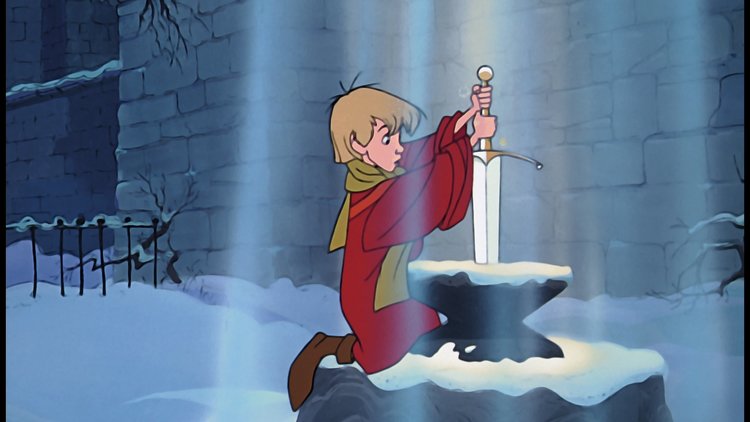 |
| "So help me if this is just some Sword +1, +3 versus Undead!" |
------
So I agree with the general sentiment, that magic items should be unique and interesting, but I disagree with the practical idea that one should not include "generic rulebook stuff". How to make this jive?
First, what's the motivation to cut out the generic item +1? Is it for the players or for the referee? In every game I've run, players are always happy to run across the next Sword +1 or Shield +1 or whatever. Even if they don't immediately use it, they can add it to their "downtime" inventory, they can give it to a favored hireling, or just hold onto it to bribe the dragon instead of using their personal Sword +3 of Whatever Awesomeness.
Likewise, as a player, I'm happy to pick up extra items +1 to add to my inventory for use by my henchmen/hirelings--or, at first level, it's just fucking awesome to finally have a magic thing!
As a corollary ... sometimes I as a player just don't want a weird magic item ... I know, I know, "weaponize floating disc and mending" and all that, and use every item in weird ways, but still, sometimes I just don't see a use for the thing. Maybe someone else does--and I'll be glad to give it to them! But sometimes a Sword +1 would just be kind of generically useful ...
Second, assuming unique magic items is a thing for the referee ... you don't need every item to be magically unique to give a unique description to the item. A Sword +1 can be a sword "marked with the maker's mark of the Waterfall", or it can be a "narrow grey sword with weird Dwarvish runes", or it can be "a flashing scimitar with a spider hilt", etc. etc. etc.
I have some specific traditions of magic-sword forgings in my game that provide ready descriptions for otherwise generic swords. I need more such, surely; and I need the same for other "generic" magic items that could be found in the game; but I've gotten by so far with what I have ...
Third, the randomness of the tables in the book is a large part of the appeal. I had a dungeon that included a staff of power in one of the rooms on the first level because I rolled the 01 on percentile dice for a magic item present, unguarded (likelihood 1%!), and proceeded to roll within 91-95 (Wand/Staff/Rod), and then 22-23 (Staff of Power). Honest rolls. Which meant, when my players found it, that they had a staff of power! Its use was their prerogative ... only just now, six years later, have they finally "used it up". Without rolling it, there's no way in hell I would have placed it there--but with random generation ... well, sometimes adventurers get lucky!
Corollary to that--if you don't like the generic tables, write your own tables specific to your setting. I keep intending to do this for myself ... but really, I have no beef with items +1 (and I don't want to spend the time). My players eat them up. I generally have handy descriptions for them to differentiate one from the next (eh, I sometimes do). Too many?--items get lost. And even the generic magic item tables have a variety of interesting things that players have never seen, or have rarely really gotten a chance to play around with, session after session (Blackleaf in my Greyhame Game has a medallion of ESP 30'. It's the first time for me as a referee ... after 20ish years of D&D? ... to have to deal with it--and definitely the first time for her as a player of maybe five years. She abuses it at every door, and I roll with it ... someday there'll be a monster with an amulet of protection from ESP ... rolled randomly, of course)
------
So call me a conservative in this regard, but I'm fine with a Mace +1 (its head is fashioned to resemble elephants with mighty tusks) and a Ring of Protection +1 (where a stone would be set instead is a piece of a saint's fingerbone). I'll place super-special magic-items here and there in the dungeon where I will, but for any old hoard (and a dungeon-level should hold several), I'll roll randomly just to see what shows up.
Sunday, April 15, 2018
11-66 Table for Fighter Abilities at First Level
I wrote this table back in December, and only just rediscovered it. I was reading Jon Peterson's Playing at the World at the time, which is a history of our hobby from its roots in wargaming up through the early years of D&D. Alas, I cannot find the reference in the book at the moment, but apparently a number of referees came up with variant abilities for the Fighting-Man class to roll at first level, to help distinguish one from the next, somewhat in the way that Magic-Users and Clerics are distinguished by their choice of spells.
I was quite taken with the idea, and I thought an 11-66 table, with 36 entries, would provide enough variety for few fighters to be the same, but not take too long to write (also, I have a fondness for 11-66 tables after playing so much of Avalon Hill's Samurai, which uses one for random events each turn). So this is what I came up with; it probably could use a bit more creativity (like Zak S.' random advancement Alternative Fighter), but I'm still using bog-standard fighters in my game:
Fighter Abilities
When generating a fighter-character at first level, roll once on this table using 2d6. Read one as the tens and one as the ones.
11 +1 to hit with swords
12 +1 to hit with pole arms
13 +1 to hit with axes
14 +1 to hit with maces
15 +1 to hit with bows
16 +1 to hit with slings
21 +1 to hit with crossbows
22 +1 to hit with spears and javelins
23 +1 to hit with daggers
24 +1 to hit with hammers
25 +1 to hit in melee
26 +1 to hit with missiles
31 -1 AC with shields
32 +1 damage in melee
33 +1 damage with missiles
34 +1 damage
35 +1 to hit
36 +1 to hit when fighting alongside a companion
41 -1 AC in mail armor
42 -1 AC in plate armor
43 grant -1 AC from your shield to your companion next to you
44 may climb sheer surfaces as a same-level thief when in leather armor
45 may move silently/hide in shadows as a same-level thief when in leather armor
46 may open locks as a same-level thief (when not wearing gauntlets)
51 knows one first level magic-user spell (cannot cast it while armored)
52 knows one first level cleric spell
53 may turn undead as a first level cleric
54 +1 hp per hit die
55 may dual-wield weapons for -1 AC
56 may dual-wield weapons for +1 to hit
61 eldritch aura--may use normal weapons to strike creatures only struck by magical weapons
62 25 gp income per month
63 100 gp income per month
64 knightly title--some discretion as to what this entails, but certainly deference from inferiors, exemption from taxation or some other legal burden, access to a higher social circle, etc.
65 +1 morale to followers
66 +1 to number of retainers one may lead
I was quite taken with the idea, and I thought an 11-66 table, with 36 entries, would provide enough variety for few fighters to be the same, but not take too long to write (also, I have a fondness for 11-66 tables after playing so much of Avalon Hill's Samurai, which uses one for random events each turn). So this is what I came up with; it probably could use a bit more creativity (like Zak S.' random advancement Alternative Fighter), but I'm still using bog-standard fighters in my game:
Fighter Abilities
When generating a fighter-character at first level, roll once on this table using 2d6. Read one as the tens and one as the ones.
11 +1 to hit with swords
12 +1 to hit with pole arms
13 +1 to hit with axes
14 +1 to hit with maces
15 +1 to hit with bows
16 +1 to hit with slings
21 +1 to hit with crossbows
22 +1 to hit with spears and javelins
23 +1 to hit with daggers
24 +1 to hit with hammers
25 +1 to hit in melee
26 +1 to hit with missiles
31 -1 AC with shields
32 +1 damage in melee
33 +1 damage with missiles
34 +1 damage
35 +1 to hit
36 +1 to hit when fighting alongside a companion
41 -1 AC in mail armor
42 -1 AC in plate armor
43 grant -1 AC from your shield to your companion next to you
44 may climb sheer surfaces as a same-level thief when in leather armor
45 may move silently/hide in shadows as a same-level thief when in leather armor
46 may open locks as a same-level thief (when not wearing gauntlets)
51 knows one first level magic-user spell (cannot cast it while armored)
52 knows one first level cleric spell
53 may turn undead as a first level cleric
54 +1 hp per hit die
55 may dual-wield weapons for -1 AC
56 may dual-wield weapons for +1 to hit
61 eldritch aura--may use normal weapons to strike creatures only struck by magical weapons
62 25 gp income per month
63 100 gp income per month
64 knightly title--some discretion as to what this entails, but certainly deference from inferiors, exemption from taxation or some other legal burden, access to a higher social circle, etc.
65 +1 morale to followers
66 +1 to number of retainers one may lead
Friday, April 13, 2018
Greyhame Mountain Dungeon Expedition 26
Orcs have returned to the caverns of the Glimmervaults ...
the Goblin King and the Lord of Werewolves have renewed their ancient alliance in the dungeons beneath the Howling Tower ...
the secret treasury of the Bronding Kings is said to lie hidden behind the Brokenbrand falls, haunted by enchanting naiads ...
Jaer the Windlord looks down on the world below from the Eyries of the Eagles atop the Greyhame Mountain itself ...
and the Stars themselves are singing an eerie, eldritch song, night after night ...
29 March's roster:
Lead (cleric 4)
Baby-Face (thief 5)
Valor Justice (Elf 1)
Little Bob (travelling-man 4)
Aethelwulf (paladin 4)
Blackleaf (Elf 4)
Koko (woman-ape 2)
and a coterie of hirelings and dogs
To the Howling Tower, to deal with the Goblin King and his meddling with Star-Things!
On the second night out, the characters came across a pair of wolves, unconscious and lying in the woods, with a strange and shimmering silver cord rising from each up into the night sky toward the singing Stars. The party was baffled. Baby-Face suggested that the stars were sucking information out of them, but who knows?
Aethelwulf decided to put one out of its ... misery isn't quite the right word. Still, he slew one with his sword; the silver cord snapped as soon as the body was slain.
After that, Koko attempted to use her ring of animal control on the "surviving" wolf, to no avail; Blackleaf tried to read any thoughts in it with her amulet of ESP, but detected nothing within--not even an animal intelligence. It seemed the bodies were mere shells, alive in the barest sense of the word, and Aethelwulf killed the second one.
Then the party made camp, and I telegraphed that something was coming by asking for a watch schedule. Alas, but I have only just introduced actual encounters that require a watch schedule in the wilderness; I should probably request one as a matter of course when setting out from town.
Anyway, four watches were set over the course of the night, and I rolled the first watch, which Lead and Blackleaf had taken. So as they stayed up to watch over their comrades, Blackleaf suddenly felt as if some kind of insect were crawling over her back--and yet nothing was there!
The invisible thing's attack failed against Blackleaf. Hands attempting to find it failed to touch anything, but the swordpoint of a magic sword carefully pressed into the area around the weird crawling feelings resulted in contact with some kind of invisible presence. Those individuals who were wakened and had magic weapons proceeded to attack the invisible thing; despite penalties to their attacks, they managed to hit the thing and avoid hitting Blackleaf until finally whatever it was seemed to fall off; searching the ground with magical swordpoints finally revealed something on the ground that didn't seem to be moving around. The thing was dead? They couldn't see it or touch to really ascertain ... so they went back to their regular watch schedule.
Nothing further happened.
Arriving on the ridge atop which stands the Howling Tower, fronted by its two pyres of goblin and ogre corpses, the players agreed to enter through the insect tunnels on the north side of the ridge, which lead directly into the first dungeon level and bypass the Tower itself. Lead left his mule Sparkly outside (mules don't fit in the tunnels), guarded by Baby Face's hirelings Thorn and Cadmus.
The party made their way through the first dungeon level seeking for the stairs down to the second level. They encountered what seemed to be a mobile puddle of water as a wandering monster, but easily destroyed the ooze with an overwhelming number of attacks.
Descending to the second dungeon level, the party headed south. They passed through the room that contained the star pool, which has once been seen to contain a Cthulu-ish tentacular horror; but it seemed empty of anything but stars at the moment. Passing to the south, the party found a door that opened into a chamber with three statues in the NE, SE, and SW corners. One was of a beautiful, seductive Elf-maiden, one of Anglamorath the Dragon, and the last of Astora Queen of Stars in full regalia.
Through the eastern door of that chamber, the party found a north-south corridor that they followed south. They ultimately walked into a chamber which was a goblin-barracks containing more than a dozen goblins. A sleep spell incapacitated many, and the others were slaughtered. The party killed two, but tied up four of the sleeping goblins (amusingly, my notes read "sleeping orcs", a Tolkienian slip); questioning those left alive, they learned from the poor creatures that "the Goblin King can be found through the western corridor and down the stair," while "treasure could be found north with the webs and the snakes."
Leaving the goblins behind, the party went west through further corridors. They ran into a party of goblins and one wolf as wandering monsters. My notes are sparse; I believe that what happened was that the goblins were driven back into another room, which contained other goblins. But ultimately, the party encountered a party of goblins including three that seemed less crooked than their fellows, all of whom began casting spells when the party moved to the attack.
One of the goblin magic-users doused the party's lights so that all was darkness. One of them threw a web spell, incapacitating most of the party (I think initiative was simultaneous, though, because I remember dogs and frontline fighters getting into melee); the last of the goblins cast a sleep spell which dropped all the frontline dogs except Panzer, Little Bob's orc mastiff.
A short melee round ensued; meanwhile, for the webbed party, Lead the cleric lit a torch and set the web alight. So it burned up (in one round; in retrospect it takes two rounds in the rules, but whatever), causing 1-6 damage to all those stuck within. This fire damage killed the hirelings Clara and Ilana of Blackleaf, but the rest of the party was thus freed.
Beyond that, the combat was short--one of the goblins got off a second douse lights spell, but the characters lit another torch; and another one managed to get off a mirror image, which allowed him alone to survive the combat. After all the other goblins were slain, this last fellow was finally subdued and tied up. He directed the party to the Goblin King's inverse-tower in return for his life, and also let drop a mention that the captured children were turned into goblins by the King by being spun up in spider-silk; and then he was left behind by the party. Meanwhile, some characters were looting the room--they found a good deal of gold, a magic helm, a magic shield, a potion, a scroll, a bow, and a spear (much of it loot from the dead goblin-magic-users).
Through another short corridor, the party finally opened a door onto a long spiral stair down into the darkness. It seems to lead down to dungeon levels three and four, but our time was short ... behind a door on the landing, Blackleaf detected the thoughts of scared children. The door was forced open, and the party found a group of five scared and emaciated children.
Our time was short, so the party ushered the children out of the dungeon. The only thing of note on the way out was that passing through the room with the three statues, the party found the statues changed into images of horrid hags, and as the party passed through, they were all subjected to a kind of curse.
Nothing else happened on the way back to town. Local high-level cleric Lailith (who won't adventure in Greyhame until the other characters are closer in level) agreed to lift the curses for 1000 gold altogether. And with his share of the wealth, Baby Face paid off the last 1600 gold of his debt to the Thieves' Guild.
------
Remembrance for the Fallen:
Clara and Ilana (normal women), Marlo and a number of dogs, Gram, Dorcas, Frida, and Johann Haybaler (normal hirelings), Hauka and Wilmerand (weasels), Blade and Boar (boarhounds), Hubert the Peacock and Lysimmachus (normal men), a nameless mastiff, Livy (normal man), Orkie (orc mastiff), Fang (boarhound), Droopy and Snoopy (mastiffs), Dream Destroyer (ghosthound), Arrow (pack dog), Freyja (normal woman), a nameless cur, Hot Dog and Cross (mastiffs), Orion II (lion dog), Bacon (boarhound), Tore (half-orc fighter 1/cleric 1), Jimmy the Snitch (dog), Orion (lion dog), Harambe (man-ape 1)
and for those Enchanted away:
Dol (fyrdman hireling)
the Goblin King and the Lord of Werewolves have renewed their ancient alliance in the dungeons beneath the Howling Tower ...
the secret treasury of the Bronding Kings is said to lie hidden behind the Brokenbrand falls, haunted by enchanting naiads ...
Jaer the Windlord looks down on the world below from the Eyries of the Eagles atop the Greyhame Mountain itself ...
and the Stars themselves are singing an eerie, eldritch song, night after night ...
29 March's roster:
Lead (cleric 4)
Baby-Face (thief 5)
Valor Justice (Elf 1)
Little Bob (travelling-man 4)
Aethelwulf (paladin 4)
Blackleaf (Elf 4)
Koko (woman-ape 2)
and a coterie of hirelings and dogs
To the Howling Tower, to deal with the Goblin King and his meddling with Star-Things!
On the second night out, the characters came across a pair of wolves, unconscious and lying in the woods, with a strange and shimmering silver cord rising from each up into the night sky toward the singing Stars. The party was baffled. Baby-Face suggested that the stars were sucking information out of them, but who knows?
Aethelwulf decided to put one out of its ... misery isn't quite the right word. Still, he slew one with his sword; the silver cord snapped as soon as the body was slain.
After that, Koko attempted to use her ring of animal control on the "surviving" wolf, to no avail; Blackleaf tried to read any thoughts in it with her amulet of ESP, but detected nothing within--not even an animal intelligence. It seemed the bodies were mere shells, alive in the barest sense of the word, and Aethelwulf killed the second one.
Then the party made camp, and I telegraphed that something was coming by asking for a watch schedule. Alas, but I have only just introduced actual encounters that require a watch schedule in the wilderness; I should probably request one as a matter of course when setting out from town.
Anyway, four watches were set over the course of the night, and I rolled the first watch, which Lead and Blackleaf had taken. So as they stayed up to watch over their comrades, Blackleaf suddenly felt as if some kind of insect were crawling over her back--and yet nothing was there!
The invisible thing's attack failed against Blackleaf. Hands attempting to find it failed to touch anything, but the swordpoint of a magic sword carefully pressed into the area around the weird crawling feelings resulted in contact with some kind of invisible presence. Those individuals who were wakened and had magic weapons proceeded to attack the invisible thing; despite penalties to their attacks, they managed to hit the thing and avoid hitting Blackleaf until finally whatever it was seemed to fall off; searching the ground with magical swordpoints finally revealed something on the ground that didn't seem to be moving around. The thing was dead? They couldn't see it or touch to really ascertain ... so they went back to their regular watch schedule.
Nothing further happened.
Arriving on the ridge atop which stands the Howling Tower, fronted by its two pyres of goblin and ogre corpses, the players agreed to enter through the insect tunnels on the north side of the ridge, which lead directly into the first dungeon level and bypass the Tower itself. Lead left his mule Sparkly outside (mules don't fit in the tunnels), guarded by Baby Face's hirelings Thorn and Cadmus.
The party made their way through the first dungeon level seeking for the stairs down to the second level. They encountered what seemed to be a mobile puddle of water as a wandering monster, but easily destroyed the ooze with an overwhelming number of attacks.
Descending to the second dungeon level, the party headed south. They passed through the room that contained the star pool, which has once been seen to contain a Cthulu-ish tentacular horror; but it seemed empty of anything but stars at the moment. Passing to the south, the party found a door that opened into a chamber with three statues in the NE, SE, and SW corners. One was of a beautiful, seductive Elf-maiden, one of Anglamorath the Dragon, and the last of Astora Queen of Stars in full regalia.
Through the eastern door of that chamber, the party found a north-south corridor that they followed south. They ultimately walked into a chamber which was a goblin-barracks containing more than a dozen goblins. A sleep spell incapacitated many, and the others were slaughtered. The party killed two, but tied up four of the sleeping goblins (amusingly, my notes read "sleeping orcs", a Tolkienian slip); questioning those left alive, they learned from the poor creatures that "the Goblin King can be found through the western corridor and down the stair," while "treasure could be found north with the webs and the snakes."
Leaving the goblins behind, the party went west through further corridors. They ran into a party of goblins and one wolf as wandering monsters. My notes are sparse; I believe that what happened was that the goblins were driven back into another room, which contained other goblins. But ultimately, the party encountered a party of goblins including three that seemed less crooked than their fellows, all of whom began casting spells when the party moved to the attack.
One of the goblin magic-users doused the party's lights so that all was darkness. One of them threw a web spell, incapacitating most of the party (I think initiative was simultaneous, though, because I remember dogs and frontline fighters getting into melee); the last of the goblins cast a sleep spell which dropped all the frontline dogs except Panzer, Little Bob's orc mastiff.
A short melee round ensued; meanwhile, for the webbed party, Lead the cleric lit a torch and set the web alight. So it burned up (in one round; in retrospect it takes two rounds in the rules, but whatever), causing 1-6 damage to all those stuck within. This fire damage killed the hirelings Clara and Ilana of Blackleaf, but the rest of the party was thus freed.
Beyond that, the combat was short--one of the goblins got off a second douse lights spell, but the characters lit another torch; and another one managed to get off a mirror image, which allowed him alone to survive the combat. After all the other goblins were slain, this last fellow was finally subdued and tied up. He directed the party to the Goblin King's inverse-tower in return for his life, and also let drop a mention that the captured children were turned into goblins by the King by being spun up in spider-silk; and then he was left behind by the party. Meanwhile, some characters were looting the room--they found a good deal of gold, a magic helm, a magic shield, a potion, a scroll, a bow, and a spear (much of it loot from the dead goblin-magic-users).
Through another short corridor, the party finally opened a door onto a long spiral stair down into the darkness. It seems to lead down to dungeon levels three and four, but our time was short ... behind a door on the landing, Blackleaf detected the thoughts of scared children. The door was forced open, and the party found a group of five scared and emaciated children.
Our time was short, so the party ushered the children out of the dungeon. The only thing of note on the way out was that passing through the room with the three statues, the party found the statues changed into images of horrid hags, and as the party passed through, they were all subjected to a kind of curse.
Nothing else happened on the way back to town. Local high-level cleric Lailith (who won't adventure in Greyhame until the other characters are closer in level) agreed to lift the curses for 1000 gold altogether. And with his share of the wealth, Baby Face paid off the last 1600 gold of his debt to the Thieves' Guild.
------
Remembrance for the Fallen:
Clara and Ilana (normal women), Marlo and a number of dogs, Gram, Dorcas, Frida, and Johann Haybaler (normal hirelings), Hauka and Wilmerand (weasels), Blade and Boar (boarhounds), Hubert the Peacock and Lysimmachus (normal men), a nameless mastiff, Livy (normal man), Orkie (orc mastiff), Fang (boarhound), Droopy and Snoopy (mastiffs), Dream Destroyer (ghosthound), Arrow (pack dog), Freyja (normal woman), a nameless cur, Hot Dog and Cross (mastiffs), Orion II (lion dog), Bacon (boarhound), Tore (half-orc fighter 1/cleric 1), Jimmy the Snitch (dog), Orion (lion dog), Harambe (man-ape 1)
and for those Enchanted away:
Dol (fyrdman hireling)
Wednesday, April 11, 2018
Skills in My Game
Over at "The Retired Adventurer" is a wonderful post about character backstory for an OSR type game where the characters explicitly don't have backstory: "The Pack of Lies: Backstory as Equipment and Resource" (with the opening counterpart being a 3.5 game with a great deal of backstory).
The basic idea is that there are several items a character could have in one's inventory that imply backstory (a diary, a published personal memoir, ingredients for s'mores that inspire campfireside stories, or a lucky charm), and that a player-character could invoke one of these items by telling those at the table an anecdote about their backstory (true or not) to justify why they're "Good At ..." something. This trait for being Good At ... lasts for but a session with most of these items/invocations, which is an elegant mechanic for allowing otherwise skill-less OSR characters to take on some kind of mechanical skill while still keeping their character sheets and home rules uncluttered with miscellaneous entries.
I'm tempted to nab this idea entirely for use in my games (especially the 5e Jungles of Chult game, given that 5e explicitly includes a random table of weird charms/things a character can start with--a perfect random lucky charm table).
Still, I'll have to think it over; my game already has a homebrewed rule for character "skills" and their acquisition. It was formed in the rough-hewn origins when I was trying to navigate the space between player skills and game mechanics ... especially for certain situations that would have used an opposed roll in 3.5, which we were used to, but which I didn't want to fall back to.
For example, say the party has captured an orc and want to tie him up securely (while I, nefarious referee, planned secretly for the orc to attempt escape to warn his fellows deeper in the dungeon). In 3e I would have asked for a Use Rope skill from the players, and compared their roll against the orc's Escape Artist roll; but this is B/X! I don't want to have to enumerate all the potential skills and have players select from among them, that would defeat the purpose of playing B/X to escape the rules. Still, I wanted a means of random adjudication ...
So the new skill rule was instituted. "We tie up the orc!" the players say. "Roll a d6," I answer. "On a 1, your character is skilled with ropes, the orc is firmly secured, and you can note your skill with ropes on your character sheet. In the future, you may invoke that note for any plan involving ropes, and I'll give you better odds for it working or just adjudicate success."
This followed from two sources, 1) Jeff Rients' general rule that any action may be attempted with a roll of a d6, with a 1 being definite success and a 6 being definite failure (and with further gradations according to referee consideration); and 2) adapted from the 1e Dungeon Master's Guide page 60, "LISTENING AT DOORS ... Keen-eared individuals will gain a bonus [to their "hear-noise" roll] ... Use the chance of hearing a noise to determine if a character is keen-eared the first time he or she listens at a door, and if it is indicated, tell the player to note the fact for his or her character. ..." (modified to use the B/X rules rather than 1e, so a keen-eared demi-human "hears-noise" on a 1-3 on a d6 rather than a 1-2, while a keen-eared human "hears" on a 1-2 rather than a 1)
At any time in the game, a player may ask if they can invoke a kind of "skill" regarding a task or plan in which they're engaged. On a 1 on the die, they may note that their character is skilled in whatever task it was. This has resulted in some great "skills"--a friend of mine has a fighting-man who is an Art Critic, who can judge the value of obscure art; another has a character who is a Religious Scholar, who can identify various details about obscure cults, their symbols, and theological minutiae. There are, of course, a number of characters who are skilled rope-users, appraisers of treasure, or other more usefully banal skills, but the openness of the rule allows for surprising and strange skill-sets that make a character just that much richer.
I don't have a hard limit on the number of "skills" a character can have noted on their sheet, but three seems like a good boundary beyond which something more would be required than just a d6 roll (like maybe going to a sage/expert and paying them to teach you over the course of several months/years ...). Plus, the rule doesn't usually get invoked often enough for characters in my game to have more than one or two skills yet.
As a final note, a further de facto rule that has arisen is that characters don't roll for the same skill twice ... except I don't have players note that on their character sheet because I've never actually ruled against it. Players just assume that they can't and leave it at that. I mean, I probably would rule that within a single session, only one roll per "skill" would be allowed, but other than that I'm open. Maybe the character learned it during downtime?
Well, those are my rules for "skills". I really do like the item => background => "good at" idea, though, so I'm considering adding it to my repertoire of home rules. Maybe even just as an alternative to my own skills-rule.
The basic idea is that there are several items a character could have in one's inventory that imply backstory (a diary, a published personal memoir, ingredients for s'mores that inspire campfireside stories, or a lucky charm), and that a player-character could invoke one of these items by telling those at the table an anecdote about their backstory (true or not) to justify why they're "Good At ..." something. This trait for being Good At ... lasts for but a session with most of these items/invocations, which is an elegant mechanic for allowing otherwise skill-less OSR characters to take on some kind of mechanical skill while still keeping their character sheets and home rules uncluttered with miscellaneous entries.
I'm tempted to nab this idea entirely for use in my games (especially the 5e Jungles of Chult game, given that 5e explicitly includes a random table of weird charms/things a character can start with--a perfect random lucky charm table).
Still, I'll have to think it over; my game already has a homebrewed rule for character "skills" and their acquisition. It was formed in the rough-hewn origins when I was trying to navigate the space between player skills and game mechanics ... especially for certain situations that would have used an opposed roll in 3.5, which we were used to, but which I didn't want to fall back to.
For example, say the party has captured an orc and want to tie him up securely (while I, nefarious referee, planned secretly for the orc to attempt escape to warn his fellows deeper in the dungeon). In 3e I would have asked for a Use Rope skill from the players, and compared their roll against the orc's Escape Artist roll; but this is B/X! I don't want to have to enumerate all the potential skills and have players select from among them, that would defeat the purpose of playing B/X to escape the rules. Still, I wanted a means of random adjudication ...
So the new skill rule was instituted. "We tie up the orc!" the players say. "Roll a d6," I answer. "On a 1, your character is skilled with ropes, the orc is firmly secured, and you can note your skill with ropes on your character sheet. In the future, you may invoke that note for any plan involving ropes, and I'll give you better odds for it working or just adjudicate success."
This followed from two sources, 1) Jeff Rients' general rule that any action may be attempted with a roll of a d6, with a 1 being definite success and a 6 being definite failure (and with further gradations according to referee consideration); and 2) adapted from the 1e Dungeon Master's Guide page 60, "LISTENING AT DOORS ... Keen-eared individuals will gain a bonus [to their "hear-noise" roll] ... Use the chance of hearing a noise to determine if a character is keen-eared the first time he or she listens at a door, and if it is indicated, tell the player to note the fact for his or her character. ..." (modified to use the B/X rules rather than 1e, so a keen-eared demi-human "hears-noise" on a 1-3 on a d6 rather than a 1-2, while a keen-eared human "hears" on a 1-2 rather than a 1)
At any time in the game, a player may ask if they can invoke a kind of "skill" regarding a task or plan in which they're engaged. On a 1 on the die, they may note that their character is skilled in whatever task it was. This has resulted in some great "skills"--a friend of mine has a fighting-man who is an Art Critic, who can judge the value of obscure art; another has a character who is a Religious Scholar, who can identify various details about obscure cults, their symbols, and theological minutiae. There are, of course, a number of characters who are skilled rope-users, appraisers of treasure, or other more usefully banal skills, but the openness of the rule allows for surprising and strange skill-sets that make a character just that much richer.
I don't have a hard limit on the number of "skills" a character can have noted on their sheet, but three seems like a good boundary beyond which something more would be required than just a d6 roll (like maybe going to a sage/expert and paying them to teach you over the course of several months/years ...). Plus, the rule doesn't usually get invoked often enough for characters in my game to have more than one or two skills yet.
As a final note, a further de facto rule that has arisen is that characters don't roll for the same skill twice ... except I don't have players note that on their character sheet because I've never actually ruled against it. Players just assume that they can't and leave it at that. I mean, I probably would rule that within a single session, only one roll per "skill" would be allowed, but other than that I'm open. Maybe the character learned it during downtime?
Well, those are my rules for "skills". I really do like the item => background => "good at" idea, though, so I'm considering adding it to my repertoire of home rules. Maybe even just as an alternative to my own skills-rule.
Friday, March 30, 2018
Greyhame Mountain Dungeon Expedition 25
Orcs have returned to the caverns of the Glimmervaults ...
the Goblin King and the Lord of Werewolves have renewed their ancient alliance in the dungeons beneath the Howling Tower ...
the secret treasury of the Bronding Kings is said to lie hidden behind the Brokenbrand falls, haunted by enchanting naiads ...
Jaer the Windlord looks down on the world below from the Eyries of the Eagles atop the Greyhame Mountain itself ...
and the Stars themselves are singing an eerie, eldritch song, night after night ...
22 March's roster:
July (half-Elf 1)
Kord (half-orc fighter 4/cleric 4)
Ham (cleric 4)
Thaddeus (fighter 1)
Blackleaf (Elf 3)
Koko (woman-ape 3)
Little Bob (travelling man 5)
"LET IT BE KNOWN ... THE WORSHIP OF KORD IS HEREBY OUTLAWED ON PAIN OF DEATH ..." read the placards that are nailed up throughout town this week.
"AND MOREOVER, LET IT BE KNOWN THAT BABY-FACE, LEAD, AND THEIR ASSOCIATES ARE HEREBY NAMED WOLVES AND MAY BE HUNTED TO THE DEATH THROUGHOUT THIS REALM.
"~MORHOLT, LORD OF OAKRIDGE CASTLE AND THE VILLAGES BRAKERIDGE AND KALLIA"
Last session, the party entered into Oakridge Castle by stealth and while one half rescued the Lady Sonora (whom Morholt had been holding hostage with the intent to force her to marry him using a love potion), the other half slew a number of his men-at-arms in their sleep. Unfortunately, one half of the party started off with a less successful gambit, attempting to gain entrance at the gate by claiming to be clerics of the god Kord, and thus announcing themselves as probably the perpetrators ...
Fortunately for everyone, the news that Sonora was rescued spread quickly through town. The villagers hate Morholt and love Sonora as they remember her late husband, the legitimate lord of the area whose power was usurped by Morholt after a suspicious hunting accident; so given the news that their lady was freed, the villagers sent word around to get Kord, Blackleaf, and the others out of town before Morholt's men-at-arms could come hunt them down.
So, out of town but nearby, the characters considered overthrowing Morholt once and for all and restoring Sonora to her ladyship ... but Blackleaf preferred to wait until they had a fuller party. And, moreover, the young half-Elf adventuress July showed up, newly arrived and ready to go adventuring, and it seemed more prudent to show her the adventuring ropes in a dungeon, rather than start off with a castle raid.
Thus, the party elected to return to the Howling Tower, there to explore and see what they might learn about the Star Things, while Kord expressed a desire to collect the body of Gram from the secret shadow-shrine.
Three days to the Tower ... wilderness attrition resulted in lost daggers and a lost shield, so I presume they were minor animal encounters. The Tower stands atop a ridge running down from the southwest spur of the Greyhame Mountain, just above the treeline so that it stands like a lone nail above the valleys on either side. In front of it stand two pyres filled with the bodies of goblins.
Kord remembered the secret tunnel entrance down to the crypts of the first dungeon level and led the party to it, and everyone elected to use it. About half way down is a wider space in which are sometimes insectile horrors; this time, the party found a number of large egg sacs which they decided to destroy before passing on down to the dungeon.
In the dungeon crypts, the party emerged about twenty feet from the secret shadow shrine. Given how close they were, that meant that Kord wanted to go in and get Gram's body, left their from another session. So the half-orc went in without any light (light inside creates animated shadows); meanwhile, Blackleaf heard a goblin voice stage-whisper "Oh, shit!" from the darkness just to the north, and heard two pair of goblin-feet padding quickly away through the dungeon.
The party gave chase, and with a lit lantern managed to shoot the two goblins down before they got far so that they could not warn their comrades elsewhere.
From this point, the party explored a number of tombs in the largely unmapped western portion of the dungeons. They fought a number of pallid, hungry undead humanoids which were easily turned by Kord and Ham with prayers to their god; and also a number of tentacled insectile horrors, some of which managed to paralyze Ham, Little Bob, and one of the dogs for a number of turns before the horrors themselves were killed.
In one tomb, the party discovered a sarcophagus that was cold to the touch. Koko the ape drank a potion that she felt made her invincible, and found within a colony of brown mold that was so cold that her breath came out as a mist and her fingers cramped up. In the midst of the colony was laid a sword ... ignoring the damage she was taking, Koko took out the sword ... at the party's behest, she laid it in the middle of the room, covered it with oil, and set it on fire. The mold on the sword immediately doubled in size and the room got noticeably colder! Koko was badly injured by the extreme cold, and so she wrapped the sword up with rags and then she and the party abandoned the room to the mold ...
Exploring further, the party found a couple means of ingress to a separate dungeon level to the west, one through a secret door, the other through a goblin barricade. These goblins Blackleaf magically slept, and the party took them prisoner. Then, using "truth potions" (the party's label for them ... sure they're labeled as such, but I don't remember ever handing such out ... I ruled that the potion got the goblin drunk and then he blurted out a kind of truth), the party learned from one of the goblins that there is a secret door with treasure behind it in the main goblin barracks on the first dungeon level.
Using this info, the party traced their steps back to the main goblin room on their map. Barging in, they found a number of goblins and wolves; Koko used her ring of control animal to force the wolves to attack the goblins, and meanwhile the party lit into the poor goblins with a vengeance. Once the room was secure, they did indeed find a secret door on the south wall, behind which was hidden a violent shrine to a goblin deity and vengeance against the Elves--on three decapitated Elf heads on the altar shone three circlets of silver and gold.
Collecting their loot, the party then made their way back to the surface. They avoided the stairs (a party of goblins was waiting there, ready to ambush them, but Blackleaf checked ahead without light and saw them) and left by the tunnel instead.
All in all, a simple session, but a good one. A good introduction for July and her player, I hope!
------
Remembrance for the Fallen:
Gram, Dorcas, Frida, and Johann Haybaler (normal hirelings), Hauka and Wilmerand (weasels), Blade and Boar (boarhounds), Hubert the Peacock and Lysimmachus (normal men), a nameless mastiff, Livy (normal man), Orkie (orc mastiff), Fang (boarhound), Droopy and Snoopy (mastiffs), Dream Destroyer (ghost hound), Arrow (pack dog), Freyja (normal woman), a nameless cur, Hot Dog and Cross (mastiffs), Orion II (lion dog), Bacon (boarhound), Tore (half-orc fighter 1/cleric 1), Jimmy the Snitch (dog), Orion (lion dog), Harambe (man-ape 1)
and for those Enchanted away:
Dol (fyrdman hireling)
the Goblin King and the Lord of Werewolves have renewed their ancient alliance in the dungeons beneath the Howling Tower ...
the secret treasury of the Bronding Kings is said to lie hidden behind the Brokenbrand falls, haunted by enchanting naiads ...
Jaer the Windlord looks down on the world below from the Eyries of the Eagles atop the Greyhame Mountain itself ...
and the Stars themselves are singing an eerie, eldritch song, night after night ...
22 March's roster:
July (half-Elf 1)
Kord (half-orc fighter 4/cleric 4)
Ham (cleric 4)
Thaddeus (fighter 1)
Blackleaf (Elf 3)
Koko (woman-ape 3)
Little Bob (travelling man 5)
"LET IT BE KNOWN ... THE WORSHIP OF KORD IS HEREBY OUTLAWED ON PAIN OF DEATH ..." read the placards that are nailed up throughout town this week.
"AND MOREOVER, LET IT BE KNOWN THAT BABY-FACE, LEAD, AND THEIR ASSOCIATES ARE HEREBY NAMED WOLVES AND MAY BE HUNTED TO THE DEATH THROUGHOUT THIS REALM.
"~MORHOLT, LORD OF OAKRIDGE CASTLE AND THE VILLAGES BRAKERIDGE AND KALLIA"
Last session, the party entered into Oakridge Castle by stealth and while one half rescued the Lady Sonora (whom Morholt had been holding hostage with the intent to force her to marry him using a love potion), the other half slew a number of his men-at-arms in their sleep. Unfortunately, one half of the party started off with a less successful gambit, attempting to gain entrance at the gate by claiming to be clerics of the god Kord, and thus announcing themselves as probably the perpetrators ...
Fortunately for everyone, the news that Sonora was rescued spread quickly through town. The villagers hate Morholt and love Sonora as they remember her late husband, the legitimate lord of the area whose power was usurped by Morholt after a suspicious hunting accident; so given the news that their lady was freed, the villagers sent word around to get Kord, Blackleaf, and the others out of town before Morholt's men-at-arms could come hunt them down.
So, out of town but nearby, the characters considered overthrowing Morholt once and for all and restoring Sonora to her ladyship ... but Blackleaf preferred to wait until they had a fuller party. And, moreover, the young half-Elf adventuress July showed up, newly arrived and ready to go adventuring, and it seemed more prudent to show her the adventuring ropes in a dungeon, rather than start off with a castle raid.
Thus, the party elected to return to the Howling Tower, there to explore and see what they might learn about the Star Things, while Kord expressed a desire to collect the body of Gram from the secret shadow-shrine.
Three days to the Tower ... wilderness attrition resulted in lost daggers and a lost shield, so I presume they were minor animal encounters. The Tower stands atop a ridge running down from the southwest spur of the Greyhame Mountain, just above the treeline so that it stands like a lone nail above the valleys on either side. In front of it stand two pyres filled with the bodies of goblins.
Kord remembered the secret tunnel entrance down to the crypts of the first dungeon level and led the party to it, and everyone elected to use it. About half way down is a wider space in which are sometimes insectile horrors; this time, the party found a number of large egg sacs which they decided to destroy before passing on down to the dungeon.
In the dungeon crypts, the party emerged about twenty feet from the secret shadow shrine. Given how close they were, that meant that Kord wanted to go in and get Gram's body, left their from another session. So the half-orc went in without any light (light inside creates animated shadows); meanwhile, Blackleaf heard a goblin voice stage-whisper "Oh, shit!" from the darkness just to the north, and heard two pair of goblin-feet padding quickly away through the dungeon.
The party gave chase, and with a lit lantern managed to shoot the two goblins down before they got far so that they could not warn their comrades elsewhere.
From this point, the party explored a number of tombs in the largely unmapped western portion of the dungeons. They fought a number of pallid, hungry undead humanoids which were easily turned by Kord and Ham with prayers to their god; and also a number of tentacled insectile horrors, some of which managed to paralyze Ham, Little Bob, and one of the dogs for a number of turns before the horrors themselves were killed.
In one tomb, the party discovered a sarcophagus that was cold to the touch. Koko the ape drank a potion that she felt made her invincible, and found within a colony of brown mold that was so cold that her breath came out as a mist and her fingers cramped up. In the midst of the colony was laid a sword ... ignoring the damage she was taking, Koko took out the sword ... at the party's behest, she laid it in the middle of the room, covered it with oil, and set it on fire. The mold on the sword immediately doubled in size and the room got noticeably colder! Koko was badly injured by the extreme cold, and so she wrapped the sword up with rags and then she and the party abandoned the room to the mold ...
Exploring further, the party found a couple means of ingress to a separate dungeon level to the west, one through a secret door, the other through a goblin barricade. These goblins Blackleaf magically slept, and the party took them prisoner. Then, using "truth potions" (the party's label for them ... sure they're labeled as such, but I don't remember ever handing such out ... I ruled that the potion got the goblin drunk and then he blurted out a kind of truth), the party learned from one of the goblins that there is a secret door with treasure behind it in the main goblin barracks on the first dungeon level.
Using this info, the party traced their steps back to the main goblin room on their map. Barging in, they found a number of goblins and wolves; Koko used her ring of control animal to force the wolves to attack the goblins, and meanwhile the party lit into the poor goblins with a vengeance. Once the room was secure, they did indeed find a secret door on the south wall, behind which was hidden a violent shrine to a goblin deity and vengeance against the Elves--on three decapitated Elf heads on the altar shone three circlets of silver and gold.
Collecting their loot, the party then made their way back to the surface. They avoided the stairs (a party of goblins was waiting there, ready to ambush them, but Blackleaf checked ahead without light and saw them) and left by the tunnel instead.
All in all, a simple session, but a good one. A good introduction for July and her player, I hope!
------
Remembrance for the Fallen:
Gram, Dorcas, Frida, and Johann Haybaler (normal hirelings), Hauka and Wilmerand (weasels), Blade and Boar (boarhounds), Hubert the Peacock and Lysimmachus (normal men), a nameless mastiff, Livy (normal man), Orkie (orc mastiff), Fang (boarhound), Droopy and Snoopy (mastiffs), Dream Destroyer (ghost hound), Arrow (pack dog), Freyja (normal woman), a nameless cur, Hot Dog and Cross (mastiffs), Orion II (lion dog), Bacon (boarhound), Tore (half-orc fighter 1/cleric 1), Jimmy the Snitch (dog), Orion (lion dog), Harambe (man-ape 1)
and for those Enchanted away:
Dol (fyrdman hireling)
Wednesday, March 21, 2018
Travelling in the Wilderness: Becoming Lost
(new rule idea in the middle of this post)
"If a party is lost, the DM may choose the direction the party moves in, or use a random die roll. The DM must keep track of the party's actual position, as well as the direction the party believes it is moving. For example, the DM determines that a party ... has become lost. ... the party wishes to travel north; however, the DM has secretly determined that the party will head northeast. If after travelling in this direction for 6 miles, should the group decided to turn northwest, they will actually turn north." ("Travelling in the Wilderness", Dungeons and Dragons Expert Rules, p.X56)
A diagram using hexes follows.
I have never used this rule.
I did invoke a "becoming lost" rule once, in my Jungles of Chult game, which in 5e is of course a skill check (a Survival [Wisdom] check, DC 10 for waterways or DC 15 for jungles). Failure indicates that when the party moves into the "next" hex, roll a d6 to randomly determine which neighboring hex they actually enter. "... While the party is lost, players can't pinpoint the group's location on their map of Chult. The next time a navigator succeeds on a Wisdom (Survival) check made to navigate, reveal the party's actual location to the players." ("Chapter 2: The Land of Chult", Tomb of Annihilation, p.38)
Actually, I didn't use that rule by-the-text either, because I allowed a player character to make a second roll to get on track after the navigators (River Mist and Flask of Wine) got themselves turned around with a failed roll.
Where I have used rules like it is when playing Outdoor Survival (the hex map of which, as I understand it, was the basis for much D&D exploration back in the genesis-days). In that game it makes sense. As a board game, each player has perfect information about the board and the state of his "character" and position on the board, and even everyone else's character and position. The only way to simulate "lostness" in such a case is to force a player to move in a random direction as indicated by a die roll. (Every turn you roll a die to determine how lost you are; a good roll allows you to choose a direction, a bad roll forces you to move in a die-rolled direction)
But D&D is emphatically not a game of perfect information. A player has the information on his character sheet and on whatever map he may have drawn, and beyond that relies on the referee's description of his character's location and surroundings. D&D is a game of discovery, of epistemology one might say ... a game in which players map a space according to the referee's descriptions which may or may not conform to the referee's map of the "actual" space, and where such accuracy or deviation can have serious consequences for the state of the characters and the game.
So D&D doesn't need to simulate "lostness" in the way that Outdoor Survival does. The players already don't know the map, and don't know where they're going. And I don't much like the idea of running "getting lost" at the table by travelling in a random direction--to go back to the B/X quote at the top, to keep track of where the characters are on my map and also where they think they are on my map, and to adjust their movements accordingly seems like a hassle. I won't lie, I already have trouble keeping track of where the party is on a hex map just for myself when I'm supposed to be notating it in pencil ... sometimes I forget to mark a day's travel, or when they're not moving at the speed of one hex per day I forget how far through the hex they've moved this turn ... (maybe I'll post about hex maps in the future).
------
Long story short, I have a thought for another way to simulate becoming lost that would mitigate the hassle of the map and confusion on the referee's (my) part:
Becoming Lost
When moving from hex to hex (or from area to area, maybe), treat navigation as an "open door" type check. The party rolls a die (be it a straight 1-2 on a d6 or rolling a d20 plus Survival [Wisdom] against some DC, or whatever) and if they succeed, they may proceed into the next area. If they fail the roll, their day's travel is suspended as they try to find a passable way into the next area but their way is blocked by impassable brambles, a raging river, a sheer cliff, or their own incompetence at wilderness travel. They do not advance or move anywhere else.
On the next day, they may either try again with another roll, or must try to circumvent the barrier through magic or by traveling another direction (depending on whether you, the referee, treat the roll as final or as re-rollable).
In most situations, the party is able to backtrack the way they've come without having to roll anything, especially in the cast that they've mapped their way there. But in especially thick wilderness (a jungle, say), the party might have to make a roll to make their way into another hex or area even if that is the same hex or area from whence they've just come. I'd probably still allow a bonus to backtrack, especially with a map ...
------
This method of getting lost would cut out an element of the game that I feel is intellectually interesting, but which often bogs down at the table: the mode of play in which it is up to the players to ensure that their map is correct, to interrogate the fictive space that the referee is describing to be certain that they have grasped the "truth" of their representation of it.
Theoretically, the rules for getting lost in B/X D&D actually appeal to me, in the way that the sliding corridors, one-way doors, and secret teleporters that Gygax seems so fond of in dungeons are theoretically appealing. What fun it would be, I think to myself reading such rules, to be in a dungeon where I was suddenly deposited somewhere from which I don't know how to get to the exit. I would have to map myself back to a familiar space on my map!
The problem with this type of play is that most of the time I'm stuck with two or three hours for the game at most, and I've got to resolve things by the end (for my pick-up games ... same-people campaigns are a bit different, and you can put things on hold until next session). Jeff Rients' Triple Secret Random Dungeon Fate Chart of Very Probable Doom (scroll to the bottom) can help with resolving what happens when characters are stuck or lost in the dungeon (or wilderness--need a new table!) at the end of a session; but what happens when characters are split up in the middle of play? Do you split time between them? Cut one side out and have them roll to get out while you stay with the other group?
I know there must be good ways for referees to deal with these things effectively and without bogging play down, but I am not at the moment privy to them. Perhaps someone out there has procedures that make this part of the game as easy as the rest is--and I would be glad to learn from them!--but as of now, I haven't played in anyone else's hexcrawl, and only one other referee's "squarecrawl", so I'm just muddling things out for myself.
"If a party is lost, the DM may choose the direction the party moves in, or use a random die roll. The DM must keep track of the party's actual position, as well as the direction the party believes it is moving. For example, the DM determines that a party ... has become lost. ... the party wishes to travel north; however, the DM has secretly determined that the party will head northeast. If after travelling in this direction for 6 miles, should the group decided to turn northwest, they will actually turn north." ("Travelling in the Wilderness", Dungeons and Dragons Expert Rules, p.X56)
A diagram using hexes follows.
I have never used this rule.
I did invoke a "becoming lost" rule once, in my Jungles of Chult game, which in 5e is of course a skill check (a Survival [Wisdom] check, DC 10 for waterways or DC 15 for jungles). Failure indicates that when the party moves into the "next" hex, roll a d6 to randomly determine which neighboring hex they actually enter. "... While the party is lost, players can't pinpoint the group's location on their map of Chult. The next time a navigator succeeds on a Wisdom (Survival) check made to navigate, reveal the party's actual location to the players." ("Chapter 2: The Land of Chult", Tomb of Annihilation, p.38)
Actually, I didn't use that rule by-the-text either, because I allowed a player character to make a second roll to get on track after the navigators (River Mist and Flask of Wine) got themselves turned around with a failed roll.
Where I have used rules like it is when playing Outdoor Survival (the hex map of which, as I understand it, was the basis for much D&D exploration back in the genesis-days). In that game it makes sense. As a board game, each player has perfect information about the board and the state of his "character" and position on the board, and even everyone else's character and position. The only way to simulate "lostness" in such a case is to force a player to move in a random direction as indicated by a die roll. (Every turn you roll a die to determine how lost you are; a good roll allows you to choose a direction, a bad roll forces you to move in a die-rolled direction)
/pic66394.jpg) |
| image from Boardgamegeek |
But D&D is emphatically not a game of perfect information. A player has the information on his character sheet and on whatever map he may have drawn, and beyond that relies on the referee's description of his character's location and surroundings. D&D is a game of discovery, of epistemology one might say ... a game in which players map a space according to the referee's descriptions which may or may not conform to the referee's map of the "actual" space, and where such accuracy or deviation can have serious consequences for the state of the characters and the game.
So D&D doesn't need to simulate "lostness" in the way that Outdoor Survival does. The players already don't know the map, and don't know where they're going. And I don't much like the idea of running "getting lost" at the table by travelling in a random direction--to go back to the B/X quote at the top, to keep track of where the characters are on my map and also where they think they are on my map, and to adjust their movements accordingly seems like a hassle. I won't lie, I already have trouble keeping track of where the party is on a hex map just for myself when I'm supposed to be notating it in pencil ... sometimes I forget to mark a day's travel, or when they're not moving at the speed of one hex per day I forget how far through the hex they've moved this turn ... (maybe I'll post about hex maps in the future).
------
Long story short, I have a thought for another way to simulate becoming lost that would mitigate the hassle of the map and confusion on the referee's (my) part:
Becoming Lost
When moving from hex to hex (or from area to area, maybe), treat navigation as an "open door" type check. The party rolls a die (be it a straight 1-2 on a d6 or rolling a d20 plus Survival [Wisdom] against some DC, or whatever) and if they succeed, they may proceed into the next area. If they fail the roll, their day's travel is suspended as they try to find a passable way into the next area but their way is blocked by impassable brambles, a raging river, a sheer cliff, or their own incompetence at wilderness travel. They do not advance or move anywhere else.
On the next day, they may either try again with another roll, or must try to circumvent the barrier through magic or by traveling another direction (depending on whether you, the referee, treat the roll as final or as re-rollable).
In most situations, the party is able to backtrack the way they've come without having to roll anything, especially in the cast that they've mapped their way there. But in especially thick wilderness (a jungle, say), the party might have to make a roll to make their way into another hex or area even if that is the same hex or area from whence they've just come. I'd probably still allow a bonus to backtrack, especially with a map ...
------
This method of getting lost would cut out an element of the game that I feel is intellectually interesting, but which often bogs down at the table: the mode of play in which it is up to the players to ensure that their map is correct, to interrogate the fictive space that the referee is describing to be certain that they have grasped the "truth" of their representation of it.
Theoretically, the rules for getting lost in B/X D&D actually appeal to me, in the way that the sliding corridors, one-way doors, and secret teleporters that Gygax seems so fond of in dungeons are theoretically appealing. What fun it would be, I think to myself reading such rules, to be in a dungeon where I was suddenly deposited somewhere from which I don't know how to get to the exit. I would have to map myself back to a familiar space on my map!
The problem with this type of play is that most of the time I'm stuck with two or three hours for the game at most, and I've got to resolve things by the end (for my pick-up games ... same-people campaigns are a bit different, and you can put things on hold until next session). Jeff Rients' Triple Secret Random Dungeon Fate Chart of Very Probable Doom (scroll to the bottom) can help with resolving what happens when characters are stuck or lost in the dungeon (or wilderness--need a new table!) at the end of a session; but what happens when characters are split up in the middle of play? Do you split time between them? Cut one side out and have them roll to get out while you stay with the other group?
I know there must be good ways for referees to deal with these things effectively and without bogging play down, but I am not at the moment privy to them. Perhaps someone out there has procedures that make this part of the game as easy as the rest is--and I would be glad to learn from them!--but as of now, I haven't played in anyone else's hexcrawl, and only one other referee's "squarecrawl", so I'm just muddling things out for myself.
Tuesday, March 20, 2018
When an Elf gains a Soul ...
As I've mentioned before, Elves in my game do not have souls in the same way that humans do; Elves are immortal so long as their bodies live--and they do not age or experience time--but when their bodies are slain by violence, accident, or disease, they die permanently. (Actually, they can still be raised from the dead with magic, but that just restores them to bodily life)
So what would it mean for an Elf to attain the kind of soul that a human has? Such an event is attested in old tales, chief among them the tale of Undine, though arguably the Tale of Beren and Luthien in which the Elf-woman Luthien Tinuviel is granted the Doom of death to join her human love Beren in death also entails an Elf attaining a soul. There is also the song of the Cup of Lethe and the White Sword, which involves a half-Elfin maid giving up her Elfin nature to join human society (yeah, yeah, shameless on my part, I wrote that epic).
In my current Greyhame game, the Elfin character Blackleaf is engaged in a quest to attain a soul for herself, in which she generally ineffectually attempts to win the true love of local blacksmith Aldir. The lore is that an Elf would gain a soul if married to a Good human, because of the union of flesh and all that which marriage entails; and so Blackleaf, after having a drunken fling with Aldir, encouraged the paladin Aethelwulf to convert Aldir to Goodness. But alas for Blackleaf, when Aldir listened to Aethelwulf, he was so impressed with the tenets of Goodness that he abandoned his illicit relationship with the Elf-woman and devoted himself entirely to the Good cult and its tenets of sinless living! Now Blackleaf hangs around and tries to impress him, but he generally turns his nose up at her because of poor reactions rolls.
Still, perhaps Blackleaf could someday win back Aldir's affections and attain a soul through marriage to him. Or through some other means, like a wish spell, or some other miracle.
------
So what would happen then?
My current inclination would be to adapt the rules for dual-classing from 1e AD&D. An Elf, e.g. Blackleaf, who attained an immortal soul would forever turn their back on the "class" of Elf. No more could she advance as a kind of fighter/magic-user, and no more would she be able to cast spells and fight while wearing armor. Instead, an Elf with a soul would have to choose a new class--fighter, thief, magic-user, or cleric (or paladin, ranger, or illusionist), and advance as such for the rest of her days. (Assassin and Druid would be denied as class options here, because an Elf with a soul must be Good, as the soul that was attained was through the union in flesh to a Good human ... I suppose a soul gained another way, i.e. through wish might align differently).
Per dual-classing, the Elf would start over at first level of experience in her new class, though retaining her hit points as already accrued, and taking the better saves and THAC0 between the new class and her current class. Otherwise, she must act within the abilities of her new class, or forfeit any experience gained during the session/expedition, i.e. an Elf that dual-classes to magic-user that nevertheless takes to wearing armor during an adventure would receive no experience at the end of that adventure.
As class options, fighter and magic-user would both be immediately available for the former-Elf to dual class into, as those are the classes most similar to an Elf's proclivities anyway. As a fighter, she would not be able to cast spells until attaining a level in fighter equal to her level in the Elf class; as a magic-user, she would not be able to wear any armor or wield any weapons other than a dagger, but could still cast all of the spells known to her from her levels as an Elf.
The other classes would be available, but would require a human sponsor who could train the Elf-cum-human in the particulars of her new-chosen class. Honestly, this shouldn't be much of a roadblock to selection; either the character should know another PC of the chosen class who can sponsor them, or it involves the introduction of a new NPC who can do the same. At the most, this might involve a session's worth of gaming/role playing to find an NPC who could sponsor the Elf in their chosen class.
So that's my initial thoughts on what it means for an Elf to gain a soul in my game. I can already see that I need to relax the alignment thing I mentioned above--just because an Elf married a Good human and received a soul doesn't mean that she doesn't immediately use that soul to turn to Evil. The whole point of a soul is to be able to choose!
Still, this will be my basis as things continue. Perhaps Blackleaf will be successful in her machinations with Aldir. Ultimately, I expect she'll find a means to attain a soul one way or the other, regardless, and we'll move forward from there!
So what would it mean for an Elf to attain the kind of soul that a human has? Such an event is attested in old tales, chief among them the tale of Undine, though arguably the Tale of Beren and Luthien in which the Elf-woman Luthien Tinuviel is granted the Doom of death to join her human love Beren in death also entails an Elf attaining a soul. There is also the song of the Cup of Lethe and the White Sword, which involves a half-Elfin maid giving up her Elfin nature to join human society (yeah, yeah, shameless on my part, I wrote that epic).
.jpg) |
| Alas for Undine, she is actually rejected by Huldbrand and so is doomed to return to the waters as mere seafoam ... |
In my current Greyhame game, the Elfin character Blackleaf is engaged in a quest to attain a soul for herself, in which she generally ineffectually attempts to win the true love of local blacksmith Aldir. The lore is that an Elf would gain a soul if married to a Good human, because of the union of flesh and all that which marriage entails; and so Blackleaf, after having a drunken fling with Aldir, encouraged the paladin Aethelwulf to convert Aldir to Goodness. But alas for Blackleaf, when Aldir listened to Aethelwulf, he was so impressed with the tenets of Goodness that he abandoned his illicit relationship with the Elf-woman and devoted himself entirely to the Good cult and its tenets of sinless living! Now Blackleaf hangs around and tries to impress him, but he generally turns his nose up at her because of poor reactions rolls.
Still, perhaps Blackleaf could someday win back Aldir's affections and attain a soul through marriage to him. Or through some other means, like a wish spell, or some other miracle.
------
So what would happen then?
My current inclination would be to adapt the rules for dual-classing from 1e AD&D. An Elf, e.g. Blackleaf, who attained an immortal soul would forever turn their back on the "class" of Elf. No more could she advance as a kind of fighter/magic-user, and no more would she be able to cast spells and fight while wearing armor. Instead, an Elf with a soul would have to choose a new class--fighter, thief, magic-user, or cleric (or paladin, ranger, or illusionist), and advance as such for the rest of her days. (Assassin and Druid would be denied as class options here, because an Elf with a soul must be Good, as the soul that was attained was through the union in flesh to a Good human ... I suppose a soul gained another way, i.e. through wish might align differently).
Per dual-classing, the Elf would start over at first level of experience in her new class, though retaining her hit points as already accrued, and taking the better saves and THAC0 between the new class and her current class. Otherwise, she must act within the abilities of her new class, or forfeit any experience gained during the session/expedition, i.e. an Elf that dual-classes to magic-user that nevertheless takes to wearing armor during an adventure would receive no experience at the end of that adventure.
As class options, fighter and magic-user would both be immediately available for the former-Elf to dual class into, as those are the classes most similar to an Elf's proclivities anyway. As a fighter, she would not be able to cast spells until attaining a level in fighter equal to her level in the Elf class; as a magic-user, she would not be able to wear any armor or wield any weapons other than a dagger, but could still cast all of the spells known to her from her levels as an Elf.
The other classes would be available, but would require a human sponsor who could train the Elf-cum-human in the particulars of her new-chosen class. Honestly, this shouldn't be much of a roadblock to selection; either the character should know another PC of the chosen class who can sponsor them, or it involves the introduction of a new NPC who can do the same. At the most, this might involve a session's worth of gaming/role playing to find an NPC who could sponsor the Elf in their chosen class.
So that's my initial thoughts on what it means for an Elf to gain a soul in my game. I can already see that I need to relax the alignment thing I mentioned above--just because an Elf married a Good human and received a soul doesn't mean that she doesn't immediately use that soul to turn to Evil. The whole point of a soul is to be able to choose!
Still, this will be my basis as things continue. Perhaps Blackleaf will be successful in her machinations with Aldir. Ultimately, I expect she'll find a means to attain a soul one way or the other, regardless, and we'll move forward from there!
Monday, March 19, 2018
Greyhame Mountain Dungeon Expedition 23
Orcs have returned to the caverns of the Glimmervaults ...
the Goblin King and the Lord of Werewolves have renewed their ancient alliance beneath the Howling Tower ...
the secret treasury of the Bronding Kings is said to lie hidden behind the Brokenbrand Falls, haunted by enchanting naiads ...
...
Jaer the Windlord looks down on the world below from the Eyries of the Eagles on Greyhame Mountain itself ...
while the Stars themselves are singing an eerie, eldritch song, night after night ...
8 March's roster:
Kord (half-orc fighter/cleric)
with Gram and Thaddeus (normal men) and Boar One and Boar Two (boar hounds)
Ham (cleric)
Blackleaf (Elf)
with Clara (normal woman) and three mules led by Karl Hoffson (teamster)
Koko (woman-ape)
Aethelwulf (paladin)
Little Bob (traveling man)
with Rolf Rolfson (normal man) and four dogs including Panzer and Marlo
I should have written this earlier, but alas, I did not. And so I don't recall anything done in town ... Other than that Morholt, local lord and usurper, is rumored to finally have gotten his hands on a love potion--possibly from the Elves with whom he has recently come into contact through Amrohir the Elf--and so Morholt intends to use said potion to force Sonora, widow of the late legitimate lord, to marry him and thus to legitimize his rule. This wedding is planned for the following week (i.e. session 24), it's the talk of the town, and it will occur unless the characters do something to stop it.
But hearing this and that they have a week yet to think on it, the characters preferred to return to the dungeon first, thinking that the singing and the coming of the Stars seems a rather more pressing issue. Looking back to the last session, Aethelwulf, Kord, and Little Bob regaled the others with their experience with the star pool on the second dungeon level beneath the Howling Tower, and with the strange Cthulu-ish monster that seemed to dwell within the pool.
The characters had earlier heard from Jaer the Windlord that the singing of the Stars has to do with something that the Goblin King and Lord of Werewolves are up to, and that the Stars are seeking someone or something; and remembering that, the characters wondered if the thing in the star pool might be a child of the Stars and the thing that they're looking for. So naturally they decided that they needed to pull it out of the pool--to kill it and/or free it?--and that to do so they would need a team of mules and hundreds of feet of rope. This was all duly purchased, and a teamster (Karl Hoffson) was hired, and the party set out seeking the Howling Tower.
On the way out to the tower, a vicious summer storm blew up, and over the course of night two and day three, the party lost through attrition a multitude of daggers, two weeks of rations, a javelin, a spear, and a shield.
Then, as the storm continued above, the party arrived before the Howling Tower, which stands like a dark spike from the center of the ridge just above the treeline. Kord suggested that perhaps the party should go through the tunnels through which he has crawled out from and down to the first dungeon level before, but the party looked at their mules and decided against that course.
Entering the tower, they made for the stairs, meaning going immediately north through what was once Begor's room--and in that room, they ran into a number of wolves. My notes have "asleep" over a column of hit points, so I assume that Blackleaf cast sleep over the three boxed wolf-hp-totals. Meanwhile, six other wolves engaged the party in a melee ... the wolves managed to injure Aethelwulf fairly significantly, but otherwise all but one were slain. Some were indeed werewolves--they were not injured by normal weapons, but had to be killed with magical weapons.
One of the wolves did escape, however! Probably off to warn its compatriots--and so the party gave chase through the winding corridors beyond, and were then quickly met by a unit of mixed wolves and goblins coming up through the corridor against them. Another melee ensued. My notes are spotty, but I remember that the goblins were pressed forward as "cannon fodder" by the wolves--and some of them were clearly werewolves, standing on hindlegs and having paw-like hands. But after several goblins were dispatched, their morale broke and they pressed back through the wolves, and several were cut down by wolves snapping at them as they ran! Then the wolves pressed in and the melee continued ... but the wolves and werewolves were just not up to the party's mettle.
Before long, the regular wolves were all cut down, and the werewolves fled. They moved faster than the party, but the party was able to track them to the end of the corridor and discover that they had fled through a secret door previously undiscovered by the door to the room with the down-stair. This secret door opened onto a ten by ten chamber without any other exit--and without any werewolves or goblins--the only contents of which was a soot outline of an arch on one of the walls. The party wondered over this for a while, but ultimately had to press on to the stairs down ...
The stair was unguarded, the goblins already having fled. As the party dithered in the corridor uncertain what exactly they wanted to do, Kord declared that he was going to go mess with the shadows in the secret shrine to try to get a piece of a shadow for Axxl the Mask, a sage who has offered thousands of gold for anyone who can bring him such a thing.
So despite that being not their goal, the party followed Kord to the secret shrine with the shadows that appear when light is brought over the threshold. They passed through some narrow corridors to the secret door, and then Kord threw open the door. A number of shadows appeared, thrown by the light of the torch, and they proceeded to attack the party. The characters had a number of magic weapons, which seemed to be the only means to affect the incorporeal things, but they were unable to prevail; after a few rounds of combat, having killed only one shadow and it dissipating entirely without leaving any kind of piece to be gathered up, the party doused their light, hoping thus to extinguish the shadows.
Alas! The shadows continued to exist, and now were effectively invisible in the darkness. Their attacks were more potent, and they managed to kill Gram and to bring down Aethelwulf; but Kord healed the paladin of his hurts, and the party managed to backtrack through the secret door, and the shadows did not follow across the threshold ...
At this point, the party didn't feel that they had enough time to deal with the star-thing, and so they turned instead to exploring tombs in the far west of the first dungeon level. The first few tombs they investigated contained mere bones, then animated bones (easily destroyed), and a pittance of treasure.
But then they opened a door onto a room with a basin that seemed to be filled with water (with gems at the bottom), and which also contained a number of funerary cremation urns that seemed worth something. The party did not exactly fall for the fact that the pool was a grey ooze, but the ooze did manage to reach out and attack Aethelwulf. This was almost the paladin's end! He was knocked unconscious by its acidic attacks as it clung to him, but the party managed to kill the ooze while Kord dropped another healing spell on him--otherwise he would have been a dead-dead paladin.
The party then pressed on, through a further door, and discovered a huge sarcophagus labeled with the name Ulfior and legendry of the knight Ulfior attempting to woo the Elf-princess Feanora. In the south of the room stood a number of silver canopic jars and another door. The characters wisely avoided the the tomb, but as they investigated the jars ("How much are these worth?") the sarcophagus was thrown open and an embalmed, animated corpse emerged, while a strange mist arose out of one of the jars.
The characters rolled saves against fear and Blackleaf, Koko, Ham, and Little Bob were all paralyzed with fear at the sight of the horrible undead thing. But fortunately for them, Kord raised his holy symbol and uttered a prayer to his god, Kord, and rolled a 12 on his turning check (on 2d6, the best that could be rolled), and so managed to hold back the horror. But I ruled that he had to continue to utter a litany of prayers against it to keep it turned, and so he was otherwise out of the fight.
Meanwhile, the other characters who were not afeared focused on the mist. Aethelwulf called on his own god, Adonai, and with a strong prayer managed to turn it as well--and with the bonus to hit entailed by its "cowering" (how does a mist cower? whatever), they quickly dispatched the mist with their magical weapons. They then all turned their attention on the embalmed undead and beat it down with superior numbers and good luck that I rolled poorly on my attacks.
It was time for us to wrap up, but I gave the DM cue that there was a hoard of treasure nearby--"Are you sure you want to leave immediately?" They checked behind the door, and behold! there was a great hoard of treasure with a handful of magic items, thousands of coin, and probably a dozen pieces of jewelry. One of the best hauls yet borne forth from the dungeon!
But our time really was ending. The party loaded their mules down with this treasure and headed back to town, and Kord caroused and spilled the beans on all this in his drunkenness.
------
Remembrance for the Fallen:
Gram, Dorcas, Frida, and Johann Haybaler (normal hirelings), Hauka and Wilmerand (weasels), Blade and Boar (dogs), Hubert the Peacock and Lysimmachus (normal men), a nameless mastiff, Livy (normal man), Orkie (orc mastiff), Fang (boarhound), Droopy and Snoopy (mastiffs), Dream Destroyer (ghosthound), Arrow (pack dog), Freyja (normal woman), a nameless cur, Hot Dog and Cross (mastiffs), Orion II (lion dog), Bacon (boarhound), Tore (half-orc fighter 1/cleric 1), Jimmy the Snitch (dog), Orion (lion dog), Harambe (man-ape 1)
And for those Enchanted away:
Dol (fyrdman hireling)
the Goblin King and the Lord of Werewolves have renewed their ancient alliance beneath the Howling Tower ...
the secret treasury of the Bronding Kings is said to lie hidden behind the Brokenbrand Falls, haunted by enchanting naiads ...
...
Jaer the Windlord looks down on the world below from the Eyries of the Eagles on Greyhame Mountain itself ...
while the Stars themselves are singing an eerie, eldritch song, night after night ...
8 March's roster:
Kord (half-orc fighter/cleric)
with Gram and Thaddeus (normal men) and Boar One and Boar Two (boar hounds)
Ham (cleric)
Blackleaf (Elf)
with Clara (normal woman) and three mules led by Karl Hoffson (teamster)
Koko (woman-ape)
Aethelwulf (paladin)
Little Bob (traveling man)
with Rolf Rolfson (normal man) and four dogs including Panzer and Marlo
I should have written this earlier, but alas, I did not. And so I don't recall anything done in town ... Other than that Morholt, local lord and usurper, is rumored to finally have gotten his hands on a love potion--possibly from the Elves with whom he has recently come into contact through Amrohir the Elf--and so Morholt intends to use said potion to force Sonora, widow of the late legitimate lord, to marry him and thus to legitimize his rule. This wedding is planned for the following week (i.e. session 24), it's the talk of the town, and it will occur unless the characters do something to stop it.
But hearing this and that they have a week yet to think on it, the characters preferred to return to the dungeon first, thinking that the singing and the coming of the Stars seems a rather more pressing issue. Looking back to the last session, Aethelwulf, Kord, and Little Bob regaled the others with their experience with the star pool on the second dungeon level beneath the Howling Tower, and with the strange Cthulu-ish monster that seemed to dwell within the pool.
The characters had earlier heard from Jaer the Windlord that the singing of the Stars has to do with something that the Goblin King and Lord of Werewolves are up to, and that the Stars are seeking someone or something; and remembering that, the characters wondered if the thing in the star pool might be a child of the Stars and the thing that they're looking for. So naturally they decided that they needed to pull it out of the pool--to kill it and/or free it?--and that to do so they would need a team of mules and hundreds of feet of rope. This was all duly purchased, and a teamster (Karl Hoffson) was hired, and the party set out seeking the Howling Tower.
On the way out to the tower, a vicious summer storm blew up, and over the course of night two and day three, the party lost through attrition a multitude of daggers, two weeks of rations, a javelin, a spear, and a shield.
Then, as the storm continued above, the party arrived before the Howling Tower, which stands like a dark spike from the center of the ridge just above the treeline. Kord suggested that perhaps the party should go through the tunnels through which he has crawled out from and down to the first dungeon level before, but the party looked at their mules and decided against that course.
Entering the tower, they made for the stairs, meaning going immediately north through what was once Begor's room--and in that room, they ran into a number of wolves. My notes have "asleep" over a column of hit points, so I assume that Blackleaf cast sleep over the three boxed wolf-hp-totals. Meanwhile, six other wolves engaged the party in a melee ... the wolves managed to injure Aethelwulf fairly significantly, but otherwise all but one were slain. Some were indeed werewolves--they were not injured by normal weapons, but had to be killed with magical weapons.
One of the wolves did escape, however! Probably off to warn its compatriots--and so the party gave chase through the winding corridors beyond, and were then quickly met by a unit of mixed wolves and goblins coming up through the corridor against them. Another melee ensued. My notes are spotty, but I remember that the goblins were pressed forward as "cannon fodder" by the wolves--and some of them were clearly werewolves, standing on hindlegs and having paw-like hands. But after several goblins were dispatched, their morale broke and they pressed back through the wolves, and several were cut down by wolves snapping at them as they ran! Then the wolves pressed in and the melee continued ... but the wolves and werewolves were just not up to the party's mettle.
Before long, the regular wolves were all cut down, and the werewolves fled. They moved faster than the party, but the party was able to track them to the end of the corridor and discover that they had fled through a secret door previously undiscovered by the door to the room with the down-stair. This secret door opened onto a ten by ten chamber without any other exit--and without any werewolves or goblins--the only contents of which was a soot outline of an arch on one of the walls. The party wondered over this for a while, but ultimately had to press on to the stairs down ...
The stair was unguarded, the goblins already having fled. As the party dithered in the corridor uncertain what exactly they wanted to do, Kord declared that he was going to go mess with the shadows in the secret shrine to try to get a piece of a shadow for Axxl the Mask, a sage who has offered thousands of gold for anyone who can bring him such a thing.
So despite that being not their goal, the party followed Kord to the secret shrine with the shadows that appear when light is brought over the threshold. They passed through some narrow corridors to the secret door, and then Kord threw open the door. A number of shadows appeared, thrown by the light of the torch, and they proceeded to attack the party. The characters had a number of magic weapons, which seemed to be the only means to affect the incorporeal things, but they were unable to prevail; after a few rounds of combat, having killed only one shadow and it dissipating entirely without leaving any kind of piece to be gathered up, the party doused their light, hoping thus to extinguish the shadows.
Alas! The shadows continued to exist, and now were effectively invisible in the darkness. Their attacks were more potent, and they managed to kill Gram and to bring down Aethelwulf; but Kord healed the paladin of his hurts, and the party managed to backtrack through the secret door, and the shadows did not follow across the threshold ...
At this point, the party didn't feel that they had enough time to deal with the star-thing, and so they turned instead to exploring tombs in the far west of the first dungeon level. The first few tombs they investigated contained mere bones, then animated bones (easily destroyed), and a pittance of treasure.
But then they opened a door onto a room with a basin that seemed to be filled with water (with gems at the bottom), and which also contained a number of funerary cremation urns that seemed worth something. The party did not exactly fall for the fact that the pool was a grey ooze, but the ooze did manage to reach out and attack Aethelwulf. This was almost the paladin's end! He was knocked unconscious by its acidic attacks as it clung to him, but the party managed to kill the ooze while Kord dropped another healing spell on him--otherwise he would have been a dead-dead paladin.
The party then pressed on, through a further door, and discovered a huge sarcophagus labeled with the name Ulfior and legendry of the knight Ulfior attempting to woo the Elf-princess Feanora. In the south of the room stood a number of silver canopic jars and another door. The characters wisely avoided the the tomb, but as they investigated the jars ("How much are these worth?") the sarcophagus was thrown open and an embalmed, animated corpse emerged, while a strange mist arose out of one of the jars.
 |
| A sarcophagus like this one, 14th C. tomb of Sir Richard Stapledon in Exeter Cathedral |
The characters rolled saves against fear and Blackleaf, Koko, Ham, and Little Bob were all paralyzed with fear at the sight of the horrible undead thing. But fortunately for them, Kord raised his holy symbol and uttered a prayer to his god, Kord, and rolled a 12 on his turning check (on 2d6, the best that could be rolled), and so managed to hold back the horror. But I ruled that he had to continue to utter a litany of prayers against it to keep it turned, and so he was otherwise out of the fight.
Meanwhile, the other characters who were not afeared focused on the mist. Aethelwulf called on his own god, Adonai, and with a strong prayer managed to turn it as well--and with the bonus to hit entailed by its "cowering" (how does a mist cower? whatever), they quickly dispatched the mist with their magical weapons. They then all turned their attention on the embalmed undead and beat it down with superior numbers and good luck that I rolled poorly on my attacks.
It was time for us to wrap up, but I gave the DM cue that there was a hoard of treasure nearby--"Are you sure you want to leave immediately?" They checked behind the door, and behold! there was a great hoard of treasure with a handful of magic items, thousands of coin, and probably a dozen pieces of jewelry. One of the best hauls yet borne forth from the dungeon!
But our time really was ending. The party loaded their mules down with this treasure and headed back to town, and Kord caroused and spilled the beans on all this in his drunkenness.
------
Remembrance for the Fallen:
Gram, Dorcas, Frida, and Johann Haybaler (normal hirelings), Hauka and Wilmerand (weasels), Blade and Boar (dogs), Hubert the Peacock and Lysimmachus (normal men), a nameless mastiff, Livy (normal man), Orkie (orc mastiff), Fang (boarhound), Droopy and Snoopy (mastiffs), Dream Destroyer (ghosthound), Arrow (pack dog), Freyja (normal woman), a nameless cur, Hot Dog and Cross (mastiffs), Orion II (lion dog), Bacon (boarhound), Tore (half-orc fighter 1/cleric 1), Jimmy the Snitch (dog), Orion (lion dog), Harambe (man-ape 1)
And for those Enchanted away:
Dol (fyrdman hireling)
Thursday, March 8, 2018
Greyhame Mountain Dungeon Expedition 22
Orcs have returned to the caverns of the Glimmervaults ...
the Goblin King and the Lord of Werewolves have renewed their ancient alliance beneath the Howling Tower ...
and the secret treasury of the Bronding Kings is said to lie hidden behind the Brokenbrand Falls, haunted by enchanting naiads ...
...
and Jaer the Windlord looks down on the world below from the Eyries of the Eagles on Greyhame Mountain itself ...
the Goblin King and the Lord of Werewolves have renewed their ancient alliance beneath the Howling Tower ...
and the secret treasury of the Bronding Kings is said to lie hidden behind the Brokenbrand Falls, haunted by enchanting naiads ...
...
and Jaer the Windlord looks down on the world below from the Eyries of the Eagles on Greyhame Mountain itself ...
while the Stars themselves are singing an eerie, eldritch song, night after night ...
26 February's roster:
Aethelwulf (paladin 3)
Lead (cleric 4)
Baby Face (thief 5)
Valor Justice (Elf 1, first return since first session, played as Baby Face's retaine)
Blackleaf (Elf 3)
Koko (woman-ape 2)
Kord (half-orc fighter 3/cleric 3)
Ham (cleric 4)
Little Bob (traveling-man)
and all their army of hirelings and dogs ...
First things first, town stuff:
Axxl the Mask, one of two local sages, identified the black-bladed magic sword won from the wyvern hoard last session--it's name is Drinker, and it was made in imitation of the Black Swords, but is not actually such a weapon (those weapons were forged of old with demons bound inside; Drinker just looks like them). Drinker is a sword of life draining, and so will be able to drain life energy levels when Aethelwulf wishes ... as a paladin he feels slightly uneasy with the sword, but is not barred from wielding it.
Meanwhile, Morholt's son, Morrow, returns injured from a hunting trip, having been mauled by an animal in the woods. He was brought into Oakridge Castle badly savaged; Morholt, the local usurper of lordly power, sought around town for help and both Aethelfwulf and Kord were willing to offer magical healing for Morrow. Aethelwulf received a silver ring from Morholt as a token of his appreciation.
Furthermore, Morholt asked Aethelwulf to gather the party for an audience in the castle. When everyone was gathered, Morholt declared that though the adventurers' presence and meddling in town an in the dungeon was generally aggravating to him, "Perhaps now we can come to some sort of agreement of mutual benefit." He then called in and introduced another character--one Amrohir, an Elf of the Dwimmerholt. Indeed, the Elf that the party had run into last time on their way out to the Greyhame mountain, and who had sneered at them!
This Elf Amrohir now launched into a tale: he told the group that he was in search of the Elf-princess Amaltheia, who some while ago had been ensorceled and seduced by the Goblin King and left with child, and who had thence fled from the Courts of the Dwimmerholt fearing that her mother and the other Elves would have her half-goblin child exposed to die. Other Elves are out seeking her throughout the land, but Amrohir believes that she has fled into the Glimmervaults, and he thought he would enlist the aid of adventurers in discovering her. "And of course her fears are ridiculous--you must find her and bring her back, and assure her that all will be well."
Well, the party didn't trust Amrohir at all; once they had left the audience, Baby-Face used his sending bone to attempt to send a message to Amaltheia that they were on her side and wanted to help. Alas, the spirit-sending was not able to find her, and returned without delivering its message.
The party, however, had goals other than seeking and saving Amaltheia. They were rather more disturbed by the news received from Jaer the Windlord that the stars are singing because star-things are coming, looking for something or someone, summoned because the Goblin King and Lord of Werewolves are meddling in deep magic. The arrival of the star-things will be very bad, and so our protagonists hoped to find and stop whatever evil the goblins and werewolves are up to.
So to the Howling Tower they went. Arriving at the top of the ridge where the tower rises like a spike above the treeline, they observed the pyres out in front of the tower; and, approaching the doors, they observed three wolves who observed them back and then ran to the door, stood up, opened it with hands, and then disappeared into the tower.
Somewhat worried, the party pressed on nonetheless. And worried for good reason as they soon learned--passing through the rooms on the first level of the tower, the party came up against a large party of wolves (about 14 altogether--and as they ultimately learned, not all were mere wolves ...).
Blackleaf put three of the normal wolves to sleep, and then battle was enjoined. The party was poorly organized, though, and several of the wolves who seemed to have extra cunning in their yellow eyes set about waking their sleeping comrades while the party struck other wolves at random. All the wolves were ultimately slain, even a half a dozen who received multiple wounds from normal arrows and weapons without taking any hurt, but which were ultimately killed with silver-tipped arrows and swords; the party, meanwhile, lost the hireling Dorcas, and no others. Aethelwulf managed to skin five of the wolves, and then the party continued deeper into the dungeon.
We were short on time, but ultimately the party discovered the stairs down to the second dungeon level in the northern section of the first dungeon level; pushing down they explored in a few directions, gathered several broken pieces of marble sculpture that they thought they could resell, and then found themselves in a strange room with a pool in its center. From the pool the singing of the stars came through very clearly; but moreover, the pool seemed to open out to the stars, and didn't seem to have any bottom.
A magically lighted stone thrown into the pool passed through the water and then seemed to sink away into infinity. Then Lead jumped in, caution thrown completely out, and dragged Baby-Face into the pool with him. They splashed briefly and then began to sink, and it didn't quite seem that they were sinking through water. Fortunately the party had rope, and using it was able to drag out the hapless Baby-Face and Lead.
And then something turned within and approached. Something impossible to describe, something Lovecraftian and squamous and tentacled, and it looked at and into Lead, reached out and through the pool in an attempt to grasp at Lead. Fortunately, it rolled poorly.
Faced with such an empyrean horror, the party had no desire to look upon it any more and they fled.
They fled all the way out of the dungeon and back to town. With so little treasure, their shares of experience were pitiful. Finally, nobody wanted to carouse except Kord, who made his save.
------
Remembrance for the Fallen:
Dorcas, Frida, and Johann Haybaler (normal hirelings), Hauka and Wilmerand (weasels), Blade and Boar (dogs), Hubert the Peacock and Lysimmachus (normal men), a nameless mastiff, Livy (normal man), Orkie (orc mastiff), Fang (boarhound), Droopy and Snoopy (mastiffs), Dream Destroyer (ghosthound), Arrow (pack dog), Freyja (normal woman), a nameless cur, Hot Dog and Cross (mastiffs), Orion II (lion dog), Bacon (boarhound), Tore (half-orc fighter 1/cleric 1), Jimmy the Snitch (dog), Orion (lion dog), Harambe (man-ape 1)
and for those Enchanted Away:
Dol (fyrdman hireling)
(I don't know what's going on with the format of this post)
Monday, February 19, 2018
Greyhame Mountain Dungeon Expedition 20
Orcs have returned to the caverns of the Glimmervaults ...
the Goblin King and the Lord of Werewolves have renewed their ancient alliance beneath the Howling Tower ...
and the secret treasury of the Bronding Kings is said to lie hidden behind the Brokenbrand Falls, haunted by enchanting naiads ...
...
and Jaer the Windlord looks down on the world below from the Eyries of the Eagles on Greyhame Mountain itself ...
while the Stars themselves are singing an eerie, eldritch song, night after night ...
12 February's roster:
Kord (half-orc fighter /cleric )
with Gram and Thaddeus (normal men)
and Saint One and Saint Two (St. Bernards)
Ham (cleric )
Aethelwulf (paladin 3)
with Hauka (snake-killing weasel)
Little Bob (traveling-man )
with Rolf Rolfson (normal man)
and Marlo and Panzer (dogs)
and later,
Blackleaf (Elf 2)
with Johann Haybaler (normal man)
Koko (woman-ape 2)
Before getting to the adventure proper, the townsfolk of Brakeridge threw a big celebration for the heroes that saved their children from the horrors of the goblin-dungeons beneath the Howling Tower. Everyone was allowed to "carouse" for experience without ill effects, the villagers slaughtered swine and oxen and roasted them in a great barbecue and shared out mead and beer in abundance; and even Morholt, usurper though he is, had to admit the heroism of the adventurers and sent gifts for them. Kord, Ham, and Aethelwulf each received a shield painted with heroic deeds to hang at their shrines; Little Bob, Koko, and Blackleaf each received a silver torc; and even Baby-Face received a letter of pardon forgiving him for the insult to Morrow Morholtson way back on the first adventure.
In town, Kord paid 1500 gold to build a granary on the second plot of land he purchased beside his new church to his god Kord (Chaotic Good god of strength). The church, meanwhile, is finished though rather spare in furniture.
Kord bought the two St. Bernards available in town and then took Aethelwulf under his wing and led him off to the Howling Tower, promising wealth but otherwise being rather cryptic about everything.
Attrition on the way out included a broken shield, axe, and javelin, lost during a brief skirmish with orcs. Then they arrived at the Tower and observed three baboons hanging out on the steps that lead up to the door into the tower, chattering and picking lice off of each other. Rather than go through them, Kord led Aethelwulf around to the north slope of the ridge and showed him a hole in the ground and said, "I hope you're not claustrophobic, 'cause we're going in there!"
They sent the weasel Hauka in first and then everyone else followed, Aethelwulf carrying his lit lantern ahead of him as he squirmed after his weasel through the narrow earthen tunnel.
After bending back and forth for a ways, the tunnels opened into a wider chamber--but it was little relief, because an insectoid horror surged up out of the darkness and attacked Hauka the weasel with writhing tentacles. The tentacles struck and Hauka's muscles seized and locked up, and then the insect-thing began to drag the paralyzed weasel away into the darkness.
Aethelwulf and Kord's dogs attempted to kill the horror before it could escape with Hauka, but they weren't quick enough in the confined space, and the horror disappeared down a side-tunnel, weasel in tow. Kord directed the party to the main tunnel and with a little more caution, they continued downwards.
Eventually, the tunnel opened into an area of worked stone with burial niches along the wall--Little-Bob (who was totally along with the party the whole time and definitely didn't just show up out of the blue) recognized the area on his map, and Kord showed the other two a secret door that they had missed on earlier expeditions. But he cautioned them not to bring any light into the corridor beyond, because the shadows created would animate and attack.
Everyone entered the short corridor beyond in total darkness; then Kord went ahead, and the others could hear him picking things up, moving them around, and he started to hand back sacks filled with treasure. Ultimately, they gathered three sacks filled with coin and a variety of other treasures including an incense box and incense, silver armbands, a painted canopic jar, etc. These they hauled back up through the earthen tunnel they had entered to begin with, all without dealing with any other monsters, and made their way back to town with only another brief skirmish against orcs.
Back in town, they divided their loot (not a small haul) and Aethelwulf paid a thousand gold for a fine liturgy of the Good cult in order to restore himself to Paladinhood.
The party, now joined by Blackleaf and Koko, then decided to venture to the Glimmervaults to collect the last nine orc heads required in their quest for a wish from Jaer the Windlord.
The journey to the Glimmervaults was uneventful. Faced with the choice between the western entrance through the natural grotto or the eastern entrance of worked stone fronted with heads and limbs on pikes, the party opted for the latter--reasoning that they were more likely to find orcs that way.
And lo! they immediately ran into a group of six orcs guarding the entrance just inside. These put up a brief fight, just long enough that one of their number could escape down the eastern corridor to warn his fellows. Meanwhile, the party took their time cutting off heads before they gave chase, and by the time they pursued the last guard, he had delivered his message about invaders and called on a number of other orcs and large lumbering creatures the party quickly identified as ogres.
Retreating down the corridor a bit, the party filled a 10'x10' square with oil and then lit the pool on fire when the orcs and company charged them. Both ogres and about half the orcs made it through, the other half were driven back, but most took damage from the flames. A general melee ensued; Blackleaf slept one ogre, making it easy prey, and then the other ogre and orcs quickly fell to the party's massed attacks.
They gathered the heads of the dead orcs into a bloody sack and then made their way back to town, triumphant and ready to seek out Jaer to deliver the orc heads to him for some magic.
Kord and Ham both caroused on their return, and held their liquor well. Everyone else, meanwhile, is a little gunshy about carousing after some of the mishaps they've seen.
------
Remembrance for the Fallen:
Hauka and Wilmerand (weasels), Blade and Boar (dogs), Hubert the Peacock and Lysimmachus (normal men), a nameless mastiff, Livy (normal man), Orkie (orc mastiff), Fang (boarhound), Droopy and Snoopy (mastiffs), Dream Destroyer (ghost hound), Arrow (pack dog), Freyja (normal woman), a nameless cur, Hot Dog and Cross (mastiffs), Orion II (lion dog), Bacon (boarhound), Tore (half-orc fighter 1/cleric 1), Jimmy the Snitch (dog), Orion (lion dog), Harambe (man-ape 1)
and for those Enchanted Away:
Dol (fyrdman hireling)
the Goblin King and the Lord of Werewolves have renewed their ancient alliance beneath the Howling Tower ...
and the secret treasury of the Bronding Kings is said to lie hidden behind the Brokenbrand Falls, haunted by enchanting naiads ...
...
and Jaer the Windlord looks down on the world below from the Eyries of the Eagles on Greyhame Mountain itself ...
while the Stars themselves are singing an eerie, eldritch song, night after night ...
12 February's roster:
Kord (half-orc fighter /cleric )
with Gram and Thaddeus (normal men)
and Saint One and Saint Two (St. Bernards)
Ham (cleric )
Aethelwulf (paladin 3)
with Hauka (snake-killing weasel)
Little Bob (traveling-man )
with Rolf Rolfson (normal man)
and Marlo and Panzer (dogs)
and later,
Blackleaf (Elf 2)
with Johann Haybaler (normal man)
Koko (woman-ape 2)
Before getting to the adventure proper, the townsfolk of Brakeridge threw a big celebration for the heroes that saved their children from the horrors of the goblin-dungeons beneath the Howling Tower. Everyone was allowed to "carouse" for experience without ill effects, the villagers slaughtered swine and oxen and roasted them in a great barbecue and shared out mead and beer in abundance; and even Morholt, usurper though he is, had to admit the heroism of the adventurers and sent gifts for them. Kord, Ham, and Aethelwulf each received a shield painted with heroic deeds to hang at their shrines; Little Bob, Koko, and Blackleaf each received a silver torc; and even Baby-Face received a letter of pardon forgiving him for the insult to Morrow Morholtson way back on the first adventure.
In town, Kord paid 1500 gold to build a granary on the second plot of land he purchased beside his new church to his god Kord (Chaotic Good god of strength). The church, meanwhile, is finished though rather spare in furniture.
Kord bought the two St. Bernards available in town and then took Aethelwulf under his wing and led him off to the Howling Tower, promising wealth but otherwise being rather cryptic about everything.
Attrition on the way out included a broken shield, axe, and javelin, lost during a brief skirmish with orcs. Then they arrived at the Tower and observed three baboons hanging out on the steps that lead up to the door into the tower, chattering and picking lice off of each other. Rather than go through them, Kord led Aethelwulf around to the north slope of the ridge and showed him a hole in the ground and said, "I hope you're not claustrophobic, 'cause we're going in there!"
They sent the weasel Hauka in first and then everyone else followed, Aethelwulf carrying his lit lantern ahead of him as he squirmed after his weasel through the narrow earthen tunnel.
After bending back and forth for a ways, the tunnels opened into a wider chamber--but it was little relief, because an insectoid horror surged up out of the darkness and attacked Hauka the weasel with writhing tentacles. The tentacles struck and Hauka's muscles seized and locked up, and then the insect-thing began to drag the paralyzed weasel away into the darkness.
Aethelwulf and Kord's dogs attempted to kill the horror before it could escape with Hauka, but they weren't quick enough in the confined space, and the horror disappeared down a side-tunnel, weasel in tow. Kord directed the party to the main tunnel and with a little more caution, they continued downwards.
Eventually, the tunnel opened into an area of worked stone with burial niches along the wall--Little-Bob (who was totally along with the party the whole time and definitely didn't just show up out of the blue) recognized the area on his map, and Kord showed the other two a secret door that they had missed on earlier expeditions. But he cautioned them not to bring any light into the corridor beyond, because the shadows created would animate and attack.
Everyone entered the short corridor beyond in total darkness; then Kord went ahead, and the others could hear him picking things up, moving them around, and he started to hand back sacks filled with treasure. Ultimately, they gathered three sacks filled with coin and a variety of other treasures including an incense box and incense, silver armbands, a painted canopic jar, etc. These they hauled back up through the earthen tunnel they had entered to begin with, all without dealing with any other monsters, and made their way back to town with only another brief skirmish against orcs.
Back in town, they divided their loot (not a small haul) and Aethelwulf paid a thousand gold for a fine liturgy of the Good cult in order to restore himself to Paladinhood.
The party, now joined by Blackleaf and Koko, then decided to venture to the Glimmervaults to collect the last nine orc heads required in their quest for a wish from Jaer the Windlord.
The journey to the Glimmervaults was uneventful. Faced with the choice between the western entrance through the natural grotto or the eastern entrance of worked stone fronted with heads and limbs on pikes, the party opted for the latter--reasoning that they were more likely to find orcs that way.
And lo! they immediately ran into a group of six orcs guarding the entrance just inside. These put up a brief fight, just long enough that one of their number could escape down the eastern corridor to warn his fellows. Meanwhile, the party took their time cutting off heads before they gave chase, and by the time they pursued the last guard, he had delivered his message about invaders and called on a number of other orcs and large lumbering creatures the party quickly identified as ogres.
Retreating down the corridor a bit, the party filled a 10'x10' square with oil and then lit the pool on fire when the orcs and company charged them. Both ogres and about half the orcs made it through, the other half were driven back, but most took damage from the flames. A general melee ensued; Blackleaf slept one ogre, making it easy prey, and then the other ogre and orcs quickly fell to the party's massed attacks.
They gathered the heads of the dead orcs into a bloody sack and then made their way back to town, triumphant and ready to seek out Jaer to deliver the orc heads to him for some magic.
Kord and Ham both caroused on their return, and held their liquor well. Everyone else, meanwhile, is a little gunshy about carousing after some of the mishaps they've seen.
------
Remembrance for the Fallen:
Hauka and Wilmerand (weasels), Blade and Boar (dogs), Hubert the Peacock and Lysimmachus (normal men), a nameless mastiff, Livy (normal man), Orkie (orc mastiff), Fang (boarhound), Droopy and Snoopy (mastiffs), Dream Destroyer (ghost hound), Arrow (pack dog), Freyja (normal woman), a nameless cur, Hot Dog and Cross (mastiffs), Orion II (lion dog), Bacon (boarhound), Tore (half-orc fighter 1/cleric 1), Jimmy the Snitch (dog), Orion (lion dog), Harambe (man-ape 1)
and for those Enchanted Away:
Dol (fyrdman hireling)
Saturday, February 10, 2018
Play Report from Jeff Rients' Vaults of Vyzor 4
(my 4th report, not the 4th session ... go to Jeff's Gameblog to find the preceding 30+ sessions)
"Laurantha the Unbeautiful to the Sorcerer of the Blue Mask,
"O! puissant one! We, your lieutenants and servants, have confronted the Elf-King, Elexus Starchild, in his own throne room and come away without victory and badly scathed for our troubles. This is my account:
"I write this missive in great pain, only barely dulled by the strength even of my own mead--for my left hand has been mangled, leaving only a bloody mess without fingers. It throbs without end, and I fear as to my future spell-casting faculties; and Barnabus Sleet, muscle-wizard unparalleled, has returned from the depths with a stump where his right foot once firmly trod the earth; and Kat Eumeleia, a companion on the delve, has not even returned, but was captured by the Elf-King's lion-men during our headlong flight.
"I tell you, the company we gathered was good. Barnabus had with him his manservant Dale, as well as the wolf-demon Astonac; Pitwin Spryneedle was with us, a sapling who has grown as proud in prowess even as Magic Meryl, and he commanding the mushroom-demon Xasu; and Lobat the Laserer was with us, accompanied by trusted gnomes-at-arm Jade and Blondie. For myself, I had heard the Kat Eumeleia, cleric of the Star Goddess was considered a Champion of Vyzor, and so I enlisted her as my henchwoman, much to her ill fortune. Rose Royce, said to be kin to the Elf-King was also intended to accompany us, but alas was unable to join our ill venture ...
"And lastly, the creature Man-Rider was with us. [Man-Rider is weird. ~Ed.] This thing, said once to be a goblin--and now a weird blue thing with tentacles and too many eyes and a door in its breast--proclaimed itself a tracker faultless through its own eldritch faculties, and so we enlisted its aid to seek out the Elf-King in his dungeons below the Azure Tower. For this we required an article once possessed by the Elf-King himself, and Kat Eumeleia, after wooing Laurela--the estranged niece of the Elf-King, freed by the deeds of Kat and others--that is, Kat received from Laurela a dress she had once gotten as a gift from Elexus, which Man-Rider took (and wore himself, a most hideous sight), and declared that he knew where the Elf-King was.
"Therefore, Barnabus took the Man-Rider upon his shoulders (as was only appropriate), and we set out into the depths beneath the Azure Tower, following the directions of the misbegotten Man-Rider. On the first level we dithered for a while, finding orcs and goblins captive in the Elf-King's Agony-Machine cages. Suffice to say that the goblins were freed and the orcs all slain, save one charmed by Sleet.
"Thence we descended through the second level down to the third, and unto the very bronze doors of the Elf-King's throne room, those doors emblazoned with his ancient deeds of wonder. 'Through there,' Man-Rider indicated, and Barnabus Sleet hesitated not a moment before he burst open the great doors. Not a moment even to plan ...
"And there was Elexus, seated formally upon his throne, eyes like black holes, face made up in full Starchild makeup, wearing a robe of lucky charms and a cloak of the still-living-and-grimacing faces of inept servants--and attended by a host of lion-men! Without a thought, Barnabus leapt across the throne room to confront the Elf-King himself with but his fists, leaving the rest of us behind to fend off the lion-men.
"And this we did! Pitwin slew many with a wave of acid; Man-Rider, thrown into the melee by Lobat, incinerated others with his fiery burps; Blondie and Jade threw a tube of hair gel into the midst of the guards and shot it with their lasers, causing the tube to explode; and myself, I sent a line of lightning crackling through their ranks. Many died.
"Meanwhile, Barnabus's own lightning spell, cast through his connecting fist, was merely caught in the hand of the Elf-King, ready to throw back at us. Only good fortune saved us, in that Lobat then turned his laser rifle on the Elf-King and blasted a hole in his right arm, causing the lightning to ricochet around the room (incinerating one of his own guards). Still, the Elf-King lived--
"--and summoned an elemental of earth from the floor of the chamber! And the eight pillars around the room smoked and then transformed into horrid creatures with ebon skin, terrible claws, and red-burning eyes!
"Lobat rolled a keg of black powder at the elemental and shot it, causing the powder to explode and the room to shake, but failing to destroy the creature. Man-Rider sought to inject new strangeness into the melee, first by growing a great shell, and then by summoning a serpent-demon which proceeded to attack and dominate him; and while Barnabus continued to rain fists upon the Elf-King to little avail, I advanced to attack one of the pillar-demons with my sword. It should be noted of Pitwin that he showed conspicuous gallantry in throwing an interdimensional knife at Elexus, which he followed through the planar gap to stand beside the Elf-King himself, and to stab Elexus in the posterior with his knife, literally enacting the thing he had intended merely to spraypaint upon the throne room's walls.
"But this is where the tide turned against us. The pillar-demons struck out, and their attacks against myself and Barnabus Sleet caused grievous bodily harm. And here the Elf-King drew his sword, which I am to understand was forged from a single hair stolen from an angel, and stabbed at Barnabus--and only the sudden collapsing of the chamber's roof and the mutual surprise of everyone involved interrupted his incipient death!
"As the chamber shuddered, weakened by the explosions within, and the Elf-King hesitated, wondered at the shivering walls, we all fled headlong, uncertain of aught but that our doom lay within if we remained there. In the flight, Kat was lost and captured by a new contingent of lion-men coming to reinforce the first bodyguard, and one of the gnome lasses following Lobat was smashed in the hip, ever after to walk with a limp--but otherwise carried to safety out of the deeps.
"So it was that we, your lieutenants and servants, assaulted the Elf-King on his own ground, and were badly repulsed. For myself, I fully intend to return to the dungeon as soon as I am able and recovered of my wounds, thereby to deliver Kat Eumeleia from captivity, and to redeem my honor as the one who enlisted her aid ...
"Your lieutenant in the War Against the Elf-King,
"Laurantha Akala"
"Laurantha the Unbeautiful to the Sorcerer of the Blue Mask,
"O! puissant one! We, your lieutenants and servants, have confronted the Elf-King, Elexus Starchild, in his own throne room and come away without victory and badly scathed for our troubles. This is my account:
"I write this missive in great pain, only barely dulled by the strength even of my own mead--for my left hand has been mangled, leaving only a bloody mess without fingers. It throbs without end, and I fear as to my future spell-casting faculties; and Barnabus Sleet, muscle-wizard unparalleled, has returned from the depths with a stump where his right foot once firmly trod the earth; and Kat Eumeleia, a companion on the delve, has not even returned, but was captured by the Elf-King's lion-men during our headlong flight.
"I tell you, the company we gathered was good. Barnabus had with him his manservant Dale, as well as the wolf-demon Astonac; Pitwin Spryneedle was with us, a sapling who has grown as proud in prowess even as Magic Meryl, and he commanding the mushroom-demon Xasu; and Lobat the Laserer was with us, accompanied by trusted gnomes-at-arm Jade and Blondie. For myself, I had heard the Kat Eumeleia, cleric of the Star Goddess was considered a Champion of Vyzor, and so I enlisted her as my henchwoman, much to her ill fortune. Rose Royce, said to be kin to the Elf-King was also intended to accompany us, but alas was unable to join our ill venture ...
"And lastly, the creature Man-Rider was with us. [Man-Rider is weird. ~Ed.] This thing, said once to be a goblin--and now a weird blue thing with tentacles and too many eyes and a door in its breast--proclaimed itself a tracker faultless through its own eldritch faculties, and so we enlisted its aid to seek out the Elf-King in his dungeons below the Azure Tower. For this we required an article once possessed by the Elf-King himself, and Kat Eumeleia, after wooing Laurela--the estranged niece of the Elf-King, freed by the deeds of Kat and others--that is, Kat received from Laurela a dress she had once gotten as a gift from Elexus, which Man-Rider took (and wore himself, a most hideous sight), and declared that he knew where the Elf-King was.
"Therefore, Barnabus took the Man-Rider upon his shoulders (as was only appropriate), and we set out into the depths beneath the Azure Tower, following the directions of the misbegotten Man-Rider. On the first level we dithered for a while, finding orcs and goblins captive in the Elf-King's Agony-Machine cages. Suffice to say that the goblins were freed and the orcs all slain, save one charmed by Sleet.
"Thence we descended through the second level down to the third, and unto the very bronze doors of the Elf-King's throne room, those doors emblazoned with his ancient deeds of wonder. 'Through there,' Man-Rider indicated, and Barnabus Sleet hesitated not a moment before he burst open the great doors. Not a moment even to plan ...
"And there was Elexus, seated formally upon his throne, eyes like black holes, face made up in full Starchild makeup, wearing a robe of lucky charms and a cloak of the still-living-and-grimacing faces of inept servants--and attended by a host of lion-men! Without a thought, Barnabus leapt across the throne room to confront the Elf-King himself with but his fists, leaving the rest of us behind to fend off the lion-men.
"And this we did! Pitwin slew many with a wave of acid; Man-Rider, thrown into the melee by Lobat, incinerated others with his fiery burps; Blondie and Jade threw a tube of hair gel into the midst of the guards and shot it with their lasers, causing the tube to explode; and myself, I sent a line of lightning crackling through their ranks. Many died.
"Meanwhile, Barnabus's own lightning spell, cast through his connecting fist, was merely caught in the hand of the Elf-King, ready to throw back at us. Only good fortune saved us, in that Lobat then turned his laser rifle on the Elf-King and blasted a hole in his right arm, causing the lightning to ricochet around the room (incinerating one of his own guards). Still, the Elf-King lived--
"--and summoned an elemental of earth from the floor of the chamber! And the eight pillars around the room smoked and then transformed into horrid creatures with ebon skin, terrible claws, and red-burning eyes!
"Lobat rolled a keg of black powder at the elemental and shot it, causing the powder to explode and the room to shake, but failing to destroy the creature. Man-Rider sought to inject new strangeness into the melee, first by growing a great shell, and then by summoning a serpent-demon which proceeded to attack and dominate him; and while Barnabus continued to rain fists upon the Elf-King to little avail, I advanced to attack one of the pillar-demons with my sword. It should be noted of Pitwin that he showed conspicuous gallantry in throwing an interdimensional knife at Elexus, which he followed through the planar gap to stand beside the Elf-King himself, and to stab Elexus in the posterior with his knife, literally enacting the thing he had intended merely to spraypaint upon the throne room's walls.
"But this is where the tide turned against us. The pillar-demons struck out, and their attacks against myself and Barnabus Sleet caused grievous bodily harm. And here the Elf-King drew his sword, which I am to understand was forged from a single hair stolen from an angel, and stabbed at Barnabus--and only the sudden collapsing of the chamber's roof and the mutual surprise of everyone involved interrupted his incipient death!
"As the chamber shuddered, weakened by the explosions within, and the Elf-King hesitated, wondered at the shivering walls, we all fled headlong, uncertain of aught but that our doom lay within if we remained there. In the flight, Kat was lost and captured by a new contingent of lion-men coming to reinforce the first bodyguard, and one of the gnome lasses following Lobat was smashed in the hip, ever after to walk with a limp--but otherwise carried to safety out of the deeps.
"So it was that we, your lieutenants and servants, assaulted the Elf-King on his own ground, and were badly repulsed. For myself, I fully intend to return to the dungeon as soon as I am able and recovered of my wounds, thereby to deliver Kat Eumeleia from captivity, and to redeem my honor as the one who enlisted her aid ...
"Your lieutenant in the War Against the Elf-King,
"Laurantha Akala"
Subscribe to:
Posts (Atom)