Several weeks ago (both real-time and game-time) a couple players in the Greyhame Game helped Einan Wife-Lover and his band of dwarves reclaim the old dwarf-hold of Khundrukar (from the 3e module Forge of Fury). The dwarves wanted to assault the front themselves to see firsthand how the defenses worked (or not), they wanted a band of adventurers to infiltrate through a secret way through the side of the mountain and to come up and destroy the orcs inside from behind. They offered a good percentage of the treasure recovered from within as payment.
This assault went off so well that the dwarves, in the same session, asked for help clearing the lower levels. While Einan and company dealt with the duergar on the third level, the adventurers (Baby Face, Ikasha the Starchild, Valor Justice, Little Bob, and Rolf Rolfson) descended all the way to the black lake in the depths to deal with the dragon there. The dragon killed Baby Face and Valor Justice with its first breath attack, but was ultimately overwhelmed when it got a whiff of dragonrose that put it to sleep, and then the party murdered it. Poor dragon.
All of this is a preamble to the fact that now there is a colony of dwarves about three days' travel away from Brakeridge, in the mountains just east of the walled town of Bardastead (which lies due north of Brakeridge). Dwarves who feel, perhaps, that they owe something to the characters who helped them, and also that they have a new market of men to whom to sell their wares, and from whom to buy foodstuffs.
So dwarf items are going to enter into the market at the game table. Especially when Einan Wife-Lover and company build a trading post just outside of Brakeridge ... Anyway, these are the items that are potentially available at Einan's Trading Post:
------
1 - a bearded helm, i.e. a helm with joined cheek-plates formed in imitation of a dwarf's long beard. Forged with superior dwarvish iron and steel, and covering the entire face, these helms grant a bonus of -1 to AC when worn ... though being so enclosed, they make it difficult for clerics or Elves wearing them to cast spells (1 in 6 chance of a spell fizzling), and make hearing for any character significantly more difficult (1 in 10 chance rather than 1 in 6).
2 - a suit of dwarf articulated plate armor is available--or a fitting for it, rather, as a dwarf armorer is in town and willing to get the measurements for one individual for whom he will build a suit of this excellent armor (AC 2). The armor will be ready one month from the time of the measurements. It is made specifically for the person fitted--anyone else attempting to wear it will have an AC of 5 instead, until it is refitted (costs three quarters as much as the armor, requires a separate fitting session, 2 in 6 chance it doesn't work anyway)
3 - a goldsniffer, that is, a little ferret-like creature with golden fur and eight legs. It can detect metal (gold only) at will within 60', even through rock (so it can smell ore veins), and will beg and whine to be fed gold. "Do not under any circumstances feed it gold!" the seller will admonish prospective buyers. (Goldsniffer -- HD 1-1, AC 5, attacks 1-2/1-2/1-3, M7, saves F1)
4 - a matching set of dwarvish had and boots; the boots will of course have to be fitted and cobbled, which will take a week, but you can wear the hat now. The hat comes in two styles, the high stiff conical style of the gnomes, or the long floppy tasseled style of the dwarves. The boots, once broken in, allow a person to travel/hike 25% farther than otherwise because of their sturdy nature. But woe to he who wears the boots without the hat--dwarves will consider it a grave insult to their culture, and reactions will be surly and unpleasant.
5 - hallucinogenic mushrooms that, when eaten, cause intense hallucinations and a usually euphoric high, though the "trip" could turn into a nightmare under threatening circumstances. The eater is confused as the spell for 1-3 hours per dose (though unless the trip has turned ugly, treat "attacks others" as feeling them up, or talking to them as if they're a disembodied mouth or something)
6 - a set of jewelers' eyes, which are eye glasses with multiple lenses of varying magnification for use in appraising and cutting gemstones of various size. Thieves may use them too, however, gaining a +10% to their ability to find/remove traps, and to their open locks ability. They are glasses, however, and easily broken if not stored properly!
7 - 1-3 bee bombs are for sale. These clay globes contain a dozen or so wasps or bees, kept in an enchanted sleep by runes etched inside the globe. To "prime" it, first it must be shaken, to waken and anger the bees; then hurl it at a foe and laugh as they're tormented by a cloud of stinging insects for 2-4 rounds, dealing 1 damage each round, causing the target to take a -1 penalty to hit and to saves, and preventing spellcasting
8 - a beard-care kit, which includes a variety of small scissors, a hand mirror, beard combs, beard oils, beard-ties, etc. An individual who has a beard, and who uses this kit continually each week will gain +1 reactions with other humans and demi-humans
9 - a linden shield which is constructed of a softer wood than most shields, and built in such a way that it can be used to bind a bladed or piercing weapon by catching the blade deep in the wood. That is, in lieu of an attack, a character may destroy the shield to bind the weapon of an enemy in melee and then attempt to rip that weapon out of the enemy's hands. The shield is useless after this
10 - a sevenfold shield, which is so heavily built that it provides a bonus of -2 to AC, but being so heavy, it cannot be "splintered" to block a successful attack like other shields in my game.
11 - a runic weapon, its metallic blade or head traced with semi-magical dwarvish runes. The small amount of magic in the runes can only be used once per day, by reading the runes aloud, and the effect lasts from 1-10 rounds. It allows the weapon to strike creatures hit only by silver or magical weapons, though it does no extra damage.
12 - a dark flower ... suffused with arcane power, these flowers grow in the deep places of the world where ley lines run and cross. Eating one causes the body to become magical for 1-6 turns, able to detect magic 30' at will, +1 to hit and to damage, +1 to saves, and -1 bonus to AC.
BUT, magic-users or Elves with spells memorized who eat a darkflower will spontaneously cast one memorized spell at random, and they then suffer a major migraine (-1 to all rolls) for the duration of the effect.
At the end of the effects, any character who ate of a darkflower will be drained fro 1-3 hours, at -1 penalty on all rolls, and must save v. poison to resist becoming addicted.
Showing posts with label random table. Show all posts
Showing posts with label random table. Show all posts
Monday, June 18, 2018

Sunday, April 15, 2018
11-66 Table for Fighter Abilities at First Level
I wrote this table back in December, and only just rediscovered it. I was reading Jon Peterson's Playing at the World at the time, which is a history of our hobby from its roots in wargaming up through the early years of D&D. Alas, I cannot find the reference in the book at the moment, but apparently a number of referees came up with variant abilities for the Fighting-Man class to roll at first level, to help distinguish one from the next, somewhat in the way that Magic-Users and Clerics are distinguished by their choice of spells.
I was quite taken with the idea, and I thought an 11-66 table, with 36 entries, would provide enough variety for few fighters to be the same, but not take too long to write (also, I have a fondness for 11-66 tables after playing so much of Avalon Hill's Samurai, which uses one for random events each turn). So this is what I came up with; it probably could use a bit more creativity (like Zak S.' random advancement Alternative Fighter), but I'm still using bog-standard fighters in my game:
Fighter Abilities
When generating a fighter-character at first level, roll once on this table using 2d6. Read one as the tens and one as the ones.
11 +1 to hit with swords
12 +1 to hit with pole arms
13 +1 to hit with axes
14 +1 to hit with maces
15 +1 to hit with bows
16 +1 to hit with slings
21 +1 to hit with crossbows
22 +1 to hit with spears and javelins
23 +1 to hit with daggers
24 +1 to hit with hammers
25 +1 to hit in melee
26 +1 to hit with missiles
31 -1 AC with shields
32 +1 damage in melee
33 +1 damage with missiles
34 +1 damage
35 +1 to hit
36 +1 to hit when fighting alongside a companion
41 -1 AC in mail armor
42 -1 AC in plate armor
43 grant -1 AC from your shield to your companion next to you
44 may climb sheer surfaces as a same-level thief when in leather armor
45 may move silently/hide in shadows as a same-level thief when in leather armor
46 may open locks as a same-level thief (when not wearing gauntlets)
51 knows one first level magic-user spell (cannot cast it while armored)
52 knows one first level cleric spell
53 may turn undead as a first level cleric
54 +1 hp per hit die
55 may dual-wield weapons for -1 AC
56 may dual-wield weapons for +1 to hit
61 eldritch aura--may use normal weapons to strike creatures only struck by magical weapons
62 25 gp income per month
63 100 gp income per month
64 knightly title--some discretion as to what this entails, but certainly deference from inferiors, exemption from taxation or some other legal burden, access to a higher social circle, etc.
65 +1 morale to followers
66 +1 to number of retainers one may lead
I was quite taken with the idea, and I thought an 11-66 table, with 36 entries, would provide enough variety for few fighters to be the same, but not take too long to write (also, I have a fondness for 11-66 tables after playing so much of Avalon Hill's Samurai, which uses one for random events each turn). So this is what I came up with; it probably could use a bit more creativity (like Zak S.' random advancement Alternative Fighter), but I'm still using bog-standard fighters in my game:
Fighter Abilities
When generating a fighter-character at first level, roll once on this table using 2d6. Read one as the tens and one as the ones.
11 +1 to hit with swords
12 +1 to hit with pole arms
13 +1 to hit with axes
14 +1 to hit with maces
15 +1 to hit with bows
16 +1 to hit with slings
21 +1 to hit with crossbows
22 +1 to hit with spears and javelins
23 +1 to hit with daggers
24 +1 to hit with hammers
25 +1 to hit in melee
26 +1 to hit with missiles
31 -1 AC with shields
32 +1 damage in melee
33 +1 damage with missiles
34 +1 damage
35 +1 to hit
36 +1 to hit when fighting alongside a companion
41 -1 AC in mail armor
42 -1 AC in plate armor
43 grant -1 AC from your shield to your companion next to you
44 may climb sheer surfaces as a same-level thief when in leather armor
45 may move silently/hide in shadows as a same-level thief when in leather armor
46 may open locks as a same-level thief (when not wearing gauntlets)
51 knows one first level magic-user spell (cannot cast it while armored)
52 knows one first level cleric spell
53 may turn undead as a first level cleric
54 +1 hp per hit die
55 may dual-wield weapons for -1 AC
56 may dual-wield weapons for +1 to hit
61 eldritch aura--may use normal weapons to strike creatures only struck by magical weapons
62 25 gp income per month
63 100 gp income per month
64 knightly title--some discretion as to what this entails, but certainly deference from inferiors, exemption from taxation or some other legal burden, access to a higher social circle, etc.
65 +1 morale to followers
66 +1 to number of retainers one may lead
Saturday, April 7, 2018
War Dogs for Sale
What feels like a long time ago (June 2012), I copied the general idea of Zak S.' d100 wardog table into the notebook in which I was keying my first megadungeon in my still-ongoing B/X game. It's much modified from Zak's table (and Noism's dogs, which Zak liberally lifted); my proud addition to it, which has taken some prominence in my recent Greyhame Game, was the entry of "Snake-Killing Weasel: 3 HD, x2 cost, murders snakes, morale fails 50%"; the characters Baby-Face and Aethelwulf have both purchased a number of such creatures for that game, and used them well in many a combat.

I break this table out pretty much every session; the value of a wardog that you can buy for 25 gold and then set in the front line so that it takes the brunt of the damage is pretty well intuitive to just about everyone who plays. But my notebook is getting beat up (my own characters are in it; some of the pages are stained, and the spiral coil is well-used), so I think it's time to write out a new copy of the table; and since I've been using it for almost six years, maybe it's time for some new entries!
War Dogs for Sale (d100 table)
1d4+1 dogs are available per session
normal cost 25 gold per dog
all dogs have AC 6 unless otherwise mentioned, and morale 8; all dogs know "heel", "come", "sic", and "stay" as base commands; HD 1 dogs deal 1d6 damage on a bite, HD 2 or higher dogs deal 2d4 damage on a bite
01-04 Well-Trained Dog: HD 1, never checks morale
05-08 Avenillish Cur: HD 1, AC 5, surprised only on a 1
09-13 Ghost Hound: HD 1+1, detects invisible within 60 feet
14-17 Aachen Weaseler: HD 1, AC 4 (highly agile)
18-22 Wolfhound: HD 2, +2 to hit
23-29 Pack Dog: HD 2, +1 to hit and damage when attacking with other dogs (+5 maximum)
30-35 Lion Dog: HD 2, can carry 250 coin of stuff
36-43 Boarhound: HD 2, 60% chance to track enemies, may wear armor (costs 25 gp, AC 4)
44-50 St. Bernard: HD 2, trained to drag unconscious allies to safety
51-62 Mastiff: HD 2, ordinary war dog, may wear armor (costs 25 gold, AC 4)
63-67 Hexenhound: HD 2, detects familiars, shape-changers, etc.
68-72 Half-Wolf: HD 2+2, +2 damage, 50% attacks allies if morale fails
73-77 Basilisk Hound: HD 1+1, -2 to attack, immune to gaze attacks (because they're blind)
78-81 Dungeon Terrier: HD 1, AC 5, surprised only on a 1, x2 damage to creatures dog-size or smaller
82-85 Bloodhound: HD 2, 80% chance to track target given to it via scent (i.e. dirty socks or something)
86-89 Orc Mastiff: HD 3+3, x3 cost, morale 10, invisible to infravision, 60% chance to track orcs, may wear armor as boarhounds or mastiffs
90-93 Snake-Killing Weasel: HD 3, x2 cost, murders snakes, morale fails 50%
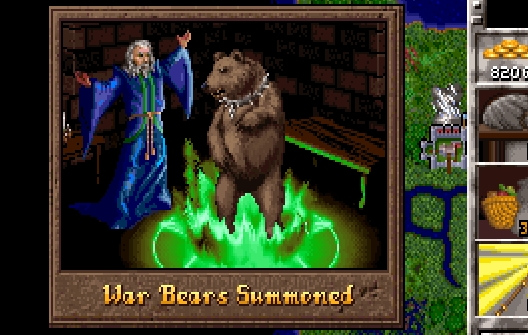
94-95 War Bear: (as B/X black bear) HD 4, x6 cost, attacks 1-3/1-3/1-6, morale 7, may wear armor (costs50 gold, AC 4)
96-97 Warbat: HD 2, x4 cost, echolocate 60 feet [a silence spell will blind it], trained to scout ahead in darkness and come back with warnings, fly 180 feet/round, attack 1-4)
98-99 Hunting Pard: (like B/X mountain lion) HD 3+3, x6 cost, attacks 1-3/1-3/1-6, surprise on 1-3 if sent ahead)
00 Warbeetle: HD 3+3, x8 cost, AC 3, attack 2-12, morale 10)
Friday, March 23, 2018
Travelling in the Wilderness: 20 Wilderness Traps
There's no text to quote concerning this topic that I know off the top of my head.
I'm chewing on another means of running wilderness exploration than the venerable hexcrawl. Not like there couldn't be tricks and traps in a hex or in a traditional hexcrawl, but I've been thinking of "dungeonizing" the wilderness, if I can. We'll see what happens.
But I'm stumbling. The utter freedom of the wilderness is too much, and populating any area in my map is like, "Is this a grove of trees? A boulder field? A ridgeline? A cliff-face? An area with knucker-holes? etc. etc." So I'm paralyzed by possibility, and I wanted to try to focus myself with a table of discreet ideas. Ideas for traps at the moment. So here goes.
------
20 Wilderness Traps (these are a little "conservative" in scope, but they're just the beginning of what could be out there ...)
1) Tree fall -- 1 in 6 chance that a dead tree falls on 1-3 randomly selected characters. They may save v. paralysis (or using DEX) or take 4-24 damage
2) Poison ivy -- or other rash-causing plant; characters moving through the area are automatically affected by an itching rash that incurs a penalty of -1 on "to hit", damage, and saving rolls because of discomfort for 2-7 days. Characters looking out for the plants are only affected on a 2 in 6 chance.
3) Stonefish -- or other venomous animal, e.g. vipers or scorpions; characters moving through the area have a 2 in 6 chance of being stung. Those stung must make a save v. death/poison (or CON) or die in 1-3 days.
4) Rock fall -- like a tree fall, except it happens where boulder are and causes 5-30 damage. Sorry for the overlap
5) Glue-resin -- characters moving through the area have a 3 in 6 chance of contacting glue-like resin and being thus bound to the resin-tree. The resin binds quickly, but may be loosed by liberal application of alcohol ... otherwise, the character remains bound to the resin for 1-3 days and wandering monster checks ensue ... (strength based options to remove them are of course optional)
6) Strangle-bracken -- the bracken in the area reacts to movement through it by tightening; characters moving through the area must make a save v. paralysis or be stuck. One day without movement is required before the bracken "relaxes" enough to allow a character to struggle back out the way they entered (or to the nearest clearing).
7) Loose scree -- characters in leather or lighter armor may move nimbly enough not to fall, but those in metal armor (scale, mail, splint, banded, or plate) who move over scree have a 2 in 6 chance of falling 20 to 120 feet (1-6 damage per 10 feet fallen).
8) Razorgrass -- characters moving through the area without any armor take 1-6 damage per mile traveled. Those in armor are allowed a save against paralysis, +0 for leather, +1 for mail, +3 for plate armor, those who fail take damage as if unarmored, those who succeed take no damage.
9) Sandflies (diseased) -- the biting insects in the area carry a disease. Unless some means of repellent is used, characters passing through must save v. poison or contract a disease. If no other specific disease is used, it will cause -1 CON and 1-6 fewer hit points until cured.
10) Tick-nest -- the foliage in this area is thick with ticks. Characters who pass through have a 2 in 6 chance of getting bitten by ticks, which causes -1 CON and 1-4 fewer hit points until dealt with. Furthermore, 1 in 20 ticks are diseased and the character must save v. poison or contract a disease that will be fatal in 1-6 weeks.
11) Geyserhole -- entering the superheated water causes 4-32 damage, but who would do that? More importantly, there is a 1 in 6 chance that the geyser "goes off" and causes 2-16 damage to all those nearby.
12) Sleep-river -- like the stream in Mirkwood, the water of this river causes a magical sleep to all who touch it
13) Black-water -- worse than the stream in Mirkwood, the water of this river is rife with negative energy; all who touch it are drained of one life-energy level per round of contact with the water. Those who are reduced to 0 levels are killed and rise as hostile wraiths in 1-4 rounds thereafter. Such wraiths must remain within 1 mile of the body whence they sprang, so if borne downriver, downriver the wraith must go ...
14) Labyrinth-root -- a particularly pernicious kind of tree with excessive root-systems that magicall compel people who come across them to trace them like a labyrinth, save v. spell to resist; the labyrinth will take 1-3 days to complete, incurring wandering monster checks as usual (though non-flyers might also become caught in the magical labyrinth?)
15) Drawstone -- a kind of super-powerful magnetic rock formation; metal-armored characters that pass too close (1 chance in 6 when passing through its area) cannot move farther away; those who fail a save v. paralysis must move closer. Shedding armor takes enough time to allow a wandering monster check
16) Corpseflower -- flowers that smell like rotting flesh and always draw the attention of monsters that would eat such. Passing through the area incurs an extra wandering monster check; coming into contact with the flowers (3 in 6 chance unless explicitly avoiding them) continues to draw one extra monster check per day for 1-4 days
17) Hotspring slime -- it's a green or grey slime, but bigger; OR a brown mold colony that makes the hot spring just a spring, but touching the mold causes the normal 4-32 cold damage
18) Social insect colony -- stepping into an underground wasp colony is a nightmare of mine, and the characters just did it! Save v. poison or take 3-18 damage from the stinging insects, save at +1 in leather armor, +2 in mail, or +4 in plate. There are 1-3 swarms; they might pursue for a bit if the reaction roll is particularly bad, but only do 1-6 damage after that first round
19) Yellow mold (always a favorite) -- it's a wild yellow mold colony; 50% chance that the characters nearest it save v. death or die in 6 rounds as they choke to death on the spores. Outdoors, these colonies could get huge
20) Wormrose -- wildflowers with a magical worm that dwells within them; 3 in 6 chance that a character comes into contact with one if wormrose is in the area, and such a character must save v. breath weapon or fall into a coma for 1-4 days and be a hassle for their party to haul around unconscious ... it's difficult to harvest wormrose, but many magic-users, sages, etc. will pay a good price for intact flowers with the worms inside if they can be brought back safely ...

I'm chewing on another means of running wilderness exploration than the venerable hexcrawl. Not like there couldn't be tricks and traps in a hex or in a traditional hexcrawl, but I've been thinking of "dungeonizing" the wilderness, if I can. We'll see what happens.
But I'm stumbling. The utter freedom of the wilderness is too much, and populating any area in my map is like, "Is this a grove of trees? A boulder field? A ridgeline? A cliff-face? An area with knucker-holes? etc. etc." So I'm paralyzed by possibility, and I wanted to try to focus myself with a table of discreet ideas. Ideas for traps at the moment. So here goes.
------
20 Wilderness Traps (these are a little "conservative" in scope, but they're just the beginning of what could be out there ...)
1) Tree fall -- 1 in 6 chance that a dead tree falls on 1-3 randomly selected characters. They may save v. paralysis (or using DEX) or take 4-24 damage
2) Poison ivy -- or other rash-causing plant; characters moving through the area are automatically affected by an itching rash that incurs a penalty of -1 on "to hit", damage, and saving rolls because of discomfort for 2-7 days. Characters looking out for the plants are only affected on a 2 in 6 chance.
3) Stonefish -- or other venomous animal, e.g. vipers or scorpions; characters moving through the area have a 2 in 6 chance of being stung. Those stung must make a save v. death/poison (or CON) or die in 1-3 days.
4) Rock fall -- like a tree fall, except it happens where boulder are and causes 5-30 damage. Sorry for the overlap
5) Glue-resin -- characters moving through the area have a 3 in 6 chance of contacting glue-like resin and being thus bound to the resin-tree. The resin binds quickly, but may be loosed by liberal application of alcohol ... otherwise, the character remains bound to the resin for 1-3 days and wandering monster checks ensue ... (strength based options to remove them are of course optional)
6) Strangle-bracken -- the bracken in the area reacts to movement through it by tightening; characters moving through the area must make a save v. paralysis or be stuck. One day without movement is required before the bracken "relaxes" enough to allow a character to struggle back out the way they entered (or to the nearest clearing).
7) Loose scree -- characters in leather or lighter armor may move nimbly enough not to fall, but those in metal armor (scale, mail, splint, banded, or plate) who move over scree have a 2 in 6 chance of falling 20 to 120 feet (1-6 damage per 10 feet fallen).
8) Razorgrass -- characters moving through the area without any armor take 1-6 damage per mile traveled. Those in armor are allowed a save against paralysis, +0 for leather, +1 for mail, +3 for plate armor, those who fail take damage as if unarmored, those who succeed take no damage.
9) Sandflies (diseased) -- the biting insects in the area carry a disease. Unless some means of repellent is used, characters passing through must save v. poison or contract a disease. If no other specific disease is used, it will cause -1 CON and 1-6 fewer hit points until cured.
10) Tick-nest -- the foliage in this area is thick with ticks. Characters who pass through have a 2 in 6 chance of getting bitten by ticks, which causes -1 CON and 1-4 fewer hit points until dealt with. Furthermore, 1 in 20 ticks are diseased and the character must save v. poison or contract a disease that will be fatal in 1-6 weeks.
11) Geyserhole -- entering the superheated water causes 4-32 damage, but who would do that? More importantly, there is a 1 in 6 chance that the geyser "goes off" and causes 2-16 damage to all those nearby.
12) Sleep-river -- like the stream in Mirkwood, the water of this river causes a magical sleep to all who touch it
13) Black-water -- worse than the stream in Mirkwood, the water of this river is rife with negative energy; all who touch it are drained of one life-energy level per round of contact with the water. Those who are reduced to 0 levels are killed and rise as hostile wraiths in 1-4 rounds thereafter. Such wraiths must remain within 1 mile of the body whence they sprang, so if borne downriver, downriver the wraith must go ...
14) Labyrinth-root -- a particularly pernicious kind of tree with excessive root-systems that magicall compel people who come across them to trace them like a labyrinth, save v. spell to resist; the labyrinth will take 1-3 days to complete, incurring wandering monster checks as usual (though non-flyers might also become caught in the magical labyrinth?)
15) Drawstone -- a kind of super-powerful magnetic rock formation; metal-armored characters that pass too close (1 chance in 6 when passing through its area) cannot move farther away; those who fail a save v. paralysis must move closer. Shedding armor takes enough time to allow a wandering monster check
16) Corpseflower -- flowers that smell like rotting flesh and always draw the attention of monsters that would eat such. Passing through the area incurs an extra wandering monster check; coming into contact with the flowers (3 in 6 chance unless explicitly avoiding them) continues to draw one extra monster check per day for 1-4 days
17) Hotspring slime -- it's a green or grey slime, but bigger; OR a brown mold colony that makes the hot spring just a spring, but touching the mold causes the normal 4-32 cold damage
18) Social insect colony -- stepping into an underground wasp colony is a nightmare of mine, and the characters just did it! Save v. poison or take 3-18 damage from the stinging insects, save at +1 in leather armor, +2 in mail, or +4 in plate. There are 1-3 swarms; they might pursue for a bit if the reaction roll is particularly bad, but only do 1-6 damage after that first round
19) Yellow mold (always a favorite) -- it's a wild yellow mold colony; 50% chance that the characters nearest it save v. death or die in 6 rounds as they choke to death on the spores. Outdoors, these colonies could get huge
20) Wormrose -- wildflowers with a magical worm that dwells within them; 3 in 6 chance that a character comes into contact with one if wormrose is in the area, and such a character must save v. breath weapon or fall into a coma for 1-4 days and be a hassle for their party to haul around unconscious ... it's difficult to harvest wormrose, but many magic-users, sages, etc. will pay a good price for intact flowers with the worms inside if they can be brought back safely ...
Monday, January 22, 2018
Encounters in Chult -- Non-Monster Encounters
In Tomb of Annihilation, "While characters are exploring or camping in the wilderness, roll a d20 three times per day of game time, checking for encounters each morning, afternoon, and evening or night. An encounter occurs on a roll of 16 or higher." (Tomb of Annihilation, pg. 193)
On the result of an encounter (16-20), one is then directed to roll percentile dice on the "Wilderness Encounters" table on the next pages (194-5), which includes columns for different terrain types, including Beach, several types of Jungle, Mountains, Rivers, Ruins, Swamp, and Wasteland. These different terrains have different values for the various creatures that haunt Chult and its environs--but almost every entry is a creature of some kind, implying combat (6 out of 90 entries are with non-creatures, while at least half a dozen more are with neutral or friendly NPCs).
There follows a description of each encounter in pages 196-203, of the number of creatures or the nature of the non-creature thing found. These are generally good entries, though I find it irritating how many of them coyly resolve into non-encounters if the players don't provoke the creatures, e.g. of the dinosaurs, the Ankylosaurus, Brontosaurus, Hadrosaurus, Pteranodon, Stegosaurus, and Triceratops all ignore the characters unless attacked, touched, or bothered. And these aren't the only entries like that. Which is to say, if I roll an 18 on my d20 and then a triceratops encounter, inform the players, and then they walk away, nothing happens ... over the course of hundreds of hexes of travel this will become dozens of dice rolls to nothing, sapping my time and my players' interest.
All of which is a longwinded way of saying, these wilderness encounters need sprucing up!
First, because it seems to me that travel should involve a variety of mishaps/encounters not necessarily all of which involve creatures, I'd like to rewrite a table of non-monster wilderness occurrences that I use for wilderness travel in my homebrew game. (other blog-entries may include creating more specific wilderness terrains and resulting encounter tables, and/or nesting the results on the ToA tables with greater random variety)
So, per the rules, per day that the characters spend in the wilderness, roll three d20s. A result of a 16-20 indicates an encounter; the first and last such rolls indicate an encounter on the "Wilderness Encounters" table from the book, but the second/middle roll indicates a further roll on this table:
------
Non-Monster Wilderness Encounters
1-3 -- Bad weather -- half movement for the next 1-6 days
4-5 -- Lamed mule/Sprained ankle -- cannot move forward until the injury is healed, either by magic or by 1-3 days of rest
6-7 -- Spoiled rations -- 1-2 weeks of rations are spoiled by mold, maggots, etc.
8 -- Lost supplies -- the party loses ... 1) 50' rope, 2) 100-600 gp, 3) 1 week of rations,
4) tinderbox, 5) lantern and 1-4 flasks of oil OR 2-12 torches, 6) 50' rope and roll again ((or one useful item at random))
9-10 -- Heatstroke -- a character at random is incapacitated and cannot act until they take a full day of rest
11-12 -- Wrong turn -- not lost per se, but no movement for the day as all "progress" must be retraced back in the proper direction
13 -- Venomous bite -- a character at random must save against poison or using CON, or die; neutralize poison or other such spells would naturally be handy in such a situation
14 -- Diseased bite -- a character at random must save against poison or using CON, or become infected with a debilitating disease; the character loses 1 STR per day of travel, and a week of full rest is required to overcome the disease; during the "crisis" another save v. poison or with CON is required, and failure indicates that 1 point of CON is permanently lost
15-16 -- Good foraging/hunting -- no rations are needed for the day due to plentiful game/forage
17-18 -- Bad water -- 1-3 characters must save against poison or using CON, or contract a debilitating disease per (14)
19-20 -- Physical Barrier -- the party has hiked into a box canyon, cul de sac, bog, mire, etc. etc., and must backtrack; no movement unless a thief with ropes climbs a way through, or a druid demonstrates a path, or some other rule or narrative is invoked by the player characters to pass through
On the result of an encounter (16-20), one is then directed to roll percentile dice on the "Wilderness Encounters" table on the next pages (194-5), which includes columns for different terrain types, including Beach, several types of Jungle, Mountains, Rivers, Ruins, Swamp, and Wasteland. These different terrains have different values for the various creatures that haunt Chult and its environs--but almost every entry is a creature of some kind, implying combat (6 out of 90 entries are with non-creatures, while at least half a dozen more are with neutral or friendly NPCs).
There follows a description of each encounter in pages 196-203, of the number of creatures or the nature of the non-creature thing found. These are generally good entries, though I find it irritating how many of them coyly resolve into non-encounters if the players don't provoke the creatures, e.g. of the dinosaurs, the Ankylosaurus, Brontosaurus, Hadrosaurus, Pteranodon, Stegosaurus, and Triceratops all ignore the characters unless attacked, touched, or bothered. And these aren't the only entries like that. Which is to say, if I roll an 18 on my d20 and then a triceratops encounter, inform the players, and then they walk away, nothing happens ... over the course of hundreds of hexes of travel this will become dozens of dice rolls to nothing, sapping my time and my players' interest.
All of which is a longwinded way of saying, these wilderness encounters need sprucing up!
First, because it seems to me that travel should involve a variety of mishaps/encounters not necessarily all of which involve creatures, I'd like to rewrite a table of non-monster wilderness occurrences that I use for wilderness travel in my homebrew game. (other blog-entries may include creating more specific wilderness terrains and resulting encounter tables, and/or nesting the results on the ToA tables with greater random variety)
 |
| "I hope we don't run into any mouth dragons out here ..." |
So, per the rules, per day that the characters spend in the wilderness, roll three d20s. A result of a 16-20 indicates an encounter; the first and last such rolls indicate an encounter on the "Wilderness Encounters" table from the book, but the second/middle roll indicates a further roll on this table:
------
Non-Monster Wilderness Encounters
1-3 -- Bad weather -- half movement for the next 1-6 days
4-5 -- Lamed mule/Sprained ankle -- cannot move forward until the injury is healed, either by magic or by 1-3 days of rest
6-7 -- Spoiled rations -- 1-2 weeks of rations are spoiled by mold, maggots, etc.
8 -- Lost supplies -- the party loses ... 1) 50' rope, 2) 100-600 gp, 3) 1 week of rations,
4) tinderbox, 5) lantern and 1-4 flasks of oil OR 2-12 torches, 6) 50' rope and roll again ((or one useful item at random))
9-10 -- Heatstroke -- a character at random is incapacitated and cannot act until they take a full day of rest
11-12 -- Wrong turn -- not lost per se, but no movement for the day as all "progress" must be retraced back in the proper direction
13 -- Venomous bite -- a character at random must save against poison or using CON, or die; neutralize poison or other such spells would naturally be handy in such a situation
14 -- Diseased bite -- a character at random must save against poison or using CON, or become infected with a debilitating disease; the character loses 1 STR per day of travel, and a week of full rest is required to overcome the disease; during the "crisis" another save v. poison or with CON is required, and failure indicates that 1 point of CON is permanently lost
15-16 -- Good foraging/hunting -- no rations are needed for the day due to plentiful game/forage
17-18 -- Bad water -- 1-3 characters must save against poison or using CON, or contract a debilitating disease per (14)
19-20 -- Physical Barrier -- the party has hiked into a box canyon, cul de sac, bog, mire, etc. etc., and must backtrack; no movement unless a thief with ropes climbs a way through, or a druid demonstrates a path, or some other rule or narrative is invoked by the player characters to pass through
Friday, December 1, 2017
Charisma ... is it Comeliness, Fame, or Both?
... or something else entirely?
I actually dislike the idea that Charisma represents "Comeliness" or physical beauty, and that is explicitly not what it is in my game. I've had this discussion a couple times at the table to address the assumption that Charisma =/= beauty, but of course it always crops up here and there in offhand assumptions. Not that beauty doesn't play into Charisma, but it is neither necessary or sufficient for high Charisma.
My basic take on Charisma is that it is "charm." Handsome people of course have a natural kind of charm--but it's not difficult to imagine a beautiful person who is so awkward and difficult to get along with that their Charisma actually comes off as "average" right? Likewise, is it difficult to consider a person who would not be considered generically beautiful, and yet when they speak, people are magnetically attracted to their sense of humor, of comedic timing, or just sheer energy? (Hence the table-conversations, pointing out that high Charisma is not just beauty, low Charisma not just ugliness).
(I recently found The Hall of Blue Illumination, a podcast about the setting/game Tekumel/Empire of the Petal Throne, and on Episode 6, around the 16:20 mark, is a discussion of Comeliness in the rules. ... Now, apparently, according to Victor J. Raymond, Comeliness (replacing Charisma in Empire of the Petal Throne) was not original to the rules; and M.A.R Barker, the game creator, did not think that Charisma should be a character abstraction, but should be an outgrowth of actual play; but that Comeliness, as a physical measure of beauty, was an objective thing that a character could possess regardless of the player, like Strength or Constitution. There's something to this as an explanation of the stat ... and I really enjoyed the discussion on the podcast about what Comeliness could do for a game, i.e. slavers or priests hunting for an exceptionally beautiful character ... but for my B/X game I think I still prefer Charisma as something less concrete than mere physical beauty).
Some years ago, I found a post somewhere in the OSR blogosphere (alas, I have no idea where I found it, and I can't give credit where it's due!) discussing Charisma as a measure of fame or reputation. The post suggested that perhaps Charisma should be malleable according to success or failure on dungeon expeditions, to represent Charisma as fame rather than personal charm. I took this and ran with it; so for several years, characters that ran through my dungeons gained 1 point of Charisma (max 18) for every successful expedition (no character deaths, big haul), lost 1 point of Charisma (min 3) for every failure (no wealth, several character deaths), or no change for a wash (good haul and several deaths, or no deaths but no haul). This counted only for "lead" characters--henchmen didn't gain or lose charisma.
I like this rule because it represents well what I think of Charisma, but it has ultimately flattened a part of the game--whenever I turn to certain "old-hand" characters these days to ask for Charisma, I get the same answer: "18". Furthermore, I haven't been using this rule at all in the Greyhame Game ... and that's actually why I'm posting this, because I had a question from one of my old-hand players as to whether I would boost certain recent good hauls with higher Charisma? He offered a suggestion to look at it as fame or renown, a something separate from the attribute as Charisma, and I thought I'd hash something out here.
------
Local Reputation (as local as your referee wants it, be it per bar, per neighborhood, per town, per region, etc.)--roll only for the "captain" of the expedition, if any was elected; otherwise, roll once for one random character who participated
Returning from a Successful Expedition (no character deaths && good haul):
1 - reactions +1 (+4 max)
2 - retainer morale +1 (11 max)
3 - no. retainers +1
4 - basic equipment costs -5% (-50% max)
5 - major services cost -10% (e.g. hiring sages or armorers ... -25% max)
6 - owed one favor (referee discretion, not "worth" more than 1000 gp)
7 - infatuation (someone in town falls for you, for good or ill)
8 - gain attention of Thieves' Guild (referee discretion!)
9 - debt forgiven (1000-6000 gp; OR reactions +1 if no debt owed)
10 - attentions of a patron (referee discretion, but it should be positive)
11 - awesome parties (x2 xp from carousing)
12 - life of the party (x2 gp cost for carousing)
Returning from a Failed Expedition (1+ character deaths && poor or worse haul of loot):
1 - reactions -1 (-4 min)
2 - retainer morale -1 (4 min)
3 - no. retainers -1 (0 min)
4 - basic equipment costs +5% (+50% max)
5 - major services cost +10% (+25% max)
6 - evil reputation (would-be hirelings must roll "accept" twice before taking on with you)
7 - disinterest (someone who was interested in you moves on / you get snubbed in some way)
8 - lose attention of Thieves' Guild / gain attention of loan shark
9 - debt exacerbated--pay now, or owe an extra 50%, and if you don't pay up soon, to jail with you! (if no debt, -1 reactions)
10 - lose patron (if you don't have a patron, gain a bad reputation, e.g. patrons think twice before taking you on as a client)
11 - shunned (1/2 xp from carousing)
12 - ostracized (can't carouse at all!)
This is a rough draft, of course. Is granting it to just the captain too limited? Do d12 rolls offer too many options? Is adding yet another thing to the game too complicating (I would hope that d12 rolls granting 1 addition to a character sheet is better than coming up with some new score to keep track of ... but I don't know.)
Anyway, I'll likely try this out the next Greyhame Game in some way
I actually dislike the idea that Charisma represents "Comeliness" or physical beauty, and that is explicitly not what it is in my game. I've had this discussion a couple times at the table to address the assumption that Charisma =/= beauty, but of course it always crops up here and there in offhand assumptions. Not that beauty doesn't play into Charisma, but it is neither necessary or sufficient for high Charisma.
My basic take on Charisma is that it is "charm." Handsome people of course have a natural kind of charm--but it's not difficult to imagine a beautiful person who is so awkward and difficult to get along with that their Charisma actually comes off as "average" right? Likewise, is it difficult to consider a person who would not be considered generically beautiful, and yet when they speak, people are magnetically attracted to their sense of humor, of comedic timing, or just sheer energy? (Hence the table-conversations, pointing out that high Charisma is not just beauty, low Charisma not just ugliness).
(I recently found The Hall of Blue Illumination, a podcast about the setting/game Tekumel/Empire of the Petal Throne, and on Episode 6, around the 16:20 mark, is a discussion of Comeliness in the rules. ... Now, apparently, according to Victor J. Raymond, Comeliness (replacing Charisma in Empire of the Petal Throne) was not original to the rules; and M.A.R Barker, the game creator, did not think that Charisma should be a character abstraction, but should be an outgrowth of actual play; but that Comeliness, as a physical measure of beauty, was an objective thing that a character could possess regardless of the player, like Strength or Constitution. There's something to this as an explanation of the stat ... and I really enjoyed the discussion on the podcast about what Comeliness could do for a game, i.e. slavers or priests hunting for an exceptionally beautiful character ... but for my B/X game I think I still prefer Charisma as something less concrete than mere physical beauty).
Some years ago, I found a post somewhere in the OSR blogosphere (alas, I have no idea where I found it, and I can't give credit where it's due!) discussing Charisma as a measure of fame or reputation. The post suggested that perhaps Charisma should be malleable according to success or failure on dungeon expeditions, to represent Charisma as fame rather than personal charm. I took this and ran with it; so for several years, characters that ran through my dungeons gained 1 point of Charisma (max 18) for every successful expedition (no character deaths, big haul), lost 1 point of Charisma (min 3) for every failure (no wealth, several character deaths), or no change for a wash (good haul and several deaths, or no deaths but no haul). This counted only for "lead" characters--henchmen didn't gain or lose charisma.
I like this rule because it represents well what I think of Charisma, but it has ultimately flattened a part of the game--whenever I turn to certain "old-hand" characters these days to ask for Charisma, I get the same answer: "18". Furthermore, I haven't been using this rule at all in the Greyhame Game ... and that's actually why I'm posting this, because I had a question from one of my old-hand players as to whether I would boost certain recent good hauls with higher Charisma? He offered a suggestion to look at it as fame or renown, a something separate from the attribute as Charisma, and I thought I'd hash something out here.
------
Local Reputation (as local as your referee wants it, be it per bar, per neighborhood, per town, per region, etc.)--roll only for the "captain" of the expedition, if any was elected; otherwise, roll once for one random character who participated
Returning from a Successful Expedition (no character deaths && good haul):
1 - reactions +1 (+4 max)
2 - retainer morale +1 (11 max)
3 - no. retainers +1
4 - basic equipment costs -5% (-50% max)
5 - major services cost -10% (e.g. hiring sages or armorers ... -25% max)
6 - owed one favor (referee discretion, not "worth" more than 1000 gp)
7 - infatuation (someone in town falls for you, for good or ill)
8 - gain attention of Thieves' Guild (referee discretion!)
9 - debt forgiven (1000-6000 gp; OR reactions +1 if no debt owed)
10 - attentions of a patron (referee discretion, but it should be positive)
11 - awesome parties (x2 xp from carousing)
12 - life of the party (x2 gp cost for carousing)
Returning from a Failed Expedition (1+ character deaths && poor or worse haul of loot):
1 - reactions -1 (-4 min)
2 - retainer morale -1 (4 min)
3 - no. retainers -1 (0 min)
4 - basic equipment costs +5% (+50% max)
5 - major services cost +10% (+25% max)
6 - evil reputation (would-be hirelings must roll "accept" twice before taking on with you)
7 - disinterest (someone who was interested in you moves on / you get snubbed in some way)
8 - lose attention of Thieves' Guild / gain attention of loan shark
9 - debt exacerbated--pay now, or owe an extra 50%, and if you don't pay up soon, to jail with you! (if no debt, -1 reactions)
10 - lose patron (if you don't have a patron, gain a bad reputation, e.g. patrons think twice before taking you on as a client)
11 - shunned (1/2 xp from carousing)
12 - ostracized (can't carouse at all!)
This is a rough draft, of course. Is granting it to just the captain too limited? Do d12 rolls offer too many options? Is adding yet another thing to the game too complicating (I would hope that d12 rolls granting 1 addition to a character sheet is better than coming up with some new score to keep track of ... but I don't know.)
Anyway, I'll likely try this out the next Greyhame Game in some way
Tuesday, November 21, 2017
Eating a Dragon Heart
 |
| Sigurd/Siegfried sucks his thumb after burning it while cooking Fafnir's heart--he is about to understand birdspeech ... |
[after slaying the dragon Fafnir] ... Therewith Sigurd cut out the heart of the worm with the sword called Ridil; but Regin drank of Fafnir's blood, and spake, "Grant me a boon, and do a thing little for thee to do. Bear the heart to the fire, and roast it, and give me thereof to eat."
Then Sigurd went his ways and roasted it on a rod; and when the blood bubbled out he laid his finger thereon to essay it, if it were fully done; and then he set his finger in his mouth, and lo, when the heart-blood of the worm touched his tongue, straightway he knew the voice of all fowls, and heard withal how the wood-peckers chattered in the brake beside him--
"There sittest thou, Sigurd, roasting Fafnir's heart for another, that thou shouldest eat thine ownself, and then thou shouldest become the wisest of all men."
And another spake: "There lies Regin, minded to beguile the man who trusts in him."
But yet again said the third, "Let him smite the head from off him then, and be only lord of all that gold."
And once more the fourth spake and said, "Ah, the wiser were he if he followed after that good counsel, and rode thereafter to Fafnir's lair, and took to him that mighty treasure that lieth there, and then rode over Hindfell, whereas sleeps Brynhild; for there would he get great wisdom. Ah, wise he were, if he did after your redes, and bethought him of his own weal; 'for where wolf's ears are, wolf's teeth are near.'"
Then cried the fifth: "Yea, yea, not so wise is he as I deem him, if he spareth him whose brother he hath slain already."
At last spake the sixth: "Handy and good rede to slay him, and be lord of the treasure!"
Then said Sigurd, "The time is unborn wherein Regin shall be my bane; nay, rather one road shall both these brothers fare."
And therewith he drew his sword Gram and struck off Regin's head. ...
("Chapter XIX: Of the Slaying of Regin, Son of Hreidmar", The Volsung Saga, translated by William Morris and Eirikr Magnusson, 1888, retrieved online from Sacred Texts)
------
Drawing from this instance of Sigurd/Siegfried gaining magical knowledge from the heart of Fafnir (not a true dragon, you might say, being a dwarf transformed by curse into a worm, but bah! a dragon I call him) ... and also from the parallel story of Finn cooking the Salmon of Knowledge, burning his thumb on it, sucking his thumb, and thus gaining knowledge ... in my game, eating the heart of a dragon earns a character magical wisdom, strength, lore, or other strange powers.
Several dragons have been killed over the course of the years, and several hearts eaten, and several powers/advantages gained ... and once I even got a player (my wife!) rolling her eyes at bonuses to her character's attributes, a most coveted use of the wish spell in the ancient days--and she just rolled her eyes! D&D players--you just can't please 'em.
Anyway, for dragon hearts I use a d12 table, because I like the variety without it being overboard. A friend of mine who took to B/X D&D with alacrity and who has hosted a longstanding campaign when I wish to play, took my table and ran with it, adding all kinds of bells and whistles, with saves, percentile dice, etc.--and my characters have taken advantage, believe it well, when we have slain dragons in his game--but I retain the simple d12 table for my game. (Actually, several ... I keep losing them)
So here's the current incarnation:
Eating a Dragon Heart
1 - comprehend languages at will
2 - 1 first level spell, determined at random; can be used even by a character in armor, like an Elf
3 - 1 second level spell, determined at random; can be used even by a character in armor
4 - (1-2) +1 Strength, (3-4) +1 Dexterity, (5-6) +1 Constitution
5 - (1-2) +1 Intelligence, (3-4) +1 Wisdom, (5) +1 INT, +1 Charisma, (6) +1 WIS, +1 CHA
6 - dragon skin, -1 AC, -1 reactions
7 - dragon awe, +1 reactions, enemy Morale -1
8 - dragon power, +1 to hit, +1 to damage
9 - dragon eyes, +1 reactions, charm person 1/day
10 - +1 STR, DEX, CON, max 18
11 - +1 INT, WIS, CHA, max 18
12 - 1 first and 1 second level spell, determined randomly, may be cast by armored characters
Friday, November 17, 2017
Wilderness Encounters as Attrition 2
I received a comment on a recent post inquiring if I had fiddled with my rules for "wilderness attrition" at all, and whether I had anything further to write about them. The short answer heretofore was "no" because I have been using the rules as I wrote them for the last few sessions (and they've been pretty simple and effective so far, and people are starting to carry back-up items, which is one thing I envisioned for these rules ... thus necessitating a mule and porters ... mwahaha!)
The longer answer is, I do actually have an idea for making "wilderness attrition" a little better, I hope--"concreteness".
As written so far, and as used so far, I roll the encounter chance, elucidate the results and the number of damage dice for the party, and then come up with a lame reason for it afterward (especially when prompted by the player of Rendorsheeg the Elf). This is abstract; abstraction, of course, was the main purpose for creating these rules; yet nevertheless, D&D is so often about concreteness that it pains me to just kind of handwave why a week of rations, 12 arrows, a spear, and a shield were all lost. Generally I've been calling it skirmishes with goblins or orcs ... but what if I had said it was wolves, and a druid, say, replied by saying, "I want to cast speak with animals and talk them out of attacking us"?
Moreover, of the three dice I roll for every encounter/wandering monster check, on of them is not pulling much weight in these "attrition" rules, and I think "concreteness" could be a better use of its pips on the table.
Therefore:
When I roll for encounters, I roll 3d6, one black, one white, one red:
black -- encounter chance
white -- party surprise chance
red -- monster surprise chance
I ignore the red and white dice if black comes up nothing.
For attrition in the wilderness, rather than rolling up a full encounter on a positive result from the black die, I look to the other dice:
The white die determines "attrition dice" inversely to the number rolled on the die, e.g. 1 is 6d6, 2 is 5d6, 3 is 4d6, 4 is 3d6, etc.
Instead of an extra chance to "ignore" the encounter as I originally wrote, the red die can be used to determine "concretely" just what happened, thus:
1 - animal encounter -- a bear, a pack of wolves, a rutting moose, a baboon troupe, etc.
2 - men encounter -- a group of hunters, some brigands, some local ruffians
3 - humanoid encounter -- a skirmish with orcs, goblins, ogres, etc. per what I've generally said
4 - fey/unusual encounter -- undead perhaps, or faerie trees/briars that grasp at characters, etc.
5-6 - non-creature encounter -- a freak storm, a patch of poison ivy, a nest of young ticks, etc.
These are vague, and I think necessarily. As I said above, abstractness is the reason for these rules of attrition--what I get out of them is focusing on the dungeon while retaining some of the danger of the wilderness and travel through it. Attrition is a quick way to move through the consequences of the wilderness than having to describe an entire encounter with a band of orcs transporting prisoners, etc.
And yet, having a sense of what concretely the characters have encountered allows the players to respond to it with their skills, spells, etc in somewhat of the way that they would if presented with a full encounter. The best example I have is that if the referee rolls an "animal" encounter of six attrition dice, and the party includes a druid who responds by casting the spell speak with animals, the referee could allow the druid to just talk to the animals and avoid the encounter altogether, OR allow that spellcasting to replace one (or so) of the "usual" means of eliminating attrition dice (including the otherwise invulnerable sixth die, perhaps!).
Maybe an "unusual encounter" is undead, and the cleric can turn undead to eliminate an attrition die; or perhaps a group of men can be charmed or slept by a magic user to eliminate dice ... etc.
And of course, if the players just blithely accept the dice that you put forth, break their items, and move on, it's no skin off the referee's back. I just felt a strong need to have a way to clearly allow more player agency in response to the "attrition".
black -- encounter chance
white -- party surprise chance
red -- monster surprise chance
I ignore the red and white dice if black comes up nothing.
For attrition in the wilderness, rather than rolling up a full encounter on a positive result from the black die, I look to the other dice:
The white die determines "attrition dice" inversely to the number rolled on the die, e.g. 1 is 6d6, 2 is 5d6, 3 is 4d6, 4 is 3d6, etc.
Instead of an extra chance to "ignore" the encounter as I originally wrote, the red die can be used to determine "concretely" just what happened, thus:
1 - animal encounter -- a bear, a pack of wolves, a rutting moose, a baboon troupe, etc.
2 - men encounter -- a group of hunters, some brigands, some local ruffians
3 - humanoid encounter -- a skirmish with orcs, goblins, ogres, etc. per what I've generally said
4 - fey/unusual encounter -- undead perhaps, or faerie trees/briars that grasp at characters, etc.
5-6 - non-creature encounter -- a freak storm, a patch of poison ivy, a nest of young ticks, etc.
These are vague, and I think necessarily. As I said above, abstractness is the reason for these rules of attrition--what I get out of them is focusing on the dungeon while retaining some of the danger of the wilderness and travel through it. Attrition is a quick way to move through the consequences of the wilderness than having to describe an entire encounter with a band of orcs transporting prisoners, etc.
And yet, having a sense of what concretely the characters have encountered allows the players to respond to it with their skills, spells, etc in somewhat of the way that they would if presented with a full encounter. The best example I have is that if the referee rolls an "animal" encounter of six attrition dice, and the party includes a druid who responds by casting the spell speak with animals, the referee could allow the druid to just talk to the animals and avoid the encounter altogether, OR allow that spellcasting to replace one (or so) of the "usual" means of eliminating attrition dice (including the otherwise invulnerable sixth die, perhaps!).
 |
| Perhaps the party encounters "animals"--the referee declares them spiders ... and the halfling of the party uses his halfling abilities to sneak around distracting the spiders with anti-arachnid slurs like, "Hey, atter-cop!" |
Maybe an "unusual encounter" is undead, and the cleric can turn undead to eliminate an attrition die; or perhaps a group of men can be charmed or slept by a magic user to eliminate dice ... etc.
And of course, if the players just blithely accept the dice that you put forth, break their items, and move on, it's no skin off the referee's back. I just felt a strong need to have a way to clearly allow more player agency in response to the "attrition".
Saturday, November 11, 2017
the Grey Pilgrims
'... "These are High-Elves! They spoke the name of Elbereth!" said Frodo in amazement. Few of that fairest folk are ever seen in the Shire. Not many now remain in Middle-Earth, east of the Great Sea. This is indeed a strange chance!"
'The hobbits sat in shadow by the wayside. Before long the Elves came down the lane towards the valley. They passed slowly, and the hobbits could see the starlight glimmering on their hair and in their eyes. They bore no lights, yet as they walked a shimmer, like the light of the moon above the rim of the hills before it rises, seemed to fall about their feet. They were now silent [having ceased their song of Elbereth], and as the last Elf passed he turned and looked toward the hobbits and laughed.
'"Hail, Frodo!" he cried. "You are abroad late. Or are you perhaps lost?" Then he called to the others, and all the company stopped and gathered round. ...'
(J.R.R. Tolkien, "Three is Company," The Fellowship of the Ring, 1955, pg 109, Ballantine Books)
This Elf turns out to be Gildor Inglorion of the House of Finrod, and he and his companions are members of a Wandering Company, those who sometimes come into the Shire during spring or autumn, but "'For tonight we go to the woods on the hills above Woodhall. ...'" (p. 110)
(It is curious to me to know that Gildor, being of the House of Finrod, is in fact a Grey Elf, one of the Noldor who went to see the light of the trees in Valinor, yet who returned to Middle-Earth in company of Feanor, their chief, to seek the Silmarils--and who slaughtered the Sea-Elves to take their ships in order to return! As Gildor later says to Frodo, the Elves do indeed carry their own burdens and sorrows separate from the other races of Middle-Earth)
------
In my Encounters on the Road table, one of the entries is that of Elf-Pilgrims, with whom characters may carouse (spending money and gaining experience per carousing), like Frodo and the hobbits do at Woodhall, but with the possible consequence that they pass on with the Elves, forgetting their place in the mortal world for a time in preference for the wonders of the Elves.
Two weeks ago, as the players in my regular (non-Greyhame) game traveled from their home city to the halfling land of Hopshire, they twice encountered Elf-Pilgrims (due to the vagaries of the dice). The first encounter went off without any consequences, but during the second, one of the characters failed and nearly joined the Elf-Pilgrims on their way to the Glimmervaults to look at the Stars that gleam within those caverns (hence the name)--Ronald the magic-user was so entranced by their verses in praise of the ancient Stars, the Stars that gleamed above when the Elves first stepped forth in the morning of the world, before even the Sun and the Moon were set into the heavens, that he intended to join the Elves making their way there.
Alas (?) his friends got wind of his plan and got him so stinking drunk that he was too hung over to join the Elves on the next leg of their journey, and he got over their charm as he nursed his hangover.
Obviously, these pilgrims will figure in the Greyhame game before long, as the destination of their pilgrimage is the caverns of the Glimmervaults.
All of which is to say in a longwinded way, I was thinking of developing a table for encounters with Elf-Pilgrims or Wandering Companies, so here it is:
Where are they headed?
1) to the Glimmervaults (or some other place where the Elves can gaze upon the ancient Stars down from whence they stepped in the morning of the world); a character who carouses with them and fails his save against drunkenness will be enchanted by their vision of the Stars and accompany them, a journey which will take from 3 to 18 months before he returns to play
2) to the Grey Havens and the ships that sail away across the star-strewn Sea, out of the mortal world to halls of everlasting ease; a character may save at +2 against poison to avoid the consequences of carousing with these Elves, but a failure means that she will travel with them to the nearest ocean port and thence pass out of the world forever--once gone across the Sea, only a wish could bring her back
3) to nowhere in particular--the Elves are a Wandering Company who wend through wood and dale, carousing in the hidden vales beneath the starlight; characters who carouse with them gain the effects of carousing, but are also healed as if they had rested for 2-12 days--as indeed they have! for the Elfin feast, though it seemed to last but a night, has lasted nigh a fortnight (and advance the calendar accordingly). The Elves have all vanished and continued on to the next valley by the time the characters waken, leaving memories of starlit draughts and the apples of Avalon
4) to the Isle of Avalon (or somewhere likewise suitable), bearing the bier of a mortal warrior of such renown (or so beloved by a King or Queen of Elves) that he is to be brought back to the Sunny Isle to wait in deathly sleep for the day of his awakening. Carousing with those among this company, one hears epics of both the hero himself, and of elder days and ancient heroes, and such stirring deed-songs fill the heart with courage such that one receives experience equal to 100 times one's level above the normal carousing benefit
5) not a pilgrimage per se, but a company of Wood-Elves, wary of strangers--an Elf-banquet of the sort that got the dwarves into trouble in the Mirkwood (in The Hobbit). Attempting to carouse with these Elves, a character will wander away from the party and get lost--as an individual, they will suffer 1-6 attrition dice, and if any dice remain that would cause damage, the character is instead imprisoned by the Prince of the Wood-Elves in his secret palace-dungeon until such time as she is rescued or ransomed (1000 gp/level for a ransom as a baseline)--(that, or they're just imprisoned on failing a save against paralysis)
6) to the dressing of the idols of Astora and Anglamorath at a clear lake deep in the forests of the Dwimmerholt (Anglamorath-Astora is a dual goddess of Chaos worshiped primarily by the Elves; Astora is the Elf-Queen of Stars, the First Elf, and she is joined in worship to Anglamorath the Black Dragon, the Dark Behind the Stars, Whose Wings are the Night); carousing with these Elves one must save rather against spells as they attempt to charm and enslave the characters for a year and a day, after which they will be free to return to the mortal world
Who is among the Company?
1) Adrasteia, a Lamia (not the weird lion-type, a real Lamia who is a serpent wearing the guise of a maiden); she is accompanied by two charmed slaves, Archidamus (Fighter 3ish with a shield, spear, mail armor, and a lion cloak of courage, +1 AC, +1 morale to hirelings) and Musa (Fighter 3ish with a shield, scepter/mace +2, and mail armor)
2) Ponderous, a hugely tall pine Treant (+2 HD); unlike most Treants, he is not vulnerable to fire due to the flaky scales of his bark and the great height of his limbs--but at the same time, he receives only one attack because of his great height, and is treated as a "giant" for attacks against dwarves and halflings
3) the Elf-woman Thranduila and her halfling companion Otho Skopper (they seem a rather Fafhrd and the Gray Mouser pair); Thranduila is laconic and interested in wine and handsome fighting-men, while Otho is exuberant, often derisive, and interested in wine and pipeweed. Their motives are mercenary, such that they might be enticed away with promise of loot or gold to do some other deed, rather than continue on with the pilgrimage--maybe
4) the Goblin Blinx, chief slave (2 HD, one first level spell) over 3-18 other (normal) goblins; Blinx himself harbors a slow simmering hatred for his Elfin masters (simmered over several centuries), and is subtly eager to seek aid from mortals for his own manumission, whether that involves an exchange of coin or bloodshed; he would even be happy to instigate a goblin rebellion if he could get support outside the few goblin-slaves among the party
5) Morla of the Mists, a high level magic-user, presumably female; she is always somewhat obscured by a mist that seems to billow up from the hems of her dark, heavy cloak. Her perambulations with the Elves never takes her too far away from her dwelling in the Myrkr Fen. Why she travels with the Elves is obscure, but being a high level magic-user and some-time sage, she can answer sage-type questions for a significant offering of gp, including the identification of magic items
6) Ceor (or Ceora if female?) a mortal overcome by the burden of his or her deeds while adventuring; perhaps he cared too deeply about the plight of some orc children, only to have his spirit crushed by his comrades' murderous intent; perhaps she carried the burden of a supremely evil artefact to the pits of Hell to see it destroyed, and the toll has crushed all joy in her mortal life; either way, he or she accompanies the Elves in hopes of a finding a way out of the mortal realm and all its suffering ...
The Elves carry with them a thing of Interest ... what is it?
1) a Hunting Horn that once per week can summon 1-3 Fey Hounds (3 HD, AC 6, THAC0 17, d2-12, gaze of fear all in melee save against paralysis or unable to act for the round, 2 consecutive saves immune; look aside, +2 to save, -2 "to hit"; close eyes/look away, no need to save, but -4 "to hit"); possessed by the leader of the pilgrimage, who will not part with it lightly (but will entertain reasonable offers of gold or deeds)
2) a Ring of the Elf-Friend (protection +1, and +2 on saves against charm and sleep), granted to any one character who acts the most graciously with the Elves (speaking Elvish with them, sharing poetry, naming constellations, etc.). Naturally, the +2 bonus applies on the carousing save as well
3) the Mead of Poetry (one character determined at random during carousing gains +1 CHA, has a knack for poetry, regardless of player ability; and they may further, once per year, utter a doom which may be a geas or quest spell, or any kind of curse, quest, doom, etc. that a bard might utter in literature--think of the Icelandic skalds in particular, e.g. Egil Skallagrimsson)
4) a Philtre--on a failed save against carousing, one character determined at random is in love with one of the Elves on the pilgrimage (this does not necessitate joining the pilgrimage, but does entail other effects ...); on a successful save against carousing, the same character has instead filched the Philtre, and may use it as a love potion as they will ...
5) an Idol, either a Lawful, Clannish, or Good Idol taken in a raid; OR a Chaotic, Natural, or Arcane Idol representing the Elves' cult. Returning the former to the proper cult would provide a large experience reward, while seizing the latter would surely result in a statue worth 600 to 3600 gold (3d6 times 20) and commensurate experience
6) an Elfin Lap-Dog, a creature bred for companionship rather than war or hunting (HD 1, AC 6, THAC0 19, d1-6); and it wears a collar with soothing bells forged in Avalon (+1 to all saves for those within 30' of it, if the dog is adventuring for some reason); spending a week in its presence "back home" grants such ease of mind that one curse is removed, OR a painful love/memory/etc. may be forgotten for that week, OR all wounds and diseases are cured, even if the HP total is more than can be healed in such a time (not all at once, choose out of the three!). Removing the collar destroys the magic, alas (why would you do that Isolde??), but the dog will live for 2-20 years, being somewhat Elfin in nature
'The hobbits sat in shadow by the wayside. Before long the Elves came down the lane towards the valley. They passed slowly, and the hobbits could see the starlight glimmering on their hair and in their eyes. They bore no lights, yet as they walked a shimmer, like the light of the moon above the rim of the hills before it rises, seemed to fall about their feet. They were now silent [having ceased their song of Elbereth], and as the last Elf passed he turned and looked toward the hobbits and laughed.
'"Hail, Frodo!" he cried. "You are abroad late. Or are you perhaps lost?" Then he called to the others, and all the company stopped and gathered round. ...'
(J.R.R. Tolkien, "Three is Company," The Fellowship of the Ring, 1955, pg 109, Ballantine Books)
This Elf turns out to be Gildor Inglorion of the House of Finrod, and he and his companions are members of a Wandering Company, those who sometimes come into the Shire during spring or autumn, but "'For tonight we go to the woods on the hills above Woodhall. ...'" (p. 110)
(It is curious to me to know that Gildor, being of the House of Finrod, is in fact a Grey Elf, one of the Noldor who went to see the light of the trees in Valinor, yet who returned to Middle-Earth in company of Feanor, their chief, to seek the Silmarils--and who slaughtered the Sea-Elves to take their ships in order to return! As Gildor later says to Frodo, the Elves do indeed carry their own burdens and sorrows separate from the other races of Middle-Earth)
------
In my Encounters on the Road table, one of the entries is that of Elf-Pilgrims, with whom characters may carouse (spending money and gaining experience per carousing), like Frodo and the hobbits do at Woodhall, but with the possible consequence that they pass on with the Elves, forgetting their place in the mortal world for a time in preference for the wonders of the Elves.
Two weeks ago, as the players in my regular (non-Greyhame) game traveled from their home city to the halfling land of Hopshire, they twice encountered Elf-Pilgrims (due to the vagaries of the dice). The first encounter went off without any consequences, but during the second, one of the characters failed and nearly joined the Elf-Pilgrims on their way to the Glimmervaults to look at the Stars that gleam within those caverns (hence the name)--Ronald the magic-user was so entranced by their verses in praise of the ancient Stars, the Stars that gleamed above when the Elves first stepped forth in the morning of the world, before even the Sun and the Moon were set into the heavens, that he intended to join the Elves making their way there.
Alas (?) his friends got wind of his plan and got him so stinking drunk that he was too hung over to join the Elves on the next leg of their journey, and he got over their charm as he nursed his hangover.
Obviously, these pilgrims will figure in the Greyhame game before long, as the destination of their pilgrimage is the caverns of the Glimmervaults.
 |
| In this case, a troupe of four Elfin queens and their guard have happened upon a sleeping adventurer (William Frank Calderon, How Four Queens Found Lancelot Sleeping, 1908) |
All of which is to say in a longwinded way, I was thinking of developing a table for encounters with Elf-Pilgrims or Wandering Companies, so here it is:
Where are they headed?
1) to the Glimmervaults (or some other place where the Elves can gaze upon the ancient Stars down from whence they stepped in the morning of the world); a character who carouses with them and fails his save against drunkenness will be enchanted by their vision of the Stars and accompany them, a journey which will take from 3 to 18 months before he returns to play
2) to the Grey Havens and the ships that sail away across the star-strewn Sea, out of the mortal world to halls of everlasting ease; a character may save at +2 against poison to avoid the consequences of carousing with these Elves, but a failure means that she will travel with them to the nearest ocean port and thence pass out of the world forever--once gone across the Sea, only a wish could bring her back
3) to nowhere in particular--the Elves are a Wandering Company who wend through wood and dale, carousing in the hidden vales beneath the starlight; characters who carouse with them gain the effects of carousing, but are also healed as if they had rested for 2-12 days--as indeed they have! for the Elfin feast, though it seemed to last but a night, has lasted nigh a fortnight (and advance the calendar accordingly). The Elves have all vanished and continued on to the next valley by the time the characters waken, leaving memories of starlit draughts and the apples of Avalon
4) to the Isle of Avalon (or somewhere likewise suitable), bearing the bier of a mortal warrior of such renown (or so beloved by a King or Queen of Elves) that he is to be brought back to the Sunny Isle to wait in deathly sleep for the day of his awakening. Carousing with those among this company, one hears epics of both the hero himself, and of elder days and ancient heroes, and such stirring deed-songs fill the heart with courage such that one receives experience equal to 100 times one's level above the normal carousing benefit
5) not a pilgrimage per se, but a company of Wood-Elves, wary of strangers--an Elf-banquet of the sort that got the dwarves into trouble in the Mirkwood (in The Hobbit). Attempting to carouse with these Elves, a character will wander away from the party and get lost--as an individual, they will suffer 1-6 attrition dice, and if any dice remain that would cause damage, the character is instead imprisoned by the Prince of the Wood-Elves in his secret palace-dungeon until such time as she is rescued or ransomed (1000 gp/level for a ransom as a baseline)--(that, or they're just imprisoned on failing a save against paralysis)
6) to the dressing of the idols of Astora and Anglamorath at a clear lake deep in the forests of the Dwimmerholt (Anglamorath-Astora is a dual goddess of Chaos worshiped primarily by the Elves; Astora is the Elf-Queen of Stars, the First Elf, and she is joined in worship to Anglamorath the Black Dragon, the Dark Behind the Stars, Whose Wings are the Night); carousing with these Elves one must save rather against spells as they attempt to charm and enslave the characters for a year and a day, after which they will be free to return to the mortal world
Who is among the Company?
1) Adrasteia, a Lamia (not the weird lion-type, a real Lamia who is a serpent wearing the guise of a maiden); she is accompanied by two charmed slaves, Archidamus (Fighter 3ish with a shield, spear, mail armor, and a lion cloak of courage, +1 AC, +1 morale to hirelings) and Musa (Fighter 3ish with a shield, scepter/mace +2, and mail armor)
2) Ponderous, a hugely tall pine Treant (+2 HD); unlike most Treants, he is not vulnerable to fire due to the flaky scales of his bark and the great height of his limbs--but at the same time, he receives only one attack because of his great height, and is treated as a "giant" for attacks against dwarves and halflings
3) the Elf-woman Thranduila and her halfling companion Otho Skopper (they seem a rather Fafhrd and the Gray Mouser pair); Thranduila is laconic and interested in wine and handsome fighting-men, while Otho is exuberant, often derisive, and interested in wine and pipeweed. Their motives are mercenary, such that they might be enticed away with promise of loot or gold to do some other deed, rather than continue on with the pilgrimage--maybe
4) the Goblin Blinx, chief slave (2 HD, one first level spell) over 3-18 other (normal) goblins; Blinx himself harbors a slow simmering hatred for his Elfin masters (simmered over several centuries), and is subtly eager to seek aid from mortals for his own manumission, whether that involves an exchange of coin or bloodshed; he would even be happy to instigate a goblin rebellion if he could get support outside the few goblin-slaves among the party
5) Morla of the Mists, a high level magic-user, presumably female; she is always somewhat obscured by a mist that seems to billow up from the hems of her dark, heavy cloak. Her perambulations with the Elves never takes her too far away from her dwelling in the Myrkr Fen. Why she travels with the Elves is obscure, but being a high level magic-user and some-time sage, she can answer sage-type questions for a significant offering of gp, including the identification of magic items
6) Ceor (or Ceora if female?) a mortal overcome by the burden of his or her deeds while adventuring; perhaps he cared too deeply about the plight of some orc children, only to have his spirit crushed by his comrades' murderous intent; perhaps she carried the burden of a supremely evil artefact to the pits of Hell to see it destroyed, and the toll has crushed all joy in her mortal life; either way, he or she accompanies the Elves in hopes of a finding a way out of the mortal realm and all its suffering ...
The Elves carry with them a thing of Interest ... what is it?
1) a Hunting Horn that once per week can summon 1-3 Fey Hounds (3 HD, AC 6, THAC0 17, d2-12, gaze of fear all in melee save against paralysis or unable to act for the round, 2 consecutive saves immune; look aside, +2 to save, -2 "to hit"; close eyes/look away, no need to save, but -4 "to hit"); possessed by the leader of the pilgrimage, who will not part with it lightly (but will entertain reasonable offers of gold or deeds)
2) a Ring of the Elf-Friend (protection +1, and +2 on saves against charm and sleep), granted to any one character who acts the most graciously with the Elves (speaking Elvish with them, sharing poetry, naming constellations, etc.). Naturally, the +2 bonus applies on the carousing save as well
3) the Mead of Poetry (one character determined at random during carousing gains +1 CHA, has a knack for poetry, regardless of player ability; and they may further, once per year, utter a doom which may be a geas or quest spell, or any kind of curse, quest, doom, etc. that a bard might utter in literature--think of the Icelandic skalds in particular, e.g. Egil Skallagrimsson)
4) a Philtre--on a failed save against carousing, one character determined at random is in love with one of the Elves on the pilgrimage (this does not necessitate joining the pilgrimage, but does entail other effects ...); on a successful save against carousing, the same character has instead filched the Philtre, and may use it as a love potion as they will ...
5) an Idol, either a Lawful, Clannish, or Good Idol taken in a raid; OR a Chaotic, Natural, or Arcane Idol representing the Elves' cult. Returning the former to the proper cult would provide a large experience reward, while seizing the latter would surely result in a statue worth 600 to 3600 gold (3d6 times 20) and commensurate experience
6) an Elfin Lap-Dog, a creature bred for companionship rather than war or hunting (HD 1, AC 6, THAC0 19, d1-6); and it wears a collar with soothing bells forged in Avalon (+1 to all saves for those within 30' of it, if the dog is adventuring for some reason); spending a week in its presence "back home" grants such ease of mind that one curse is removed, OR a painful love/memory/etc. may be forgotten for that week, OR all wounds and diseases are cured, even if the HP total is more than can be healed in such a time (not all at once, choose out of the three!). Removing the collar destroys the magic, alas (why would you do that Isolde??), but the dog will live for 2-20 years, being somewhat Elfin in nature
Monday, November 6, 2017
Golden Bones and the Chained Guard: two new Skeletons
I told myself not to publish too many "play reports" in quick succession, so I'm posting these couple of monster-write-ups today, and I'll post the Greyhame Mountain Dungeon Expedition 7 tomorrow. So, without further ado, a couple of variant skeletons for use in any dungeon:
 |
| A particularly well-dressed skeleton |
The Red Priests, a Chaotic sect of clerics and magic-users who more than dabbled in necromantic magics, created undead servants for themselves that were more than mere skeletons. Some were formed from the corpses of favored slaves; some from the bodies of guardians, sacrificed in tandem to create yet more effective guardians; and others were bodyguards duped by gifts of magic items that did more than promised upon the wielder's death (in the best tradition of Sauron granting the Nine Rings to the Ringwraiths!)
------
Firstly, the Gilded Slaves (or Golden Bones):
No. appearing 1-6 && 2-20 regular skeletons
HD 2
AC 5
THAC0 18
Damage by weapon (1-4 usually, sometimes 1-6, rarely 1-8) (on a d6, results 1-3/4-5/6)
Morale -- (they're skeletons)
Turned as zombies (i.e. as HD 2 undead)
Gilded with decorations to please the Red Priests who created them. Each skeleton comes decorated with (roll a single d6 to determine):
1) 2 gems for eyes (roll once for both gems)
2) silvered bones worth 10-60 gp
3) gilt bones worth 100-600 gp
4) one piece of jewelry worth 200-1200 gp set into the sternum
5) silver death mask worth 20-80 gp
6) scrimshaw imagery on major bones (sternum, skull, femurs, etc.) worth 50 gp, OR 300-1800 to the right buyer
------
the Chained Guard
No. appearing 4-9 (d6+3)
HD 1
AC 7
THAC0 19, +1 per skeleton killed (well, -1 ... bonus +1 "to hit" per skeleton killed)
Damage 1-6, +1 per skeleton killed
Morale -- (again, they're skeletons--undead servitors have no morale)
Turned together as a single undead creature equal to the number of hit dice that remain in the group (i.e. 7 skeletons encountered on the first round are turned as a 7 HD monster; if after 3 rounds the skeletons are reduced to 4 and then turned, count the group as a 4 HD monster)
the Chain -- the entire group of skeletons is chained together at the ankles by either a silver chain (worth 10 gp/individual) or a gold chain (worth 50 gp/individual); moreover, this chain magically links the members of the group (4 to 9 skeletons) together, so that the death of any one skeleton in the group increases the "to hit" and damage rolls of each other member by +1.
That is, assuming a group of 5 skeletons, each rolls to hit with a THAC0 19 and 1-6 damage on the first round. If one is killed on the second round, the remaining 4 skeletons attack at THAC0 18 and with 2-7 damage. On the next round, if 2 more are killed, the remaining 2 skeletons attack at THAC0 16 and with 4-9 damage.
I've never bothered with the "dimensions/length" of the chain, but I'm a mean/lazy referee who wants to attack with all the skeletons regardless. If you want, you could come up with the actual line of the chain and let the Chained Guard get tangled up in their own fetters if too ambitious ...
 |
| Think these guys, except they're chain-ganged at the ankles --and they'll hit you harder for every one that's re-killed! |
Credit for this idea goes to Lloyd Alexander of The Chronicles of Prydain, in which the (living) Huntsmen of Arawn are linked together by evil magic, and all grow stronger for each one of their comrades who is slain. I've always loved that idea, and plagiarized it for several games; this is my favorite version of my own plagiarisms.
------
As for a third type, the Bodyguard of the Ring, I'll let imagination stew for a time. I've used them in one dungeon yet, and to good effect! It's true that there are no rumors of any of these particular skeleton-creations lurking in the Greyhame Mountain Dungeon--but then again, one never really knows what lies in store for oneself in the deep places of the world ...
Wednesday, November 1, 2017
On the Road Again ... Encounters
In my regular (non-Greyhame Dungeon game), I've had the party move areas a couple times, first relocating them down south for the winter to deal with the return of Sakatha the Lizard-King (module I2), and then of course moving them back north to the original town of Calpurnia where they started. I've now also got half the party continuing even farther north to go help the halflings of Hopshire.
For these travels, I came up with a d20 table of Encounters on the Road from which I roll one item for every week of travel, rather than rolling on the wilderness encounter table day by day by day. This speeds long distance travel up significantly, without necessarily just "jump-cutting", so that the travel itself retains some interest and impact; and it is to my mind justified, because the particular journeys being made by my group are not wilderness exploration, but rather along major thoroughfares within civilization, so rolling constantly on the wilderness encounter tables just doesn't make much sense.
There's no great need for me to keep this secret from my players--I'll roll what I roll, and they can deal with it!--I thought I'd present it here:
Encounters on the Road -- roll 1d20 per week, roll a random day if you want
1 - Dragon, on a d6 (1-2) basking, (3-4) hunting, (5-6) patrolling. Will accept mere flattery sometimes, demand food if hunting, or demand tribute if patrolling. I either roll up a new dragon and place it in the world near where it was encountered, or have a dragon already placed nearby who can stand in for the enounter
2 - Zauldron the Sage and Clara Clairvoyant -- for 2000 gp, they can do in 2-5 days what takes a normal sage 1 month (because of the synergy from his encyclopedic memory and her clairvoyance!); OR, Clara can commune with a higher power for the characters (also costs 2000 gp)
3 - Caravan/Free Market -- opportunity to buy/sell/resupply, plus the possibility to get in on some arbitrage/speculative trading of goods
4 - Magic Item Peddler -- buys magic items (500 gp/+ bonus, OR per offer); has 2-7 potions from the list for sale, as well as 1 item from my magic item for sale table; and don't try to rob him, he's got a competent guard of many well-armored fellows, plus a leveled fighting-man, magic-user, or whatever
5 - Storms and/or Bad Weather -- add 2-9 days of to travel time to the party's destination
6 - Castle -- per the rules in the Expert Book, OR just assess some kind of toll on the party, demanded by a party of armored knights on their lord's behalf
7 - Fey Encounter -- the party comes upon a Faerie-knight, a nymph-grotto, a dryad-grove, a nixie/naiad-pool, an oread's mountain, dwarvish underkingdom, etc. etc. Make it weirder than just a combat encounter with a dryad
8 - Wild Animal Peddler -- sells animals per my table of Animals For Sale; like the peddler of magic items, he is well guarded by a party of armed men
9 - Haunted Keep/Shrine -- either some kind of combat encounter with undead, esp if the party comes nigh around dusk; OR come up with a unique way to use turn undead or bless ... I haven't rolled this yet, so I haven't fleshed it out like I wanted to
10 - a Hermit -- on a d6 (1-2) Good saint, (3) Lawful anchorite, (4) Chaotic outlaw, (5-6) Arcane hedge wizard/witch. The saint offers succor and healing; the anchorite can offer sage advice; the outlaw might have a band with him, likely has a bounty on his/her head (200-1200 gp?), but can offer pathfinding, etc., to those who won't snitch; the hedge wizard has 2-5 potions and 1-2 scrolls possibly for sale
11 - Fellow Travelers -- 1) arrogant aristocrat and entourage, 2) party of pilgrims, 3) dust-weary villeins, 4) adventurers-errant, 5) muddy-booted men-at-arms, or 6) roll on the MEN wandering monster table
12-13 Wandering Monster per that table
14 - Peasants seeking aid -- when I rolled this, I had peasants seeking aid after some natural disaster, and the group decided to give them I think several hundred gold pieces--naturally, the peasants used some of that wealth to raise a shrine dedicated to the party cleric's goddess/saint in gratitude
15 - roll on the FLYERS wandering monster table
16 - Elf-Pilgrims -- you may carouse with them for the night, according to the carousing rules, but if you fail your save you might just join them and return to the mortal realm some time much later

17 - Ankhegs (I just like ankhegs; obviously, replace this with whatever particular monster you want)
18 - Greater Werewolf and his pack, obviously in the guise of fellow pilgrims/travelers; it's probable that they'll try to eat the party at some inopportune time (these fellows are currently rising in power as Chaos is on the rise in my world; given other circumstances, I would alter the particular creature)
19 - Diseased Inn or Plague Victims -- save v. poison or random members of the party are infected
20 - Doomsaying Prophet or Itinerant Preacher -- maybe he's just a madman mumbling nonsense, maybe he's a man inspired by God or the gods to bring a warning the world, a local city, or even the king; he could even just be a wandering holy man, offering healing to the injured and sick, blessings, and words of advice to those in need
For these travels, I came up with a d20 table of Encounters on the Road from which I roll one item for every week of travel, rather than rolling on the wilderness encounter table day by day by day. This speeds long distance travel up significantly, without necessarily just "jump-cutting", so that the travel itself retains some interest and impact; and it is to my mind justified, because the particular journeys being made by my group are not wilderness exploration, but rather along major thoroughfares within civilization, so rolling constantly on the wilderness encounter tables just doesn't make much sense.
There's no great need for me to keep this secret from my players--I'll roll what I roll, and they can deal with it!--I thought I'd present it here:
Encounters on the Road -- roll 1d20 per week, roll a random day if you want
1 - Dragon, on a d6 (1-2) basking, (3-4) hunting, (5-6) patrolling. Will accept mere flattery sometimes, demand food if hunting, or demand tribute if patrolling. I either roll up a new dragon and place it in the world near where it was encountered, or have a dragon already placed nearby who can stand in for the enounter
 |
| "Why yes, I am quite magnificent. Do go on, mortal, and I might let you pass without eating your mule." |
2 - Zauldron the Sage and Clara Clairvoyant -- for 2000 gp, they can do in 2-5 days what takes a normal sage 1 month (because of the synergy from his encyclopedic memory and her clairvoyance!); OR, Clara can commune with a higher power for the characters (also costs 2000 gp)
3 - Caravan/Free Market -- opportunity to buy/sell/resupply, plus the possibility to get in on some arbitrage/speculative trading of goods
4 - Magic Item Peddler -- buys magic items (500 gp/+ bonus, OR per offer); has 2-7 potions from the list for sale, as well as 1 item from my magic item for sale table; and don't try to rob him, he's got a competent guard of many well-armored fellows, plus a leveled fighting-man, magic-user, or whatever
5 - Storms and/or Bad Weather -- add 2-9 days of to travel time to the party's destination
6 - Castle -- per the rules in the Expert Book, OR just assess some kind of toll on the party, demanded by a party of armored knights on their lord's behalf
7 - Fey Encounter -- the party comes upon a Faerie-knight, a nymph-grotto, a dryad-grove, a nixie/naiad-pool, an oread's mountain, dwarvish underkingdom, etc. etc. Make it weirder than just a combat encounter with a dryad
8 - Wild Animal Peddler -- sells animals per my table of Animals For Sale; like the peddler of magic items, he is well guarded by a party of armed men
9 - Haunted Keep/Shrine -- either some kind of combat encounter with undead, esp if the party comes nigh around dusk; OR come up with a unique way to use turn undead or bless ... I haven't rolled this yet, so I haven't fleshed it out like I wanted to
10 - a Hermit -- on a d6 (1-2) Good saint, (3) Lawful anchorite, (4) Chaotic outlaw, (5-6) Arcane hedge wizard/witch. The saint offers succor and healing; the anchorite can offer sage advice; the outlaw might have a band with him, likely has a bounty on his/her head (200-1200 gp?), but can offer pathfinding, etc., to those who won't snitch; the hedge wizard has 2-5 potions and 1-2 scrolls possibly for sale
 |
| You see this fellow hunched under an oak by the tree; being St. Anthony, he can help you resist the temptations of demons |
11 - Fellow Travelers -- 1) arrogant aristocrat and entourage, 2) party of pilgrims, 3) dust-weary villeins, 4) adventurers-errant, 5) muddy-booted men-at-arms, or 6) roll on the MEN wandering monster table
12-13 Wandering Monster per that table
14 - Peasants seeking aid -- when I rolled this, I had peasants seeking aid after some natural disaster, and the group decided to give them I think several hundred gold pieces--naturally, the peasants used some of that wealth to raise a shrine dedicated to the party cleric's goddess/saint in gratitude
15 - roll on the FLYERS wandering monster table
16 - Elf-Pilgrims -- you may carouse with them for the night, according to the carousing rules, but if you fail your save you might just join them and return to the mortal realm some time much later
17 - Ankhegs (I just like ankhegs; obviously, replace this with whatever particular monster you want)
18 - Greater Werewolf and his pack, obviously in the guise of fellow pilgrims/travelers; it's probable that they'll try to eat the party at some inopportune time (these fellows are currently rising in power as Chaos is on the rise in my world; given other circumstances, I would alter the particular creature)
19 - Diseased Inn or Plague Victims -- save v. poison or random members of the party are infected
20 - Doomsaying Prophet or Itinerant Preacher -- maybe he's just a madman mumbling nonsense, maybe he's a man inspired by God or the gods to bring a warning the world, a local city, or even the king; he could even just be a wandering holy man, offering healing to the injured and sick, blessings, and words of advice to those in need
Monday, October 30, 2017
New Class: the Hardy Yeoman
So there are some random advancement classes out there in the blogosphere that I've looked at, and I think they're neat (Zak S has several, here's the fighter; Jeff Rients has several, here's the B/X halfling; Perttu Vedenoja, alongside whom I've played in a couple online games has a sellsword; by way of examples ... there are more, I'm sure), and I thought I wanted to get in on that idea.
I was also trying to think of what kind of a character might use constitution as a prime requisite?
The Hardy Yeoman is the result of a fusion of these intents, and it is not quite like the linked d100 table classes, certainly less flashy, but more in keeping with my tastes. The future might see something different, but the present has the Hardy Yeoman, an upstanding peasant-type who's willing to leave his community for a time to deal with the forces of Chaos encroaching from beyond his family's ancient plot and fields.
Without further ado:
The HARDY YEOMAN
His or her prime requisite is Constitution; 13+ grants a 5% bonus to xp earned on adventure, and 16+ grants a non-cumulative 10% xp bonus
Level 1 -- Serf -- 1d6 HD -- 0 XP
Level 2 -- Peon -- 2d6 HD -- 1500 XP
Level 3 -- Peasant -- 3d6 HD -- 3000 XP
Level 4 -- Burgher -- 4d6 HD -- 6000 XP
Level 5 -- Freeman -- 5d6 HD -- 12,000 XP
Level 6 -- Yeoman Farmer -- 6d6 -- 25,000 XP
Hardy Yeomen may advance no further than 6th level in their own class; at that level, a Hardy Yeoman may construct a freehold/homestead, attracting a spouse, 1-4 family members, and 2-7 farm hands, as well as receiving (on a d6) (1-2) a herd of 2-12 horses and pasturage, (3-4) a herd of 3-24 cattle and pasturage, or (5-6) acreage for 1-3 cash crops per season, plus subsistence.
Furthermore, a 6th level Hardy Yeoman may dual class into a class that they qualify for (and rolls of 1-4 on their ability chart automatically qualify them for the relevant class, fighter, cleric, magic-user, or thief); dual classing means they retain current hit dice and hit points, but advance from first level in the new class as far as they wish; any use of their Hardy Yeoman abilities before reaching 6th level in the new class invalidates any XP gained from the particular adventure on which that ability was used. Once the former Hardy Yeoman reaches 7th level in his or her new class, he begins to gain hit dice per the new class, and continues to gain abilities for that class.
The Hardy Yeoman fights as a Cleric and saves as a Fighter; he or she may use any weapons or armor
At first level and every level gained thereafter, the Hardy Yeoman rolls once on a d20 table; as a d20 table, the referee will probably eventually have to start changing specific abilities, but with only one or two Yeomen in a game, there shouldn't be too much overlap of abilities.
I was also trying to think of what kind of a character might use constitution as a prime requisite?
The Hardy Yeoman is the result of a fusion of these intents, and it is not quite like the linked d100 table classes, certainly less flashy, but more in keeping with my tastes. The future might see something different, but the present has the Hardy Yeoman, an upstanding peasant-type who's willing to leave his community for a time to deal with the forces of Chaos encroaching from beyond his family's ancient plot and fields.
 |
| "Why yes, sir, I did hear of some goblins causing trouble out beyond the hedgerow. I was thinking of taking my shovel to them." |
Without further ado:
The HARDY YEOMAN
His or her prime requisite is Constitution; 13+ grants a 5% bonus to xp earned on adventure, and 16+ grants a non-cumulative 10% xp bonus
Level 1 -- Serf -- 1d6 HD -- 0 XP
Level 2 -- Peon -- 2d6 HD -- 1500 XP
Level 3 -- Peasant -- 3d6 HD -- 3000 XP
Level 4 -- Burgher -- 4d6 HD -- 6000 XP
Level 5 -- Freeman -- 5d6 HD -- 12,000 XP
Level 6 -- Yeoman Farmer -- 6d6 -- 25,000 XP
Hardy Yeomen may advance no further than 6th level in their own class; at that level, a Hardy Yeoman may construct a freehold/homestead, attracting a spouse, 1-4 family members, and 2-7 farm hands, as well as receiving (on a d6) (1-2) a herd of 2-12 horses and pasturage, (3-4) a herd of 3-24 cattle and pasturage, or (5-6) acreage for 1-3 cash crops per season, plus subsistence.
Furthermore, a 6th level Hardy Yeoman may dual class into a class that they qualify for (and rolls of 1-4 on their ability chart automatically qualify them for the relevant class, fighter, cleric, magic-user, or thief); dual classing means they retain current hit dice and hit points, but advance from first level in the new class as far as they wish; any use of their Hardy Yeoman abilities before reaching 6th level in the new class invalidates any XP gained from the particular adventure on which that ability was used. Once the former Hardy Yeoman reaches 7th level in his or her new class, he begins to gain hit dice per the new class, and continues to gain abilities for that class.
The Hardy Yeoman fights as a Cleric and saves as a Fighter; he or she may use any weapons or armor
At first level and every level gained thereafter, the Hardy Yeoman rolls once on a d20 table; as a d20 table, the referee will probably eventually have to start changing specific abilities, but with only one or two Yeomen in a game, there shouldn't be too much overlap of abilities.
1 - was in the local fyrd/militia;
rolls “to hit” as a fighter (further rolls indicate a cumulative
+1 “to hit” rolls)
2 - had some trouble with the law;
gains one thief ability at random
3 - had some schooling at a local
shrine; may cast 1 first level cleric spell per day (even wearing
armor)
4 - apprenticed to a hedge mage; may
cast 1 first level magic-user spell once per day, when not wearing
armor
5 - knows woodcraft; may track
creatures through the wilderness
6 - hunter; may forage food for 1-6
people per day in any wilderness
7 - knows some herb lore; can recognize
poisonous/beneficial herbs
8 - peasant doctor; one patient under
care regains double the usual hp from a full day of rest
9 - inheritance; receive a monthly
income of 10-60 gold
10 - peasant religion; leave 10+ gold
as an offering at shrines to a place-god/land-elf/nature-spirit/etc.
for a chance to receive a blessing
11 - green thumb;
preternaturally good at gardening and growing things
12 - smells
oncoming rain; can predict the weather
13 -
brewer/brewster; can brew one batch of profitable beer/mead/etc. per
month, given necessary resources--even IPAs and weird-tasting sours
can find a niche market
14 - horse-sense;
+1 reaction rolls with animals
15 - sturdy stock;
+1-3 hit points
16 - sturdy stock;
+1 on all saves
17 - handyman - can
perform general maintenance on almost anything
18 - cheesemaker;
can produce one profitable cheese per month, following the local
monastary's recipe
19 - blood is
thicker than water; your kinfolk are spread through many realms, and
all will treat even distant cousins as one of the family (by
providing provender, a place to stay, advocacy under the law, or even
help breaking you out of jail … kin may be called on 2-5 times
before they think you're some kind of black sheep or Took and won't
have more to do with you)
20 - royal decree
favoring archery over football; you're a bowyer and a fletcher, and
receive +1 “to hit” with bows, slings, etc.
 |
| "I'd rather be playing football on the village green ..." |
Thursday, October 26, 2017
Wilderness Encounters as Attrition
Earlier this month, as I was contemplating running a public game focused on the dungeon, I was wondering how best to deal with the wilderness. For myself, though I'm glad to play in them, I have a tough time wanting to run a game in which the dungeon is right there in town (like Jeff Rients' Vyzor; or my own local friend's dungeon, the entrance to which is in the inn's basement). I have my own idiom, into which I've fallen every time I've started a new group--a long north-south corridor, bounded to west and east by mountains, with wilderness over the eastern mountains, and civilization back over the western mountains. The dungeon is near--not more than a week away--but still must lie somewhere in the eastern mountains, on the border between civilization's final frontier, and the beginning of the true wilderlands.
(and the drive in Idaho, between the poles of Boise and Moscow, definitely exerts a kind of of influence over this vision)
I use this both as a means of separation (the characters still must travel away from civilization to find adventure), and as a means to make sure time passes in-game (the local game run by my friend has maybe progressed a couple weeks, and we've been playing for months; for me, if I were refereeing, that would feel stultifying, in that I like a session to be a week at minimum, but his game is his game).
But if the game is dungeon-focused, wilderness encounters will draw attention away from that dungeon. Case-in-point, during the last session of the Greyhame Mountain Dungeon that I ran, perhaps a quarter of the session was spent just dealing with an orc warband encountered on the way to the dungeon. It wasn't a bad encounter (actually, the players took it quite in stride and shone in it); nevertheless, it took a lot of time that might have been differently spent inside the dungeon.
(and just for the record, that encounter occurred because I couldn't remember these very "attrition" rules I'd tried to formulate, and it was easier to just do a monster encounter; and yet for the dungeon-game, it could have been quicker into the dungeon if I'd had my "attrition" notes before me).
So:
When I roll for encounters, I roll 3d6, one black, one white, one red:
black -- encounter chance
white -- party surprise chance
red -- monster surprise chance
I ignore the red and white dice if black comes up nothing.
For attrition in the wilderness, rather than rolling up a full encounter on a positive result from the black die, I look to the other dice:
If the red die comes up 1 or 2, there is still no encounter/attrition, because the "monster/encounter" was "surprised" by the party, and they can avoid it.
But the white die determines "attrition dice" inversely to the number rolled on the die, e.g. 1 is 6d6, 2 is 5d6, 3 is 4d6, 4 is 3d6, etc.
An "attrition die" is 1d6 of damage allocated to one party member, by lot or by choice. In any singular "encounter", an "attrition die" may be negated by breaking 1 shield, 1 suit of armor, 1 weapon, by losing 1 week of rations, or by expending 1 dozen ammunition (arrows, bolts, bullets, etc. via the commensurate missile weapon, e.g. bow, crossbow, sling), but no negation may be duplicated (i.e. once a shield is broken, no other shields may be used to negate "attrition dice" in a given "encounter").
You may note that a roll of 1 on the white die (6d6 "attrition") creates an absolute necessity of 1d6 damage somewhere in the party, volunteered or by lot (because a maximum of 5d6 "attrition" can be negated in any one "encounter"). I could further add that this damage may not be cured by clerics during the course of an adventure, representing instead of wounds, fatigue, starvation, mild disease, or what have you--or perhaps not, if I don't feel inclined.
I envision this option as a means to resolve wilderness encounters quickly, yet without simply bypassing the fact that the D&D wilderness can be dangerous. Stakes remain, even up to damage to characters or the possible destruction of equipment. And yet, the game will be allowed to move quickly to the dungeon that is its real focus without dwelling overlong on the wilderness chance encounter.
Given the abstraction, I wouldn't use rules like this at a "regular" game, where I would much rather just run a wilderness encounter as-is, and let the consequences be what they may. But games like that imply a continuity that extends beyond the dungeon; whereas if your pick-up game relies on getting to the dungeon--but wants to touch on the danger of the wilderness--"attrition" could be a fast way to convey that.
All said, you could just start the game "at the dungeon". I just ... still want the travel time, and the possibility of some minor disaster. And this is my rough draft for an "in-between" version.
(and the drive in Idaho, between the poles of Boise and Moscow, definitely exerts a kind of of influence over this vision)
 |
| It's surprisingly hard to find Google images of the mountains rising on either side, which is much of what one sees on the north-south drive through Idaho; my D&D games have wider valleys, but a similar bifurcation |
I use this both as a means of separation (the characters still must travel away from civilization to find adventure), and as a means to make sure time passes in-game (the local game run by my friend has maybe progressed a couple weeks, and we've been playing for months; for me, if I were refereeing, that would feel stultifying, in that I like a session to be a week at minimum, but his game is his game).
But if the game is dungeon-focused, wilderness encounters will draw attention away from that dungeon. Case-in-point, during the last session of the Greyhame Mountain Dungeon that I ran, perhaps a quarter of the session was spent just dealing with an orc warband encountered on the way to the dungeon. It wasn't a bad encounter (actually, the players took it quite in stride and shone in it); nevertheless, it took a lot of time that might have been differently spent inside the dungeon.
(and just for the record, that encounter occurred because I couldn't remember these very "attrition" rules I'd tried to formulate, and it was easier to just do a monster encounter; and yet for the dungeon-game, it could have been quicker into the dungeon if I'd had my "attrition" notes before me).
So:
When I roll for encounters, I roll 3d6, one black, one white, one red:
black -- encounter chance
white -- party surprise chance
red -- monster surprise chance
I ignore the red and white dice if black comes up nothing.
For attrition in the wilderness, rather than rolling up a full encounter on a positive result from the black die, I look to the other dice:
If the red die comes up 1 or 2, there is still no encounter/attrition, because the "monster/encounter" was "surprised" by the party, and they can avoid it.
But the white die determines "attrition dice" inversely to the number rolled on the die, e.g. 1 is 6d6, 2 is 5d6, 3 is 4d6, 4 is 3d6, etc.
An "attrition die" is 1d6 of damage allocated to one party member, by lot or by choice. In any singular "encounter", an "attrition die" may be negated by breaking 1 shield, 1 suit of armor, 1 weapon, by losing 1 week of rations, or by expending 1 dozen ammunition (arrows, bolts, bullets, etc. via the commensurate missile weapon, e.g. bow, crossbow, sling), but no negation may be duplicated (i.e. once a shield is broken, no other shields may be used to negate "attrition dice" in a given "encounter").
You may note that a roll of 1 on the white die (6d6 "attrition") creates an absolute necessity of 1d6 damage somewhere in the party, volunteered or by lot (because a maximum of 5d6 "attrition" can be negated in any one "encounter"). I could further add that this damage may not be cured by clerics during the course of an adventure, representing instead of wounds, fatigue, starvation, mild disease, or what have you--or perhaps not, if I don't feel inclined.
I envision this option as a means to resolve wilderness encounters quickly, yet without simply bypassing the fact that the D&D wilderness can be dangerous. Stakes remain, even up to damage to characters or the possible destruction of equipment. And yet, the game will be allowed to move quickly to the dungeon that is its real focus without dwelling overlong on the wilderness chance encounter.
Given the abstraction, I wouldn't use rules like this at a "regular" game, where I would much rather just run a wilderness encounter as-is, and let the consequences be what they may. But games like that imply a continuity that extends beyond the dungeon; whereas if your pick-up game relies on getting to the dungeon--but wants to touch on the danger of the wilderness--"attrition" could be a fast way to convey that.
All said, you could just start the game "at the dungeon". I just ... still want the travel time, and the possibility of some minor disaster. And this is my rough draft for an "in-between" version.
Saturday, October 14, 2017
Love At First Sight
Once upon a time I was infatuated with the new idea of random tables, and I thought it would be fun to write one about "falling in love at first sight" or ... infatuation. Despite the fact that D&D Basic/Expert already has something kind of representing this with the "reactions roll" (2-12 on 2d6, 2-5 is bad, 6-8 is uncertain, 9-12 is good). No, I wanted a percentile dice table with little fiddly bits for various things.
Well, I'm still infatuated with random tables, especially now that I understand better how to write them, even on the fly (e.g. my d12 secret resurrection table, my d12 secret eating a dragon heart table, the d12 oddments for sale tables posted earlier, my various wilderness encounter tables, etc.). But this table, written at the beginning of my (so far comparatively short) Old School D&D stint, still has a place in my heart. And in the hearts of one of the first players of my Old School game, apparently, as he asked me if I still had it for the game today (Storming Mobrai Castle).
Infatuation in this case doesn't really have any "mechanical" game value. I would roll it once, when characters first meet, to see if there's some kind of "spark" for one or the other individual (and it's explicitly not mutual, just like you can have a crush on someone and they totally don't think you're hot or interesting at all). I don't do it all the time, but it can be nice to roll when you save a prince or princess, or when first meeting a sage or business proprietor to maybe get something extra out of the exchange. I've also used it personally for my own characters to see if they're especially attracted to other PCs or NPCs, to inform my "role playing" and which characters my own pay special attention to.
That is, it's only as "binding" as any one player decides it is, but it can add a fun element of surprise to the game in the form of character attachments and love triangles.
So, without further ado:
With d% dice...
Base chance to fall for someone is 10%
All modifiers are in +/-1% increments.
Charisma:
3 -3
4-5 -2
6-8 -1
9-12 0
13-15 +1
16-17 +2
18 +3
if your race is ...
Human
+1 humans, half elves; +2 elves; -1 halfling, man-ape; -2 dwarf; -3 half orcs
Half Elf
+1 humans, elves; +2 half elves; -1 man-apes, -2 dwarves; -3 half orcs
Elf
+1 elves; -1 humans, halflings, man-apes; -3 dwarves; -4 half orcs
Halfling
+1 elves, halflings, dwarves; -1 man-apes, -3 half orcs
Dwarf
+1 dwarves; -1 humans, halflings; -2 half elves, half orcs, man-apes; -3 elves
Half Orc
+1 humans, man-apes; -1 half elves, half orcs, halflings; -3 elves
Free Goblin
+1 half-orcs, man-apes, -1 halflings, -2 dwarves, -3 half-elves, -6 elves
Man-Ape
+1 apes, humans, half-elves, half-orcs, elves
if your Alignment is ...
Lawful
+1 lawful, +1 clannish, -1 arcane, -1 chaotic, -1 natural
Chaotic
+1 chaotic, +1 arcane, -1 lawful, -1 clannish
Good
+1 good, +1 neutral, -1 evil
Neutral
+1 good, +1 natural
Evil
-1 good
Arcane
+1 chaotic, -1 lawful, -1 natural, -1 clannish
Clannish
+1 lawful, -1 chaotic, -1 natural, -1 arcane
No gnomes? I greatly dislike gnomes as presented as a player class. Gnomes in my game are creepy underground/forest dwellers that eat teeth stolen from children and do other weird things.
Plus, obviously, this table reflects a 1E AD&D world with half-elves and half-orcs. I'll have to come up with classes for them for my B/X game. And free goblins? That's a class I'll post about soon.
Well, I'm still infatuated with random tables, especially now that I understand better how to write them, even on the fly (e.g. my d12 secret resurrection table, my d12 secret eating a dragon heart table, the d12 oddments for sale tables posted earlier, my various wilderness encounter tables, etc.). But this table, written at the beginning of my (so far comparatively short) Old School D&D stint, still has a place in my heart. And in the hearts of one of the first players of my Old School game, apparently, as he asked me if I still had it for the game today (Storming Mobrai Castle).
Infatuation in this case doesn't really have any "mechanical" game value. I would roll it once, when characters first meet, to see if there's some kind of "spark" for one or the other individual (and it's explicitly not mutual, just like you can have a crush on someone and they totally don't think you're hot or interesting at all). I don't do it all the time, but it can be nice to roll when you save a prince or princess, or when first meeting a sage or business proprietor to maybe get something extra out of the exchange. I've also used it personally for my own characters to see if they're especially attracted to other PCs or NPCs, to inform my "role playing" and which characters my own pay special attention to.
That is, it's only as "binding" as any one player decides it is, but it can add a fun element of surprise to the game in the form of character attachments and love triangles.
So, without further ado:
With d% dice...
Base chance to fall for someone is 10%
All modifiers are in +/-1% increments.
Charisma:
3 -3
4-5 -2
6-8 -1
9-12 0
13-15 +1
16-17 +2
18 +3
if your race is ...
Human
+1 humans, half elves; +2 elves; -1 halfling, man-ape; -2 dwarf; -3 half orcs
Half Elf
+1 humans, elves; +2 half elves; -1 man-apes, -2 dwarves; -3 half orcs
Elf
+1 elves; -1 humans, halflings, man-apes; -3 dwarves; -4 half orcs
Halfling
+1 elves, halflings, dwarves; -1 man-apes, -3 half orcs
Dwarf
+1 dwarves; -1 humans, halflings; -2 half elves, half orcs, man-apes; -3 elves
Half Orc
+1 humans, man-apes; -1 half elves, half orcs, halflings; -3 elves
Free Goblin
+1 half-orcs, man-apes, -1 halflings, -2 dwarves, -3 half-elves, -6 elves
Man-Ape
+1 apes, humans, half-elves, half-orcs, elves
if your Alignment is ...
Lawful
+1 lawful, +1 clannish, -1 arcane, -1 chaotic, -1 natural
Chaotic
+1 chaotic, +1 arcane, -1 lawful, -1 clannish
Good
+1 good, +1 neutral, -1 evil
Neutral
+1 good, +1 natural
Evil
-1 good
Arcane
+1 chaotic, -1 lawful, -1 natural, -1 clannish
Clannish
+1 lawful, -1 chaotic, -1 natural, -1 arcane
No gnomes? I greatly dislike gnomes as presented as a player class. Gnomes in my game are creepy underground/forest dwellers that eat teeth stolen from children and do other weird things.
Plus, obviously, this table reflects a 1E AD&D world with half-elves and half-orcs. I'll have to come up with classes for them for my B/X game. And free goblins? That's a class I'll post about soon.
Subscribe to:
Posts (Atom)