I've seen some posts in the OSR blogosphere about initiative that are interesting in their takes on the idea, but to which I want to respond ...
In Dungeons and Dragons, of course, "initiative" is the roll that one makes at the beginning of combat (either once, or every round of combat, depending on editions ...) which determines the order of combatants and their actions.
Noisms at Monsters and Manuals talks about it directly in "Seizing the Initiative", in which he points out that "initiative" is a thing that one can actually observe "being seized" in sports matches or in historical accounts of battle, even if the precise ... Platonic ideal, one could say ... cannot be directly observed. In a match between two teams, one of them suddenly takes charge seemingly of everything and destroys the other team. This is not modeled well in the D&D "roll for initiative" rule, he argues, and might better be modeled by some action that could be taken by players or NPC enemies to "seize the initiative" for their team and ensure that they act first (until the initiative is taken back).
Emmy Allen at Cavegirl's Game Stuff has an excellent post about how RPGs fail to model the realities of skirmishes and combat when one has actually partaken in modern recreations of melee combats with swords, spears, shields, etc ("Shit games don't get about combat situations"). She doesn't talk about initiative in particular, so much as "reach" weapons (spears), missile weapons, shield walls, and formations in general, and their effects on the people involved in a combat. But these things are basic parts of "initiative" ... some D&D games use "reach" as the deciding factor for "initiative", i.e. spears always strike before swords ... AD&D complicated things by having smaller/faster weapons strike first after the initial round, though this is not unreasonable when considering the effect of the Spanish rodelleros (using sword and buckler) against pike formations in the 16th C.
And just recently, Patrick Stuart at False Machine has written an idea for initiative in which it is literally a physical thing carried by the characters which can be seized back and forth, OR as a mechanic related to how much information the player/characters are trying to ascertain before they act, this post being, "Physical Initiative and Query Initiative". In a sense, I quite like the Physical Initiative--you could tie it to a standard bearer-character, or a drum/pipes character keeping time for the march, and if they are captured or killed, they can no longer provide initiative for their own team (Patrick has even more bizarre and interesting versions that are worth checking out).
------
So these are all interesting ways to think about what D&D or its descendants are modeling, and about how one might model things in one's own game to better match what one thinks "initiative" is (or more broadly, just to remember that any game mechanic can be fiddled with, changed, or forgotten, to fit what you want to happen in your game!).
But, I think this quibbling over "initiative" as a mechanic actually misses the initiative of those playing the game. Sure, in my game as in most "OSR" games, a d6 is rolled each round, one for the player/characters, one for the monsters they're fighting, and the higher result wins. There are lots of fiddly particulars depending on the referee--Aleksandr Revzin has the players win on a tied roll; I ask magic-users to declare spells before initiative is rolled, and if their side loses initiative and they get struck by an attack, their spell fizzles; also, concerning tied rolls, I have all attacks happen simultaneously, so that even those "killed" in the round still get their attacks off.
All of this is largely cosmetic, though.
Initiative proper is whether the players understand what's going on well enough in the melee to coordinate their attacks. Better yet, initiative is the players having planned the melee before hand, lured the monsters to where they want them to be, and then to attack them with maximum force.
A die roll, you go first/they go first doesn't matter much when one side has overwhelming odds. Players who understand that, set the situation up to have overwhelming odds, and then engage--those are the players who actually have the initiative.
As referees, truthfully, we could always have the initiative. We have fuller knowledge of the environment, of the numbers the goblin (or whatever) tribe could bring to bear when fully alarmed, of the tricks, traps, and spells that can be brought to bear against the players. But the game is designed to allow the players to have the initiative (usually); they enter the goblin-caves of their own will; they are the ones sneaking around, choosing where to go; if they set off the alarm, so be it, but they have their own wits about them to try to silence any alarm they can.
Even when they do end up in melee combat, the player/characters can take the initiative. Stand in the hallway rather than the broad chamber so you can set up an un-flankable battle-line; lay down flaming oil to keep enemies off your flank when you can't withdraw in time; focus attacks on one enemy at a time to make sure they go down, rather than dividing attention among multiple foes; all of these and more are tactics that will see a party through, regardless of what they roll for initiative any particular round.
I don't know how many combats I've watched as a referee in which players just attack whatever, and nobody takes the initiative to direct their fellows as to the best course of action. Melees like that go fine against goblins ... but against well coordinated enemies, they tend to go poorly. I think initiative is already in the hands of the players ... the dice roll is just there to keep things from being stale (yeah, don't get me started on waiting an hour to get back around to my turn in 3e/Pathfinder/5e!!)
Showing posts with label osr rules. Show all posts
Showing posts with label osr rules. Show all posts
Monday, October 22, 2018

Wednesday, April 18, 2018
New Class: the Ogre
Back when the Greyhame Game was just picking up, only a few sessions in, one of the prospective players asked me if he could roll up an ogre character for the game. No, I immediately replied, wishing as referee to retain control of the game and its B/X basis (this particular player was familiar with 3rd edition and its rules for monsters as characters).
But then I relented. After all, directly from Holmes, "At the Dungeon Master's discretion, a character can be anything his or her player wants him to be. Characters must always start out inexperienced and relatively weak and build on their experience. Thus, an expedition might include, in addition to the four basic classes and races ... a centaur, a lawful werebear, and a Japanese Samurai fighting-man." (p.7, Dungeons and Dragons, by Gygax and Arneson, edited by Eric Holmes, 1979 edition)
So I agreed that he could play an ogre-character, but not until another character in the game had reached fourth level (given that ogres start off with HD 4+1). Well, today he remembered that conversation, and told me he was going to roll up an ogre tonight (probably for Thursday's game). I told him to roll it up as usual, 3d6 in order, and I'll write an ogre-class ... so here goes.
 ------
The OGRE
Strength is the prerequisite of the ogre class, and STR 13+ provides a bonus of 5% to earned xp, while a STR 16+ provides a bonus of 10% (non-cumulative). Ogres may not be of Lawful, Clannish, Good, or Evil alignment; Ogres of less than INT 13 also may not be of Arcane alignment.
Level 1 -- Bully -- 4d8 HD -- 0 XP
Level 2 -- Brute -- 5d8 HD -- 16,000 XP
Level 3 -- Masher -- 6d8 HD -- 32,000 XP
Level 4 -- Ogre -- 7d8 HD -- 64,000 XP
Level 5 -- Bluebeard -- 8d8 HD -- 120,000 XP
Level 6 -- Chieftain -- 9d8 HD -- 240,000 XP
Level 7 -- 7th Level Chieftain -- 9d8+4 HD -- 480,000 XP
Level 8 -- 8th Level Chieftain -- 9d8+8 HD -- 600,000 XP
Ogres may advance no higher than 8th level.
Languages known are Ogre, Orc, Troll, Stone Giant and a pidgin Common. Ogres with INT 13+ may learn additional languages (or be fluent in Common) normally. All ogres start play as illiterate, and remain so until/unless they spend time in-play learning to read and write.
Ogres fight and save as a fighter of a level equal to their hit dice (i.e. an Ogre 1 fights and saves as a Fighter 4). They may use any weapon or shield, but armor must be fashioned specifically for their frame, at great cost. Magic armor may not be worn unless fashioned for a giant-type creature to begin with.
Without armor, Ogres have an armor class of 6; they start the game with a suit of piecemeal armor that lowers this to armor class 5 when worn. To fashion armor for an ogre, the cost is 100 gold for leather (AC 4), 400 for mail (AC 2), or 1000 for plate (AC 0), at minimum.
Because of their great strength, ogres deal 1-10 damage when striking with clubs of their own make. Any other weapon in their hands deals an additional +2 to damage (i.e. a spear would deal 3-9 damage, rather than 1-6). This is in addition to any bonuses or penalties from an ogre's strength score, so an ogre with STR 13 will actually deal +3 damage on every hit with a normal weapon (or 2-11 damage with his own club).
All Ogres begin play with only three items: piecemeal armor, a club, and an ogre-bag. The ogre bag may carry up to 4000 coin of weight, and contains an additional 2-5 random items according to the table at the bottom of the post (roll once at first level; after that, what's in your bag is what you put into it).
At 4th level (Ogre HD 7), an Ogre may invest 5000 gold into raw materials, magical components, etc., in order to complete an esoteric ritual to sew and create a new ogre-bag which is actually a bag of holding. The creation of this bag takes from 1 to 3 months to create, though--as the ritual is largely involved in the slow process of stitching everything together--it may be interrupted by periods of adventuring. Nevertheless, any time spent adventuring does not count toward time spent creating the bag.
At 6th level (Chieftain HD 9, so basically "name level") an Ogre may carve out or seize a cave or some other underground complex as his lair. Depending on the Ogre-character's proclivities, the referee will provide the details for this adventure. Once the lair has been secured and any inhabitants driven off or subdued (or, if carving it out, any attempts to take it by other creatures are driven off), the Ogre will attract a tribe of 2-20 normal HD 4+1 ogres to join him. These do not serve per se, but may be bullied into doing the Ogre chief's bidding.
------
Contents of an Ogre's Bag
Roll 2-5 times on this table at first level. After that, what's in your bag is up to what you put into it.
11 - hemp rope 100'
12 - a battered lantern
13 - a week's worth of hardtack and pemmican
14 - two halves of a 10' pole
15 - a large, tarnished hand-mirror
16 - a scroll which is actually a randomly generated treasure map; you can't read it, of course
21 - a lump of wax
22 - a tangled mass of string and twine
23 - a large jar of lard
24 - 50 pieces of greasy parchment
25 - 2-12 iron ingots
26 - large cast iron cooking pot
31 - 4 large, round, river rocks
32 - a broken-off stalactite/stalagmite--may be used as a club that deals 1-12 damage
33 - a cool geode; you think it's worth something, but it probably isn't
34 - a little box of dirt you took off some halfling; doesn't seem worth much
35 - 1-6 chunks of ore; could be copper, might be gold
36 - 1-6 pieces of fool's gold
41 - a large bone whistle fashioned for your lips/mouth
42 - a long braided sling; casting large stones with it, you deal 1-8 damage
43 - soiled laundry (jerkin, etc.) that even you won't wear anymore
44 - a sewing kit with large bone needles--sometimes even ogres need to stitch something!
45 - a large whetstone and a large knife (shortsword) sharpened by it
46 - an idol of your god or giant-hero, whittled with some patience
51 - the corpse of a giant rat
52 - a live troll arm--you've got to keep eating from it day-to-day or it will grow into an angry troll
53 - 1-6 of what might be dragon teeth (the kind that grow armed warriors when planted)
54 - 2-12 orc heads
55 - a roper's gizzard containing 1-3 gems worth 10-100 gold each
56 - a wyvern's sting with one dose left
61 - a giant's femur, scrimshawed with scenes of battle
62 - a cask of fine wine of excellent vintage; you've been saving it for a real shindig
63 - a battered old book of poetry worth maybe up to 600 gold (except you can't read it)
64 - a rolled-up old tapestry worth maybe 100 gold to the right collector
65 - furs worth 100-600 gold
66 - 1000 gold
But then I relented. After all, directly from Holmes, "At the Dungeon Master's discretion, a character can be anything his or her player wants him to be. Characters must always start out inexperienced and relatively weak and build on their experience. Thus, an expedition might include, in addition to the four basic classes and races ... a centaur, a lawful werebear, and a Japanese Samurai fighting-man." (p.7, Dungeons and Dragons, by Gygax and Arneson, edited by Eric Holmes, 1979 edition)
So I agreed that he could play an ogre-character, but not until another character in the game had reached fourth level (given that ogres start off with HD 4+1). Well, today he remembered that conversation, and told me he was going to roll up an ogre tonight (probably for Thursday's game). I told him to roll it up as usual, 3d6 in order, and I'll write an ogre-class ... so here goes.

The OGRE
Strength is the prerequisite of the ogre class, and STR 13+ provides a bonus of 5% to earned xp, while a STR 16+ provides a bonus of 10% (non-cumulative). Ogres may not be of Lawful, Clannish, Good, or Evil alignment; Ogres of less than INT 13 also may not be of Arcane alignment.
Level 1 -- Bully -- 4d8 HD -- 0 XP
Level 2 -- Brute -- 5d8 HD -- 16,000 XP
Level 3 -- Masher -- 6d8 HD -- 32,000 XP
Level 4 -- Ogre -- 7d8 HD -- 64,000 XP
Level 5 -- Bluebeard -- 8d8 HD -- 120,000 XP
Level 6 -- Chieftain -- 9d8 HD -- 240,000 XP
Level 7 -- 7th Level Chieftain -- 9d8+4 HD -- 480,000 XP
Level 8 -- 8th Level Chieftain -- 9d8+8 HD -- 600,000 XP
Ogres may advance no higher than 8th level.
Languages known are Ogre, Orc, Troll, Stone Giant and a pidgin Common. Ogres with INT 13+ may learn additional languages (or be fluent in Common) normally. All ogres start play as illiterate, and remain so until/unless they spend time in-play learning to read and write.
Ogres fight and save as a fighter of a level equal to their hit dice (i.e. an Ogre 1 fights and saves as a Fighter 4). They may use any weapon or shield, but armor must be fashioned specifically for their frame, at great cost. Magic armor may not be worn unless fashioned for a giant-type creature to begin with.
Without armor, Ogres have an armor class of 6; they start the game with a suit of piecemeal armor that lowers this to armor class 5 when worn. To fashion armor for an ogre, the cost is 100 gold for leather (AC 4), 400 for mail (AC 2), or 1000 for plate (AC 0), at minimum.
Because of their great strength, ogres deal 1-10 damage when striking with clubs of their own make. Any other weapon in their hands deals an additional +2 to damage (i.e. a spear would deal 3-9 damage, rather than 1-6). This is in addition to any bonuses or penalties from an ogre's strength score, so an ogre with STR 13 will actually deal +3 damage on every hit with a normal weapon (or 2-11 damage with his own club).
All Ogres begin play with only three items: piecemeal armor, a club, and an ogre-bag. The ogre bag may carry up to 4000 coin of weight, and contains an additional 2-5 random items according to the table at the bottom of the post (roll once at first level; after that, what's in your bag is what you put into it).
At 4th level (Ogre HD 7), an Ogre may invest 5000 gold into raw materials, magical components, etc., in order to complete an esoteric ritual to sew and create a new ogre-bag which is actually a bag of holding. The creation of this bag takes from 1 to 3 months to create, though--as the ritual is largely involved in the slow process of stitching everything together--it may be interrupted by periods of adventuring. Nevertheless, any time spent adventuring does not count toward time spent creating the bag.
At 6th level (Chieftain HD 9, so basically "name level") an Ogre may carve out or seize a cave or some other underground complex as his lair. Depending on the Ogre-character's proclivities, the referee will provide the details for this adventure. Once the lair has been secured and any inhabitants driven off or subdued (or, if carving it out, any attempts to take it by other creatures are driven off), the Ogre will attract a tribe of 2-20 normal HD 4+1 ogres to join him. These do not serve per se, but may be bullied into doing the Ogre chief's bidding.
------
Contents of an Ogre's Bag
Roll 2-5 times on this table at first level. After that, what's in your bag is up to what you put into it.
11 - hemp rope 100'
12 - a battered lantern
13 - a week's worth of hardtack and pemmican
14 - two halves of a 10' pole
15 - a large, tarnished hand-mirror
16 - a scroll which is actually a randomly generated treasure map; you can't read it, of course
21 - a lump of wax
22 - a tangled mass of string and twine
23 - a large jar of lard
24 - 50 pieces of greasy parchment
25 - 2-12 iron ingots
26 - large cast iron cooking pot
31 - 4 large, round, river rocks
32 - a broken-off stalactite/stalagmite--may be used as a club that deals 1-12 damage
33 - a cool geode; you think it's worth something, but it probably isn't
34 - a little box of dirt you took off some halfling; doesn't seem worth much
35 - 1-6 chunks of ore; could be copper, might be gold
36 - 1-6 pieces of fool's gold
41 - a large bone whistle fashioned for your lips/mouth
42 - a long braided sling; casting large stones with it, you deal 1-8 damage
43 - soiled laundry (jerkin, etc.) that even you won't wear anymore
44 - a sewing kit with large bone needles--sometimes even ogres need to stitch something!
45 - a large whetstone and a large knife (shortsword) sharpened by it
46 - an idol of your god or giant-hero, whittled with some patience
51 - the corpse of a giant rat
52 - a live troll arm--you've got to keep eating from it day-to-day or it will grow into an angry troll
53 - 1-6 of what might be dragon teeth (the kind that grow armed warriors when planted)
54 - 2-12 orc heads
55 - a roper's gizzard containing 1-3 gems worth 10-100 gold each
56 - a wyvern's sting with one dose left
61 - a giant's femur, scrimshawed with scenes of battle
62 - a cask of fine wine of excellent vintage; you've been saving it for a real shindig
63 - a battered old book of poetry worth maybe up to 600 gold (except you can't read it)
64 - a rolled-up old tapestry worth maybe 100 gold to the right collector
65 - furs worth 100-600 gold
66 - 1000 gold
Wednesday, April 11, 2018
Skills in My Game
Over at "The Retired Adventurer" is a wonderful post about character backstory for an OSR type game where the characters explicitly don't have backstory: "The Pack of Lies: Backstory as Equipment and Resource" (with the opening counterpart being a 3.5 game with a great deal of backstory).
The basic idea is that there are several items a character could have in one's inventory that imply backstory (a diary, a published personal memoir, ingredients for s'mores that inspire campfireside stories, or a lucky charm), and that a player-character could invoke one of these items by telling those at the table an anecdote about their backstory (true or not) to justify why they're "Good At ..." something. This trait for being Good At ... lasts for but a session with most of these items/invocations, which is an elegant mechanic for allowing otherwise skill-less OSR characters to take on some kind of mechanical skill while still keeping their character sheets and home rules uncluttered with miscellaneous entries.
I'm tempted to nab this idea entirely for use in my games (especially the 5e Jungles of Chult game, given that 5e explicitly includes a random table of weird charms/things a character can start with--a perfect random lucky charm table).
Still, I'll have to think it over; my game already has a homebrewed rule for character "skills" and their acquisition. It was formed in the rough-hewn origins when I was trying to navigate the space between player skills and game mechanics ... especially for certain situations that would have used an opposed roll in 3.5, which we were used to, but which I didn't want to fall back to.
For example, say the party has captured an orc and want to tie him up securely (while I, nefarious referee, planned secretly for the orc to attempt escape to warn his fellows deeper in the dungeon). In 3e I would have asked for a Use Rope skill from the players, and compared their roll against the orc's Escape Artist roll; but this is B/X! I don't want to have to enumerate all the potential skills and have players select from among them, that would defeat the purpose of playing B/X to escape the rules. Still, I wanted a means of random adjudication ...
So the new skill rule was instituted. "We tie up the orc!" the players say. "Roll a d6," I answer. "On a 1, your character is skilled with ropes, the orc is firmly secured, and you can note your skill with ropes on your character sheet. In the future, you may invoke that note for any plan involving ropes, and I'll give you better odds for it working or just adjudicate success."
This followed from two sources, 1) Jeff Rients' general rule that any action may be attempted with a roll of a d6, with a 1 being definite success and a 6 being definite failure (and with further gradations according to referee consideration); and 2) adapted from the 1e Dungeon Master's Guide page 60, "LISTENING AT DOORS ... Keen-eared individuals will gain a bonus [to their "hear-noise" roll] ... Use the chance of hearing a noise to determine if a character is keen-eared the first time he or she listens at a door, and if it is indicated, tell the player to note the fact for his or her character. ..." (modified to use the B/X rules rather than 1e, so a keen-eared demi-human "hears-noise" on a 1-3 on a d6 rather than a 1-2, while a keen-eared human "hears" on a 1-2 rather than a 1)
At any time in the game, a player may ask if they can invoke a kind of "skill" regarding a task or plan in which they're engaged. On a 1 on the die, they may note that their character is skilled in whatever task it was. This has resulted in some great "skills"--a friend of mine has a fighting-man who is an Art Critic, who can judge the value of obscure art; another has a character who is a Religious Scholar, who can identify various details about obscure cults, their symbols, and theological minutiae. There are, of course, a number of characters who are skilled rope-users, appraisers of treasure, or other more usefully banal skills, but the openness of the rule allows for surprising and strange skill-sets that make a character just that much richer.
I don't have a hard limit on the number of "skills" a character can have noted on their sheet, but three seems like a good boundary beyond which something more would be required than just a d6 roll (like maybe going to a sage/expert and paying them to teach you over the course of several months/years ...). Plus, the rule doesn't usually get invoked often enough for characters in my game to have more than one or two skills yet.
As a final note, a further de facto rule that has arisen is that characters don't roll for the same skill twice ... except I don't have players note that on their character sheet because I've never actually ruled against it. Players just assume that they can't and leave it at that. I mean, I probably would rule that within a single session, only one roll per "skill" would be allowed, but other than that I'm open. Maybe the character learned it during downtime?
Well, those are my rules for "skills". I really do like the item => background => "good at" idea, though, so I'm considering adding it to my repertoire of home rules. Maybe even just as an alternative to my own skills-rule.
The basic idea is that there are several items a character could have in one's inventory that imply backstory (a diary, a published personal memoir, ingredients for s'mores that inspire campfireside stories, or a lucky charm), and that a player-character could invoke one of these items by telling those at the table an anecdote about their backstory (true or not) to justify why they're "Good At ..." something. This trait for being Good At ... lasts for but a session with most of these items/invocations, which is an elegant mechanic for allowing otherwise skill-less OSR characters to take on some kind of mechanical skill while still keeping their character sheets and home rules uncluttered with miscellaneous entries.
I'm tempted to nab this idea entirely for use in my games (especially the 5e Jungles of Chult game, given that 5e explicitly includes a random table of weird charms/things a character can start with--a perfect random lucky charm table).
Still, I'll have to think it over; my game already has a homebrewed rule for character "skills" and their acquisition. It was formed in the rough-hewn origins when I was trying to navigate the space between player skills and game mechanics ... especially for certain situations that would have used an opposed roll in 3.5, which we were used to, but which I didn't want to fall back to.
For example, say the party has captured an orc and want to tie him up securely (while I, nefarious referee, planned secretly for the orc to attempt escape to warn his fellows deeper in the dungeon). In 3e I would have asked for a Use Rope skill from the players, and compared their roll against the orc's Escape Artist roll; but this is B/X! I don't want to have to enumerate all the potential skills and have players select from among them, that would defeat the purpose of playing B/X to escape the rules. Still, I wanted a means of random adjudication ...
So the new skill rule was instituted. "We tie up the orc!" the players say. "Roll a d6," I answer. "On a 1, your character is skilled with ropes, the orc is firmly secured, and you can note your skill with ropes on your character sheet. In the future, you may invoke that note for any plan involving ropes, and I'll give you better odds for it working or just adjudicate success."
This followed from two sources, 1) Jeff Rients' general rule that any action may be attempted with a roll of a d6, with a 1 being definite success and a 6 being definite failure (and with further gradations according to referee consideration); and 2) adapted from the 1e Dungeon Master's Guide page 60, "LISTENING AT DOORS ... Keen-eared individuals will gain a bonus [to their "hear-noise" roll] ... Use the chance of hearing a noise to determine if a character is keen-eared the first time he or she listens at a door, and if it is indicated, tell the player to note the fact for his or her character. ..." (modified to use the B/X rules rather than 1e, so a keen-eared demi-human "hears-noise" on a 1-3 on a d6 rather than a 1-2, while a keen-eared human "hears" on a 1-2 rather than a 1)
At any time in the game, a player may ask if they can invoke a kind of "skill" regarding a task or plan in which they're engaged. On a 1 on the die, they may note that their character is skilled in whatever task it was. This has resulted in some great "skills"--a friend of mine has a fighting-man who is an Art Critic, who can judge the value of obscure art; another has a character who is a Religious Scholar, who can identify various details about obscure cults, their symbols, and theological minutiae. There are, of course, a number of characters who are skilled rope-users, appraisers of treasure, or other more usefully banal skills, but the openness of the rule allows for surprising and strange skill-sets that make a character just that much richer.
I don't have a hard limit on the number of "skills" a character can have noted on their sheet, but three seems like a good boundary beyond which something more would be required than just a d6 roll (like maybe going to a sage/expert and paying them to teach you over the course of several months/years ...). Plus, the rule doesn't usually get invoked often enough for characters in my game to have more than one or two skills yet.
As a final note, a further de facto rule that has arisen is that characters don't roll for the same skill twice ... except I don't have players note that on their character sheet because I've never actually ruled against it. Players just assume that they can't and leave it at that. I mean, I probably would rule that within a single session, only one roll per "skill" would be allowed, but other than that I'm open. Maybe the character learned it during downtime?
Well, those are my rules for "skills". I really do like the item => background => "good at" idea, though, so I'm considering adding it to my repertoire of home rules. Maybe even just as an alternative to my own skills-rule.
Saturday, April 7, 2018
War Dogs for Sale
What feels like a long time ago (June 2012), I copied the general idea of Zak S.' d100 wardog table into the notebook in which I was keying my first megadungeon in my still-ongoing B/X game. It's much modified from Zak's table (and Noism's dogs, which Zak liberally lifted); my proud addition to it, which has taken some prominence in my recent Greyhame Game, was the entry of "Snake-Killing Weasel: 3 HD, x2 cost, murders snakes, morale fails 50%"; the characters Baby-Face and Aethelwulf have both purchased a number of such creatures for that game, and used them well in many a combat.

I break this table out pretty much every session; the value of a wardog that you can buy for 25 gold and then set in the front line so that it takes the brunt of the damage is pretty well intuitive to just about everyone who plays. But my notebook is getting beat up (my own characters are in it; some of the pages are stained, and the spiral coil is well-used), so I think it's time to write out a new copy of the table; and since I've been using it for almost six years, maybe it's time for some new entries!
War Dogs for Sale (d100 table)
1d4+1 dogs are available per session
normal cost 25 gold per dog
all dogs have AC 6 unless otherwise mentioned, and morale 8; all dogs know "heel", "come", "sic", and "stay" as base commands; HD 1 dogs deal 1d6 damage on a bite, HD 2 or higher dogs deal 2d4 damage on a bite
01-04 Well-Trained Dog: HD 1, never checks morale
05-08 Avenillish Cur: HD 1, AC 5, surprised only on a 1
09-13 Ghost Hound: HD 1+1, detects invisible within 60 feet
14-17 Aachen Weaseler: HD 1, AC 4 (highly agile)
18-22 Wolfhound: HD 2, +2 to hit
23-29 Pack Dog: HD 2, +1 to hit and damage when attacking with other dogs (+5 maximum)
30-35 Lion Dog: HD 2, can carry 250 coin of stuff
36-43 Boarhound: HD 2, 60% chance to track enemies, may wear armor (costs 25 gp, AC 4)
44-50 St. Bernard: HD 2, trained to drag unconscious allies to safety
51-62 Mastiff: HD 2, ordinary war dog, may wear armor (costs 25 gold, AC 4)
63-67 Hexenhound: HD 2, detects familiars, shape-changers, etc.
68-72 Half-Wolf: HD 2+2, +2 damage, 50% attacks allies if morale fails
73-77 Basilisk Hound: HD 1+1, -2 to attack, immune to gaze attacks (because they're blind)
78-81 Dungeon Terrier: HD 1, AC 5, surprised only on a 1, x2 damage to creatures dog-size or smaller
82-85 Bloodhound: HD 2, 80% chance to track target given to it via scent (i.e. dirty socks or something)
86-89 Orc Mastiff: HD 3+3, x3 cost, morale 10, invisible to infravision, 60% chance to track orcs, may wear armor as boarhounds or mastiffs
90-93 Snake-Killing Weasel: HD 3, x2 cost, murders snakes, morale fails 50%
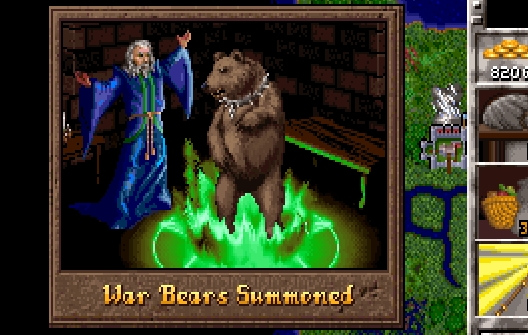
94-95 War Bear: (as B/X black bear) HD 4, x6 cost, attacks 1-3/1-3/1-6, morale 7, may wear armor (costs50 gold, AC 4)
96-97 Warbat: HD 2, x4 cost, echolocate 60 feet [a silence spell will blind it], trained to scout ahead in darkness and come back with warnings, fly 180 feet/round, attack 1-4)
98-99 Hunting Pard: (like B/X mountain lion) HD 3+3, x6 cost, attacks 1-3/1-3/1-6, surprise on 1-3 if sent ahead)
00 Warbeetle: HD 3+3, x8 cost, AC 3, attack 2-12, morale 10)
Friday, December 1, 2017
Charisma ... is it Comeliness, Fame, or Both?
... or something else entirely?
I actually dislike the idea that Charisma represents "Comeliness" or physical beauty, and that is explicitly not what it is in my game. I've had this discussion a couple times at the table to address the assumption that Charisma =/= beauty, but of course it always crops up here and there in offhand assumptions. Not that beauty doesn't play into Charisma, but it is neither necessary or sufficient for high Charisma.
My basic take on Charisma is that it is "charm." Handsome people of course have a natural kind of charm--but it's not difficult to imagine a beautiful person who is so awkward and difficult to get along with that their Charisma actually comes off as "average" right? Likewise, is it difficult to consider a person who would not be considered generically beautiful, and yet when they speak, people are magnetically attracted to their sense of humor, of comedic timing, or just sheer energy? (Hence the table-conversations, pointing out that high Charisma is not just beauty, low Charisma not just ugliness).
(I recently found The Hall of Blue Illumination, a podcast about the setting/game Tekumel/Empire of the Petal Throne, and on Episode 6, around the 16:20 mark, is a discussion of Comeliness in the rules. ... Now, apparently, according to Victor J. Raymond, Comeliness (replacing Charisma in Empire of the Petal Throne) was not original to the rules; and M.A.R Barker, the game creator, did not think that Charisma should be a character abstraction, but should be an outgrowth of actual play; but that Comeliness, as a physical measure of beauty, was an objective thing that a character could possess regardless of the player, like Strength or Constitution. There's something to this as an explanation of the stat ... and I really enjoyed the discussion on the podcast about what Comeliness could do for a game, i.e. slavers or priests hunting for an exceptionally beautiful character ... but for my B/X game I think I still prefer Charisma as something less concrete than mere physical beauty).
Some years ago, I found a post somewhere in the OSR blogosphere (alas, I have no idea where I found it, and I can't give credit where it's due!) discussing Charisma as a measure of fame or reputation. The post suggested that perhaps Charisma should be malleable according to success or failure on dungeon expeditions, to represent Charisma as fame rather than personal charm. I took this and ran with it; so for several years, characters that ran through my dungeons gained 1 point of Charisma (max 18) for every successful expedition (no character deaths, big haul), lost 1 point of Charisma (min 3) for every failure (no wealth, several character deaths), or no change for a wash (good haul and several deaths, or no deaths but no haul). This counted only for "lead" characters--henchmen didn't gain or lose charisma.
I like this rule because it represents well what I think of Charisma, but it has ultimately flattened a part of the game--whenever I turn to certain "old-hand" characters these days to ask for Charisma, I get the same answer: "18". Furthermore, I haven't been using this rule at all in the Greyhame Game ... and that's actually why I'm posting this, because I had a question from one of my old-hand players as to whether I would boost certain recent good hauls with higher Charisma? He offered a suggestion to look at it as fame or renown, a something separate from the attribute as Charisma, and I thought I'd hash something out here.
------
Local Reputation (as local as your referee wants it, be it per bar, per neighborhood, per town, per region, etc.)--roll only for the "captain" of the expedition, if any was elected; otherwise, roll once for one random character who participated
Returning from a Successful Expedition (no character deaths && good haul):
1 - reactions +1 (+4 max)
2 - retainer morale +1 (11 max)
3 - no. retainers +1
4 - basic equipment costs -5% (-50% max)
5 - major services cost -10% (e.g. hiring sages or armorers ... -25% max)
6 - owed one favor (referee discretion, not "worth" more than 1000 gp)
7 - infatuation (someone in town falls for you, for good or ill)
8 - gain attention of Thieves' Guild (referee discretion!)
9 - debt forgiven (1000-6000 gp; OR reactions +1 if no debt owed)
10 - attentions of a patron (referee discretion, but it should be positive)
11 - awesome parties (x2 xp from carousing)
12 - life of the party (x2 gp cost for carousing)
Returning from a Failed Expedition (1+ character deaths && poor or worse haul of loot):
1 - reactions -1 (-4 min)
2 - retainer morale -1 (4 min)
3 - no. retainers -1 (0 min)
4 - basic equipment costs +5% (+50% max)
5 - major services cost +10% (+25% max)
6 - evil reputation (would-be hirelings must roll "accept" twice before taking on with you)
7 - disinterest (someone who was interested in you moves on / you get snubbed in some way)
8 - lose attention of Thieves' Guild / gain attention of loan shark
9 - debt exacerbated--pay now, or owe an extra 50%, and if you don't pay up soon, to jail with you! (if no debt, -1 reactions)
10 - lose patron (if you don't have a patron, gain a bad reputation, e.g. patrons think twice before taking you on as a client)
11 - shunned (1/2 xp from carousing)
12 - ostracized (can't carouse at all!)
This is a rough draft, of course. Is granting it to just the captain too limited? Do d12 rolls offer too many options? Is adding yet another thing to the game too complicating (I would hope that d12 rolls granting 1 addition to a character sheet is better than coming up with some new score to keep track of ... but I don't know.)
Anyway, I'll likely try this out the next Greyhame Game in some way
I actually dislike the idea that Charisma represents "Comeliness" or physical beauty, and that is explicitly not what it is in my game. I've had this discussion a couple times at the table to address the assumption that Charisma =/= beauty, but of course it always crops up here and there in offhand assumptions. Not that beauty doesn't play into Charisma, but it is neither necessary or sufficient for high Charisma.
My basic take on Charisma is that it is "charm." Handsome people of course have a natural kind of charm--but it's not difficult to imagine a beautiful person who is so awkward and difficult to get along with that their Charisma actually comes off as "average" right? Likewise, is it difficult to consider a person who would not be considered generically beautiful, and yet when they speak, people are magnetically attracted to their sense of humor, of comedic timing, or just sheer energy? (Hence the table-conversations, pointing out that high Charisma is not just beauty, low Charisma not just ugliness).
(I recently found The Hall of Blue Illumination, a podcast about the setting/game Tekumel/Empire of the Petal Throne, and on Episode 6, around the 16:20 mark, is a discussion of Comeliness in the rules. ... Now, apparently, according to Victor J. Raymond, Comeliness (replacing Charisma in Empire of the Petal Throne) was not original to the rules; and M.A.R Barker, the game creator, did not think that Charisma should be a character abstraction, but should be an outgrowth of actual play; but that Comeliness, as a physical measure of beauty, was an objective thing that a character could possess regardless of the player, like Strength or Constitution. There's something to this as an explanation of the stat ... and I really enjoyed the discussion on the podcast about what Comeliness could do for a game, i.e. slavers or priests hunting for an exceptionally beautiful character ... but for my B/X game I think I still prefer Charisma as something less concrete than mere physical beauty).
Some years ago, I found a post somewhere in the OSR blogosphere (alas, I have no idea where I found it, and I can't give credit where it's due!) discussing Charisma as a measure of fame or reputation. The post suggested that perhaps Charisma should be malleable according to success or failure on dungeon expeditions, to represent Charisma as fame rather than personal charm. I took this and ran with it; so for several years, characters that ran through my dungeons gained 1 point of Charisma (max 18) for every successful expedition (no character deaths, big haul), lost 1 point of Charisma (min 3) for every failure (no wealth, several character deaths), or no change for a wash (good haul and several deaths, or no deaths but no haul). This counted only for "lead" characters--henchmen didn't gain or lose charisma.
I like this rule because it represents well what I think of Charisma, but it has ultimately flattened a part of the game--whenever I turn to certain "old-hand" characters these days to ask for Charisma, I get the same answer: "18". Furthermore, I haven't been using this rule at all in the Greyhame Game ... and that's actually why I'm posting this, because I had a question from one of my old-hand players as to whether I would boost certain recent good hauls with higher Charisma? He offered a suggestion to look at it as fame or renown, a something separate from the attribute as Charisma, and I thought I'd hash something out here.
------
Local Reputation (as local as your referee wants it, be it per bar, per neighborhood, per town, per region, etc.)--roll only for the "captain" of the expedition, if any was elected; otherwise, roll once for one random character who participated
Returning from a Successful Expedition (no character deaths && good haul):
1 - reactions +1 (+4 max)
2 - retainer morale +1 (11 max)
3 - no. retainers +1
4 - basic equipment costs -5% (-50% max)
5 - major services cost -10% (e.g. hiring sages or armorers ... -25% max)
6 - owed one favor (referee discretion, not "worth" more than 1000 gp)
7 - infatuation (someone in town falls for you, for good or ill)
8 - gain attention of Thieves' Guild (referee discretion!)
9 - debt forgiven (1000-6000 gp; OR reactions +1 if no debt owed)
10 - attentions of a patron (referee discretion, but it should be positive)
11 - awesome parties (x2 xp from carousing)
12 - life of the party (x2 gp cost for carousing)
Returning from a Failed Expedition (1+ character deaths && poor or worse haul of loot):
1 - reactions -1 (-4 min)
2 - retainer morale -1 (4 min)
3 - no. retainers -1 (0 min)
4 - basic equipment costs +5% (+50% max)
5 - major services cost +10% (+25% max)
6 - evil reputation (would-be hirelings must roll "accept" twice before taking on with you)
7 - disinterest (someone who was interested in you moves on / you get snubbed in some way)
8 - lose attention of Thieves' Guild / gain attention of loan shark
9 - debt exacerbated--pay now, or owe an extra 50%, and if you don't pay up soon, to jail with you! (if no debt, -1 reactions)
10 - lose patron (if you don't have a patron, gain a bad reputation, e.g. patrons think twice before taking you on as a client)
11 - shunned (1/2 xp from carousing)
12 - ostracized (can't carouse at all!)
This is a rough draft, of course. Is granting it to just the captain too limited? Do d12 rolls offer too many options? Is adding yet another thing to the game too complicating (I would hope that d12 rolls granting 1 addition to a character sheet is better than coming up with some new score to keep track of ... but I don't know.)
Anyway, I'll likely try this out the next Greyhame Game in some way
Monday, November 20, 2017
Journey Into Emma's Mind -- A Play Report, Joshua Blackketter Refereeing
The background:
On some kind of FLAILSNAILS adventure to which I was not party, Emma Brighteyes--apprentice and companion of the estimable muscle wizard Barnabus Sleet--was cursed by the fish-horror-god Blibdoolpoolp with catatonic insanity, such that she was basically incapable of any action other than lying around in bed drooling, being fed etc. by caretakers. Returning from this harrowing adventure, Barnabus Sleet sought around for some means of curing Emma of her catatonia and madness, and ultimately hit upon the idea of Pete Loudly, a high level wizard, sending Sleet and other companions into Emma's subconscious to literally quest the madness out of her mind.
My character, Laurantha the Unbeautiful, a B/X Elf 5, was one of the volunteers to accompany Barnabus Sleet on this quest; the other volunteers were Percival Dolmetscher, Magic Meryl, Brutal Pete, Sapphean Gratchit, and Ilse Raagenkampf-Sleet.
And thanks to Joshua Blackketter for the game! I thought it was a solid adventure in a dreamscape/symbolic sub-conscience, and everything seemed to tie together very well.
So:
"Laurantha to Xanthos--a Missive
Xanthos, my companion in arms--not only along the Dreaming River have I traveled, but now also through the rivers of dreams; the dreams of one Emma Brighteyes, apprentice of Barnabus Sleet (the founding librarian of the Jarrod's Memorial Library in Vyzor, of which I am an honorary librarian). This unfortunate, Emma, was damned by some fish-god with catatonic madness, and Sleet sought volunteers to journey into her very dreams to cut the madness out of her. We volunteers assembled at the Alchemy Shoppe of one Pete Loudly, wizard extraordinaire in the whereabouts of Vyzor; and greeted there by his imp familiar-shopkeeper, were transported by means of a cloud of thickly magical cigar smoke (blown in our faces) to the swamp-tower wherein resides the most puissant sorcerer Pete Loudly.
The imp-familiar announced us; then Pete Loudly ushered us through his halls into a most peculiar chamber, filled at once with weird crystalline machinery and fungal growths, of which fungus included seven seats. Into these seats we were ushered (Sleet leaving behind two hirelings he had brought, one a demon, best left behind due to the fact that it is generally not well-regarded to bring foreign demons into the depths of others' sub-consciences).
Pete then explained, 'It will be dreamlike ... things will have meaning, but not substance. Monsters encountered in the sub-conscience are usually external influences (though if Emma has latent homicidal tendencies, they might be internal/integral); it is unclear as yet in my researches just what happens to a body if the psyche is slain within the sub-psyche stratosphere--probably not death, but not necessarily a simple waking as from a dream.' etc. etc. and then we were suddenly transported through the machinery into the very dreamstuff of Emma's subconscious mind.
All was dark; as Sapphean himself glowed and Percival lit a torch, our eyes found ourselves in what might have been a meadow, other than the eerie deep-sea quality of the light, with layers of darkness above and around us. To one side of us, we glimpsed vast figures, veritable titans, clashing in what seemed to us a slow-motion melee. One was a bronze colossus in the shape of Sleet himself, the other in the shape of what I guessed to be Blibdoolpoolp, a great crab-clawed, lobster-faced titan of seeming-stone. To the other side of us, opposite these titanic figures, an eerie bio-luminescence glowed in the distance.
We all opted to head for the eerie glow, rather than attempt to tangle with titans, and ultimately found ourselves, in the manner of dreams, suddenly walking through the streets of the Vyzor pocket-dimension. And yet, not all was as it should be; the people themselves were all crab-clawed and lobster-faced, and spoke in the nonsense singsong of dreams; and Castle Vyzor itself had been replaced with a vast statue of obsidian carved to represent a fish vomiting forth a woman in an edifice as towering as the castle normally is; and the Jarrod Memorial Library was likewise transformed into a monstrous growth of coral.
Venturing first to the library, given the logic that it should have some symbolic meaning to Emma, we found the place strangely distorted, full of corals and growths of sea creatures where books, scrolls, and the skull of Jarrod should have been. Upstairs, we found Emma's room filled with strange sea-things; but looking into Sharene's room (Sharene being a fellow apprentice, Emma's friend), we discovered it as it should have been, except with an arm upon the bed (Barnabus to Sapphean: 'You could tell if it's human by taste, right?' Sapphean: 'I might.'). This was the first clue as to the full nature of our quest, but at the moment it seemed only prudent to collect the arm (it seemed to be Sharene's) and continue thence.
Back out on the streets of dream-Vyzor, we headed to the great statue at the center of town, and investigating it cursorily, discovered a great hole beneath the vast carven fish, set into the large pedestal upon which it sat. Within the hole seemed an endless abyss of darkness; yet when Barnabus sent a lighted torch into it with a spell, it attracted the attention of an alien denizen of the deeps, a fish-headed giant that leapt forth to attack us. Barnabus leapt right back, into the abyss to punch the rising horror, and only managed to fall into the darkness. Meanwhile, the rest of us engaged the thing in melee.
Percival received a powerful hit that knocked him out for most of the combat; Ilse managed to thrust her sword into the fish-giant's head deep enough to climb up onto it; Brutal Pete managed alternately to pin the creature's mouth open or closed with his spear; Magic Meryl both tended to Percival and struck the creature with a thrown stone; and I bravely stood before the thing, stalwartly drawing its ire and blocking its fists with my shield, too much engaged in defense to mount an effective offense. Eventually, the thing was slain by Meryl's dagger, and it burst into an ichorous mess, and we found Barnabus Sleet at the foot of a mere ten foot deep pit beside a great golden coin, and also a leg, as if 'twere Sharene's.
This coin, he lifted, and as he did so it suddenly shrank to the size of a normal gold piece; and because of my excellence in the melee, blocking hits with my shield, I was chosen to be the guardian of the coin, while Barnabus took the leg. Thereafter, we as a party intended to head to the Drooling Thoul, a local watering hole for adventurers in Vyzor; but along the way we came across a shack outside of which roosted a dream-owl--and Emma is known for taking the shape of an owl herself.
Seeing this, we stopped to investigate. Percival, a translator, attempted to communicate with the owl, and indeed upon mention of Emma's name, it turned its head. Then, breaking through the door of the shack, Barnabus revealed to us all a strange vision of child-Emma eating supper with her parents, except that her parents were crab-people like all the other villagers.
After some rather strange attempts to entice dream-child-Emma outside, we ultimately found ourselves following the owl out from Vyzor and into a forest (this, because Magic Meryl finally deigned to ask the owl outside the shack directly as to the whereabouts of Emma's spirit).
In the forest, we observed mice attempting to sneak through the brush, and yet being taken up by dark and shadowy hands from creatures that lurked in the darkness beyond our torchlight. Barnabus attempted to strike down one of the shadowy things with his fist, but managed instead to splinter a tree; nevertheless, this revealed the creature in our light to be a goblin, and yet its form was no fleshly thing, but a corse vaguely formed of oozing black oil.
Alas, distracted by this thing, we lost sight of the owl flying on its way; my comrades determined that slaying these goblin things was the best means of saving the forest for Emma's mind, but I inquired of Sleet as to the nature of the forest, and he suggested that it might be the home of the witches' coven of which Emma is a member. Armed with this knowledge, we all agreed to venture deeper into the wood, both seeking the coven, and destroying ooze-goblins as we went. These creatures being simple to destroy, we slew a great many on our way, and the mouse-population boomed behind us, ultimately including even Rodents Of Unusual Size; but in the end, we arrived in a clearing wherein stood the three Ink Witches (Emma's coven), except changed such as to have the heads and wings of owls.
Percival approached them and asked in Owl if they knew where Emma was; they pointed to a tree, in which sat the spirit of Emma in the form of an owl. We all got the dream-sense that Emma's self had recessed from personhood into the safety of merely being an owl to save herself from ultimate madness. We then went to the tree under the Emma-owl, and when I offered it the gold coin, it took it and flew away swiftly; and this seeming to be the logic of the dream, we all followed post-haste, but not without taking up the head of Sharene, which stared forth at us from across the clearing.
Following the owl, we arrived at a long shoreline of obsidian sand and glittering water. For some reason, Percival and Meryl began to throw stones into the water, and one of Meryl's stones landed with a clang rather than a splash. Barnabus used the last of his fly spell (cast earlier when he was within the grip of the illusion of the abyss that ended up being merely a ten foot pit) to search the water, and found a tonbo--a great iron club--sticking out of the water. Grabbing hold of said club, Barnabus then wrestled the club out of the grasp of the scaly arm that held onto its lower part, and then the arm sank back down into the dark waters. Meanwhile, those of us on the shore, combing the sand, came upon the other arm of Sharene, sticking up out of the sand.
Uncertain where to go without an owl leading us, we returned to Vyzor to seek out the Drooling Thoul once and for all; there we saw a man, not a crab-man, but a real (though dreamily indistinct) human man, who paid his tab as we arrived and then immediately went back out into the dream world. We followed him, and ultimately found ourselves standing before a great bronze gate. Upon the surface of this gate were carved spirals of stories in images, an infinite number, all spiraling forth from the single central image of two people meeting romantically at a pub. Every infinite possibility of the combinations of their own stories twined out of that central image; and Brutal Pete hit upon an interesting solution to open said gate when he kissed the central image. All the story-paths spiraling out lit up, and Brutal Pete touched the one he said he liked best, of the woman (she seemed to be Emma) learning not to need a man in her life, and yet who also found happiness with someone she could see as her equal.
All of the sudden, a kind of keyhole opened up with the tonbo as the seeming key; inserting it, the gate indeed opened, and revealed behind it the second leg of Sharene, which Barnabus duly collected.
At this point, Sapphean was certain that we should return to the shack wherein dwelt child-Emma, thinking that we had not yet exhausted the dream-possibilities there. So duly we returned, and there, Barnabus suddenly spilled his knowledge that Emma had deep-seated guilt over having once accidentally injured Sharene worse when trying to heal her; and that though she had ultimately saved Sharene, she still blamed herself for 'tearing her friend apart'.
And indeed, when we presented child-Emma with the body parts we had found, she brightened suddenly. 'You found them!' she declared, and then went to her 'room' in the hovel and produced a doll's torso that seemed the right fit for all the parts. Ilse then sewed every limb back together, and suddenly there was Sharene before us, alive--as far as dream-alive goes. She then led child-Emma to the clearing with the owl-witches, wherein they enacted a great ritual, summoning all the owls of the forest until finally the Emma-owl appeared, descended into a triangle created by the outspread wings of the owl-witches--and then suddenly it was an owl no longer, but Emma herself stood there, and she took her tonbo from Sleet, and she and Sharene mounted it together and flew off toward the colossi battling on the horizon.
We all followed; and we saw that when Emma and Sharene arrived, they nearly collided with the bronze giant of Sleet--and then with a flash, the colossus was no longer Sleet, but Emma herself, huge as Blibdoolpoolp and wielding a tonbo as tall as a tower.
We below joined in the combat as best we could in support of this colossus of Emma. Sleet and I threw lightning bolts; Brutal Pete drank a potion of giant's strength and tried to overtopple Blibdoolpoolp by wresting at her feet; Ilse cast haste on the party; and Sapphean flew around the fish/crab horror, biting at her and stinging at her with the bizarre growths borne on his body from the trials he has withstood while adventuring.
And then titan-Emma swung her great club at the colossus of Blibdoolpoolp, and with a crash like a thunderbolt, she burst open the fish-horror's breast. Obsidian fragments and ichor rained from above as the vast giant teetered and then careered to the earth to shatter into a thousand dark shards.
And all at once, we were seated once again in Pete Loudly's tower, surrounded by crystalline machinery and fungal growths. ...
I have since heard that Emma Brighteyes has returned to the waking world, as fully aware as before the damnation of the god that cursed her into madness. Undoubtedly, deep scars remain--but such are the scars of healing after great injury overcome. I expect there will be much rejoicing in the house of Sleet for some time to come.
Well, Xanthos--such is the account of my descent into the dreams of another. I tell you, I have seen many wonders since wandering down the Dreaming River, and I do not doubt that I shall see many more. Someday perhaps you should join me--and let that bitch Almalonthas preen in all her supernatural beauty alone for a time, while our powers grow and overtop hers. But that is of course, your prerogative.
Your companion-in-arms under the Black Dragon,
Laurantha Akala"
On some kind of FLAILSNAILS adventure to which I was not party, Emma Brighteyes--apprentice and companion of the estimable muscle wizard Barnabus Sleet--was cursed by the fish-horror-god Blibdoolpoolp with catatonic insanity, such that she was basically incapable of any action other than lying around in bed drooling, being fed etc. by caretakers. Returning from this harrowing adventure, Barnabus Sleet sought around for some means of curing Emma of her catatonia and madness, and ultimately hit upon the idea of Pete Loudly, a high level wizard, sending Sleet and other companions into Emma's subconscious to literally quest the madness out of her mind.
My character, Laurantha the Unbeautiful, a B/X Elf 5, was one of the volunteers to accompany Barnabus Sleet on this quest; the other volunteers were Percival Dolmetscher, Magic Meryl, Brutal Pete, Sapphean Gratchit, and Ilse Raagenkampf-Sleet.
And thanks to Joshua Blackketter for the game! I thought it was a solid adventure in a dreamscape/symbolic sub-conscience, and everything seemed to tie together very well.
So:
"Laurantha to Xanthos--a Missive
Xanthos, my companion in arms--not only along the Dreaming River have I traveled, but now also through the rivers of dreams; the dreams of one Emma Brighteyes, apprentice of Barnabus Sleet (the founding librarian of the Jarrod's Memorial Library in Vyzor, of which I am an honorary librarian). This unfortunate, Emma, was damned by some fish-god with catatonic madness, and Sleet sought volunteers to journey into her very dreams to cut the madness out of her. We volunteers assembled at the Alchemy Shoppe of one Pete Loudly, wizard extraordinaire in the whereabouts of Vyzor; and greeted there by his imp familiar-shopkeeper, were transported by means of a cloud of thickly magical cigar smoke (blown in our faces) to the swamp-tower wherein resides the most puissant sorcerer Pete Loudly.
The imp-familiar announced us; then Pete Loudly ushered us through his halls into a most peculiar chamber, filled at once with weird crystalline machinery and fungal growths, of which fungus included seven seats. Into these seats we were ushered (Sleet leaving behind two hirelings he had brought, one a demon, best left behind due to the fact that it is generally not well-regarded to bring foreign demons into the depths of others' sub-consciences).
Pete then explained, 'It will be dreamlike ... things will have meaning, but not substance. Monsters encountered in the sub-conscience are usually external influences (though if Emma has latent homicidal tendencies, they might be internal/integral); it is unclear as yet in my researches just what happens to a body if the psyche is slain within the sub-psyche stratosphere--probably not death, but not necessarily a simple waking as from a dream.' etc. etc. and then we were suddenly transported through the machinery into the very dreamstuff of Emma's subconscious mind.
All was dark; as Sapphean himself glowed and Percival lit a torch, our eyes found ourselves in what might have been a meadow, other than the eerie deep-sea quality of the light, with layers of darkness above and around us. To one side of us, we glimpsed vast figures, veritable titans, clashing in what seemed to us a slow-motion melee. One was a bronze colossus in the shape of Sleet himself, the other in the shape of what I guessed to be Blibdoolpoolp, a great crab-clawed, lobster-faced titan of seeming-stone. To the other side of us, opposite these titanic figures, an eerie bio-luminescence glowed in the distance.
 |
| Blibdoolpoolp, apparently |
We all opted to head for the eerie glow, rather than attempt to tangle with titans, and ultimately found ourselves, in the manner of dreams, suddenly walking through the streets of the Vyzor pocket-dimension. And yet, not all was as it should be; the people themselves were all crab-clawed and lobster-faced, and spoke in the nonsense singsong of dreams; and Castle Vyzor itself had been replaced with a vast statue of obsidian carved to represent a fish vomiting forth a woman in an edifice as towering as the castle normally is; and the Jarrod Memorial Library was likewise transformed into a monstrous growth of coral.
Venturing first to the library, given the logic that it should have some symbolic meaning to Emma, we found the place strangely distorted, full of corals and growths of sea creatures where books, scrolls, and the skull of Jarrod should have been. Upstairs, we found Emma's room filled with strange sea-things; but looking into Sharene's room (Sharene being a fellow apprentice, Emma's friend), we discovered it as it should have been, except with an arm upon the bed (Barnabus to Sapphean: 'You could tell if it's human by taste, right?' Sapphean: 'I might.'). This was the first clue as to the full nature of our quest, but at the moment it seemed only prudent to collect the arm (it seemed to be Sharene's) and continue thence.
Back out on the streets of dream-Vyzor, we headed to the great statue at the center of town, and investigating it cursorily, discovered a great hole beneath the vast carven fish, set into the large pedestal upon which it sat. Within the hole seemed an endless abyss of darkness; yet when Barnabus sent a lighted torch into it with a spell, it attracted the attention of an alien denizen of the deeps, a fish-headed giant that leapt forth to attack us. Barnabus leapt right back, into the abyss to punch the rising horror, and only managed to fall into the darkness. Meanwhile, the rest of us engaged the thing in melee.
 |
| Like this, except it also had arms that pummeled us |
Percival received a powerful hit that knocked him out for most of the combat; Ilse managed to thrust her sword into the fish-giant's head deep enough to climb up onto it; Brutal Pete managed alternately to pin the creature's mouth open or closed with his spear; Magic Meryl both tended to Percival and struck the creature with a thrown stone; and I bravely stood before the thing, stalwartly drawing its ire and blocking its fists with my shield, too much engaged in defense to mount an effective offense. Eventually, the thing was slain by Meryl's dagger, and it burst into an ichorous mess, and we found Barnabus Sleet at the foot of a mere ten foot deep pit beside a great golden coin, and also a leg, as if 'twere Sharene's.
This coin, he lifted, and as he did so it suddenly shrank to the size of a normal gold piece; and because of my excellence in the melee, blocking hits with my shield, I was chosen to be the guardian of the coin, while Barnabus took the leg. Thereafter, we as a party intended to head to the Drooling Thoul, a local watering hole for adventurers in Vyzor; but along the way we came across a shack outside of which roosted a dream-owl--and Emma is known for taking the shape of an owl herself.
Seeing this, we stopped to investigate. Percival, a translator, attempted to communicate with the owl, and indeed upon mention of Emma's name, it turned its head. Then, breaking through the door of the shack, Barnabus revealed to us all a strange vision of child-Emma eating supper with her parents, except that her parents were crab-people like all the other villagers.
After some rather strange attempts to entice dream-child-Emma outside, we ultimately found ourselves following the owl out from Vyzor and into a forest (this, because Magic Meryl finally deigned to ask the owl outside the shack directly as to the whereabouts of Emma's spirit).
In the forest, we observed mice attempting to sneak through the brush, and yet being taken up by dark and shadowy hands from creatures that lurked in the darkness beyond our torchlight. Barnabus attempted to strike down one of the shadowy things with his fist, but managed instead to splinter a tree; nevertheless, this revealed the creature in our light to be a goblin, and yet its form was no fleshly thing, but a corse vaguely formed of oozing black oil.
 |
| The Sheliak from Star Trek seem about right, just imagine goblin dimensions |
Alas, distracted by this thing, we lost sight of the owl flying on its way; my comrades determined that slaying these goblin things was the best means of saving the forest for Emma's mind, but I inquired of Sleet as to the nature of the forest, and he suggested that it might be the home of the witches' coven of which Emma is a member. Armed with this knowledge, we all agreed to venture deeper into the wood, both seeking the coven, and destroying ooze-goblins as we went. These creatures being simple to destroy, we slew a great many on our way, and the mouse-population boomed behind us, ultimately including even Rodents Of Unusual Size; but in the end, we arrived in a clearing wherein stood the three Ink Witches (Emma's coven), except changed such as to have the heads and wings of owls.
Percival approached them and asked in Owl if they knew where Emma was; they pointed to a tree, in which sat the spirit of Emma in the form of an owl. We all got the dream-sense that Emma's self had recessed from personhood into the safety of merely being an owl to save herself from ultimate madness. We then went to the tree under the Emma-owl, and when I offered it the gold coin, it took it and flew away swiftly; and this seeming to be the logic of the dream, we all followed post-haste, but not without taking up the head of Sharene, which stared forth at us from across the clearing.
Following the owl, we arrived at a long shoreline of obsidian sand and glittering water. For some reason, Percival and Meryl began to throw stones into the water, and one of Meryl's stones landed with a clang rather than a splash. Barnabus used the last of his fly spell (cast earlier when he was within the grip of the illusion of the abyss that ended up being merely a ten foot pit) to search the water, and found a tonbo--a great iron club--sticking out of the water. Grabbing hold of said club, Barnabus then wrestled the club out of the grasp of the scaly arm that held onto its lower part, and then the arm sank back down into the dark waters. Meanwhile, those of us on the shore, combing the sand, came upon the other arm of Sharene, sticking up out of the sand.
Uncertain where to go without an owl leading us, we returned to Vyzor to seek out the Drooling Thoul once and for all; there we saw a man, not a crab-man, but a real (though dreamily indistinct) human man, who paid his tab as we arrived and then immediately went back out into the dream world. We followed him, and ultimately found ourselves standing before a great bronze gate. Upon the surface of this gate were carved spirals of stories in images, an infinite number, all spiraling forth from the single central image of two people meeting romantically at a pub. Every infinite possibility of the combinations of their own stories twined out of that central image; and Brutal Pete hit upon an interesting solution to open said gate when he kissed the central image. All the story-paths spiraling out lit up, and Brutal Pete touched the one he said he liked best, of the woman (she seemed to be Emma) learning not to need a man in her life, and yet who also found happiness with someone she could see as her equal.
 |
| Personally, I imagined stories spiraling out like the expectation vs. reality scene from 500 Days of Summer --except all part of a giant bronze gate! |
All of the sudden, a kind of keyhole opened up with the tonbo as the seeming key; inserting it, the gate indeed opened, and revealed behind it the second leg of Sharene, which Barnabus duly collected.
At this point, Sapphean was certain that we should return to the shack wherein dwelt child-Emma, thinking that we had not yet exhausted the dream-possibilities there. So duly we returned, and there, Barnabus suddenly spilled his knowledge that Emma had deep-seated guilt over having once accidentally injured Sharene worse when trying to heal her; and that though she had ultimately saved Sharene, she still blamed herself for 'tearing her friend apart'.
And indeed, when we presented child-Emma with the body parts we had found, she brightened suddenly. 'You found them!' she declared, and then went to her 'room' in the hovel and produced a doll's torso that seemed the right fit for all the parts. Ilse then sewed every limb back together, and suddenly there was Sharene before us, alive--as far as dream-alive goes. She then led child-Emma to the clearing with the owl-witches, wherein they enacted a great ritual, summoning all the owls of the forest until finally the Emma-owl appeared, descended into a triangle created by the outspread wings of the owl-witches--and then suddenly it was an owl no longer, but Emma herself stood there, and she took her tonbo from Sleet, and she and Sharene mounted it together and flew off toward the colossi battling on the horizon.
We all followed; and we saw that when Emma and Sharene arrived, they nearly collided with the bronze giant of Sleet--and then with a flash, the colossus was no longer Sleet, but Emma herself, huge as Blibdoolpoolp and wielding a tonbo as tall as a tower.
We below joined in the combat as best we could in support of this colossus of Emma. Sleet and I threw lightning bolts; Brutal Pete drank a potion of giant's strength and tried to overtopple Blibdoolpoolp by wresting at her feet; Ilse cast haste on the party; and Sapphean flew around the fish/crab horror, biting at her and stinging at her with the bizarre growths borne on his body from the trials he has withstood while adventuring.
And then titan-Emma swung her great club at the colossus of Blibdoolpoolp, and with a crash like a thunderbolt, she burst open the fish-horror's breast. Obsidian fragments and ichor rained from above as the vast giant teetered and then careered to the earth to shatter into a thousand dark shards.
And all at once, we were seated once again in Pete Loudly's tower, surrounded by crystalline machinery and fungal growths. ...
I have since heard that Emma Brighteyes has returned to the waking world, as fully aware as before the damnation of the god that cursed her into madness. Undoubtedly, deep scars remain--but such are the scars of healing after great injury overcome. I expect there will be much rejoicing in the house of Sleet for some time to come.
Well, Xanthos--such is the account of my descent into the dreams of another. I tell you, I have seen many wonders since wandering down the Dreaming River, and I do not doubt that I shall see many more. Someday perhaps you should join me--and let that bitch Almalonthas preen in all her supernatural beauty alone for a time, while our powers grow and overtop hers. But that is of course, your prerogative.
Your companion-in-arms under the Black Dragon,
Laurantha Akala"
Sunday, November 19, 2017
How Underworld Doors Hate Adventurers
 |
| Referee: "Roll an open doors check." Bobby the Magic-User: "I got a 6!" Referee: "The door remains steadfastly closed. Now what?" |
Back in 2012, when I was first really introduced to the idea of the OSR, of the megadungeon, of the "dungeon as mythic underworld," when I first looked critically into the D&D B/X books I'd acquired by strange fortune some years earlier ... I remember stumbling over the "check" required simply to open a door.
"NORMAL DOORS: Doors in a dungeon are usually closed, and are often stuck or locked. A lock must usually be picked by a thief. An unlocked door must be forced open to pass through it. To force open a door, roll 1d6; a result of 1 or 2 (on 1d6) means that the door is forced open. The roll should be adjusted by a character's Strength score adjustment. The number needed to open a door can never be less than 1 nor greater than 1-5." ("Part 4: The Adventure," Dungeons and Dragons Basic Rulebook, edited by Tom Moldvay, 1981 version, page B21)
Following the sense of the "dungeon as mythic underworld" (an essay I read back then ... Save Versus All Wands has excerpted parts that I remember, particularly about doors, here), I was willing to accept that doors were strangely unrelenting to characters attempting to explore the underworld. Perhaps there was a sense of the faerie otherworld magic about them, or whatever, but I could see the gaming applicability too--what if the players stumbled onto a nest of trolls and had to get out fast, and yet the door wouldn't yield to their "ministrations"?! That seemed like gaming gold, of terrified players facing a real horror ...
And yet, at the table, it never worked out that way.
First, despite the fact that I had envisioned a way to make checks like that work, that scenario never developed. The first entrants into my megadungeon then ("the Catacombs") either prudently spiked the doors, or got themselves quickly killed by the wereleopards lurking in the shadows.
Secondly, that very vision requires that door checks be allowed to be repeated; and when the assumption is that repeated attempts are allowable, it became dreadfully frustrating to force players to roll dice for a door, round after round, until they finally forced it open.
Ultimately, the combination of a desire to require "door checks" but a frustration with repeat checks created enough friction that I came up with a rationale--in my game, when players open a door, they roll a door check; but that check is not representing the physical opening of the door--that happens regardless--rather, success indicates that the character opens the door quietly enough to chance surprise on anything on the other side; and failure indicates that the characters made such noise opening the door that anything on the other side is aware of their presence. (This works out well with "hear noise" checks too, where savvy players who listen are less likely to be surprised ...)
So that's how open door checks work in my games:
1-2 opened quietly--may surprise enemies on the other side on a 1 or 2 on a d6
3-6 opened noisily--enemies on the other side are not surprised
(+/-) according to Strength
(And because of my descriptions of these I've had two characters named for these checks in my games--Sturge Doorbane, a brawny 18 STR Dwarf, and Morphumax Doorscraper, also a brawny 17? STR Dwarf ... curious that both were dwarves!)
------
And then I finally got to play in Jeff's Vaults of Vyzor some few months ago (Session #16), and Jeff Rients faithfully has characters make open door checks. But what was novel to me--and I'm guessing is actually the intent of the rules, and so not novel to D&D!--is that if characters can't open a door, they just can't for that session (at least, that's how it seemed to me while playing with him as referee).
Which makes so much sense--just like how with thief rules, if a thief fails to pick a certain lock, he cannot try again until he gains a level (forcing the party to come up with another means of opening the lock ...).
This channels player exploration in literally random ways (i.e. where they can go is determined by a random roll when presented with a door); it also preserves the rule and the horror ("We can't get out ... We can't get out ..." as the annals of Moria described), without forcing any tedium on the play of the game.
All of which is to say ... rules require interpretation. I ran my game in 2012 without anything but the words on the page (both the B/X rulebooks I had, as well as the words on the internet pages of various blogs)--but without any actual teacher to show me his or her way. I'm going to keep my way--it's too ingrained for me anymore--but I can appreciate and enjoy other ways of interpreting the rules.
Tuesday, November 14, 2017
the Nightstalker
Before I publish the next Greyhame Dungeon play report, here's a monster recreated from one of my favorite games: the Nightstalker
 |
| Summoning a Nightstalker |
A significant amount of my mental landscape when it comes to fantasy was laid by the old Microprose game Master of Magic (1994). Back in elementary school before I had any actual D&D rulebooks, I made up monsters according to their stats in Master of Magic; and though I may have ultimately switched rather completely to 3E in highschool, and now to B/X in 2012 onward, still Master of Magic stands as an ur-source, like The Lord of the Rings, or the Timelife Books: The Enchanted World series, or The Flight of Dragons cartoon.
The Nightstalker is a summoned creature from Master of Magic, which is in hindsight clearly a rip-off of the invisible stalker in D&D; and yet, the Nightstalker is undead, only able to be conjured with a wizard with Death spellbooks; moreover, the Nightstalker has a formidable death gaze attack, which the invisible stalker clearly lacks.
Here's the Nightstalker's abilities per Master of Magic (drawn from a PDF download of the manual):
Nightstalker -- Magic (Death) -- Upkeep (1 Mana) -- Melee (7) -- Defense (3) -- Resistance (8) -- Hits (10) -- Movement (2) -- Special (Death Gaze -2 save; Invisible)
From which I will draw this (soft) D&D version:
the Nightstalker
AC 0 (4 if one can see invisible)
HD 5
THAC0 15
damage 2-12 + death gaze
death gaze -- all characters in melee with the Nightstalker save against death or die (+2 on save, -2 "to hit" if characters look sideways; +4 to save, -4 "to hit" if characters fight with eyes closed/face averted/etc.)
save as a Fighter 6
180' movement
morale 11
immune to charm, sleep, cold
turned as an undead of HD+2 (i.e. 7 for this write-up)
------
Such a monster is, of course, terrible to use against a party that has no way to detect invisible ... and nevertheless, I wrote a small dungeon that included something along these lines as a possible wandering monster within (though that version was for 5E, rather than B/X D&D)
Naturally, I rolled its appearance a couple times, and whenever it showed up, the party was in a high dudgeon of terror given the fact that it's naturally invisible and can strike when it pleases--and with a death gaze to boot! Two lower level compatriots died under the horror of its death-gaze; and ultimately, the party looted what they wanted without ever killing the invisible monster stalking the dungeon below ...
The stats don't necessitate any particular HD, AC, or anything, I'm just spitballing according to what I know of the Master of Magic wargame system, and still downplaying the monster a bit. The Nightstalker could easily be scaled up or down depending on what you want to do with it--maybe it's semi-visible for low level parties (note that it doesn't have immunity to normal weapons, and may be struck by any old sword!); maybe it has HD 10 for a high level group that may or may not have see invisible.
Saturday, November 11, 2017
the Grey Pilgrims
'... "These are High-Elves! They spoke the name of Elbereth!" said Frodo in amazement. Few of that fairest folk are ever seen in the Shire. Not many now remain in Middle-Earth, east of the Great Sea. This is indeed a strange chance!"
'The hobbits sat in shadow by the wayside. Before long the Elves came down the lane towards the valley. They passed slowly, and the hobbits could see the starlight glimmering on their hair and in their eyes. They bore no lights, yet as they walked a shimmer, like the light of the moon above the rim of the hills before it rises, seemed to fall about their feet. They were now silent [having ceased their song of Elbereth], and as the last Elf passed he turned and looked toward the hobbits and laughed.
'"Hail, Frodo!" he cried. "You are abroad late. Or are you perhaps lost?" Then he called to the others, and all the company stopped and gathered round. ...'
(J.R.R. Tolkien, "Three is Company," The Fellowship of the Ring, 1955, pg 109, Ballantine Books)
This Elf turns out to be Gildor Inglorion of the House of Finrod, and he and his companions are members of a Wandering Company, those who sometimes come into the Shire during spring or autumn, but "'For tonight we go to the woods on the hills above Woodhall. ...'" (p. 110)
(It is curious to me to know that Gildor, being of the House of Finrod, is in fact a Grey Elf, one of the Noldor who went to see the light of the trees in Valinor, yet who returned to Middle-Earth in company of Feanor, their chief, to seek the Silmarils--and who slaughtered the Sea-Elves to take their ships in order to return! As Gildor later says to Frodo, the Elves do indeed carry their own burdens and sorrows separate from the other races of Middle-Earth)
------
In my Encounters on the Road table, one of the entries is that of Elf-Pilgrims, with whom characters may carouse (spending money and gaining experience per carousing), like Frodo and the hobbits do at Woodhall, but with the possible consequence that they pass on with the Elves, forgetting their place in the mortal world for a time in preference for the wonders of the Elves.
Two weeks ago, as the players in my regular (non-Greyhame) game traveled from their home city to the halfling land of Hopshire, they twice encountered Elf-Pilgrims (due to the vagaries of the dice). The first encounter went off without any consequences, but during the second, one of the characters failed and nearly joined the Elf-Pilgrims on their way to the Glimmervaults to look at the Stars that gleam within those caverns (hence the name)--Ronald the magic-user was so entranced by their verses in praise of the ancient Stars, the Stars that gleamed above when the Elves first stepped forth in the morning of the world, before even the Sun and the Moon were set into the heavens, that he intended to join the Elves making their way there.
Alas (?) his friends got wind of his plan and got him so stinking drunk that he was too hung over to join the Elves on the next leg of their journey, and he got over their charm as he nursed his hangover.
Obviously, these pilgrims will figure in the Greyhame game before long, as the destination of their pilgrimage is the caverns of the Glimmervaults.
All of which is to say in a longwinded way, I was thinking of developing a table for encounters with Elf-Pilgrims or Wandering Companies, so here it is:
Where are they headed?
1) to the Glimmervaults (or some other place where the Elves can gaze upon the ancient Stars down from whence they stepped in the morning of the world); a character who carouses with them and fails his save against drunkenness will be enchanted by their vision of the Stars and accompany them, a journey which will take from 3 to 18 months before he returns to play
2) to the Grey Havens and the ships that sail away across the star-strewn Sea, out of the mortal world to halls of everlasting ease; a character may save at +2 against poison to avoid the consequences of carousing with these Elves, but a failure means that she will travel with them to the nearest ocean port and thence pass out of the world forever--once gone across the Sea, only a wish could bring her back
3) to nowhere in particular--the Elves are a Wandering Company who wend through wood and dale, carousing in the hidden vales beneath the starlight; characters who carouse with them gain the effects of carousing, but are also healed as if they had rested for 2-12 days--as indeed they have! for the Elfin feast, though it seemed to last but a night, has lasted nigh a fortnight (and advance the calendar accordingly). The Elves have all vanished and continued on to the next valley by the time the characters waken, leaving memories of starlit draughts and the apples of Avalon
4) to the Isle of Avalon (or somewhere likewise suitable), bearing the bier of a mortal warrior of such renown (or so beloved by a King or Queen of Elves) that he is to be brought back to the Sunny Isle to wait in deathly sleep for the day of his awakening. Carousing with those among this company, one hears epics of both the hero himself, and of elder days and ancient heroes, and such stirring deed-songs fill the heart with courage such that one receives experience equal to 100 times one's level above the normal carousing benefit
5) not a pilgrimage per se, but a company of Wood-Elves, wary of strangers--an Elf-banquet of the sort that got the dwarves into trouble in the Mirkwood (in The Hobbit). Attempting to carouse with these Elves, a character will wander away from the party and get lost--as an individual, they will suffer 1-6 attrition dice, and if any dice remain that would cause damage, the character is instead imprisoned by the Prince of the Wood-Elves in his secret palace-dungeon until such time as she is rescued or ransomed (1000 gp/level for a ransom as a baseline)--(that, or they're just imprisoned on failing a save against paralysis)
6) to the dressing of the idols of Astora and Anglamorath at a clear lake deep in the forests of the Dwimmerholt (Anglamorath-Astora is a dual goddess of Chaos worshiped primarily by the Elves; Astora is the Elf-Queen of Stars, the First Elf, and she is joined in worship to Anglamorath the Black Dragon, the Dark Behind the Stars, Whose Wings are the Night); carousing with these Elves one must save rather against spells as they attempt to charm and enslave the characters for a year and a day, after which they will be free to return to the mortal world
Who is among the Company?
1) Adrasteia, a Lamia (not the weird lion-type, a real Lamia who is a serpent wearing the guise of a maiden); she is accompanied by two charmed slaves, Archidamus (Fighter 3ish with a shield, spear, mail armor, and a lion cloak of courage, +1 AC, +1 morale to hirelings) and Musa (Fighter 3ish with a shield, scepter/mace +2, and mail armor)
2) Ponderous, a hugely tall pine Treant (+2 HD); unlike most Treants, he is not vulnerable to fire due to the flaky scales of his bark and the great height of his limbs--but at the same time, he receives only one attack because of his great height, and is treated as a "giant" for attacks against dwarves and halflings
3) the Elf-woman Thranduila and her halfling companion Otho Skopper (they seem a rather Fafhrd and the Gray Mouser pair); Thranduila is laconic and interested in wine and handsome fighting-men, while Otho is exuberant, often derisive, and interested in wine and pipeweed. Their motives are mercenary, such that they might be enticed away with promise of loot or gold to do some other deed, rather than continue on with the pilgrimage--maybe
4) the Goblin Blinx, chief slave (2 HD, one first level spell) over 3-18 other (normal) goblins; Blinx himself harbors a slow simmering hatred for his Elfin masters (simmered over several centuries), and is subtly eager to seek aid from mortals for his own manumission, whether that involves an exchange of coin or bloodshed; he would even be happy to instigate a goblin rebellion if he could get support outside the few goblin-slaves among the party
5) Morla of the Mists, a high level magic-user, presumably female; she is always somewhat obscured by a mist that seems to billow up from the hems of her dark, heavy cloak. Her perambulations with the Elves never takes her too far away from her dwelling in the Myrkr Fen. Why she travels with the Elves is obscure, but being a high level magic-user and some-time sage, she can answer sage-type questions for a significant offering of gp, including the identification of magic items
6) Ceor (or Ceora if female?) a mortal overcome by the burden of his or her deeds while adventuring; perhaps he cared too deeply about the plight of some orc children, only to have his spirit crushed by his comrades' murderous intent; perhaps she carried the burden of a supremely evil artefact to the pits of Hell to see it destroyed, and the toll has crushed all joy in her mortal life; either way, he or she accompanies the Elves in hopes of a finding a way out of the mortal realm and all its suffering ...
The Elves carry with them a thing of Interest ... what is it?
1) a Hunting Horn that once per week can summon 1-3 Fey Hounds (3 HD, AC 6, THAC0 17, d2-12, gaze of fear all in melee save against paralysis or unable to act for the round, 2 consecutive saves immune; look aside, +2 to save, -2 "to hit"; close eyes/look away, no need to save, but -4 "to hit"); possessed by the leader of the pilgrimage, who will not part with it lightly (but will entertain reasonable offers of gold or deeds)
2) a Ring of the Elf-Friend (protection +1, and +2 on saves against charm and sleep), granted to any one character who acts the most graciously with the Elves (speaking Elvish with them, sharing poetry, naming constellations, etc.). Naturally, the +2 bonus applies on the carousing save as well
3) the Mead of Poetry (one character determined at random during carousing gains +1 CHA, has a knack for poetry, regardless of player ability; and they may further, once per year, utter a doom which may be a geas or quest spell, or any kind of curse, quest, doom, etc. that a bard might utter in literature--think of the Icelandic skalds in particular, e.g. Egil Skallagrimsson)
4) a Philtre--on a failed save against carousing, one character determined at random is in love with one of the Elves on the pilgrimage (this does not necessitate joining the pilgrimage, but does entail other effects ...); on a successful save against carousing, the same character has instead filched the Philtre, and may use it as a love potion as they will ...
5) an Idol, either a Lawful, Clannish, or Good Idol taken in a raid; OR a Chaotic, Natural, or Arcane Idol representing the Elves' cult. Returning the former to the proper cult would provide a large experience reward, while seizing the latter would surely result in a statue worth 600 to 3600 gold (3d6 times 20) and commensurate experience
6) an Elfin Lap-Dog, a creature bred for companionship rather than war or hunting (HD 1, AC 6, THAC0 19, d1-6); and it wears a collar with soothing bells forged in Avalon (+1 to all saves for those within 30' of it, if the dog is adventuring for some reason); spending a week in its presence "back home" grants such ease of mind that one curse is removed, OR a painful love/memory/etc. may be forgotten for that week, OR all wounds and diseases are cured, even if the HP total is more than can be healed in such a time (not all at once, choose out of the three!). Removing the collar destroys the magic, alas (why would you do that Isolde??), but the dog will live for 2-20 years, being somewhat Elfin in nature
'The hobbits sat in shadow by the wayside. Before long the Elves came down the lane towards the valley. They passed slowly, and the hobbits could see the starlight glimmering on their hair and in their eyes. They bore no lights, yet as they walked a shimmer, like the light of the moon above the rim of the hills before it rises, seemed to fall about their feet. They were now silent [having ceased their song of Elbereth], and as the last Elf passed he turned and looked toward the hobbits and laughed.
'"Hail, Frodo!" he cried. "You are abroad late. Or are you perhaps lost?" Then he called to the others, and all the company stopped and gathered round. ...'
(J.R.R. Tolkien, "Three is Company," The Fellowship of the Ring, 1955, pg 109, Ballantine Books)
This Elf turns out to be Gildor Inglorion of the House of Finrod, and he and his companions are members of a Wandering Company, those who sometimes come into the Shire during spring or autumn, but "'For tonight we go to the woods on the hills above Woodhall. ...'" (p. 110)
(It is curious to me to know that Gildor, being of the House of Finrod, is in fact a Grey Elf, one of the Noldor who went to see the light of the trees in Valinor, yet who returned to Middle-Earth in company of Feanor, their chief, to seek the Silmarils--and who slaughtered the Sea-Elves to take their ships in order to return! As Gildor later says to Frodo, the Elves do indeed carry their own burdens and sorrows separate from the other races of Middle-Earth)
------
In my Encounters on the Road table, one of the entries is that of Elf-Pilgrims, with whom characters may carouse (spending money and gaining experience per carousing), like Frodo and the hobbits do at Woodhall, but with the possible consequence that they pass on with the Elves, forgetting their place in the mortal world for a time in preference for the wonders of the Elves.
Two weeks ago, as the players in my regular (non-Greyhame) game traveled from their home city to the halfling land of Hopshire, they twice encountered Elf-Pilgrims (due to the vagaries of the dice). The first encounter went off without any consequences, but during the second, one of the characters failed and nearly joined the Elf-Pilgrims on their way to the Glimmervaults to look at the Stars that gleam within those caverns (hence the name)--Ronald the magic-user was so entranced by their verses in praise of the ancient Stars, the Stars that gleamed above when the Elves first stepped forth in the morning of the world, before even the Sun and the Moon were set into the heavens, that he intended to join the Elves making their way there.
Alas (?) his friends got wind of his plan and got him so stinking drunk that he was too hung over to join the Elves on the next leg of their journey, and he got over their charm as he nursed his hangover.
Obviously, these pilgrims will figure in the Greyhame game before long, as the destination of their pilgrimage is the caverns of the Glimmervaults.
 |
| In this case, a troupe of four Elfin queens and their guard have happened upon a sleeping adventurer (William Frank Calderon, How Four Queens Found Lancelot Sleeping, 1908) |
All of which is to say in a longwinded way, I was thinking of developing a table for encounters with Elf-Pilgrims or Wandering Companies, so here it is:
Where are they headed?
1) to the Glimmervaults (or some other place where the Elves can gaze upon the ancient Stars down from whence they stepped in the morning of the world); a character who carouses with them and fails his save against drunkenness will be enchanted by their vision of the Stars and accompany them, a journey which will take from 3 to 18 months before he returns to play
2) to the Grey Havens and the ships that sail away across the star-strewn Sea, out of the mortal world to halls of everlasting ease; a character may save at +2 against poison to avoid the consequences of carousing with these Elves, but a failure means that she will travel with them to the nearest ocean port and thence pass out of the world forever--once gone across the Sea, only a wish could bring her back
3) to nowhere in particular--the Elves are a Wandering Company who wend through wood and dale, carousing in the hidden vales beneath the starlight; characters who carouse with them gain the effects of carousing, but are also healed as if they had rested for 2-12 days--as indeed they have! for the Elfin feast, though it seemed to last but a night, has lasted nigh a fortnight (and advance the calendar accordingly). The Elves have all vanished and continued on to the next valley by the time the characters waken, leaving memories of starlit draughts and the apples of Avalon
4) to the Isle of Avalon (or somewhere likewise suitable), bearing the bier of a mortal warrior of such renown (or so beloved by a King or Queen of Elves) that he is to be brought back to the Sunny Isle to wait in deathly sleep for the day of his awakening. Carousing with those among this company, one hears epics of both the hero himself, and of elder days and ancient heroes, and such stirring deed-songs fill the heart with courage such that one receives experience equal to 100 times one's level above the normal carousing benefit
5) not a pilgrimage per se, but a company of Wood-Elves, wary of strangers--an Elf-banquet of the sort that got the dwarves into trouble in the Mirkwood (in The Hobbit). Attempting to carouse with these Elves, a character will wander away from the party and get lost--as an individual, they will suffer 1-6 attrition dice, and if any dice remain that would cause damage, the character is instead imprisoned by the Prince of the Wood-Elves in his secret palace-dungeon until such time as she is rescued or ransomed (1000 gp/level for a ransom as a baseline)--(that, or they're just imprisoned on failing a save against paralysis)
6) to the dressing of the idols of Astora and Anglamorath at a clear lake deep in the forests of the Dwimmerholt (Anglamorath-Astora is a dual goddess of Chaos worshiped primarily by the Elves; Astora is the Elf-Queen of Stars, the First Elf, and she is joined in worship to Anglamorath the Black Dragon, the Dark Behind the Stars, Whose Wings are the Night); carousing with these Elves one must save rather against spells as they attempt to charm and enslave the characters for a year and a day, after which they will be free to return to the mortal world
Who is among the Company?
1) Adrasteia, a Lamia (not the weird lion-type, a real Lamia who is a serpent wearing the guise of a maiden); she is accompanied by two charmed slaves, Archidamus (Fighter 3ish with a shield, spear, mail armor, and a lion cloak of courage, +1 AC, +1 morale to hirelings) and Musa (Fighter 3ish with a shield, scepter/mace +2, and mail armor)
2) Ponderous, a hugely tall pine Treant (+2 HD); unlike most Treants, he is not vulnerable to fire due to the flaky scales of his bark and the great height of his limbs--but at the same time, he receives only one attack because of his great height, and is treated as a "giant" for attacks against dwarves and halflings
3) the Elf-woman Thranduila and her halfling companion Otho Skopper (they seem a rather Fafhrd and the Gray Mouser pair); Thranduila is laconic and interested in wine and handsome fighting-men, while Otho is exuberant, often derisive, and interested in wine and pipeweed. Their motives are mercenary, such that they might be enticed away with promise of loot or gold to do some other deed, rather than continue on with the pilgrimage--maybe
4) the Goblin Blinx, chief slave (2 HD, one first level spell) over 3-18 other (normal) goblins; Blinx himself harbors a slow simmering hatred for his Elfin masters (simmered over several centuries), and is subtly eager to seek aid from mortals for his own manumission, whether that involves an exchange of coin or bloodshed; he would even be happy to instigate a goblin rebellion if he could get support outside the few goblin-slaves among the party
5) Morla of the Mists, a high level magic-user, presumably female; she is always somewhat obscured by a mist that seems to billow up from the hems of her dark, heavy cloak. Her perambulations with the Elves never takes her too far away from her dwelling in the Myrkr Fen. Why she travels with the Elves is obscure, but being a high level magic-user and some-time sage, she can answer sage-type questions for a significant offering of gp, including the identification of magic items
6) Ceor (or Ceora if female?) a mortal overcome by the burden of his or her deeds while adventuring; perhaps he cared too deeply about the plight of some orc children, only to have his spirit crushed by his comrades' murderous intent; perhaps she carried the burden of a supremely evil artefact to the pits of Hell to see it destroyed, and the toll has crushed all joy in her mortal life; either way, he or she accompanies the Elves in hopes of a finding a way out of the mortal realm and all its suffering ...
The Elves carry with them a thing of Interest ... what is it?
1) a Hunting Horn that once per week can summon 1-3 Fey Hounds (3 HD, AC 6, THAC0 17, d2-12, gaze of fear all in melee save against paralysis or unable to act for the round, 2 consecutive saves immune; look aside, +2 to save, -2 "to hit"; close eyes/look away, no need to save, but -4 "to hit"); possessed by the leader of the pilgrimage, who will not part with it lightly (but will entertain reasonable offers of gold or deeds)
2) a Ring of the Elf-Friend (protection +1, and +2 on saves against charm and sleep), granted to any one character who acts the most graciously with the Elves (speaking Elvish with them, sharing poetry, naming constellations, etc.). Naturally, the +2 bonus applies on the carousing save as well
3) the Mead of Poetry (one character determined at random during carousing gains +1 CHA, has a knack for poetry, regardless of player ability; and they may further, once per year, utter a doom which may be a geas or quest spell, or any kind of curse, quest, doom, etc. that a bard might utter in literature--think of the Icelandic skalds in particular, e.g. Egil Skallagrimsson)
4) a Philtre--on a failed save against carousing, one character determined at random is in love with one of the Elves on the pilgrimage (this does not necessitate joining the pilgrimage, but does entail other effects ...); on a successful save against carousing, the same character has instead filched the Philtre, and may use it as a love potion as they will ...
5) an Idol, either a Lawful, Clannish, or Good Idol taken in a raid; OR a Chaotic, Natural, or Arcane Idol representing the Elves' cult. Returning the former to the proper cult would provide a large experience reward, while seizing the latter would surely result in a statue worth 600 to 3600 gold (3d6 times 20) and commensurate experience
6) an Elfin Lap-Dog, a creature bred for companionship rather than war or hunting (HD 1, AC 6, THAC0 19, d1-6); and it wears a collar with soothing bells forged in Avalon (+1 to all saves for those within 30' of it, if the dog is adventuring for some reason); spending a week in its presence "back home" grants such ease of mind that one curse is removed, OR a painful love/memory/etc. may be forgotten for that week, OR all wounds and diseases are cured, even if the HP total is more than can be healed in such a time (not all at once, choose out of the three!). Removing the collar destroys the magic, alas (why would you do that Isolde??), but the dog will live for 2-20 years, being somewhat Elfin in nature
Tuesday, November 7, 2017
Greyhame Mountain Dungeon Expedition 7
Orcs have returned to the caverns of the Glimmervaults;
the Goblin King and the Lord of Werewolves have renewed their ancient alliance beneath the Howling Tower;
and the secret treasury of the ancient Bronding Kings is said to lie somewhere behind the Brokenbrand Falls, haunted by enchanting naiads ...
the Goblin King and the Lord of Werewolves have renewed their ancient alliance beneath the Howling Tower;
and the secret treasury of the ancient Bronding Kings is said to lie somewhere behind the Brokenbrand Falls, haunted by enchanting naiads ...
...
and Jaer the Windlord is said to look down on the world below from the Eyries of the Eagles on Greyhame Mountain itself ...
tonight's roster (actually played 6 November):
Baby Face (thief 3)
with Thin-Faced Tim and Jimmy the Snitch (dogs)
Kord (half-orc fighter 1/cleric 1, freshly rolled)
Rendorsheeg (Elf 2)
Blackleaf (Elf 1)
Harambe (man-ape 1, recently raised from the dead)
with Orion (dog)
and Tore (half-orc fighter 1/cleric 1, who showed up for a cameo and then bit it)
We had a slow start tonight, as people slowly trickled in.
Baby Face's player showed up first, so he did some thiefing around town, picking pockets here and there, and managed to snag 5 pp, which he used to pay off some of his debt to the thieves' guild. He also talked up some peasants at the local fertility/farming-god shrine who were disgruntled with Morholt's lordship, and they promised to talk to some of their friends about maybe withholding taxes from Morholt to prevent his further payment of mercenaries ...
Meanwhile, Tore's player arrived; Tore owing, money to the thieves' guild, had asked if he could do a "job" for them to square debts, and was thus asked to accompany a thief tasked with getting money out of a recalcitrant farmer, Tore being the "muscle". Alas, Tore rolled poorly on intimidation, and the farmer sicced his dogs on the group ... the thief took off, and despite my allowance that Tore could flee too without harm, he decided to face the dogs ... and got mauled to death for his trouble. The player then began rolling up Kord, a kind of clone with better stats ...
Then finally a group coalesced, and the entire party elected to head for the Howling Tower.
On the third day out, at night, there was a skirmish with some goblins that resulted in 3 dice of attrition (per my wilderness attrition rules), which were blocked with 12 arrows, a spear, and a week of rations.
The party then arrived at the Howling Tower, which stands atop a spur coming down from Greyhame Mountain itself, above the tree line so that it stands as a dark spike over a barren ridge. As the southern half of the first floor remained unexplored from last time, the party took the south branch of the initial T of hallway, and ended up first in a room that was filled with rubble and seemed to have a rotten ceiling.
In searching the rubble, Kord, Baby Face, and Rendorsheeg caused the ceiling to collapse on them, each taking some damage; Kord was knocked unconscious by this, but was revived by Blackleaf offering him some wine from a cask previously looted from somewhere, bringing his hp back up to "conscious" from the liquid courage.
While Baby Face used his thief abilities to climb up to the next level and find a similarly shaped room with a door in a different corner, the rest of the party heard a booming voice from behind them--What in the hell is all that noise? cried a lumbering figure coming down the hallway, preceded by two lupine shapes. This was Begor, the blind ogre the party had met before.
After getting called out on some bullshit line about being repairmen (I can hear your damned Elf voices, and there ain't no friendly Elves around here! Begor opined) Rendorsheeg offered wine, which offer Begor cautiously accepted. He and Rendorsheeg repaired to the ogre's room to drink; Rendorsheeg continued to attempt to bullshit Begor, which ultimately ended with the ogre threatening, Get out of this tower, or I'll have to kill you--I guard this place for the Goblin King, after all.
With that threat ringing in his ears, Rendorsheeg returned to the party, and the group blithely ignored it by continuing to explore. To the west they found a room with a mural of barbarians worshiping an Elf-queen, probably Astora, and which also contained a slightly molded, dessicated baboon corpse. They doused this corpse in oil and set it alight, and it burst with a cloud of spores, and the party retreated back to the hall.
Unfortunately, because of their clamor in the hall, Begor and his wolves suddenly appeared in the hallway behind them, having heard their arguments. He was not dissuaded by a lame excuse of trying to find the exit (The exit is behind me, you morons!), refused to offer any reason as to his "debt" to the Goblin-King (I'll not tell the likes of you!), and as negotiation broke down, combat became inevitable.
Blackleaf attempted to sleep the ogre and his wolves (Killer and Hrapp), and managed to sleep the wolves, but Begor remained upright. He in turn slew Jimmy the Snitch--as the dog clung to his leg, he brained the poor beast with his club, while also kicking his wolf Hrapp awake. Killer was savaged to death by Orion in his sleep; meanwhile, over the course of several rounds, the party managed to kill Hrapp and pincushion Begor with enough missiles that he fell over dead. He had a sack with him, crudely sewn-together pelts containing 300 gp.
Continuing to the next room, the party found a chamber with stairs leading up, but also a troupe of 5 baboons that bared their fangs as the characters entered. Fortunately, Harambe spoke to them in Ape, asking passage, and though their dialect was terrible, the baboons moved aside.
Above, the party found a room that opened onto a northern corridor with 3 doors. Checking the first, the party heard clearly the eerie howling that has given the Howling Tower its name; they opened it, and found another stair up, to the third floor, whence issued the terrible keening.
Climbing that stair, the party found an old common room with three doors. They went north, and found an old armory, which they looted entirely of its various spears, axes, and bows. A ladder climbed to the roof (which was a simple fighting-platform with crenelations all around and old braziers).
Next, the party went through a west door and found an old guard post with arrow loops and such; to the south west was a door, to the southeast a bricked-over hearth. The wailing was clearly coming from the hearth; Blackleaf, Harambe, and the two living dogs were all supernaturally terrified after failing saves against the wailing. Nevertheless, Harambe went up to the hearth and started tearing down the bricks with his feat of strength ability; this presently revealed a glittering hoard, and also a body whence issued both the keening, and a weird black spirit emanating the chill of the grave. Kord's attempt to turn it failed as the prayers faltered through his chattering teeth, and the party ran will-he-nil-he back to the stairs down and all the way back down to the first floor. On the way, alas, Orion was caught by the spirit and withered and died in the moment his flesh was touched.
Fleeing headlong, the party dashed past the baboons and back out into the hallway; there they found a group of 5 goblins trying to haul away the bodies of Begor and his wolves; a short melee ensued, in which the party massacred the pitiful goblins. Finally taking their time to catch their breath, the party found themselves no longer pursued by the incorporeal horror from above.
Turning back to the stair once more, the party managed to pass the baboons again as Kord threw some rations to them (after Rendorsheeg briefly provoked them by throwing a bone at them). In the corridor above, they went to the northmost door, and managed to open it quietly enough to surprise 4 white apes gossiping with each other as they plucked lice one from another.
After a confused discussion of possible tactics, the party ultimately used their surprise to just attack the apes; the melee that ensued was both chaotic and deadly. All four apes ended up slain, but at the cost of Thin-Faced Tim the dog being bodily dismembered by apes (after holding his own for a surprising number of rounds!), Kord being knocked to mere unconsciousness by a lucky (for the player!) roll of low damage, and alas! Harambe being slain while wrestling a rival ape, who lifted him up and snapped his back with its terrible brute strength.
At this point, the party was in low morale and ready to return to town. In the room, they found a bed of brass that would probably be worth something on the market, so they appropriated it as a bier for Harambe.
Heading back down the stairs, Kord tossed 3 more days of rations to the otherwise disturbed baboons; and on the way back to town, the party was attacked by some goblins in the night; but by breaking a shield, a suit of armor, a spear, losing a week of rations, and expending 12 arrows--and Baby Face taking the last attrition die for 2 damage--the party finally made it back to Brakeridge.
There, they beseeched Lailith, a high level cleric newly come to town, to raise Harambe from the dead. She offered to cast it for a pittance of 300 gp, but the casting failed--Harambe was utterly dead (he rolled poorly on my resurrection table), and there was no hope for his return to mortal life, so Lailith graciously refused to take the 300 gp (I guess she is Lawful Good). Thus Harambe was re-interred in the grave whence Little Bob had exhumed him; the gravestone reads "Dicks out for Harambe" (apparently this is a meme).
In the end, Rendorsheeg and Kord caroused, furnishing their stories to fellow patrons at the Black Dragon's Meed, and hence this post, but both were able to hold their liquor and find their beds without mishap. Unfortunately for Kord, though, he wakens realizing he is in debt to the thieves' guild.
------
Remembrance for the Fallen
Bacon (boar hound), Tore (half-orc fighter 1/cleric 1), Jimmy the Snitch (dog), Orion (dog), Harambe (man-ape 1)
Baby Face (thief 3)
with Thin-Faced Tim and Jimmy the Snitch (dogs)
Kord (half-orc fighter 1/cleric 1, freshly rolled)
Rendorsheeg (Elf 2)
Blackleaf (Elf 1)
Harambe (man-ape 1, recently raised from the dead)
with Orion (dog)
and Tore (half-orc fighter 1/cleric 1, who showed up for a cameo and then bit it)
We had a slow start tonight, as people slowly trickled in.
Baby Face's player showed up first, so he did some thiefing around town, picking pockets here and there, and managed to snag 5 pp, which he used to pay off some of his debt to the thieves' guild. He also talked up some peasants at the local fertility/farming-god shrine who were disgruntled with Morholt's lordship, and they promised to talk to some of their friends about maybe withholding taxes from Morholt to prevent his further payment of mercenaries ...
Meanwhile, Tore's player arrived; Tore owing, money to the thieves' guild, had asked if he could do a "job" for them to square debts, and was thus asked to accompany a thief tasked with getting money out of a recalcitrant farmer, Tore being the "muscle". Alas, Tore rolled poorly on intimidation, and the farmer sicced his dogs on the group ... the thief took off, and despite my allowance that Tore could flee too without harm, he decided to face the dogs ... and got mauled to death for his trouble. The player then began rolling up Kord, a kind of clone with better stats ...
Then finally a group coalesced, and the entire party elected to head for the Howling Tower.
On the third day out, at night, there was a skirmish with some goblins that resulted in 3 dice of attrition (per my wilderness attrition rules), which were blocked with 12 arrows, a spear, and a week of rations.
The party then arrived at the Howling Tower, which stands atop a spur coming down from Greyhame Mountain itself, above the tree line so that it stands as a dark spike over a barren ridge. As the southern half of the first floor remained unexplored from last time, the party took the south branch of the initial T of hallway, and ended up first in a room that was filled with rubble and seemed to have a rotten ceiling.
In searching the rubble, Kord, Baby Face, and Rendorsheeg caused the ceiling to collapse on them, each taking some damage; Kord was knocked unconscious by this, but was revived by Blackleaf offering him some wine from a cask previously looted from somewhere, bringing his hp back up to "conscious" from the liquid courage.
While Baby Face used his thief abilities to climb up to the next level and find a similarly shaped room with a door in a different corner, the rest of the party heard a booming voice from behind them--What in the hell is all that noise? cried a lumbering figure coming down the hallway, preceded by two lupine shapes. This was Begor, the blind ogre the party had met before.
After getting called out on some bullshit line about being repairmen (I can hear your damned Elf voices, and there ain't no friendly Elves around here! Begor opined) Rendorsheeg offered wine, which offer Begor cautiously accepted. He and Rendorsheeg repaired to the ogre's room to drink; Rendorsheeg continued to attempt to bullshit Begor, which ultimately ended with the ogre threatening, Get out of this tower, or I'll have to kill you--I guard this place for the Goblin King, after all.
With that threat ringing in his ears, Rendorsheeg returned to the party, and the group blithely ignored it by continuing to explore. To the west they found a room with a mural of barbarians worshiping an Elf-queen, probably Astora, and which also contained a slightly molded, dessicated baboon corpse. They doused this corpse in oil and set it alight, and it burst with a cloud of spores, and the party retreated back to the hall.
Unfortunately, because of their clamor in the hall, Begor and his wolves suddenly appeared in the hallway behind them, having heard their arguments. He was not dissuaded by a lame excuse of trying to find the exit (The exit is behind me, you morons!), refused to offer any reason as to his "debt" to the Goblin-King (I'll not tell the likes of you!), and as negotiation broke down, combat became inevitable.
Blackleaf attempted to sleep the ogre and his wolves (Killer and Hrapp), and managed to sleep the wolves, but Begor remained upright. He in turn slew Jimmy the Snitch--as the dog clung to his leg, he brained the poor beast with his club, while also kicking his wolf Hrapp awake. Killer was savaged to death by Orion in his sleep; meanwhile, over the course of several rounds, the party managed to kill Hrapp and pincushion Begor with enough missiles that he fell over dead. He had a sack with him, crudely sewn-together pelts containing 300 gp.
Continuing to the next room, the party found a chamber with stairs leading up, but also a troupe of 5 baboons that bared their fangs as the characters entered. Fortunately, Harambe spoke to them in Ape, asking passage, and though their dialect was terrible, the baboons moved aside.
 |
| They ended up being grumpy baboons in the end ... |
Above, the party found a room that opened onto a northern corridor with 3 doors. Checking the first, the party heard clearly the eerie howling that has given the Howling Tower its name; they opened it, and found another stair up, to the third floor, whence issued the terrible keening.
Climbing that stair, the party found an old common room with three doors. They went north, and found an old armory, which they looted entirely of its various spears, axes, and bows. A ladder climbed to the roof (which was a simple fighting-platform with crenelations all around and old braziers).
Next, the party went through a west door and found an old guard post with arrow loops and such; to the south west was a door, to the southeast a bricked-over hearth. The wailing was clearly coming from the hearth; Blackleaf, Harambe, and the two living dogs were all supernaturally terrified after failing saves against the wailing. Nevertheless, Harambe went up to the hearth and started tearing down the bricks with his feat of strength ability; this presently revealed a glittering hoard, and also a body whence issued both the keening, and a weird black spirit emanating the chill of the grave. Kord's attempt to turn it failed as the prayers faltered through his chattering teeth, and the party ran will-he-nil-he back to the stairs down and all the way back down to the first floor. On the way, alas, Orion was caught by the spirit and withered and died in the moment his flesh was touched.
 |
| Think "The Cask of Amontillado" (Poe short story, 1846, illustration Rackham) |
Fleeing headlong, the party dashed past the baboons and back out into the hallway; there they found a group of 5 goblins trying to haul away the bodies of Begor and his wolves; a short melee ensued, in which the party massacred the pitiful goblins. Finally taking their time to catch their breath, the party found themselves no longer pursued by the incorporeal horror from above.
Turning back to the stair once more, the party managed to pass the baboons again as Kord threw some rations to them (after Rendorsheeg briefly provoked them by throwing a bone at them). In the corridor above, they went to the northmost door, and managed to open it quietly enough to surprise 4 white apes gossiping with each other as they plucked lice one from another.
After a confused discussion of possible tactics, the party ultimately used their surprise to just attack the apes; the melee that ensued was both chaotic and deadly. All four apes ended up slain, but at the cost of Thin-Faced Tim the dog being bodily dismembered by apes (after holding his own for a surprising number of rounds!), Kord being knocked to mere unconsciousness by a lucky (for the player!) roll of low damage, and alas! Harambe being slain while wrestling a rival ape, who lifted him up and snapped his back with its terrible brute strength.
 |
| I love Frazetta and this image, so I'll use it again; the melee was confused, just like the full painting ... |
At this point, the party was in low morale and ready to return to town. In the room, they found a bed of brass that would probably be worth something on the market, so they appropriated it as a bier for Harambe.
Heading back down the stairs, Kord tossed 3 more days of rations to the otherwise disturbed baboons; and on the way back to town, the party was attacked by some goblins in the night; but by breaking a shield, a suit of armor, a spear, losing a week of rations, and expending 12 arrows--and Baby Face taking the last attrition die for 2 damage--the party finally made it back to Brakeridge.
There, they beseeched Lailith, a high level cleric newly come to town, to raise Harambe from the dead. She offered to cast it for a pittance of 300 gp, but the casting failed--Harambe was utterly dead (he rolled poorly on my resurrection table), and there was no hope for his return to mortal life, so Lailith graciously refused to take the 300 gp (I guess she is Lawful Good). Thus Harambe was re-interred in the grave whence Little Bob had exhumed him; the gravestone reads "Dicks out for Harambe" (apparently this is a meme).
In the end, Rendorsheeg and Kord caroused, furnishing their stories to fellow patrons at the Black Dragon's Meed, and hence this post, but both were able to hold their liquor and find their beds without mishap. Unfortunately for Kord, though, he wakens realizing he is in debt to the thieves' guild.
------
Remembrance for the Fallen
Bacon (boar hound), Tore (half-orc fighter 1/cleric 1), Jimmy the Snitch (dog), Orion (dog), Harambe (man-ape 1)
Monday, November 6, 2017
Golden Bones and the Chained Guard: two new Skeletons
I told myself not to publish too many "play reports" in quick succession, so I'm posting these couple of monster-write-ups today, and I'll post the Greyhame Mountain Dungeon Expedition 7 tomorrow. So, without further ado, a couple of variant skeletons for use in any dungeon:
 |
| A particularly well-dressed skeleton |
The Red Priests, a Chaotic sect of clerics and magic-users who more than dabbled in necromantic magics, created undead servants for themselves that were more than mere skeletons. Some were formed from the corpses of favored slaves; some from the bodies of guardians, sacrificed in tandem to create yet more effective guardians; and others were bodyguards duped by gifts of magic items that did more than promised upon the wielder's death (in the best tradition of Sauron granting the Nine Rings to the Ringwraiths!)
------
Firstly, the Gilded Slaves (or Golden Bones):
No. appearing 1-6 && 2-20 regular skeletons
HD 2
AC 5
THAC0 18
Damage by weapon (1-4 usually, sometimes 1-6, rarely 1-8) (on a d6, results 1-3/4-5/6)
Morale -- (they're skeletons)
Turned as zombies (i.e. as HD 2 undead)
Gilded with decorations to please the Red Priests who created them. Each skeleton comes decorated with (roll a single d6 to determine):
1) 2 gems for eyes (roll once for both gems)
2) silvered bones worth 10-60 gp
3) gilt bones worth 100-600 gp
4) one piece of jewelry worth 200-1200 gp set into the sternum
5) silver death mask worth 20-80 gp
6) scrimshaw imagery on major bones (sternum, skull, femurs, etc.) worth 50 gp, OR 300-1800 to the right buyer
------
the Chained Guard
No. appearing 4-9 (d6+3)
HD 1
AC 7
THAC0 19, +1 per skeleton killed (well, -1 ... bonus +1 "to hit" per skeleton killed)
Damage 1-6, +1 per skeleton killed
Morale -- (again, they're skeletons--undead servitors have no morale)
Turned together as a single undead creature equal to the number of hit dice that remain in the group (i.e. 7 skeletons encountered on the first round are turned as a 7 HD monster; if after 3 rounds the skeletons are reduced to 4 and then turned, count the group as a 4 HD monster)
the Chain -- the entire group of skeletons is chained together at the ankles by either a silver chain (worth 10 gp/individual) or a gold chain (worth 50 gp/individual); moreover, this chain magically links the members of the group (4 to 9 skeletons) together, so that the death of any one skeleton in the group increases the "to hit" and damage rolls of each other member by +1.
That is, assuming a group of 5 skeletons, each rolls to hit with a THAC0 19 and 1-6 damage on the first round. If one is killed on the second round, the remaining 4 skeletons attack at THAC0 18 and with 2-7 damage. On the next round, if 2 more are killed, the remaining 2 skeletons attack at THAC0 16 and with 4-9 damage.
I've never bothered with the "dimensions/length" of the chain, but I'm a mean/lazy referee who wants to attack with all the skeletons regardless. If you want, you could come up with the actual line of the chain and let the Chained Guard get tangled up in their own fetters if too ambitious ...
 |
| Think these guys, except they're chain-ganged at the ankles --and they'll hit you harder for every one that's re-killed! |
Credit for this idea goes to Lloyd Alexander of The Chronicles of Prydain, in which the (living) Huntsmen of Arawn are linked together by evil magic, and all grow stronger for each one of their comrades who is slain. I've always loved that idea, and plagiarized it for several games; this is my favorite version of my own plagiarisms.
------
As for a third type, the Bodyguard of the Ring, I'll let imagination stew for a time. I've used them in one dungeon yet, and to good effect! It's true that there are no rumors of any of these particular skeleton-creations lurking in the Greyhame Mountain Dungeon--but then again, one never really knows what lies in store for oneself in the deep places of the world ...
Monday, October 30, 2017
New Class: the Hardy Yeoman
So there are some random advancement classes out there in the blogosphere that I've looked at, and I think they're neat (Zak S has several, here's the fighter; Jeff Rients has several, here's the B/X halfling; Perttu Vedenoja, alongside whom I've played in a couple online games has a sellsword; by way of examples ... there are more, I'm sure), and I thought I wanted to get in on that idea.
I was also trying to think of what kind of a character might use constitution as a prime requisite?
The Hardy Yeoman is the result of a fusion of these intents, and it is not quite like the linked d100 table classes, certainly less flashy, but more in keeping with my tastes. The future might see something different, but the present has the Hardy Yeoman, an upstanding peasant-type who's willing to leave his community for a time to deal with the forces of Chaos encroaching from beyond his family's ancient plot and fields.
Without further ado:
The HARDY YEOMAN
His or her prime requisite is Constitution; 13+ grants a 5% bonus to xp earned on adventure, and 16+ grants a non-cumulative 10% xp bonus
Level 1 -- Serf -- 1d6 HD -- 0 XP
Level 2 -- Peon -- 2d6 HD -- 1500 XP
Level 3 -- Peasant -- 3d6 HD -- 3000 XP
Level 4 -- Burgher -- 4d6 HD -- 6000 XP
Level 5 -- Freeman -- 5d6 HD -- 12,000 XP
Level 6 -- Yeoman Farmer -- 6d6 -- 25,000 XP
Hardy Yeomen may advance no further than 6th level in their own class; at that level, a Hardy Yeoman may construct a freehold/homestead, attracting a spouse, 1-4 family members, and 2-7 farm hands, as well as receiving (on a d6) (1-2) a herd of 2-12 horses and pasturage, (3-4) a herd of 3-24 cattle and pasturage, or (5-6) acreage for 1-3 cash crops per season, plus subsistence.
Furthermore, a 6th level Hardy Yeoman may dual class into a class that they qualify for (and rolls of 1-4 on their ability chart automatically qualify them for the relevant class, fighter, cleric, magic-user, or thief); dual classing means they retain current hit dice and hit points, but advance from first level in the new class as far as they wish; any use of their Hardy Yeoman abilities before reaching 6th level in the new class invalidates any XP gained from the particular adventure on which that ability was used. Once the former Hardy Yeoman reaches 7th level in his or her new class, he begins to gain hit dice per the new class, and continues to gain abilities for that class.
The Hardy Yeoman fights as a Cleric and saves as a Fighter; he or she may use any weapons or armor
At first level and every level gained thereafter, the Hardy Yeoman rolls once on a d20 table; as a d20 table, the referee will probably eventually have to start changing specific abilities, but with only one or two Yeomen in a game, there shouldn't be too much overlap of abilities.
I was also trying to think of what kind of a character might use constitution as a prime requisite?
The Hardy Yeoman is the result of a fusion of these intents, and it is not quite like the linked d100 table classes, certainly less flashy, but more in keeping with my tastes. The future might see something different, but the present has the Hardy Yeoman, an upstanding peasant-type who's willing to leave his community for a time to deal with the forces of Chaos encroaching from beyond his family's ancient plot and fields.
 |
| "Why yes, sir, I did hear of some goblins causing trouble out beyond the hedgerow. I was thinking of taking my shovel to them." |
Without further ado:
The HARDY YEOMAN
His or her prime requisite is Constitution; 13+ grants a 5% bonus to xp earned on adventure, and 16+ grants a non-cumulative 10% xp bonus
Level 1 -- Serf -- 1d6 HD -- 0 XP
Level 2 -- Peon -- 2d6 HD -- 1500 XP
Level 3 -- Peasant -- 3d6 HD -- 3000 XP
Level 4 -- Burgher -- 4d6 HD -- 6000 XP
Level 5 -- Freeman -- 5d6 HD -- 12,000 XP
Level 6 -- Yeoman Farmer -- 6d6 -- 25,000 XP
Hardy Yeomen may advance no further than 6th level in their own class; at that level, a Hardy Yeoman may construct a freehold/homestead, attracting a spouse, 1-4 family members, and 2-7 farm hands, as well as receiving (on a d6) (1-2) a herd of 2-12 horses and pasturage, (3-4) a herd of 3-24 cattle and pasturage, or (5-6) acreage for 1-3 cash crops per season, plus subsistence.
Furthermore, a 6th level Hardy Yeoman may dual class into a class that they qualify for (and rolls of 1-4 on their ability chart automatically qualify them for the relevant class, fighter, cleric, magic-user, or thief); dual classing means they retain current hit dice and hit points, but advance from first level in the new class as far as they wish; any use of their Hardy Yeoman abilities before reaching 6th level in the new class invalidates any XP gained from the particular adventure on which that ability was used. Once the former Hardy Yeoman reaches 7th level in his or her new class, he begins to gain hit dice per the new class, and continues to gain abilities for that class.
The Hardy Yeoman fights as a Cleric and saves as a Fighter; he or she may use any weapons or armor
At first level and every level gained thereafter, the Hardy Yeoman rolls once on a d20 table; as a d20 table, the referee will probably eventually have to start changing specific abilities, but with only one or two Yeomen in a game, there shouldn't be too much overlap of abilities.
1 - was in the local fyrd/militia;
rolls “to hit” as a fighter (further rolls indicate a cumulative
+1 “to hit” rolls)
2 - had some trouble with the law;
gains one thief ability at random
3 - had some schooling at a local
shrine; may cast 1 first level cleric spell per day (even wearing
armor)
4 - apprenticed to a hedge mage; may
cast 1 first level magic-user spell once per day, when not wearing
armor
5 - knows woodcraft; may track
creatures through the wilderness
6 - hunter; may forage food for 1-6
people per day in any wilderness
7 - knows some herb lore; can recognize
poisonous/beneficial herbs
8 - peasant doctor; one patient under
care regains double the usual hp from a full day of rest
9 - inheritance; receive a monthly
income of 10-60 gold
10 - peasant religion; leave 10+ gold
as an offering at shrines to a place-god/land-elf/nature-spirit/etc.
for a chance to receive a blessing
11 - green thumb;
preternaturally good at gardening and growing things
12 - smells
oncoming rain; can predict the weather
13 -
brewer/brewster; can brew one batch of profitable beer/mead/etc. per
month, given necessary resources--even IPAs and weird-tasting sours
can find a niche market
14 - horse-sense;
+1 reaction rolls with animals
15 - sturdy stock;
+1-3 hit points
16 - sturdy stock;
+1 on all saves
17 - handyman - can
perform general maintenance on almost anything
18 - cheesemaker;
can produce one profitable cheese per month, following the local
monastary's recipe
19 - blood is
thicker than water; your kinfolk are spread through many realms, and
all will treat even distant cousins as one of the family (by
providing provender, a place to stay, advocacy under the law, or even
help breaking you out of jail … kin may be called on 2-5 times
before they think you're some kind of black sheep or Took and won't
have more to do with you)
20 - royal decree
favoring archery over football; you're a bowyer and a fletcher, and
receive +1 “to hit” with bows, slings, etc.
 |
| "I'd rather be playing football on the village green ..." |
Subscribe to:
Posts (Atom)