I sometimes daydream about writing my own treasure tables ... tables in which the category of "Jewelry" is not merely a number of items whose value is each 3d6 x 100 gp, but which includes a wider variety of values, and a number of specific and evocative items that are valuable, though not necessarily obviously so.
I dream of such things, but I tend to put my mind to other uses for the game, like designing new dungeons, new monsters, and new tricks; for treasure, I usually faithfully roll out the percentages per "treasure type", adjusting on the fly as seems to be needed. If I'm really motivated, I'll describe the pieces of jewelry--a gilded panoply, or a golden death mask, etc.--or replace the 1000s of gold or silver pieces with some other form of wealth, like ingots of copper or crates of trade goods.
So I was recently looking through a dungeon of mine, its hoards rolled up faithfully according to the B/X treasure charts, and I saw an excess of pieces of jewelry, all notated as JEWELRY: (1000) (600) (1400) (1300) etc. according to gp value rolled on 3d6 ... and a thought came to me as I tried to imagine what these pieces were--what if some of them were in fact not worth that amount of gold, but could be donated to the right cult or other party for their value in experience instead (as a limiting factor in the amount of gold I'm giving out ...)? I suppose these are basically "quest" items that grant "quest" xp--except their use would be to reduce "excessive" wealth from a rolled up hoard, yet to still grant xp for those characters willing to do a little extra leg work outside the dungeon.
Here are a few examples I came up with for a d12 roll--obviously just scratching the surface of what could be:
1) an altar service of wood and ceramic plates, cups, platters, etc. These humble items are of little value on the open market (maybe 25 gp if you're fortunate), but their very humbleness is sacred and symbolic to the Good cults. Returning these items to a local Good cult will net 3d6 x 100 experience
2) an oriflamme of Law, topped with a bronze Hand of Sabazios. Though interesting enough to be sold for half of its value (3d6 x 100), returning this battle standard to a local Law cult of Sabazios will earn its full value in experience for the party
3) a lead-lined cloak of penance, of literally no value on the open market (who wants a cape that literally weighs you down?), it can be turned over to the Good cult for a full 3d6 x 100 experience.
4) --slightly different--a charter of incorporation or a grant of monopoly over certain goods, unfortunately dedicated to some defunct guild or party, or otherwise outdated so that it has no market value. Nevertheless, it is of recent enough vintage that a Thieves' Guild or other such nefarious organization would be willing to buy it for 3d6 x 100 gold in order to use it as a basic standard for forging such documents for their own use
5) the acorn of a dryad's oak, or a sapling/clone of an Elfin aspen grove. It might have some gold value to certain individuals, decided by referee fiat, but otherwise it could be given over to a local Nature cult for a full 3d6 x 100 experience reward (yeah, I played Baldur's Gate II)
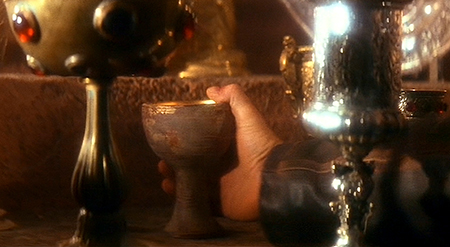
6) a simple wooden or ceramic chalice, a relic of a humble Good saint; perhaps surrounded by gaudy gold and jeweled chalices purporting to be the actual relic, but which are really all trapped with contact poison or a magical curse a la Indiana Jones; regardless, the chalice itself is worth next to nothing except to its relevant cult, earning 3d6 x 100 experience--OR to one who knows its value, in that it fills with water as good as a potion of cure light wounds 1/day when filled with simple water and blessed by a Good cleric
7) a sword of blood (or other metal-dependent weapon, like an axe or mace)--it's a +1 weapon, but because of its origins from iron drawn from the blood of sacrificial victims, Good characters wield it as a -1 weapon instead; but if a character decides to turn it over to the Good cult to redeem the item's inherent evil, they will receive at least 2500 experience
8) a trivial magic item--a cloak of minor comfort or a pot of cleanliness that cleans itself, or maybe a singing candlestick; such an item could be sold as a curio for 2d6 x 100 gold, but if turned over to the Arcane cult, will net the same gold plus 2d6 x 100 experience, or a cool 4d6 x 100 experience if given freely
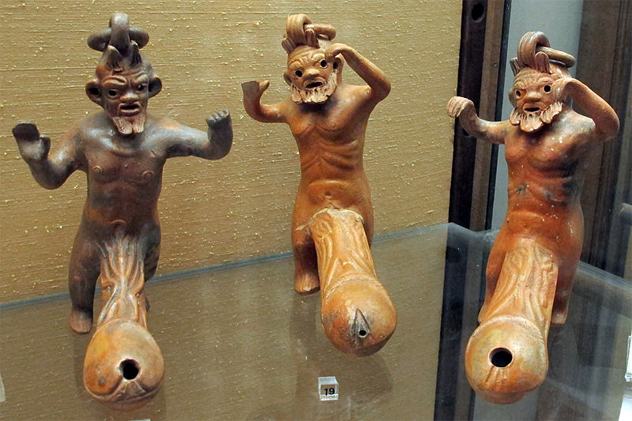
9) a leathern, earthenware, bronze, or smoothed-stone phallus; if you know the right people, the Evil cult will gladly accept it as a "relic" and invite you to an orgy and a mockery of another cult's ritual practices, possibly involving said "relic". The "relic" alone nets 3d6 x 100 experience, but attending the orgy doubles the experience and initiates you into the Evil cult. They'll even let you pet the cat.
10) a collection of river rocks or smoothed over stones. Not just lying around--these are in a chest or some other vessel, clearly important in some way, clearly organized with some sense of size and color, none of them magical or remarkable in any other way. They are the "grok rocks" of the local dwarven Clannish cult (they use them for divination by casting stones, playing marbles, etc.); there are 2-7 of them, each worth 1d4 x 100 experience, not depending on color or size, but on something ineffable about the stone itself
11) any holy symbol or other piece of religious imagery from another cult--rather than sell these for half their value in gold you can remand them to your own cult for the full value in experience instead (100 gold maximum--higher value pieces should be treated as "jewelry", saleable as close to cost as the referee allows, no bonus if given to your cult); Chaotic characters receive double this bonus
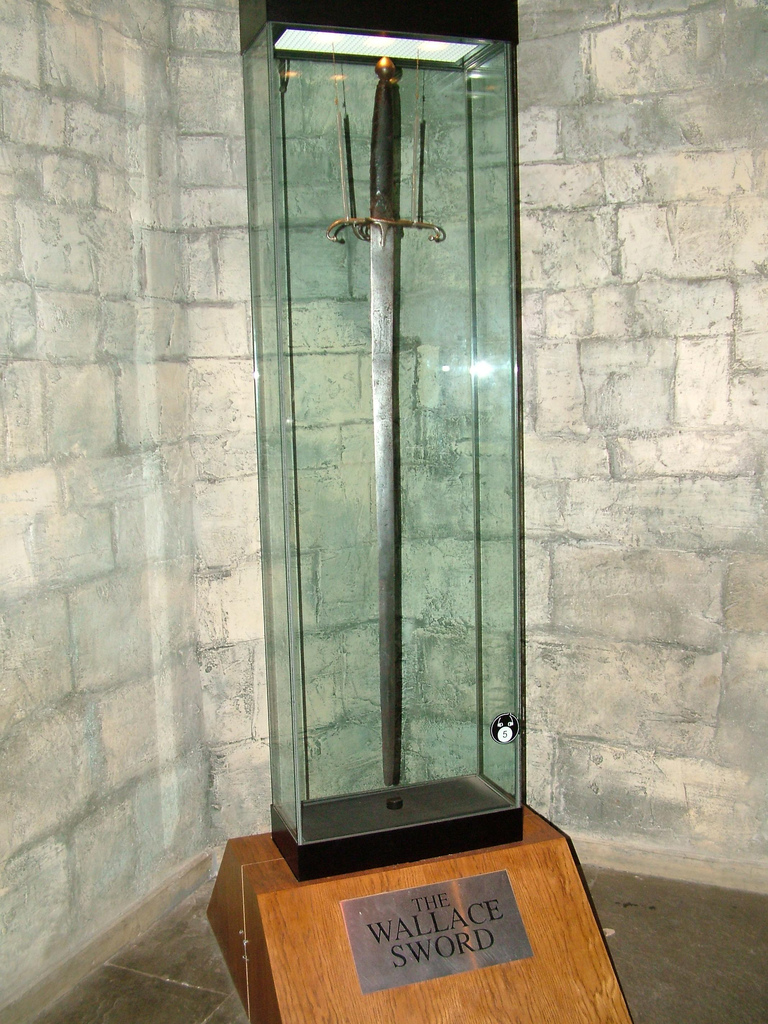
12) a ceremonial two-handed sword or other exaggerated weapon, so large and "intimidating" in its construction that it's worthless in battle. Because of the fine materials used in its construction, it can be sold as a typical piece of jewelry (3d6 x 100 gold), but if a Chaotic character takes it to their cult and offers it to their god, they gain 3d6+6 x 100 experience
The placement of such items in a treasure to replace those worth gold AND experience is, of course, rooted in that age-old advice of Gygax to limit the amount of gold to which players have access. I don't tend to be anywhere as extreme as his advice suggests one be, but I do worry sometimes about being a kind of monty-haul referee if I'm not careful (exacerbated, no doubt, by the fact that I've played in a few monty-haul type games where I've gotten vast sums for next to no work)
... 'What about a little light?' said Bilbo apologetically. ---- 'We like the dark,' said all the dwarves. 'Dark for dark business! There are many hours before dawn.' ---- ... 'We are met to discuss our plans,' [said Thorin], 'our ways, means, policy, and devices. We shall soon before the break of day start on our long journey, a journey from which some of us, or perhaps all of us ... may never return.' ...
Sunday, February 4, 2018
Thursday, February 1, 2018
Greyhame Mountain Dungeon Expedition 18
Orcs have returned to the caverns of the Glimmervaults;
the Goblin King and the Lord of Werewolves have renewed their ancient alliance beneath the Howling Tower;
and the secret treasury of the ancient Bronding Kings is said to lie hidden behind the Brokenbrand Falls, haunted by enchanting naiads ...
...
and Jaer the Windlord looks down on the world below from the Eyries of the Eagles on Greyhame Mountain itself;
while the Stars themselves are singing an eerie, eldritch song, night after night ...
29 January's roster:
Aethelwulf (paladin 3)
with Hauka (snake-killing weasel)
Baby-Face (thief 5)
with Frida and Hubert the Peacock (normal mercenaries)
and Whesker and Wilmerand (weasels) and St. Bb (a st. bernard)
Lead (cleric 4)
with Astia (normal woman) and Sparkly the Mule
Blackleaf (Elf 2)
with Johann Haybaler (normal man)
Koko (woman-ape 1)
Lead the cleric was eager to get back to the Glimmervaults to kill orcs and take more heads for Jaer the Windlord, a powerful creature of air who dwells with the eagles at the summit of Greyhame Mountain. In the past, Jaer has promised a powerful wish for a group who would rid the mountain of the orcs that are always hunting and torturing his friends, the eagles, and Saul-style, set the price for this wish at fifty orc heads brought to him on his mountain. (On an earlier expedition, the party gathered a mere 31)
Before setting out, they had several items to attend to.
First, Baby-Face acquired a sending bone and a bottle of Laurantha's mead from the local procurer of oddments. He used the sending bone to send a message to Jaer, asking whether the wish was for the group entire, or one wish for every individual, and the spirit arose from the bone and whisked away on the wind toward the mountains. On its return, the sending took on an imitation of Jaer's visage: One wish! it declared. But one wish for the company--even my powers are limited.
Meanwhile, Aethelwulf had a couple of things he wanted to do. First, because the party would not be following through with the rescue of children kidnapped by the goblins on this expedition, he sought out the captain of the guard, Cairn, Knight-Captain of "the Citadel" (the watchtower in town), and implored him to guard the town's children better against goblin kidnappers. "If all the children are taken away, Morholt won't have any populace left within his realm," Aethelwulf pointed out.
But Cairn basically just shrugged him off--"We guard the town. It's the fools in the country who can't keep their children safe. And what, a dozen farmers' nits carried away? Good riddance."
After this ineffectual audience, Aethelfwulf went to pray at his small shrine to Adonai, god of justice, in the market square. There, he found Aldir, Blackleaf's blacksmith-squeeze, who has been more aloof with Blackleaf in the past week, while going on about how he wants to be Good and a hero, like Aethefulwulf. So at the shrine of Adonai, Aldir got a little more instruction in the mysteries of Good from Aethelwulf.
Finally, we were ready to adventure. The party gathered rations and supplies and set out from town. The trek to the Glimmervaults proved easy, with but a single broken axe when Baby-Face was cutting firewood.
Looking up a the two entrances into the Glimmervaults--a western grotto that leads into a natural cave system, and a built-stone entrance to the east with spears and impaled heads placed out before it--looking up at these entrances, and then down at the maps drawn by their some-time companion Little Bob, the characters were paralyzed by confusion. This was a moment of great amusement for me, the referee, as the players pored over their actual artefact of play, unable to make sense of the three maps. It was a perfect moment of a kind of 1:1 identification between the characters and the players, of actually poring over a map in confusion as to what it means, where to go?
Finally, they elected to enter the grotto and explore an unexplored side-corridor just to the west inside the entrance. In they went, and were immediately surprised by a roar and with Lead getting swiped by the claws of a huge bear. A short melee followed, short because the bear was overwhelmed by the party's numbers. It put up a good fight--damaged Aethelwulf's hawk-shield and mauled both him and Lead (mauled Lead because the man was still wearing his old green-slime-burned plate armor from the first session!), but ultimately it was put down by two simultaneous critical hits.
Aethelfwulf turned out to be proficient at skinning animals, and so he proceeded to remove the bear's pelt, which was mostly undamaged other than the melee-mangled head. This would prove to be their only real treasure for the session.
When the bear was skinned, the party continued southeast through a series of large irregular caves, deeper into the Glimmervaults, seeking a great chasm on the first of Little Bob's maps. Entering into a chamber with stairs leading up to a flowstone formation, they searched for secret doors and found one--but heard the noise of moving things from the other side. Fearing undead, they cracked the door open and balanced a flask of holy water above, to drop on anything passing beneath--but the noise turned out to be a group of orcs passing by.
Lead insulted them and their mothers, and the orcs shot back with a lame retort and then charged through the door. The holy water didn't do much--but the "army" facing them were too much, and two orcs went down on the first round, and the other two were shot down as they attempted to flee. The party hacked off their heads and then moved on.
They found a chamber with statues, their faces all knocked off by chisel and hammer, and with an iron plaque on the west wall reading in part, The tribe of Galad is destroyed root and branch; let jackals crush the bones of his heirs, let their spirits never rest. This place is accursed.
The party poked through a number of tombs in the vicinity of this room, and in one chamber with three tombs, they disturbed a colony of yellow mold within the tomb. Blackleaf, Hubert the Peacock, Frida, Wilmerand, and Whesker all failed their initial save and began to wheeze as their throats filled up with spores. The rest of the party then frantically tried to help clear their breathing with heimlich maneuvers, forcing them to gag and throw up, or even an dagger-tracheotomy for Frida! Out of all those affected, only Hubert the Peacock ended up dying.
Continuing on, the party ultimately emerged through another secret door to a passage just west of the large chasm they'd seen on the map. They skirted it along its western ledge, noting a broken bridge that would lead to a door on the east wall if still intact; but ignoring that, they headed northwest into another series of chambers, including a set of rooms with scummy wells, and an orc armory. Along the way they encountered a further six orcs, but these were slept by Blackleaf and killed without incident. The party looted the armory of spears, mail, and shields, and then headed back to town (out the way they'd come) because we were running out of time.
Back in town after another easy journey (only one more broken axe for attrition), everybody caroused. Baby-Face caroused especially hard, racking up a tab in excess of 4000 gold and landing him in debt to the thieves' guild by some 3000 gold! Aethelfwulf drunkenly bought a slave-woman, one Hastia, and awoke hung over and no longer a paladin until he frees her and atones for his crime against Goodness. Koko, meanwhile, had a religious experience, and is now of Good alignment herself!
------
Remembrance for the Fallen:
Hubert the Peacock and Lysimmachus (normal man), a nameless mastiff, Livy (normal man), Orkie (orc mastiff), Fang (boarhound), Droopy and Snoopy (mastiffs), Dream Destroyer (ghost hound), Arrow (pack dog), Freyja (normal woman), a nameless cur, Hot Dog and Cross (mastiffs), Orion II (lion dog), Bacon (boarhound), Tore (half-orc fighter 1/cleric 1), Jimmy the Snitch (dog), Orion (lion dog), Harambe (man-ape 1)
and for those Enchanted Away:
Dol (fyrdman hireling)
the Goblin King and the Lord of Werewolves have renewed their ancient alliance beneath the Howling Tower;
and the secret treasury of the ancient Bronding Kings is said to lie hidden behind the Brokenbrand Falls, haunted by enchanting naiads ...
...
and Jaer the Windlord looks down on the world below from the Eyries of the Eagles on Greyhame Mountain itself;
while the Stars themselves are singing an eerie, eldritch song, night after night ...
29 January's roster:
Aethelwulf (paladin 3)
with Hauka (snake-killing weasel)
Baby-Face (thief 5)
with Frida and Hubert the Peacock (normal mercenaries)
and Whesker and Wilmerand (weasels) and St. Bb (a st. bernard)
Lead (cleric 4)
with Astia (normal woman) and Sparkly the Mule
Blackleaf (Elf 2)
with Johann Haybaler (normal man)
Koko (woman-ape 1)
Lead the cleric was eager to get back to the Glimmervaults to kill orcs and take more heads for Jaer the Windlord, a powerful creature of air who dwells with the eagles at the summit of Greyhame Mountain. In the past, Jaer has promised a powerful wish for a group who would rid the mountain of the orcs that are always hunting and torturing his friends, the eagles, and Saul-style, set the price for this wish at fifty orc heads brought to him on his mountain. (On an earlier expedition, the party gathered a mere 31)
Before setting out, they had several items to attend to.
First, Baby-Face acquired a sending bone and a bottle of Laurantha's mead from the local procurer of oddments. He used the sending bone to send a message to Jaer, asking whether the wish was for the group entire, or one wish for every individual, and the spirit arose from the bone and whisked away on the wind toward the mountains. On its return, the sending took on an imitation of Jaer's visage: One wish! it declared. But one wish for the company--even my powers are limited.
Meanwhile, Aethelwulf had a couple of things he wanted to do. First, because the party would not be following through with the rescue of children kidnapped by the goblins on this expedition, he sought out the captain of the guard, Cairn, Knight-Captain of "the Citadel" (the watchtower in town), and implored him to guard the town's children better against goblin kidnappers. "If all the children are taken away, Morholt won't have any populace left within his realm," Aethelwulf pointed out.
But Cairn basically just shrugged him off--"We guard the town. It's the fools in the country who can't keep their children safe. And what, a dozen farmers' nits carried away? Good riddance."
After this ineffectual audience, Aethelfwulf went to pray at his small shrine to Adonai, god of justice, in the market square. There, he found Aldir, Blackleaf's blacksmith-squeeze, who has been more aloof with Blackleaf in the past week, while going on about how he wants to be Good and a hero, like Aethefulwulf. So at the shrine of Adonai, Aldir got a little more instruction in the mysteries of Good from Aethelwulf.
Finally, we were ready to adventure. The party gathered rations and supplies and set out from town. The trek to the Glimmervaults proved easy, with but a single broken axe when Baby-Face was cutting firewood.
Looking up a the two entrances into the Glimmervaults--a western grotto that leads into a natural cave system, and a built-stone entrance to the east with spears and impaled heads placed out before it--looking up at these entrances, and then down at the maps drawn by their some-time companion Little Bob, the characters were paralyzed by confusion. This was a moment of great amusement for me, the referee, as the players pored over their actual artefact of play, unable to make sense of the three maps. It was a perfect moment of a kind of 1:1 identification between the characters and the players, of actually poring over a map in confusion as to what it means, where to go?
Finally, they elected to enter the grotto and explore an unexplored side-corridor just to the west inside the entrance. In they went, and were immediately surprised by a roar and with Lead getting swiped by the claws of a huge bear. A short melee followed, short because the bear was overwhelmed by the party's numbers. It put up a good fight--damaged Aethelwulf's hawk-shield and mauled both him and Lead (mauled Lead because the man was still wearing his old green-slime-burned plate armor from the first session!), but ultimately it was put down by two simultaneous critical hits.
Aethelfwulf turned out to be proficient at skinning animals, and so he proceeded to remove the bear's pelt, which was mostly undamaged other than the melee-mangled head. This would prove to be their only real treasure for the session.
When the bear was skinned, the party continued southeast through a series of large irregular caves, deeper into the Glimmervaults, seeking a great chasm on the first of Little Bob's maps. Entering into a chamber with stairs leading up to a flowstone formation, they searched for secret doors and found one--but heard the noise of moving things from the other side. Fearing undead, they cracked the door open and balanced a flask of holy water above, to drop on anything passing beneath--but the noise turned out to be a group of orcs passing by.
Lead insulted them and their mothers, and the orcs shot back with a lame retort and then charged through the door. The holy water didn't do much--but the "army" facing them were too much, and two orcs went down on the first round, and the other two were shot down as they attempted to flee. The party hacked off their heads and then moved on.
They found a chamber with statues, their faces all knocked off by chisel and hammer, and with an iron plaque on the west wall reading in part, The tribe of Galad is destroyed root and branch; let jackals crush the bones of his heirs, let their spirits never rest. This place is accursed.
The party poked through a number of tombs in the vicinity of this room, and in one chamber with three tombs, they disturbed a colony of yellow mold within the tomb. Blackleaf, Hubert the Peacock, Frida, Wilmerand, and Whesker all failed their initial save and began to wheeze as their throats filled up with spores. The rest of the party then frantically tried to help clear their breathing with heimlich maneuvers, forcing them to gag and throw up, or even an dagger-tracheotomy for Frida! Out of all those affected, only Hubert the Peacock ended up dying.
Continuing on, the party ultimately emerged through another secret door to a passage just west of the large chasm they'd seen on the map. They skirted it along its western ledge, noting a broken bridge that would lead to a door on the east wall if still intact; but ignoring that, they headed northwest into another series of chambers, including a set of rooms with scummy wells, and an orc armory. Along the way they encountered a further six orcs, but these were slept by Blackleaf and killed without incident. The party looted the armory of spears, mail, and shields, and then headed back to town (out the way they'd come) because we were running out of time.
Back in town after another easy journey (only one more broken axe for attrition), everybody caroused. Baby-Face caroused especially hard, racking up a tab in excess of 4000 gold and landing him in debt to the thieves' guild by some 3000 gold! Aethelfwulf drunkenly bought a slave-woman, one Hastia, and awoke hung over and no longer a paladin until he frees her and atones for his crime against Goodness. Koko, meanwhile, had a religious experience, and is now of Good alignment herself!
------
Remembrance for the Fallen:
Hubert the Peacock and Lysimmachus (normal man), a nameless mastiff, Livy (normal man), Orkie (orc mastiff), Fang (boarhound), Droopy and Snoopy (mastiffs), Dream Destroyer (ghost hound), Arrow (pack dog), Freyja (normal woman), a nameless cur, Hot Dog and Cross (mastiffs), Orion II (lion dog), Bacon (boarhound), Tore (half-orc fighter 1/cleric 1), Jimmy the Snitch (dog), Orion (lion dog), Harambe (man-ape 1)
and for those Enchanted Away:
Dol (fyrdman hireling)
Monday, January 29, 2018
Sword of Blood
Inspired by a joke-calculation concerning how much blood it would actually take to forge a sword from the blood of your enemies ... This spell, sword of blood, is a ritual, a concept already in use in games like 5e, but the rules of which for my B/X game I just made up for this post. Maybe I'll rescind or modify them later, but I like the idea for now.
Rituals may be taken by clerics instead of their usual spells, or may take up a slot in a magic-user's or Elf's spellbook of a level equivalent to the ritual's level. Rituals are used in "downtime"--the rites and magic involved are too lengthy to be really useful in an adventure-context, and probably also don't add up to anything usefully gamable within that context. (Also, rituals usually use up large amounts of material components)
Sword of Blood
ritual 4
range: the blood of all humans or humanoids being sacrificed as part of the ritual
components: 500 gold for the "liturgy" of each sacrificial "session"
By the means of this ritual, a cleric or magic-user extracts the iron from the let blood of a sacrificial victim of human or humanoid nature. Each individual's blood produces 1-4 grams of iron; this works out to requiring about 200 victims to provide enough blood for a single sword. (I did say that this was a long term "downtime" activity, unless your cleric or magic-user has the location and means to sacrifice 200 victims all in one go)
I wouldn't tend to worry about the grams themselves, just the number of victims; though the caster will require somewhere to store the iron they're collecting by means of the ritual until they have enough.
When enough iron has been acquired by means of this spell, it can be forged into a sword (or other desired weapon), by the caster if he has the wont and the skill, or by a hired armorer. When the sword has been forged, and a last instance of ritual incanted over it, roll a d20 and consult this table, add +1 to the roll if at least 5000 gold is spent on ornamental trappings for the sword:
1-2 -- the metal was impure and the weapon is worthless
3-4 -- it's a sword, but there's nothing magical about it
5-12 -- it's a sword +1; if the sword is ever destroyed or broken, an incorporeal wight will spring from the fragments, born from the hatred of the spirits trapped within; this spirit will seek out and destroy the sword's creator
13-16 -- it's an intelligent sword +2 of the same alignment as its creator, but it also actively hates its creator; 3 times per day the sword can do extra damage, i.e. for 1-10 rounds, each hit will do x4 damage; if the sword is ever destroyed or broken, a wraith born of the hate of the spirits trapped within will emerge and seek out and destroy the sword's creator
17-20 -- it's an intelligent sword that hates its creator, and acts as a lifedraining sword, i.e. on a hit it may drain 1 life level of energy; but after draining 13 life levels, the blood of those within its iron erupt as a spectre intent on destroying the original caster of the spell; the sword becomes a mere sword +1
It shouldn't need saying, but any Good character attempting to use this spell immediately loses their status as Good, and they also lose one life level, and must seriously atone even to regain their former alignment. Good characters attempting to wield these weapons feel intensely uneasy and treat the magical "plus" as a penalty instead. Surrendering such weapons to the Good cult to be redeemed is worth at least 1000 experience per magical "plus".
------
There is an 01-05 chance that any magical sword (or metal-headed weapon) found in a randomly generated treasure hoard was created by this ritual. Good characters find them uneasy to wield, as above, and may turn them over to the Good cult for "redemption" and experience points.
Moreover, more powerful magic swords of this type actively hate their creators and will seek out their destruction if possible. This would be an excellent hook for future adventures ...
Rituals may be taken by clerics instead of their usual spells, or may take up a slot in a magic-user's or Elf's spellbook of a level equivalent to the ritual's level. Rituals are used in "downtime"--the rites and magic involved are too lengthy to be really useful in an adventure-context, and probably also don't add up to anything usefully gamable within that context. (Also, rituals usually use up large amounts of material components)
![]() |
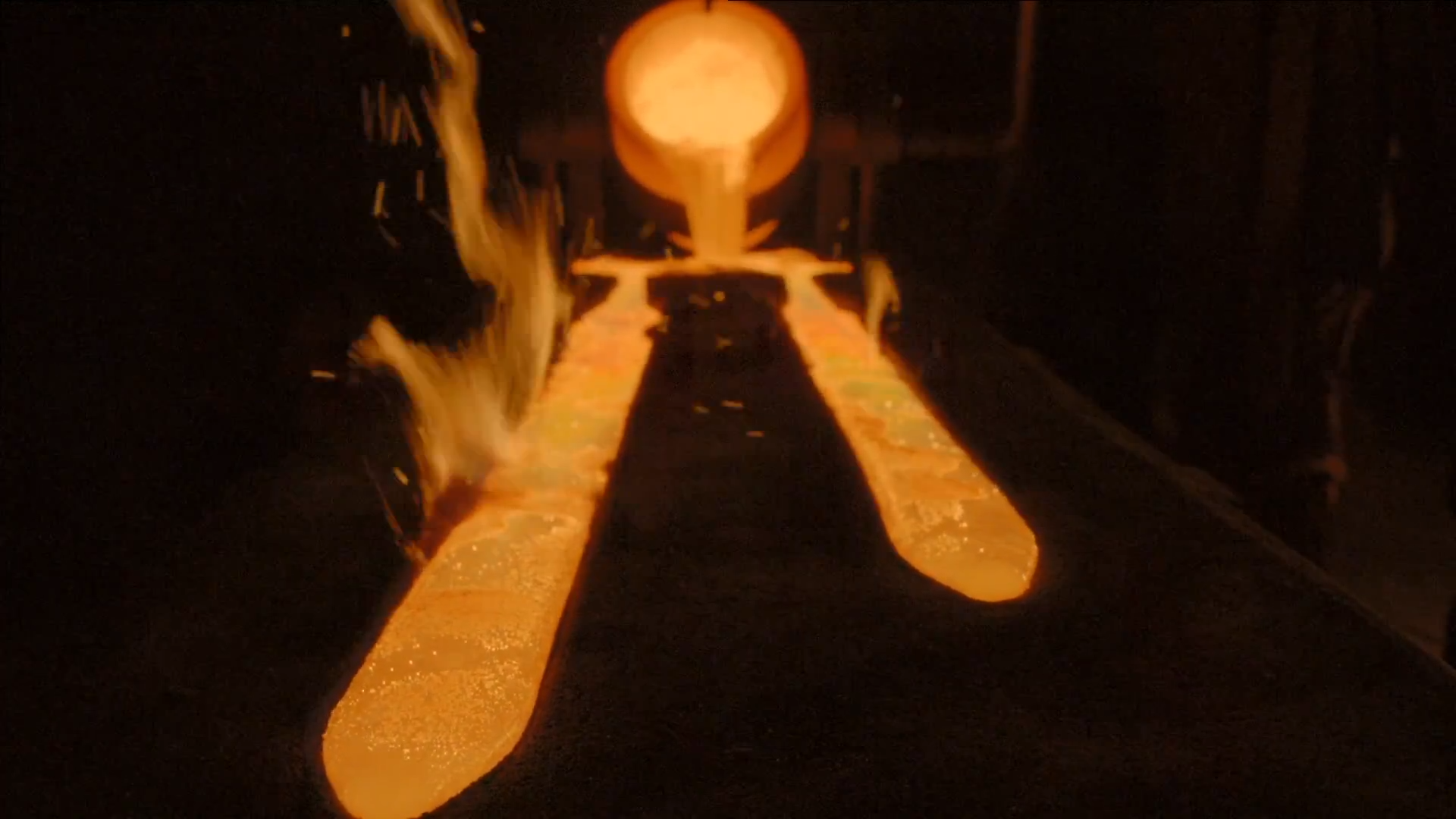
| A terrible way to forge a sword ... but it is cinematic |
Sword of Blood
ritual 4
range: the blood of all humans or humanoids being sacrificed as part of the ritual
components: 500 gold for the "liturgy" of each sacrificial "session"
By the means of this ritual, a cleric or magic-user extracts the iron from the let blood of a sacrificial victim of human or humanoid nature. Each individual's blood produces 1-4 grams of iron; this works out to requiring about 200 victims to provide enough blood for a single sword. (I did say that this was a long term "downtime" activity, unless your cleric or magic-user has the location and means to sacrifice 200 victims all in one go)
I wouldn't tend to worry about the grams themselves, just the number of victims; though the caster will require somewhere to store the iron they're collecting by means of the ritual until they have enough.
When enough iron has been acquired by means of this spell, it can be forged into a sword (or other desired weapon), by the caster if he has the wont and the skill, or by a hired armorer. When the sword has been forged, and a last instance of ritual incanted over it, roll a d20 and consult this table, add +1 to the roll if at least 5000 gold is spent on ornamental trappings for the sword:
1-2 -- the metal was impure and the weapon is worthless
3-4 -- it's a sword, but there's nothing magical about it
5-12 -- it's a sword +1; if the sword is ever destroyed or broken, an incorporeal wight will spring from the fragments, born from the hatred of the spirits trapped within; this spirit will seek out and destroy the sword's creator
13-16 -- it's an intelligent sword +2 of the same alignment as its creator, but it also actively hates its creator; 3 times per day the sword can do extra damage, i.e. for 1-10 rounds, each hit will do x4 damage; if the sword is ever destroyed or broken, a wraith born of the hate of the spirits trapped within will emerge and seek out and destroy the sword's creator
17-20 -- it's an intelligent sword that hates its creator, and acts as a lifedraining sword, i.e. on a hit it may drain 1 life level of energy; but after draining 13 life levels, the blood of those within its iron erupt as a spectre intent on destroying the original caster of the spell; the sword becomes a mere sword +1
It shouldn't need saying, but any Good character attempting to use this spell immediately loses their status as Good, and they also lose one life level, and must seriously atone even to regain their former alignment. Good characters attempting to wield these weapons feel intensely uneasy and treat the magical "plus" as a penalty instead. Surrendering such weapons to the Good cult to be redeemed is worth at least 1000 experience per magical "plus".
------
There is an 01-05 chance that any magical sword (or metal-headed weapon) found in a randomly generated treasure hoard was created by this ritual. Good characters find them uneasy to wield, as above, and may turn them over to the Good cult for "redemption" and experience points.
Moreover, more powerful magic swords of this type actively hate their creators and will seek out their destruction if possible. This would be an excellent hook for future adventures ...
Sunday, January 28, 2018
Jungles of Chult -- Around the Head of the River Tiryki
In the first session of Tomb of Annihilation, the players decided that they would journey up the River Tiryki, which they can see entire on their copy of the hex map (much of central Chult are just blank hexes to be explored, but the Tiryki is "known territory"). They made this decision in large part because they hired two Tabaxi, River Mist and Flask of Wine, as their jungle guides, and the two mentioned that they knew directly of at least two sites near the head of the Tiryki--Firefinger and Dungrunglung. (the characters had otherwise been interested in seeking Camp Righteous and Camp Vengeance, up the River Soshenstar)
As a couple other reviews of ToA (at Dungeon of Signs and Against the Wicked City) make clear, the hex map of Chult is actually a kind of howling emptiness of hundreds of miles (dozens of days) of random encounters, interspersed with a sprinkling of interesting adventure locations. My intent is to create content for all those empty hexes--and because my players are headed up the Tiryki, I'll start with locations around its head.
The information is that which is known well enough locally in Nyzanzaru that rumors could be picked up just by mentioning the Tiryki, or is information directly from River Mist and Flask of Wine.
------
the Pilgrims' Guide
There is a statue on the bank of the river, a great idol like a stern king, River Wind says. That is when we know we are halfway up the River Tiryki. He is a stern king, but he points to the east directing pilgrims on their way to the City of Mists. Sometimes they leave offerings at his altar, but I do not touch them because he is a god.
There are other altars too, Flask of Wine adds. There are too many gods in these jungles.
Sailback Hill
There is an outcropping in a swamp shaped like a sailback, according to River Wind. We only saw it from afar, because it stands in a swamp, and we did not wish to wade there. But I think I saw a face at the hill's base, a gaping jaw with big fangs. There were many storks in that swamp, and I did not like the way their eyes looked at us.
The mouth is a cave, Flask of Wine says, but says no more.
Firefinger
It is a pinnacle topped with fire! River Wind explains. It lies on the right bank of the Tiryki--a finger pointed at the sky, with a pyre burning brightly, day and night, at its top. The dead lie thick around it--all those taken up by the pterafolk, and then thrown down from the top. We have climbed, Flask and I, and found a cave inside the finger--but we have gone no higher. Just the two of us, what would we do against the many pterafolk that nest at its top?
Flask of Wine only nods agreement.
Ataaz Ahiya ("the Weeping Gorge")
The head of the River Tiryki is in a gorge (other gorges are also named with "Ataaz" in Chult, so I assume that's what it means), approximately 25 miles long north to south, and ten miles wide east to west. Smaller tributaries to the Tiryki pour in around the gorge, either as high waterfalls cascading down cliff faces, or as narrower streams that have cut their way down through the surrounding highland. Many tribes of pterafolk roost in the heights of the cliffs around the gorge, ruled by an ogiso or king.
The face of Olokuna is said to have been carved into the southern cliff-face, with waterfalls pouring from its eyes, and a mouth that opens into a deep cavern and shrine. Olokuna is an androgynous water god, possessed of both male and female features, and idols to it often include both an erect phallus and a maze-like vulva.
Yes, yes, River Wind says, we have seen the face of the goddess. She weeps because she is forgotten by all but the monkeys who dwell in her mouth. I too would weep if stinking apes were in my mouth. Her servants, the lobster-men, peer with cold eyes from the waters beneath her shrine.
He weeps because he has waterfall eyes, Flask of Wine adds. There is gold and gems in his mouth, but the baboons are too many.
Dungrunglung
Dungrunglung is the greatest shrine of the grungs--the frog men, you know, River Wind says. We have looked on it only from afar, because it lies in the midst of a wide swamp, and it is closely surrounded by a hedge of thorns. The head of the shrine towers over the hedge like an evil frog, grinning at the swamp, and all the while the croaking of the frogs and the frog-men is sounding around you. It is southwest of the Weeping Gorge perhaps twenty miles--who knows? It is difficult to judge distance in the jungle.
And it is filled with treasures, I am sure of it, Flask of Wine mutters, almost to himself. Riches to make a man wealthy.
City of the Faceless Men
Somewhere in the jungles south of the Ataaz Ahiya lies an ancient and ruined city, its name forgotten and only its curse remembered in tales and old epics. It was a city of the Eshowe, perhaps, before their slaughter; or a city of Omuans, cursed by God for the pride of their ways. Regardless of the origin a curse lies over the city--all those who enter are damned to contract a horrifying disease that slowly eats the flesh of the face until only a gaping hole remains where once were mouth, nose, and eyes. The legends vary about what lies within its cursed grounds--treasures untold, or only old broken stones? But one thing that is certain is that a tribe of cursed men live among the ruins (or eke out an undead existence)--the Faceless Men, the Mask-Wearers ... in every tale, they are said to haunt the ruins, perhaps as cannibals, perhaps as undead horrors, but always wearing masks to cover the horror of their hollow faces.
It is there, River Wind says, and her ears lower, and her eyes narrow. It is an evil place. I have forgotten the way, but I have seen the obelisks that mark its boundaries. They tell its curse, because the men there have no mouths behind their masks. I will not go back. She shakes her head after saying this, going to bathe in the river, and will not talk about the City any more after that.
I remember the way, Flask of Wine murmurs. There must be something there.
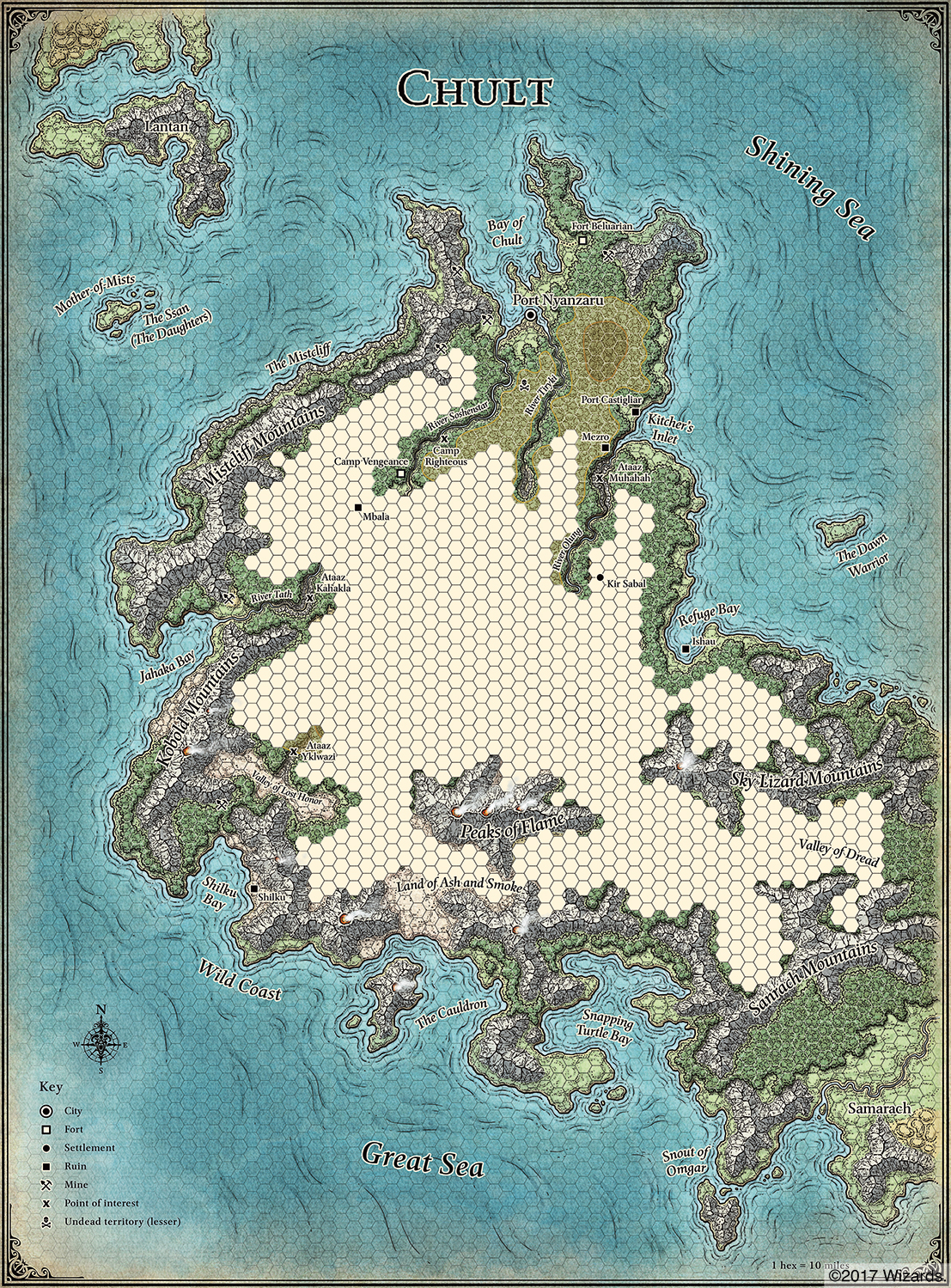
| The Tiryki is the central of the three northern rivers |
As a couple other reviews of ToA (at Dungeon of Signs and Against the Wicked City) make clear, the hex map of Chult is actually a kind of howling emptiness of hundreds of miles (dozens of days) of random encounters, interspersed with a sprinkling of interesting adventure locations. My intent is to create content for all those empty hexes--and because my players are headed up the Tiryki, I'll start with locations around its head.
The information is that which is known well enough locally in Nyzanzaru that rumors could be picked up just by mentioning the Tiryki, or is information directly from River Mist and Flask of Wine.
------
the Pilgrims' Guide
There is a statue on the bank of the river, a great idol like a stern king, River Wind says. That is when we know we are halfway up the River Tiryki. He is a stern king, but he points to the east directing pilgrims on their way to the City of Mists. Sometimes they leave offerings at his altar, but I do not touch them because he is a god.
There are other altars too, Flask of Wine adds. There are too many gods in these jungles.
Sailback Hill
There is an outcropping in a swamp shaped like a sailback, according to River Wind. We only saw it from afar, because it stands in a swamp, and we did not wish to wade there. But I think I saw a face at the hill's base, a gaping jaw with big fangs. There were many storks in that swamp, and I did not like the way their eyes looked at us.
The mouth is a cave, Flask of Wine says, but says no more.
![]() |
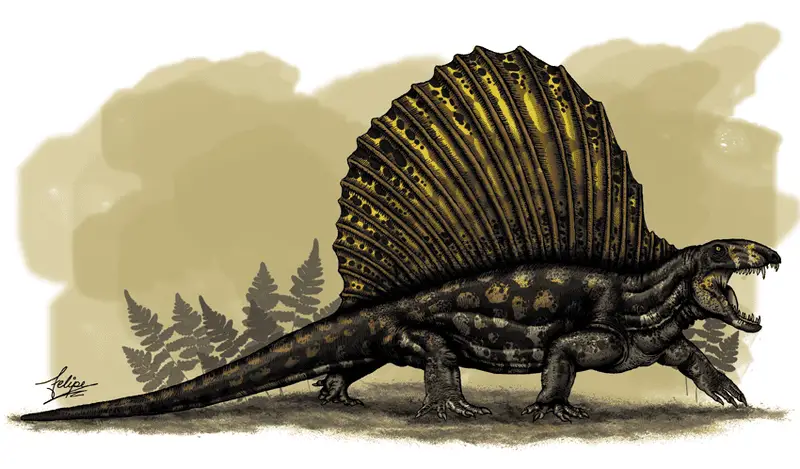
| A sailback, i.e. dimetrodon |
Firefinger
It is a pinnacle topped with fire! River Wind explains. It lies on the right bank of the Tiryki--a finger pointed at the sky, with a pyre burning brightly, day and night, at its top. The dead lie thick around it--all those taken up by the pterafolk, and then thrown down from the top. We have climbed, Flask and I, and found a cave inside the finger--but we have gone no higher. Just the two of us, what would we do against the many pterafolk that nest at its top?
Flask of Wine only nods agreement.
Ataaz Ahiya ("the Weeping Gorge")
The head of the River Tiryki is in a gorge (other gorges are also named with "Ataaz" in Chult, so I assume that's what it means), approximately 25 miles long north to south, and ten miles wide east to west. Smaller tributaries to the Tiryki pour in around the gorge, either as high waterfalls cascading down cliff faces, or as narrower streams that have cut their way down through the surrounding highland. Many tribes of pterafolk roost in the heights of the cliffs around the gorge, ruled by an ogiso or king.
The face of Olokuna is said to have been carved into the southern cliff-face, with waterfalls pouring from its eyes, and a mouth that opens into a deep cavern and shrine. Olokuna is an androgynous water god, possessed of both male and female features, and idols to it often include both an erect phallus and a maze-like vulva.
Yes, yes, River Wind says, we have seen the face of the goddess. She weeps because she is forgotten by all but the monkeys who dwell in her mouth. I too would weep if stinking apes were in my mouth. Her servants, the lobster-men, peer with cold eyes from the waters beneath her shrine.
He weeps because he has waterfall eyes, Flask of Wine adds. There is gold and gems in his mouth, but the baboons are too many.
Dungrunglung
Dungrunglung is the greatest shrine of the grungs--the frog men, you know, River Wind says. We have looked on it only from afar, because it lies in the midst of a wide swamp, and it is closely surrounded by a hedge of thorns. The head of the shrine towers over the hedge like an evil frog, grinning at the swamp, and all the while the croaking of the frogs and the frog-men is sounding around you. It is southwest of the Weeping Gorge perhaps twenty miles--who knows? It is difficult to judge distance in the jungle.
And it is filled with treasures, I am sure of it, Flask of Wine mutters, almost to himself. Riches to make a man wealthy.
![]() |
| I might end up calling them grippli or bullywugs, we'll see ... |
City of the Faceless Men
Somewhere in the jungles south of the Ataaz Ahiya lies an ancient and ruined city, its name forgotten and only its curse remembered in tales and old epics. It was a city of the Eshowe, perhaps, before their slaughter; or a city of Omuans, cursed by God for the pride of their ways. Regardless of the origin a curse lies over the city--all those who enter are damned to contract a horrifying disease that slowly eats the flesh of the face until only a gaping hole remains where once were mouth, nose, and eyes. The legends vary about what lies within its cursed grounds--treasures untold, or only old broken stones? But one thing that is certain is that a tribe of cursed men live among the ruins (or eke out an undead existence)--the Faceless Men, the Mask-Wearers ... in every tale, they are said to haunt the ruins, perhaps as cannibals, perhaps as undead horrors, but always wearing masks to cover the horror of their hollow faces.
It is there, River Wind says, and her ears lower, and her eyes narrow. It is an evil place. I have forgotten the way, but I have seen the obelisks that mark its boundaries. They tell its curse, because the men there have no mouths behind their masks. I will not go back. She shakes her head after saying this, going to bathe in the river, and will not talk about the City any more after that.
I remember the way, Flask of Wine murmurs. There must be something there.
Thursday, January 25, 2018
Greyhame Mountain Dungeon Expedition 17
Orcs have returned to the caverns of the Glimmervaults;
the Goblin King and the Lord of Werewolves have renewed their ancient alliance beneath the Howling Tower;
and the secret treasury of the ancient Bronding Kings is said to lie somewhere behind the Brokenbrand Falls, haunted by enchanting naiads ...
...
and Jaer the Windlord looks down on the world below from the Eyries of the Eagles on Greyhame Mountain itself;
and the Stars themselves are singing an eerie song, night after night ...
21 January's roster:
Kord (half-orc fighter 1/cleric 1)
Ham (cleric 1)
with Livy and Lysimmachus (normal men)
and Fang, Orkie, Blade, and a nameless mastiff
Kord's last expedition to the Greyhame Mountain Dungeons was the 14th, which is to say a couple weeks back, in-game. On that expedition, he and his compatriots (including Finbar the half-Elf) discovered a secret room behind some burial niches, a room filled with treasure--but also with strange magical shadows that leapt to life and attacked the party, draining the strength of those they touched.
Desiring to return there, but to defeat the shadows, Kord turned therefore, in search of a sage who might know more about what it takes to slay such enemies. There are two such sages who "lair" near enough town to be easily approached: Morla of the Mists, a sort of witchy hedge-wizard who dwells on a misty fen, and Axxl the Mask, a creature who hides his face -- rumored to be the ugliest face in the world -- behind an ever-changing array of masks. Kord elected to seek out Axxl.
When he arrived, he found Axxl the Mask to be standoffish and unwilling to consider any research for less than the going rate, i.e. 2000 gold for a month of research (or 500 gold for a week). This price seemed stiff to Kord, and he attempted to talk it down, but Axxl would not budge, other than to agree for an up front fee of 350 gold and payment of the rest on Kord's return ("We all know how you adventurers are of a short-lived variety, and my time is very valuable to me."). Kord seemed to intend to adventure during the week of research, but ultimately just paid the 500 gold; and after a week he was informed that the shadows typically encountered in dungeons are not undead, though they seem such, but that they are incorporeal and can only be struck by magical or possibly silvered weapons. Axxl further informed Kord that if a piece of one of these shadows were brought back to the sage, he would pay handsomely for it--though he had no idea how that might be effected.
Armed with this knowledge, Kord returned to Brakeridge and outfitted himself and his party for a foray to the Howling Tower (he had heard the tales of the last expedition from Baby Face and Blackleaf, but was also eager to seek out the secret gold he knew of). He bought two new dogs (Blade and the nameless mastiff), but with four dogs, two hirelings, and the henchman Ham to follow him, I had to check his Charisma score for maximum number of retainers--and CHA 9 allows four retainers at most, so even with dogs counting as half-retainers, he couldn't bring all of them.
Blade and the new mastiff were kenneled at the inn for 5 gold, and then Kord, Ham, and their cronies set off for the Howling Tower. Nothing molested them on the way out ("That's a first!" Kord exclaimed on arriving unscathed), and the party found themselves outside the tower on the spur of the ridge, but with the pyre that once held Begor's bones vastly expanded and filled with numerous smaller bodies. Goblin bodies, they figured on a brief inspection; then they headed into the tower.
To get to the stair, they had to go north and into Begor's old room. Then at the southwest door of that chamber they listened and heard goblin voices--Kord speaks goblin. The goblins were debating what they wanted to eat--"These rats are fat enough. Now let's get some cheese." "Cheese? I want mutton!" "Well you know we don't have any ..."
Hoping for surprise, the party burst through the door, but the goblins were not surprised per se, so much as astonished, and we proceeded to roll initiative. A short fight ensued which involved some goblins running around the corner to seek reinforcement, but also a rat thrown by another desperate goblin straight at Ham, which dealt 1 damage as it scrabbled and bit at his face. The party cut down five of the six goblins, but one escaped to warn his comrades; as the party came around the corner, they found him rallying a crew from a further room.
Kord and his crew withdrew to set up a fighting line, and soon were engaged by eight fresh goblins. These fought for a round, losing only a couple goblins, and then began a fighting withdrawal back around the corner; Kord and crew stuck with them, pressing forward and maintaining the melee. Unfortunately, around the corner was an additional dozen or so goblins, including one which began to cast a spell. The goblins also had shortbows and other missile weapons, and with their overwhelming numbers they managed to quickly knock out both dogs (Orkie and Fang) and also to slay the mercenary Livy. Lysimmachus panicked with a bad morale roll and Kord and Ham elected to retreat alongside their comrade rather than face the goblins while outnumbered ten to one.
Because of the hallway's bend, fewer goblins got off missile attacks and so the remaining party members quickly escaped back the way they'd come and out the door. As they scrambled down the stair to the ridge on which the tower stands, the goblins boiled out behind, but hissed and scowled at the sun. They threw a few ineffectual missiles at the party, along with a great number of jeers, and then retreated back into the tower.
Licking their wounds, Kord and crew retreated to town (again, miraculously, without any attrition). There, they collected Kord's other two dogs, Kord bought some oil, and Lysimmachus agreed to accompany them again in hopes of retrieving Livy's body. On the second day back to the tower, I rolled a single attrition die; Kord's player suggested losing his rope, and I agreed that Lysimmachus had somehow misplaced his boss' 150' of rope.
Then on the fourth day they arrived back at the tower, with an eagle soaring among the clouds overhead. As they climbed the stair to enter the tower, they found a spear wedged outside the door with Livy's head impaled on it--Lysimmachus blanched as he failed morale, and I adjudicated that he would be at -1 on all rolls for the rest of the expedition.
Anyway, in they went. Heading up through Begor's old room and around the corners through the corridor, they encountered none of the goblins there previously; but at the door to the room with the stair down to the dungeon, Kord heard within several goblins discussing the best way to kidnap a child. Hoping to cut them all down quickly, they burst in the door; again, the goblins were not surprised, and we rolled initiative. There followed a three round slog of mostly misses, typical of first level encounters. Noise began to gather in the hallway behind, and then the same goblin horde as before came in through the door. The nameless mastiff was both cut down in this melee, as well as a number of goblins; and Kord, feeling hopeless of victory, ordered everyone down the stairs as quick as they might.
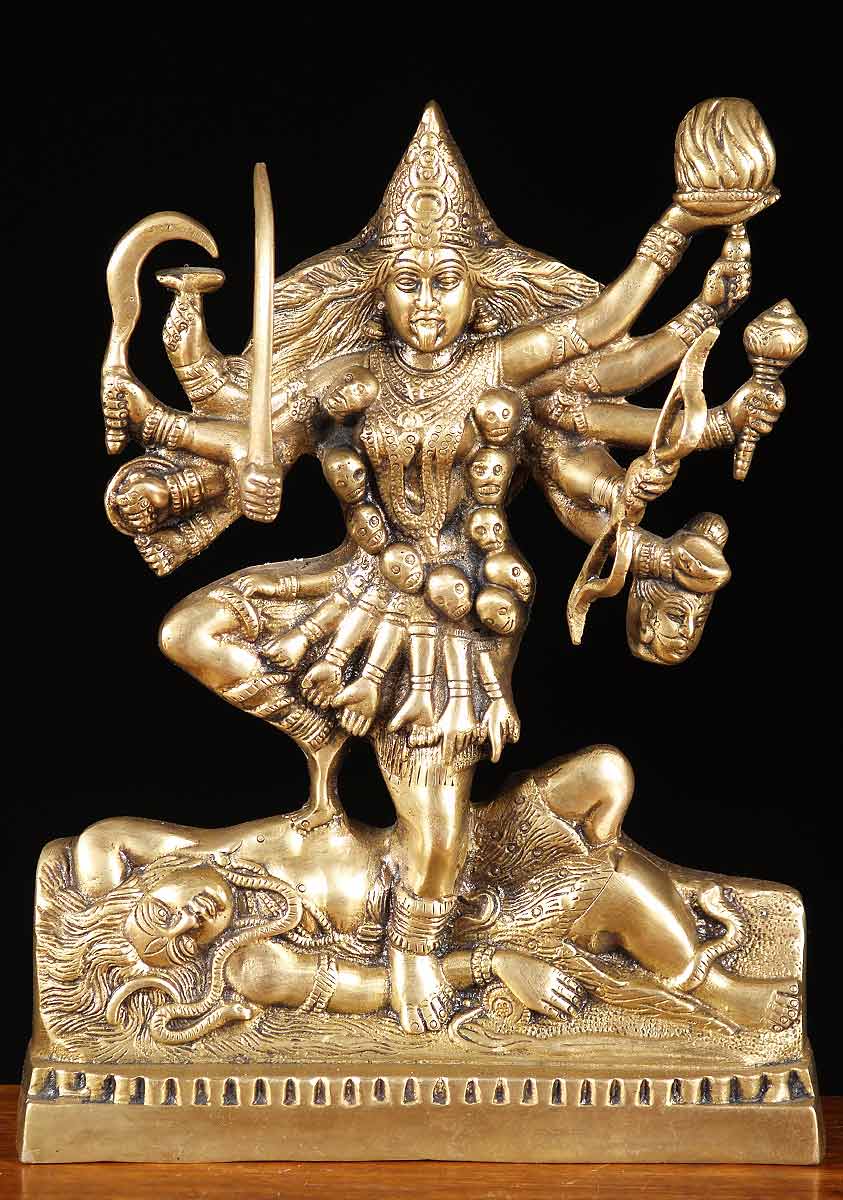
Lysimmachus was cut down as he attempted to retreat, but Kord, Ham, and Blade all made it down the stairs. As they went, Kord smashed several flasks of oil behind him and tossed his torch back to set it ablaze, and not a few goblins got hot feet for their close pursuit. With a moment of respite at the bottom of the stairs, Kord got himself oriented on the map and then sought out some southern burial niches he knew contained the secret door to the treasure horde. They passed through a room with an altar to a multi-armed goddess of darkness, a room which contained a couple desiccated husks of insectoid horrors formerly killed there.
Then, in one of the burial niches in the corridor beyond, Kord threw the catch and the stone wall ground back, revealing a narrow hall to the south which opened into a room after about thirty feet. Surmising that shadows require light to exist, Kord ordered Ham to stay back with his torch while he, Kord, went forward alone using his orcish infravision. Into the chamber he stepped--at its southern wall stood another idol of the multi-armed dervish goddess, surrounded by a veritable hoard of gold and other trinkets, while on her breast hung a carcanet of fine silver and gems. Kord went to work in the darkness, shoveling what he could into his own backpack and then into Ham's, and he never was bothered by any shadow or shade.
And then they were stumped. How to get out past all those goblins? Fortunately, at this point, Kord looked at his map, drawn on the last expedition, and pointed out a winding tunnel labeled "Up" just twenty feet from the secret door. "What does that mean?" he asked rhetorically (and the referee informed him that he would have to investigate to find out if he didn't remember). Investigate he did, and found a short tunnel that wound away up into darkness. A man could just wriggle through it if he could stomach the claustrophobia. Does it lead out? Is there any light? All he could see was the tunnel's darkness.
It was worth a try; otherwise there was a hoard of goblins to contend with. So, wriggling through miserable darkness, Kord and Ham and Blade found themselves first in a largish chamber filled with weird eggs and crawling things, but with a continuation of the tunnel; and then ultimately standing in sunlight on the slope of the spur some little way from the Howling Tower.
Needless to say, they hightailed it back to town.
Again, my dice were favorable; as Kord and Ham got to selling their loot, they found that it was probably the most valuable haul yet carried out of the dungeon. Each leveled up to second level; then, through carousing, leveled immediately up to third after that (even with Kord having to divide his XP equally between classes!).
Unfortunately for them, both being clerics of the Chaotic Good cult, Kord failed his save and had a "religious experience" of Evil, probably tempted into it by some evil genius (a spirit, not a comic book villain) whispering poison into the ears of Good characters around Brakeridge; and Ham failing his save as well, and rolling "blaspheme the gods" was clearly talked into some kind of blasphemous deed by Kord in his evil mood. So both are under the Ban of the Good cult and neither can cast cleric spells again until they atone for their evil deeds.
And still, the kidnapped children remain unrescued and somewhere unknown ...
------
Remembrance for the Fallen
Lysimmachus (normal man), a nameless mastiff, Livy (normal man), Orkie (orc mastiff), Fang (boar hound), Droopy and Snoopy (mastiffs), Dream Destroyer (ghost hound), Arrow (pack dog), Freyja (normal woman), a nameless cur, Hot Dog and Cross (mastiffs), Orion II (lion dog), Bacon (boar hound), Tore (half-orc fighter 1/cleric 1), Jimmy the Snitch (dog), Orion (lion dog), Harambe (man-ape 1)
And for those Enchanted Away
Dol (fyrdman hireling)
the Goblin King and the Lord of Werewolves have renewed their ancient alliance beneath the Howling Tower;
and the secret treasury of the ancient Bronding Kings is said to lie somewhere behind the Brokenbrand Falls, haunted by enchanting naiads ...
...
and Jaer the Windlord looks down on the world below from the Eyries of the Eagles on Greyhame Mountain itself;
and the Stars themselves are singing an eerie song, night after night ...
21 January's roster:
Kord (half-orc fighter 1/cleric 1)
Ham (cleric 1)
with Livy and Lysimmachus (normal men)
and Fang, Orkie, Blade, and a nameless mastiff
Kord's last expedition to the Greyhame Mountain Dungeons was the 14th, which is to say a couple weeks back, in-game. On that expedition, he and his compatriots (including Finbar the half-Elf) discovered a secret room behind some burial niches, a room filled with treasure--but also with strange magical shadows that leapt to life and attacked the party, draining the strength of those they touched.
Desiring to return there, but to defeat the shadows, Kord turned therefore, in search of a sage who might know more about what it takes to slay such enemies. There are two such sages who "lair" near enough town to be easily approached: Morla of the Mists, a sort of witchy hedge-wizard who dwells on a misty fen, and Axxl the Mask, a creature who hides his face -- rumored to be the ugliest face in the world -- behind an ever-changing array of masks. Kord elected to seek out Axxl.
![]() |
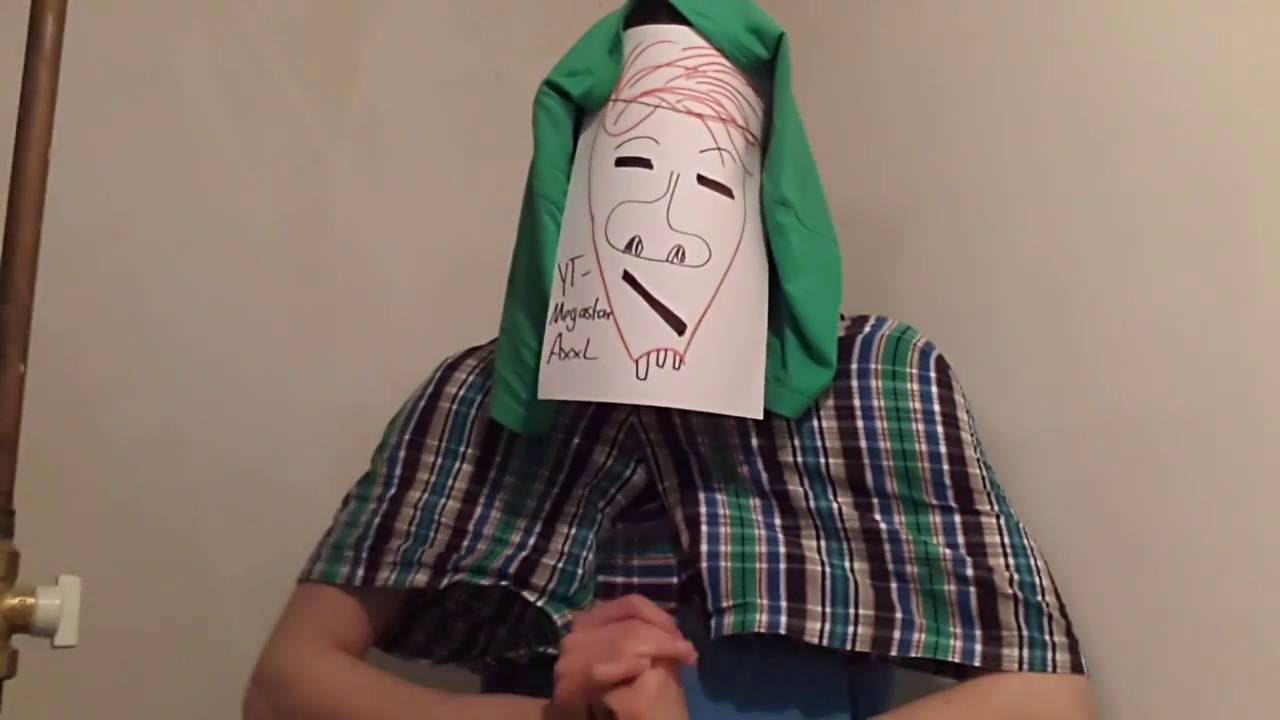
| AxxL is also a bizarre German Youtuber |
When he arrived, he found Axxl the Mask to be standoffish and unwilling to consider any research for less than the going rate, i.e. 2000 gold for a month of research (or 500 gold for a week). This price seemed stiff to Kord, and he attempted to talk it down, but Axxl would not budge, other than to agree for an up front fee of 350 gold and payment of the rest on Kord's return ("We all know how you adventurers are of a short-lived variety, and my time is very valuable to me."). Kord seemed to intend to adventure during the week of research, but ultimately just paid the 500 gold; and after a week he was informed that the shadows typically encountered in dungeons are not undead, though they seem such, but that they are incorporeal and can only be struck by magical or possibly silvered weapons. Axxl further informed Kord that if a piece of one of these shadows were brought back to the sage, he would pay handsomely for it--though he had no idea how that might be effected.
Armed with this knowledge, Kord returned to Brakeridge and outfitted himself and his party for a foray to the Howling Tower (he had heard the tales of the last expedition from Baby Face and Blackleaf, but was also eager to seek out the secret gold he knew of). He bought two new dogs (Blade and the nameless mastiff), but with four dogs, two hirelings, and the henchman Ham to follow him, I had to check his Charisma score for maximum number of retainers--and CHA 9 allows four retainers at most, so even with dogs counting as half-retainers, he couldn't bring all of them.
Blade and the new mastiff were kenneled at the inn for 5 gold, and then Kord, Ham, and their cronies set off for the Howling Tower. Nothing molested them on the way out ("That's a first!" Kord exclaimed on arriving unscathed), and the party found themselves outside the tower on the spur of the ridge, but with the pyre that once held Begor's bones vastly expanded and filled with numerous smaller bodies. Goblin bodies, they figured on a brief inspection; then they headed into the tower.
To get to the stair, they had to go north and into Begor's old room. Then at the southwest door of that chamber they listened and heard goblin voices--Kord speaks goblin. The goblins were debating what they wanted to eat--"These rats are fat enough. Now let's get some cheese." "Cheese? I want mutton!" "Well you know we don't have any ..."
Hoping for surprise, the party burst through the door, but the goblins were not surprised per se, so much as astonished, and we proceeded to roll initiative. A short fight ensued which involved some goblins running around the corner to seek reinforcement, but also a rat thrown by another desperate goblin straight at Ham, which dealt 1 damage as it scrabbled and bit at his face. The party cut down five of the six goblins, but one escaped to warn his comrades; as the party came around the corner, they found him rallying a crew from a further room.
![]() |
| Couldn't find much in the way of imagery for "rat-throwing" |
Kord and his crew withdrew to set up a fighting line, and soon were engaged by eight fresh goblins. These fought for a round, losing only a couple goblins, and then began a fighting withdrawal back around the corner; Kord and crew stuck with them, pressing forward and maintaining the melee. Unfortunately, around the corner was an additional dozen or so goblins, including one which began to cast a spell. The goblins also had shortbows and other missile weapons, and with their overwhelming numbers they managed to quickly knock out both dogs (Orkie and Fang) and also to slay the mercenary Livy. Lysimmachus panicked with a bad morale roll and Kord and Ham elected to retreat alongside their comrade rather than face the goblins while outnumbered ten to one.
Because of the hallway's bend, fewer goblins got off missile attacks and so the remaining party members quickly escaped back the way they'd come and out the door. As they scrambled down the stair to the ridge on which the tower stands, the goblins boiled out behind, but hissed and scowled at the sun. They threw a few ineffectual missiles at the party, along with a great number of jeers, and then retreated back into the tower.
Licking their wounds, Kord and crew retreated to town (again, miraculously, without any attrition). There, they collected Kord's other two dogs, Kord bought some oil, and Lysimmachus agreed to accompany them again in hopes of retrieving Livy's body. On the second day back to the tower, I rolled a single attrition die; Kord's player suggested losing his rope, and I agreed that Lysimmachus had somehow misplaced his boss' 150' of rope.
Then on the fourth day they arrived back at the tower, with an eagle soaring among the clouds overhead. As they climbed the stair to enter the tower, they found a spear wedged outside the door with Livy's head impaled on it--Lysimmachus blanched as he failed morale, and I adjudicated that he would be at -1 on all rolls for the rest of the expedition.
Anyway, in they went. Heading up through Begor's old room and around the corners through the corridor, they encountered none of the goblins there previously; but at the door to the room with the stair down to the dungeon, Kord heard within several goblins discussing the best way to kidnap a child. Hoping to cut them all down quickly, they burst in the door; again, the goblins were not surprised, and we rolled initiative. There followed a three round slog of mostly misses, typical of first level encounters. Noise began to gather in the hallway behind, and then the same goblin horde as before came in through the door. The nameless mastiff was both cut down in this melee, as well as a number of goblins; and Kord, feeling hopeless of victory, ordered everyone down the stairs as quick as they might.
Lysimmachus was cut down as he attempted to retreat, but Kord, Ham, and Blade all made it down the stairs. As they went, Kord smashed several flasks of oil behind him and tossed his torch back to set it ablaze, and not a few goblins got hot feet for their close pursuit. With a moment of respite at the bottom of the stairs, Kord got himself oriented on the map and then sought out some southern burial niches he knew contained the secret door to the treasure horde. They passed through a room with an altar to a multi-armed goddess of darkness, a room which contained a couple desiccated husks of insectoid horrors formerly killed there.
Then, in one of the burial niches in the corridor beyond, Kord threw the catch and the stone wall ground back, revealing a narrow hall to the south which opened into a room after about thirty feet. Surmising that shadows require light to exist, Kord ordered Ham to stay back with his torch while he, Kord, went forward alone using his orcish infravision. Into the chamber he stepped--at its southern wall stood another idol of the multi-armed dervish goddess, surrounded by a veritable hoard of gold and other trinkets, while on her breast hung a carcanet of fine silver and gems. Kord went to work in the darkness, shoveling what he could into his own backpack and then into Ham's, and he never was bothered by any shadow or shade.
And then they were stumped. How to get out past all those goblins? Fortunately, at this point, Kord looked at his map, drawn on the last expedition, and pointed out a winding tunnel labeled "Up" just twenty feet from the secret door. "What does that mean?" he asked rhetorically (and the referee informed him that he would have to investigate to find out if he didn't remember). Investigate he did, and found a short tunnel that wound away up into darkness. A man could just wriggle through it if he could stomach the claustrophobia. Does it lead out? Is there any light? All he could see was the tunnel's darkness.
It was worth a try; otherwise there was a hoard of goblins to contend with. So, wriggling through miserable darkness, Kord and Ham and Blade found themselves first in a largish chamber filled with weird eggs and crawling things, but with a continuation of the tunnel; and then ultimately standing in sunlight on the slope of the spur some little way from the Howling Tower.
Needless to say, they hightailed it back to town.
Again, my dice were favorable; as Kord and Ham got to selling their loot, they found that it was probably the most valuable haul yet carried out of the dungeon. Each leveled up to second level; then, through carousing, leveled immediately up to third after that (even with Kord having to divide his XP equally between classes!).
Unfortunately for them, both being clerics of the Chaotic Good cult, Kord failed his save and had a "religious experience" of Evil, probably tempted into it by some evil genius (a spirit, not a comic book villain) whispering poison into the ears of Good characters around Brakeridge; and Ham failing his save as well, and rolling "blaspheme the gods" was clearly talked into some kind of blasphemous deed by Kord in his evil mood. So both are under the Ban of the Good cult and neither can cast cleric spells again until they atone for their evil deeds.
And still, the kidnapped children remain unrescued and somewhere unknown ...
------
Remembrance for the Fallen
Lysimmachus (normal man), a nameless mastiff, Livy (normal man), Orkie (orc mastiff), Fang (boar hound), Droopy and Snoopy (mastiffs), Dream Destroyer (ghost hound), Arrow (pack dog), Freyja (normal woman), a nameless cur, Hot Dog and Cross (mastiffs), Orion II (lion dog), Bacon (boar hound), Tore (half-orc fighter 1/cleric 1), Jimmy the Snitch (dog), Orion (lion dog), Harambe (man-ape 1)
And for those Enchanted Away
Dol (fyrdman hireling)
Wednesday, January 24, 2018
Are Goblins Just the Worst?
On Monday, Kotaku published an article by Cecilia D'Anastasio entitled, "Goblin Fights In D&D Are The Worst," in which the author argues just that--that in D&D, goblins are just low-level mooks arrayed before low-level characters just so that the characters/players can have what is essentially a no-risk fight and means of gaining experience: "Repeat [to hit rolls] ad nauseum until, huzzah!, the goblins have died. Your dungeon master ... informs you that you have been awarded some experience points. Your party licks their wounds and continues on their journey."
She claims that these goblin fights are boring, standing as stagnant interludes between moments of what the game is really about, i.e. (asking ironically), "How am I supposed to break up long periods of players developing their characters, puzzle-solving, discovering lore and fighting magical monsters?" It's strange to me that D'Anastasio doesn't see that goblins are magical monsters, and doesn't conceive of the possibility that the presence of goblins and whether they fight might be a means of puzzle-solving ...
My attention to this article was directed by David Rollins at blog Searching for Magic in his post "The Ecology of My Goblins or, How to Make Goblins Fun!" He takes issue with D'Anastasio's characterization of goblins, and I agree wholeheartedly with his rebuttal.
...
But I must admit--I do actually agree with D'Anastasio to a large degree. Battles without stakes are boring, and I don't play D&D just for the visceral joy of seeing dice roll across the table--I play for the visceral joy that a character's survival depends on that die roll! If goblins are being used by a referee just to be a no-risk fight, and I'm forced to slog through every round of it, and the goblins fight to the death, and none of it matters, I tune out. I've played in games like this; I played in a Pathfinder game where my paladin was blinded, but I refused the possibility to have him cured and had him run into the vanguard of every fight against Orcs just to test how far the referee would bend the rules not to kill him (he survived every fight; the absurdity was the only reason I was entertained).
This article piqued my interest because the last two games I've run in my Greyhame Dungeon Game have both involved goblins (Expedition 16 and Expedition 17; I haven't yet written up the latter). Expedition 16 involved what was basically a massacre of goblins; the characters entered the dungeon with a veritable army of wardogs and hirelings, and all together slaughtered some thirty goblins--but this was not "I miss," "I hit," "I miss," "I hit," ad nauseum, this was a running battle with groups of goblins panicking from bad morale rolls, running to the next goblin post for reinforcements, and/or going through side corridors in attempts to outflank the party. Nothing worked--the goblins were just too weak.
Expedition 17, meanwhile, involved only a couple of characters and their few hirelings and wardogs. During their first entrance into the dungeon, the party was overwhelmed by a large number of goblins, and after both dogs and one of the hirelings were killed, the party had to retreat. Outside the dungeon, they regrouped with a couple more dogs; then, going back into the dungeon, they were ambushed by the same large force of goblins. Another dog and the other hireling were killed, and it looked like the survivors would soon be goblin-arrow pincushions; but to my surprise, the two characters and their last dog fled downstairs to the next level of the dungeon, only escaping by lighting oil on fire behind them on the stair. After that, it was only by good luck that they found another exit from the dungeon so that they didn't have to face the goblins again.
I recite these examples as clear counterexamples to D'Anastasio's claim that goblin-fights are the worst. Both of these games were exciting--for different reasons!--and both involved goblins.
So I agree with D'Anastasio in a general way that pointless fights are boring--but on the point of goblins I completely disagree, because the presence of goblins do not a pointless fight make. Goblins can be as boring as the Orcs that my blind paladin fought in that Pathfinder game, or as interesting as Rollins' weird hive-goblins, Jeff Rients' goblins with their goblin-doors (I keep forgetting to use these), or my own goblins who are certainly easily routed cowards, but who can also overwhelm and kill foolhardy adventurers (and they can cast magic and do other things too ...).
The relevant question to ask is not "Are there goblins?" but "Why are there goblins?" If the answer to the why of goblins is just to have no-risk fights for low-level characters, then fighting them is bound to become boring (but honestly, if that's the goblins' only point, if you're playing D&D, the game of tactical infinity, why don't you avoid fighting the goblins?).
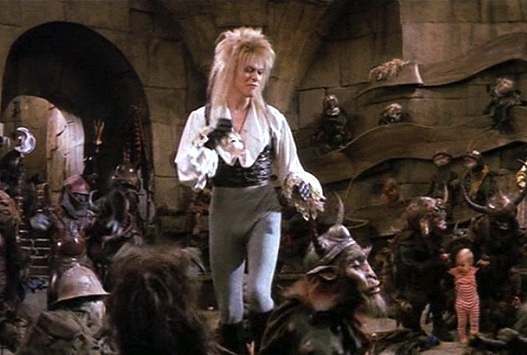
But in my game (and in Rollins' game, and in Rients' game, etc. etc.) goblins have probably been chosen because they specifically interest the referee. I know in my game, that's the case. I use goblins for a variety of reasons: goblins kidnap children (adventure hook--save the children!); goblins are the friends of wolves and werewolves (another hook in the monsters they associate with); goblins are either the slaves of Elves (and maybe sympathetic to the PCs?), or Free Goblins (both a player class, and a further adventure hook in that goblins hate Elves); higher level goblins cast weird magic (including goblin doors, probably); goblin kings are strange and powerful and as beautiful as Elves (or at least David Bowie); and let's be honest, fighting goblins in an old school game where a referee is willing to see characters die is just not boring!
Goblins are great! Use them, please, in great numbers and in great varieties. Make them interesting, and make sure interactions with them (fights and otherwise) matter.
Goblins are incredibly versatile monsters, by the way; I've seen lots of different goblins in modules, including fungus-goblins (Tomb of the Serpent Kings) and blue goblins (Mortzengursturm the Mad Manticore of the Prismatic Peak) and Batiri jungle goblins (Tomb of Annihilation); and don't forget the goblins of other media, especially Labyrinth, and even Blix from Legend.
She claims that these goblin fights are boring, standing as stagnant interludes between moments of what the game is really about, i.e. (asking ironically), "How am I supposed to break up long periods of players developing their characters, puzzle-solving, discovering lore and fighting magical monsters?" It's strange to me that D'Anastasio doesn't see that goblins are magical monsters, and doesn't conceive of the possibility that the presence of goblins and whether they fight might be a means of puzzle-solving ...
My attention to this article was directed by David Rollins at blog Searching for Magic in his post "The Ecology of My Goblins or, How to Make Goblins Fun!" He takes issue with D'Anastasio's characterization of goblins, and I agree wholeheartedly with his rebuttal.
...
But I must admit--I do actually agree with D'Anastasio to a large degree. Battles without stakes are boring, and I don't play D&D just for the visceral joy of seeing dice roll across the table--I play for the visceral joy that a character's survival depends on that die roll! If goblins are being used by a referee just to be a no-risk fight, and I'm forced to slog through every round of it, and the goblins fight to the death, and none of it matters, I tune out. I've played in games like this; I played in a Pathfinder game where my paladin was blinded, but I refused the possibility to have him cured and had him run into the vanguard of every fight against Orcs just to test how far the referee would bend the rules not to kill him (he survived every fight; the absurdity was the only reason I was entertained).
This article piqued my interest because the last two games I've run in my Greyhame Dungeon Game have both involved goblins (Expedition 16 and Expedition 17; I haven't yet written up the latter). Expedition 16 involved what was basically a massacre of goblins; the characters entered the dungeon with a veritable army of wardogs and hirelings, and all together slaughtered some thirty goblins--but this was not "I miss," "I hit," "I miss," "I hit," ad nauseum, this was a running battle with groups of goblins panicking from bad morale rolls, running to the next goblin post for reinforcements, and/or going through side corridors in attempts to outflank the party. Nothing worked--the goblins were just too weak.
Expedition 17, meanwhile, involved only a couple of characters and their few hirelings and wardogs. During their first entrance into the dungeon, the party was overwhelmed by a large number of goblins, and after both dogs and one of the hirelings were killed, the party had to retreat. Outside the dungeon, they regrouped with a couple more dogs; then, going back into the dungeon, they were ambushed by the same large force of goblins. Another dog and the other hireling were killed, and it looked like the survivors would soon be goblin-arrow pincushions; but to my surprise, the two characters and their last dog fled downstairs to the next level of the dungeon, only escaping by lighting oil on fire behind them on the stair. After that, it was only by good luck that they found another exit from the dungeon so that they didn't have to face the goblins again.
I recite these examples as clear counterexamples to D'Anastasio's claim that goblin-fights are the worst. Both of these games were exciting--for different reasons!--and both involved goblins.
![]() |
| a couple of Free Goblins |
So I agree with D'Anastasio in a general way that pointless fights are boring--but on the point of goblins I completely disagree, because the presence of goblins do not a pointless fight make. Goblins can be as boring as the Orcs that my blind paladin fought in that Pathfinder game, or as interesting as Rollins' weird hive-goblins, Jeff Rients' goblins with their goblin-doors (I keep forgetting to use these), or my own goblins who are certainly easily routed cowards, but who can also overwhelm and kill foolhardy adventurers (and they can cast magic and do other things too ...).
The relevant question to ask is not "Are there goblins?" but "Why are there goblins?" If the answer to the why of goblins is just to have no-risk fights for low-level characters, then fighting them is bound to become boring (but honestly, if that's the goblins' only point, if you're playing D&D, the game of tactical infinity, why don't you avoid fighting the goblins?).
![]() |
| What if the goblins are the type that steal children, and the fight against the goblins determines whether you save the kids or not? |
But in my game (and in Rollins' game, and in Rients' game, etc. etc.) goblins have probably been chosen because they specifically interest the referee. I know in my game, that's the case. I use goblins for a variety of reasons: goblins kidnap children (adventure hook--save the children!); goblins are the friends of wolves and werewolves (another hook in the monsters they associate with); goblins are either the slaves of Elves (and maybe sympathetic to the PCs?), or Free Goblins (both a player class, and a further adventure hook in that goblins hate Elves); higher level goblins cast weird magic (including goblin doors, probably); goblin kings are strange and powerful and as beautiful as Elves (or at least David Bowie); and let's be honest, fighting goblins in an old school game where a referee is willing to see characters die is just not boring!
![]() |
| the Goblin King |
Goblins are great! Use them, please, in great numbers and in great varieties. Make them interesting, and make sure interactions with them (fights and otherwise) matter.
Goblins are incredibly versatile monsters, by the way; I've seen lots of different goblins in modules, including fungus-goblins (Tomb of the Serpent Kings) and blue goblins (Mortzengursturm the Mad Manticore of the Prismatic Peak) and Batiri jungle goblins (Tomb of Annihilation); and don't forget the goblins of other media, especially Labyrinth, and even Blix from Legend.
Gnolls: Followers of the Phallus
In the dark of a catacombs in deepest night one might hear them: laughing wildly, raucously, yellow eyes flashing in the night, teeth cracking and grinding the bones of the dead. The gnolls have gathered for a feast of bones, and only the stalwart or the foolhardy can hear their weird laughter without the catch of terror in his heart.
(those who hear the "laughter" of gnolls must make a morale check, results appropriate to the situation--i.e. panic and flee if in combat, or become shaken and suffering -1 to all rolls, etc.)
Slaughtered animals lie in the fields, killed for sport and stinking of blood, but otherwise untouched; meanwhile, the gnolls that hunted, killed, and ignored them gather now in the graveyards of other races, digging up bodies long dead to crush the bones of corpses between their teeth. Laughing and hyena-headed, gnolls are creatures of perversity, servants of Evil who make a mockery of every philosophy and religion.
| My first D&D book was the 2e Monstrous Manual, whence this image is take; it's still my favorite depiction of a gnoll |
------
As scavengers, gnolls prefer to eat that which is already dead. They kill for sport, but prefer to eat that which is long dead, or which is killed by the hands of another. To this end, they prefer corpses dug up from necropolises and graveyards (which they can easily crush between their teeth, and which provide the added pleasure of enraging certain sects who believe that the buried dead are sacrosant); OR to eat of flesh killed by the hands of the slaves they keep--and because a slave killed it, the gnoll is glad to "scavenge" it by bullying the slave into surrendering the kill.
![]() |
| Gnolls draw dicks on everything ... and then build dick-idols! |
Gnolls' obsession with phalluses is well recorded. Certain scholars identify their main deity as Priapus, god of fertility and sexuality, traditionally depicted with an enormous erection; but this identification is weak at best, as the erection-wielding deity of the gnolls is generally androgynous, or perhaps indeed a goddess with an enormous phallus--or literally just an enormous phallus without other context, probably carved of appropriately-shaped hardwood. Not that identification of a gnoll's sex is easy--many sources attest that every single gnoll is male and that the specie's propagation is a mystery, while other scholars argue that female gnolls are actually possessed of a huge clitoral pseudo-penis, generally functional as both a male and female organ.
| On the left, a hyena penis; on the right, a hyena female's pseudo-penis |
Because every member (ahem) of the species possesses a significant erectile organ, the gnolls' obsession with phallic art is perhaps understandable. Wherever gnolls gather, phallic graffiti will adorn the walls, and altars will be raised before idols either bearing huge erections, or seeming merely to be erect phalluses themselves. Native gnollish religious rites involve feast-orgies in which the strong bully the weak into feeding and sexually pleasuring them; and among those tribes which have large contingents of Lawful or Good slaves, gnolls tend to take a perverse pleasure in mocking the rites of those religions, especially by dressing up a donkey in a priest's robes (calling it a "priest-ass" if they have any sense of the Common language and the nature of puns), and forcing all to do obeisance to it as it brays the eternal "Yee-AH! Yee-Ah!" (check out Nietzsche's Thus Spake Zarathustra for the joke ...)
Seeing this mockery of Lawful and Good religious rites, presided over by an ass, the gnolls fall among themselves laughing horribly into the night. They demand ever more elaborate "rites" and protestations of faith from the slaves/prisoners they wish to abuse by forcing them to take part in these abominations of religious ritual; whether the "rites" end up killing the slave(s), or the gnolls find the joke good enough to spare their slave(s) for the night is up to the whim of the gnolls and whether they can control themselves amidst their fits of laughter. (Once the mockery gets going and the gnolls begin really to laugh themselves wild, they should make a saving throw against paralysis at +2 each round to act; otherwise they continue to laugh uproariously, pounding the ground in their perverse mirth, though still able to defend themselves ably if attacked).
Labels:
d&d,
d&d monsters,
gnolls,
monsters,
my rules,
old school d&d,
phallus,
priapus
Subscribe to:
Posts (Atom)